
DAAD Scholarships 2027 (Fully Funded)
The DAAD Scholarship is a German government-funded program that supports international students and researchers pursuing master’s, doctoral, and postdoctoral studies in Germany. It is open to students from developing and emerging countries, focusing on fields that promote sustainable development. Many DAAD scholarships are tied to specific programs or research areas, with an emphasis on academic excellence and future contributions to home countries.
International students who are still deciding on the institution and program can also explore available courses in Germany to learn more about the different bachelor’s courses and master’s courses available across different institutions.
DAAD Scholarships Coverage
This government fully funded scholarship for international students covers the following:
-
€ 992 for master's and € 1,300 for Ph.D. students
-
Health Insurance
-
one-time research allowance
-
Family benefits
-
Language Course Funding
-
Monthly rent subsidy under certain circumstances
DAAD Scholarships Eligibility Criteria
To be eligible for DAAD Scholarships, you need to meet the following criteria:
- Students with outstanding academic records
- Students who have excellent study projects
- Motivated, with clear future prospects and commitment to extracurriculars
For detailed requirements, refer to the official eligibility page .
Eligible degree levels
Eligible programmes
Eligible nationalities
How to Apply
In this section, we'll provide a clear general overview of requirements and steps to guide you through the application process for DAAD Scholarships.
To apply for DAAD Scholarships, please follow these steps:
-
Access the scholarships database
-
Apply to your desired scholarship
Important Note: The application procedures and required documents for DAAD Scholarships may vary depending on your degree, program, nationality and other factors. For specific details regarding the requirements, kindly visit the official website of DAAD Scholarships.
Application Deadlines
Now that you’re familiar with the application procedure, it’s time to know the application dates! Knowing the dates for DAAD Scholarships will help you prepare early and it will also give you the time you need to put together a competitive application.
Application deadlines vary
The application deadlines for DAAD Scholarships vary. It’s important to review official guidelines on the official website or contact administrators for specific deadlines. Make sure to regularly check the DAAD Scholarships page for the latest and most accurate information on application deadlines.
DAAD Scholarships Eligible Institutions
The eligible institutions for DAAD Scholarships are listed below:
A
- Aalen University of Applied Sciences
- Academy of Fine Arts Leipzig
- Academy of Fine Arts Munich
- Academy of Media Arts Cologne
- Albert Ludwig University of Freiburg
- Alice Salomon University of Applied Sciences Berlin
- Anhalt University of Applied Sciences
- Ansbach University of Applied Sciences
- Aschaffenburg University of Applied Sciences
- Augsburg University of Applied Sciences
B
C
F
H
O
R
T
U
- University of Applied Sciences Düsseldorf
- University of Applied Sciences Jena
- University of Bamberg
- University of Bayreuth
- University of Bremen
- University of Cologne
- University of Duisburg-Essen
- University of Education Schwäbisch Gmünd
- University of Education Weingarten
- University of Giessen
- University of Hagen
- University of Hamburg
- University of Hohenheim
- University of Kassel
- University of Mannheim
- University of Munster
- University of Passau
- University of Potsdam
- University of Regensburg
- University of Stuttgart
- University of Trier
- University of Ulm
- University of Wuppertal
- University of Würzburg
DAAD Scholarships Recipients
Meet students who have received DAAD Scholarships and learn how they secured their award.
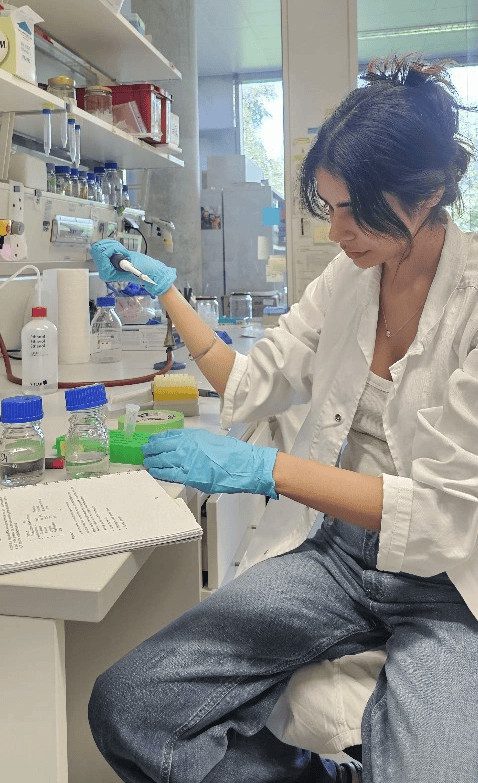
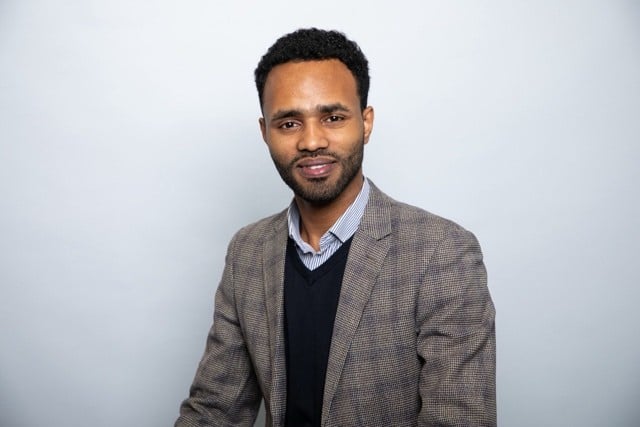
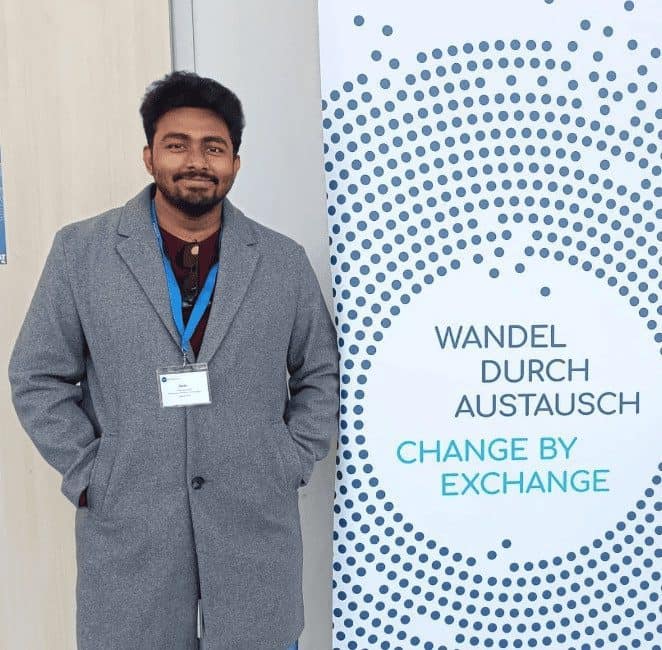



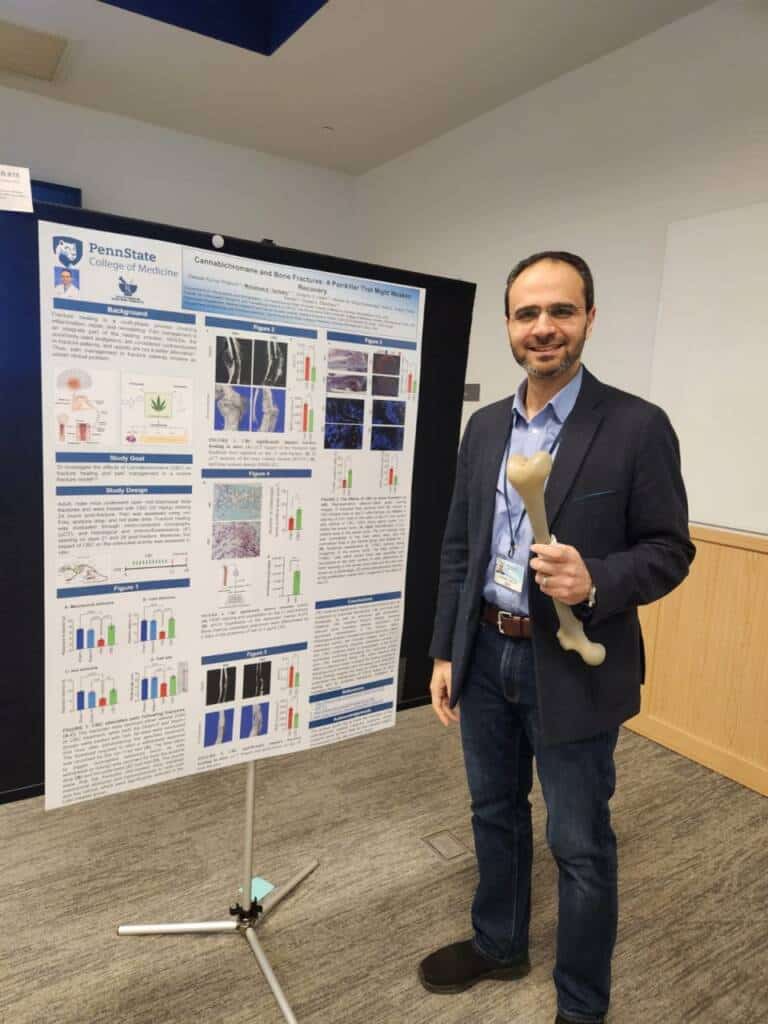
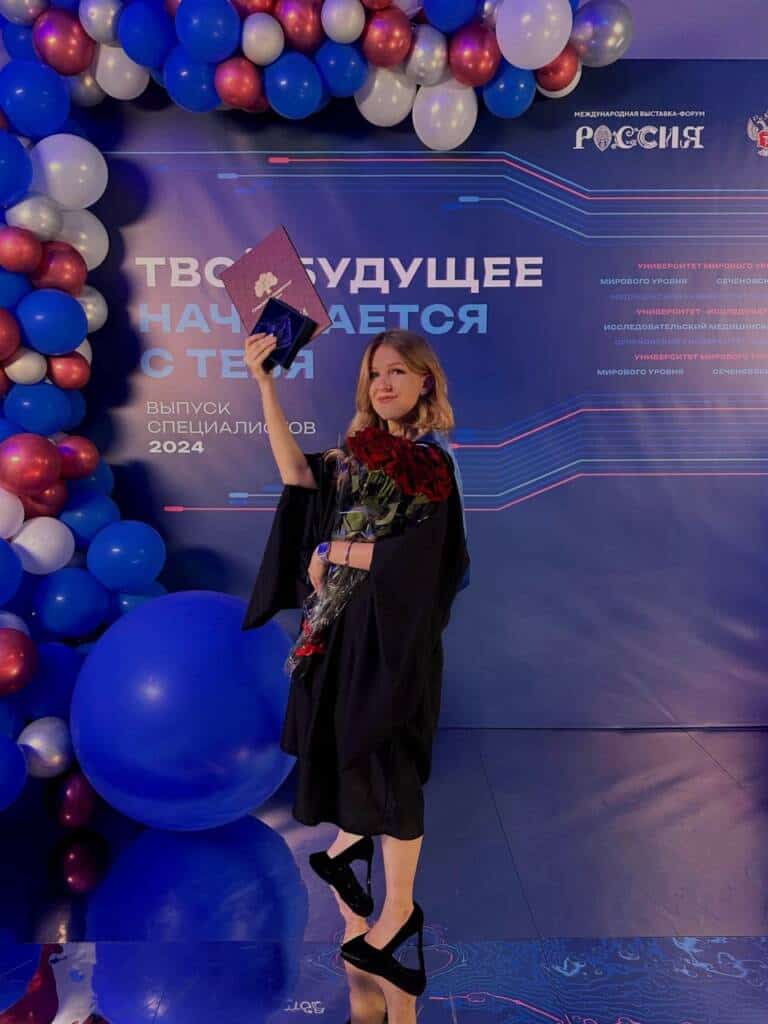
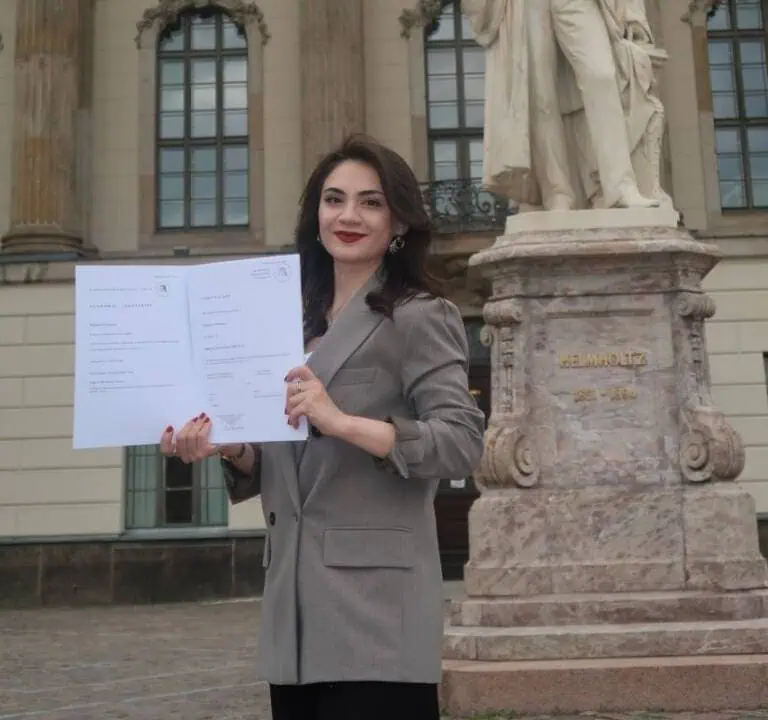


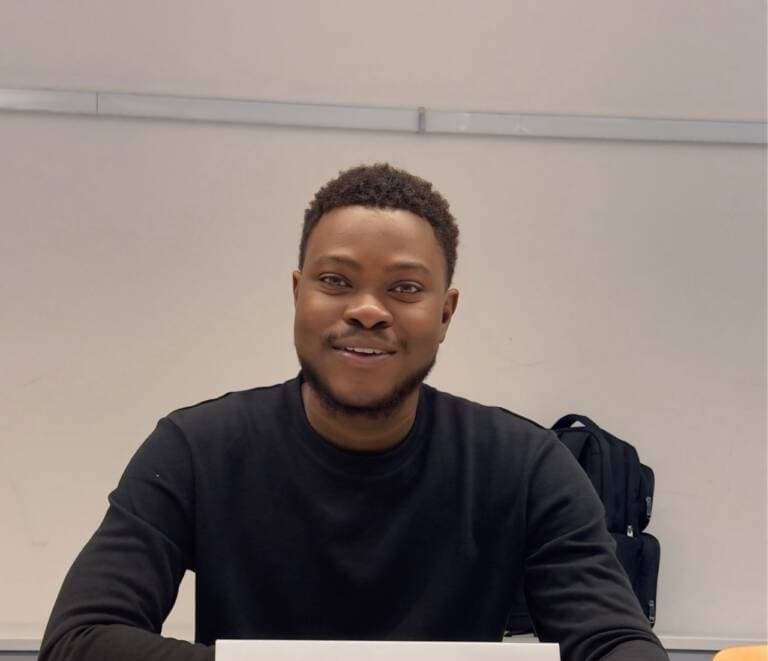
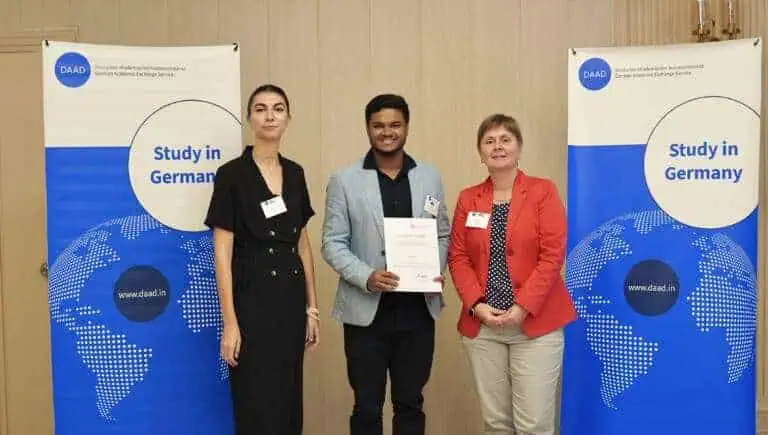
The recipient stories include 106 accounts of degree study supported by DAAD Scholarships.
Nationalities Represented in the Recipient Stories
| Nationalities | Stories per nationality |
|---|---|
| Nigerian, Pakistani | 16 each |
| Indian | 7 |
| Bangladeshi | 6 |
| Afghan, Ghanaian | 5 each |
| Azerbaijani, Ethiopian | 4 each |
| Colombian, Egyptian, Indonesian, Nepali | 3 each |
| Brazilian, Gambian, Kenyan, Uzbek | 2 each |
| American, Belarusian, Bosnian, Chinese, Costa Rican, Cypriot, Ecuadorian, Filipino, Georgian, Jordanian, Kyrgyz, Malawian, Mongolian, Palestinian, Peruvian, Russian, Sierra Leonean, Spanish, Syrian, Ukrainian, Vietnamese, Zambian, Zimbabwean | 1 each |
Degree Study Reported by Recipients
| Degree level | Stories | Subjects |
|---|---|---|
| Master’s | 88 | Social protection; governance and public policy; development economics; engineering; natural sciences; environmental studies; business; education; German literature |
| PhD | 21 | Medical microbiology; spatial information and modelling; plant breeding; plant biochemistry; biology; computer science; remote sensing; medical sciences; development studies; materials science; human-environment relations; circular economy; cancer biology; social sciences; pharmaceutical biotechnology; silicon solar-cell research |
Funding Reported by Recipients
| Recipient and degree/program | Reported coverage |
|---|---|
| Hanna Tesfaye — Master’s in Public Policy, University of Erfurt | €992 per month, health insurance and a tuition exemption; she reported that the preparatory German course was funded separately. |
| Mutiu Adebowale OYERO — MBA in Small Enterprise Promotion and Training, Leipzig University | Eighteen months of stipend support at successive rates of €861, €904 and €934; €925 for travel, €460 annual research allowance paid twice, €1,230 for field research, insurance and a two-month German course. |
| Somnath — Master’s in Air Transport and Logistics, TU Dresden | DAAD STIBET support of €300 per month for three months during the master’s. |
| Khuzaim Khan (2025 award) — Master’s in Sustainable Renewable Energy Technologies, University of Oldenburg | €992 per month for the two-year award, plus insurance, travel support and a two-month German language and culture course. |
| Tuyu Zheng (2018–2022 funding; PhD completed 2023) — PhD in Cancer Biology, German Cancer Research Center | DAAD contributed €1,200 per month; the German Cancer Research Center topped this up to a combined €1,600 per month. |
| Gerin Prince (From October 2023) — Doctoral research in Hematology and Oncology, University of Lübeck | Initially €1,300 per month, later increased to €1,400; €460 annual research allowance, health insurance and reimbursement of the first journey to Germany and final return journey. |
| Arnab Bhowmik — Doctoral research in Earth Observation and remote sensing, German Aerospace Center | €1,750 per month through the DAAD–DLR scholarship. |
| Ahmed Ridoy (From October 2016) — PhD research on silicon solar-cell processing, Fraunhofer ISE and University of Freiburg | Basic scholarship of approximately €1,000–€1,200 per month. He described family-related allowances, rent support, insurance, research and travel support; annual renewals ultimately funded four and a half years including a six-month COVID extension. |
Examples of Featured Recipients’ Application Backgrounds
| Recipient and degree/program | Scholarship/application route | Reported background and preparation |
|---|---|---|
| Nawshin Tabassum (2021 award) — Master’s in Social Protection Systems, Bonn-Rhein-Sieg University of Applied Sciences | DAAD Helmut-Schmidt-Programme | Women and Gender Studies bachelor’s at University of Dhaka, CGPA 3.78/4 and first in class; gender research and UNDP Bangladesh research-assistant experience. |
| Mutiu Adebowale OYERO — MBA in Small Enterprise Promotion and Training, Leipzig University | DAAD EPOS | Entrepreneurial Studies bachelor’s, GPA 4.34/5, research publications and assistant experience; business-development internships and work with a founders’ hub. |
| Somnath — Master’s in Air Transport and Logistics, TU Dresden | DAAD STIBET during study | Electrical Engineering bachelor’s, CGPA 8.47/10, followed by logistics and supply-chain work at Maersk and Vedanta. |
| Roshni Keshwani — Master’s in Life Sciences and Biochemistry, University of Konstanz | DAAD Scholarship for Completing Studies | Supported her application with current transcripts, two supervisors’ recommendations, bank statements and detailed accounts of her finances and circumstances. |
| Tuyu Zheng (2018–2022 funding; PhD completed 2023) — PhD in Cancer Biology, German Cancer Research Center | DAAD Doctoral Fellowship | Bioengineering qualifications from Shanghai University and University of Technology of Compiègne; research placements at the Max Delbrück Center and Institut Pasteur de Lille. |
| Gerin Prince (From October 2023) — Doctoral research in Hematology and Oncology, University of Lübeck | DAAD Research Grants – Doctoral Programmes in Germany | Integrated MSc in Systems Biology at University of Hyderabad, CGPA 8.89/10; a master’s dissertation on RNF43 in breast cancer informed his research proposal and experimental troubleshooting. |
| Ahmed Ridoy (From October 2016) — PhD research on silicon solar-cell processing, Fraunhofer ISE and University of Freiburg | DAAD Doctoral Scholarship | Optics and Photonics master’s at Karlsruhe Institute of Technology, final grade 1.9; Fraunhofer ISE thesis grade 1.0 and previous work with the future supervisors. |
How Recipients Met Language Requirements
| Language requirement route | Stories / total funded degree-study stories | Recipients and examples |
|---|---|---|
| IELTS | 45/106 | 6.5 (Muhammad Muhammad Idris); 7.0 (Julia Stepanova, Katherine Coronado Mejia, Yevheniia); 7.5 (Ariba Khan Waheed, Gular Huseynova, and 2 others); 8.0 (Baibrus Khan, Benson Innocent Edobor, and 7 others); IELTS taken for the application (Abeeb Ajagbe, Ahmad Shabir Hozad, and 26 others). |
| TOEFL | 13/106 | 92 (Mona Sader); 99 (Muhammad Saifullah); 102 (Gerin Prince, Leen Alsabbagh); 108 (Cedric Manzano); 118 (Hamza Ijaz); TOEFL taken for the application (Abubacarr Marigo, Alyaksandra Petrakouskaya, and 5 others). |
| German proficiency at entry | 1/106 | German proficiency not required at scholarship entry (Nawshin Tabassum). |
| English tests optional for the application | 3/106 | Optional English test for the reported scholarship or host application (Joshua Odeyemi, Mahnoor Zubair, Oftobkhon Akhadjonova). |
| Duolingo English Test | 1/106 | Duolingo English Test taken for the application (Mansoor Rahimi). |
| Explicit English-test exemption | 5/106 | Personal English-test exemption for the funded application (Adigidzi Ephraim Enoch, Elene Veliashvili, and 3 others). |
| English-medium education accepted | 11/106 | Prior English-medium education or an official medium-of-instruction certificate accepted (Abeeb Ajagbe, Arthur Gulo, and 9 others). |
| Accepted TOEFL evidence | 1/106 | TOEFL proficiency accepted for the reported admission (Wahidullah Azizi). |
| German Proficiency Test | 1/106 | German Proficiency Test taken for the application (Dr. Mohamed Tantawy). |
| English Proficiency Test | 1/106 | English Proficiency Test taken for the application (Dr. Mohamed Tantawy). |
| English assessed by interview | 1/106 | Host English-proficiency interview (Tuyu Zheng). |
| TestDaF | 1/106 | TestDaF taken for the application (Alyaksandra Petrakouskaya). |
| DAAD English Language Examination | 1/106 | DAAD English Language Examination taken for the application (Jennifer Fabà). |
Standardized Tests Reported by Featured Recipients
| Test | Stories reporting the test / total funded degree-study stories | Linked recipients and reported scores |
|---|---|---|
| GRE | 2/106 | GRE taken for the application (Joshua Odeyemi, Muhammad Saifullah). |
Application Timelines Reported by Recipients
| Recipient and degree/program | Application or scholarship route | Reported application timeline |
|---|---|---|
| Gular Huseynova — MA in Global Political Economy and Development, University of Kassel | DAAD study scholarship | Prepared for IELTS for two months; submitted her application and was invited to the interview phase in March. |
| Roshni Keshwani — Master’s in Life Sciences and Biochemistry, University of Konstanz | DAAD study-completion scholarship | Submitted her financial explanation and supporting documents through the International Office; after the selection committee’s meeting, received the award decision within a month. |
| Ahmed Ridoy (From October 2016) — PhD research on silicon solar-cell processing, Fraunhofer ISE and University of Freiburg | DAAD doctoral route | After document screening, returned from Italy to Bangladesh about a week before a 20–25-minute interview in Dhaka; returned to Germany with doctoral support in October 2016. |
Interview Experiences Reported by Recipients
| Recipient and degree/program | Reported interview experience |
|---|---|
| Gular Huseynova — MA in Global Political Economy and Development, University of Kassel | Prepared around her motivation letter and professional experience, then approached the interview as a genuine conversation about her interests and aims. |
| Ariba Khan Waheed — Master’s in Social Protection, Bonn-Rhein-Sieg University of Applied Sciences | Prepared without memorizing scripted answers; described the interview as a conversation about her motivation and goals. |
| Gerin Prince (From October 2023) — Doctoral research in Hematology and Oncology, University of Lübeck | The expert panel examined his research proposal and asked how he would troubleshoot experimental problems. |
| Ahmed Ridoy (From October 2016) — PhD research on silicon solar-cell processing, Fraunhofer ISE and University of Freiburg | A 20–25-minute interview in Dhaka covered the proposal, motivation, preparedness and feasibility. |
Teaching Language Reported by Recipients
| Recipient and degree/program | Reported teaching language |
|---|---|
| Elene Veliashvili — Master’s in German Literature, University of Göttingen | German Literature was taught in German. |
| Leen Alsabbagh — MSc in Global Health, University of Bonn | All classes and academic materials were in English. |
| Samuel Mensah — MSc in Tropical Forestry, TU Dresden | Tropical Forestry lectures, seminars and assessments were entirely in English. |
| Tuyu Zheng (2018–2022 funding; PhD completed 2023) — PhD in Cancer Biology, German Cancer Research Center | Described doctoral study as almost entirely in English; research seminars, group meetings and written scientific communication were in English. |
What Recipients Pursued After Their Scholarship-Funded Studies
| Recipient | Scholarship-funded degree/program | Reported outcome or current status |
|---|---|---|
| Rohit Juneja (2021–2023) | Joint Master’s in Regional Development Planning and Management, TU Dortmund University and Federal University of ABC | After SPRING, remained in Brazil for FAPESP-supported research on informal settlements, climate vulnerability and urban resilience. |
| Victória Martins (Completed March 2026) | Master’s in Peace and Conflict Studies, Otto von Guericke University Magdeburg | Completed the degree and pursued freelance reporting and communications focused on human rights and socio-environmental advocacy. |
| Madeline J. Colley (September 2024–August 2026) | MSc in Social Protection, Bonn-Rhein-Sieg University of Applied Sciences | During-study professional experience: completed a GIZ Global Programme on Social Protection internship in Bonn from March to September 2026, partly overlapping the master’s. |
| Tuyu Zheng (2018–2022 funding; PhD completed 2023) | PhD in Cancer Biology, German Cancer Research Center | Current role: Postdoctoral Research Associate at St. Jude Children’s Research Hospital in Memphis; received a Damon Runyon–St. Jude Pediatric Cancer Research Fellowship for 2025–2028. |
| Ahmed Ridoy (From October 2016) | PhD research on silicon solar-cell processing, Fraunhofer ISE and University of Freiburg | After the doctorate, moved into the semiconductor industry as an R&D Process Integration Engineer at Vishay Siliconix Itzehoe GmbH. |
Other Offers in Featured Applicants’ Journeys
| Recipient | Reported alternative | Decision described in the story |
|---|---|---|
| Nigar Mammadzada — MSc in Development Economics, University of Göttingen | Stipendium Hungaricum offer and admission offers from Lund University. | Chose Germany for the academic strength and relevance of the Göttingen program. |
| Hareem Aqdas (2021 award) — Master’s in Development and Governance, University of Duisburg-Essen | Commonwealth Scholarship offer for Durham University. | Did not accept the Commonwealth offer and pursued her German master’s. |
| Abeeb Ajagbe — Master’s in Geography of Environmental Risks and Human Security, University of Bonn and United Nations University | East Carolina University graduate assistantship: full tuition and US$12,000 for a nine-month academic year. | Forgoing the assistantship because of timing and other circumstances, accepted DAAD EPOS at University of Bonn. |
| Ella Stewart — MSc in Environmental Governance, University of Freiburg | Fulbright Study Grant covering ten months of study in Germany. | Declined Fulbright in favor of DAAD support covering the full two-year program. |
| Rohit Juneja (2021–2023) — Joint Master’s in Regional Development Planning and Management, TU Dortmund University and Federal University of ABC | University of Twente ITC Excellence package totaling €40,495; Asian Institute of Technology partial award of THB192,000. | Pursued the DAAD-supported joint SPRING master’s in Germany and Brazil. |
| Jonathan Eveso — PhD in Biology and animal behavior, University of Konstanz | PASET-RSIF doctoral scholarship for Haramaya University, Ethiopia. | Explicitly declined that award to take up the PTDF–DAAD route. |
| Thanh Phuoc Ho — PhD in Human-Environment Relations, Kiel University | Massey University Doctoral Scholarship and an RMIT University Vietnam PhD stipend offer. | Declined both for personal reasons; pursued the DAAD-funded doctorate. |
What DAAD Scholars Say
Advice and reflections from scholars about the DAAD application process and programme.
"This prestigious award offers comprehensive financial and academic support, including a monthly stipend, an annual research allowance, travel assistance within Germany,"
"I would advise them to first of all understand the scholarship’s mission, eligibility, and selection criteria."
"Gain solid research experience, find good mentors, and be intentional in telling your story. Start early, be thorough, and stay open to international collaboration."
"The courses are rigorous and very research-oriented, which challenges me to think critically and improve my analytical skills."
"Warm and supportive environment and people, collaborative work culture, premier research institute, international recognition, work-life balance, supportive to international students."
Frequently asked questions
Common questions about DAAD Scholarships, eligibility, funding, and applications.
In many cases, yes, but the exact package depends on the DAAD track. On Global Scholarships, DAAD recipients commonly describe their awards as fully funded or as covering the main costs of studying in Germany. For example, Hajra, a DAAD Helmut Schmidt scholar at the University of Passau, said the scholarship “covered my full tuition, living expenses, health insurance, and travel costs.” Similarly, Sarita Banjade, a DAAD EPOS scholar at the University of Hohenheim, explained that it “covers tuition fees, a monthly stipend, health insurance, and travel expenses from the home country to Germany.”
Often, yes, many DAAD-supported degree or research experiences in Germany can be completed in English, but basic German is still very useful for daily life. Grace Achieng Ochieng, a DAAD PhD scholar at the University of Bonn, said, “All my academic activities are conducted in English.” At the same time, Bharath Kumar, who conducted DAAD-funded research at TU Braunschweig, noted that “basic German is helpful for day-to-day life” even when English is enough academically.
It depends on the program and university. Some DAAD recipients on Global Scholarships submitted IELTS or TOEFL, while others found that their specific DAAD route did not strictly require it. For example, Mahnoor Zubair, a DAAD Helmut Schmidt scholar in Germany, said of IELTS that “it wasn’t even required for my scholarship.” On the other hand, Sevil Haziyeva, a DAAD scholar at Saarland University, shared, “I took the IELTS exam and achieved a score of 8.0.”
Across Global Scholarships recipient stories, the most repeatedly emphasized documents are the motivation letter or SOP, CV, transcripts, recommendation letters, and, where relevant, a research proposal or proof of work experience. Bharath Kumar said he “worked on a detailed Statement of Purpose (SOP)” and also prepared recommendation letters and transcripts. Likewise, Mansoor Rahimi, a DAAD scholar at Wismar University of Applied Sciences, said he prepared “a strong CV, a focused motivation letter” along with his degree documents.
For some DAAD programs, especially EPOS, relevant work experience is a major requirement. This is not universal across every DAAD scholarship, but it is very important for several development-focused tracks. Samida Sher, a DAAD EPOS scholar in Germany, explained that the program “requires applicants to have at least two years of professional experience.” Sarita Banjade also described EPOS as intended for professionals from developing countries with relevant work experience and a strong development focus.
No. Strong academics help, but recipient stories on Global Scholarships show that fit, motivation, research, and relevant experience also matter a lot. Mahnoor Zubair directly addressed this myth, saying many people assume you need a straight 4.0, but “this is not the case.” She credited her research experience and how she presented it in her DAAD motivation letter as important parts of her successful application.
The clearest pattern in Global Scholarships recipient stories is to start early, study the exact program requirements carefully, and tailor every document to fit the scholarship. Khadijah Saeed, a DAAD Helmut Schmidt scholar at the University of Duisburg-Essen, advised applicants to “Start as early as possible.” She also recommended that applicants “Talk to alumni and your mentors” so they can refine their materials with real feedback. That advice matches several other DAAD recipient stories on Global Scholarships, which emphasize program fit, careful research, and multiple drafts of the motivation letter.
Often, yes. For research-heavy DAAD pathways, recipients on Global Scholarships frequently describe securing a professor, lab match, invitation, or proposal before submitting the scholarship application. Jayalakshmi, a DAAD PhD scholar at Heidelberg University, said the requirements included “an acceptance letter from a supervisor” and “a well-defined project proposal.” Similarly, Kirti Patil, a DAAD KOSPIE scholar at KIT, explained that identifying the right professor and obtaining an official invitation were essential parts of her preparation.
There are many degrees that are open to international students right now — find yours.

Good day dear
First I want to say thank you for this opportunity you have given us 🇺🇸
I so grateful thank you so much
can you share the procedure