
How I Secured a Partially Funded Master’s at the University of Konstanz, Germany Through the DAAD Scholarship for Completing Studies
University: University of Konstanz
Degree: Master of Science in Life Sciences (Biochemistry, Computational Chemistry, and Molecular Biology)
Previous Education: Bachelor of Science in Life Sciences (Biochemistry), Jai Hind College, University of Mumbai
Scholarship: DAAD Scholarship for Completing Studies – €4,200 (Financial Support for Completing End-Stage Studies)
Social Media
LinkedIn: linkedin.com/in/roshni-keshwani/
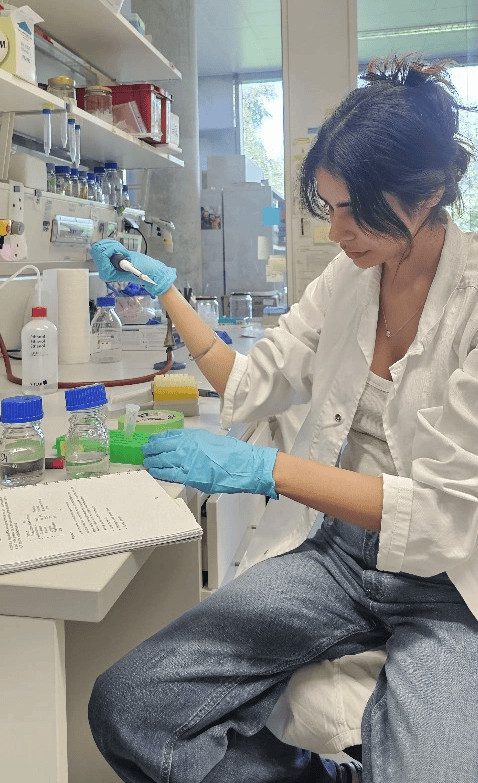
The Journey
Hi, my name is Roshni Keshwani, and I'm originally from Mumbai, India. I completed my undergraduate degree in Life Sciences in 2022, majoring in Biochemistry, at Jai Hind College, which is affiliated with the University of Mumbai.
Later that same year, I made the move to Germany to continue my studies and pursue a Master of Science in Life Sciences. During my master's, I specialized in Biochemistry with a strong focus on Computational Chemistry and Molecular Biology.
I decided to pursue further education in this field because, to be honest, science is a field that is constantly evolving. I would not say it was the dream field for me at first, but it was the one where there is always something new to discover, and for someone who is naturally curious and a chronic overthinker, that is incredibly exciting. It keeps you grounded and actually inspires you to ask more questions.
I'm somebody who absolutely despises monotony, and science is one of the few fields that has never really given me that. No two days have ever looked the same. Whether I was running an experiment, analysing data, or reading a research paper, there was always a new problem to solve or a different perspective to consider.
It is also one of the very few fields where a single skill set does not determine your entire career. Instead, it encourages you to develop a versatile range of skills, opening doors to opportunities both inside and outside academia. Knowing that the skills I was building could one day allow me to explore opportunities beyond academia also really appealed to me.
DAAD Scholarship Details
I ended up receiving the DAAD Scholarship for Completing Studies from the German Academic Exchange Service (Deutscher Akademischer Austauschdienst), which is financed by the German Federal Foreign Office. The scholarship is awarded to international students who would like support to successfully complete their end-stage studies in Germany.
Recipients are selected by a committee called STIBET (Scholarship and Academic Advising Programme for International Students and Doctoral Candidates). The selection is based on a combination of factors, primarily how well you have performed throughout the previous years of your degree, since the scholarship is intended to help students complete their studies, whether there any external factors or medical circumstances that prevented you from finishing on time, as well as the level of financial support you require.
The scholarship was awarded through the University of Konstanz under the DAAD Scholarship for Completing Studies program, and I received a total of €4,200.
Educational Background
I hold a Bachelor of Science in Life Sciences from Jai Hind College, affiliated with the University of Mumbai. I graduated with a 9.5 SGPA, which translates to approximately a 1.3 on the German grading scale.
To be very honest, I think a bachelor's degree mainly lays the groundwork. You're learning how to read scientific literature, write literature reviews, and understand what research actually looks like. You're introduced to resources like PubMed in your first year, and by the time you reach your master's, it has practically become your best friend. It also prepares you well for a master's because you're no longer learning everything from scratch; you're building on a foundation that you've already developed.
One course that unexpectedly had a lasting impact on me was Bioinformatics. At the time, it was only a small part of my bachelor's curriculum, but it introduced me to a completely different way of approaching biology. I was fortunate to have a mentor during my bachelor's who encouraged my interest, and that ultimately influenced the direction I took during my master's.
When I came to Germany, I initially thought Bioinformatics was the path I wanted to pursue. However, one of the Quantum Mechanics courses taught introduced me to Computational Chemistry, and that completely changed my perspective. Although the two fields go hand in hand, they are quite different. I found myself enjoying Computational Chemistry much more because of how analytical and interdisciplinary it was, particularly in the context of Physical Chemistry. Organic and Inorganic Chemistry were never really my strongest subjects or my forte, so discovering a field that combined chemistry, physics, and computation in a way that suited how I like to think felt like a natural fit.
Choosing the field wasn't really difficult; I simply followed the subjects that I genuinely had fun learning. It also happened to be one of the fastest-growing areas in modern life sciences with the rapid growth of biotechnology research. The more I read about it, and the more I studied it, the more I wanted to become a part of it.
Lastly, I graduated with my Master of Science in Life Sciences this year with an overall grade of 1.7 and received a grade of 1.0 for my master's thesis (German grading scale). My master's thesis gave me the opportunity to explore both in silico and in vivo research in much greater depth, which confirmed the direction I truly want to pursue in my career.
How Did You Prepare to Apply to the University of Konstanz?
Did You Take Any Standardized Tests? If So, How Did You Prepare for Them?
When I was starting the process back in 2022, applying to Germany was fairly easier than it is now. At the time, it definitely felt difficult, but looking back, the process was much simpler than what applicants have to go through today.
To find information about scholarships and institutions, I mainly used the DAAD website. I used that website exclusively throughout my application process.
India has a strong relationship with DAAD, and their website lets you search for universities, the programs they offer, and the tuition fees. (Most German universities are not completely free, and the ones in Baden-Württemberg have an international student fee, which can again be waived depending on financial circumstances.)
I applied to four public universities in Germany, received offers from three of them, and ultimately chose the University of Konstanz.
I did not take any standardized tests apart from the IELTS. At the time I applied, the GRE and GMAT were not required, only my academic transcripts and proof of English proficiency. Since the IELTS is simply an English language proficiency test, I prepared for about two months using the official preparation books that were provided when I registered for the exam. One application, the IELTS certificate, a copy of my transcripts, and two recommendation letters were good enough. Though I do remember that for other degrees, such as Economics, Design and Fashion, an additional assessment was required.
How Did You Prepare to Apply for the DAAD Scholarship?
To apply for the scholarship, I first had to fill out an explanation form where I explained why I needed the scholarship and how it would benefit me. This started with a breakdown of how I was already financing my studies, how I had been managing them despite the ongoing challenges, and what my current financial situation looked like. A copy of the current transcripts and a recommendation letter from two current supervisors were mandatory since the committee mainly considers two things: the student's academic performance throughout their degree and/or whether unforeseen circumstances have affected their ability to complete their studies.
I applied for this scholarship twice and was selected both times.
I also had to submit supporting documents to verify everything I had written. This included my bank statements, a financial breakdown of my spending over the previous three months, my health insurance certificate, and, in case of any medical issues (which was also an additional factor for me here) -- relevant medical certificates. I also had to provide a projected financial breakdown for the following three months, showing how the scholarship would help me complete my studies.
Once all the documents were ready, I submitted my application to the representative at the International Office. The application was then reviewed by the selection committee, and after their meeting, I was informed within a month that I had been awarded it.
How is Your Experience at the University of Konstanz? How Do You Rate the Institution Academically and Why?
My experience at the University of Konstanz has honestly been one of the best experiences I've ever had. Both the International Office and the international student representatives were incredibly welcoming. To be very honest, I never thought I stood a chance of getting this scholarship until they encouraged me to apply. They genuinely believed I had a good chance, and when I received it, they were just as happy for me as I was.
Academically, I would rate the university in the high 90s. I know I'm biased, but the University of Konstanz has given me opportunities that I don't think I would have found so easily elsewhere. It has not only helped me discover what I enjoy in terms of science, but also what I don't enjoy, and more importantly, it has given me the chance to try completely new things; be it within the lab or outside.
Before coming here, I had only worked partially as a bench biochemist. I had never even considered computational chemistry as a subject, and it definitely wasn't something I imagined myself pursuing. But being introduced to the field and having one of the best mentors and supervisors, Dr. Christine Peter, completely changed my outlook. It made me realize that this was something I genuinely enjoyed, and it's one of the biggest reasons I rate the university so highly academically.
The University of Konstanz was part of Germany's Excellence Initiative, and I genuinely believe it will continue to be one of the country's strongest research universities.
The university's method of teaching focuses more on application-based learning than rote learning, and I believe that makes all the difference. Coming from a country that heavily depended on textbook learning, which unfortunately I was not very good at, to now studying in an education system that plays to my strengths was extremely heartwarming to witness. Nevertheless, having completed my bachelor's degree back home in India did make my foundation much stronger, and I will always have that to thank.
How Does the University of Konstanz Support International Students?
Honestly, I think the University of Konstanz supports international students really well. Especially when it comes to university-related matters, such as visa requirements, settling in, or understanding administrative processes, I've always felt supported.
For example, because everything was in German, the International Office helped me with my applications, checked that all my documents were correct, and answered any questions I had along the way. I always had someone I could reach out to whenever I was unsure about something.
I even had one situation where I urgently needed to fly back home but also had to extend my visa. The representative from the International Office contacted the immigration office on my behalf and managed to get me an earlier appointment, which I really appreciated.
Of course, the International Office is limited by the number of staff they have and the responsibilities they're allowed to take on, so there are situations where they simply can't do more. But from my experience, if you ask for help, they genuinely do their best to support you. Overall, I've had a great experience, and I would honestly give the University of Konstanz a 10 out of 10 for how they support international students.
Are Your Classes Conducted in English or German?
The Master's in Life Sciences at my university is conducted solely in English, including the presentations and exams. All the notes are also purely in English.
What Did You Pursue After the DAAD Scholarship?
I am currently working at the University of Konstanz in two research groups. In one, I am working on the development of a potential cancer drug, with the goal of publishing my master's thesis in a high-impact journal. My research follows a lab-in-the-loop approach, where I begin with AI-driven in silico predictions, validate them experimentally in the laboratory, and then use those results to refine and improve the next round of predictions. I really enjoy being able to combine modern AI tools with traditional scientific research to make the discovery process more efficient and targeted.
In my second role, I work as a data analyst, where I develop Python scripts to automate literature reviews and organise large amounts of scientific data, making the process significantly more efficient for an ongoing PhD project.
I am currently aiming to gradually transition out of academia and into industry, and I am looking forward to making that leap.
Would Potential Students Have Any Problems Not Knowing German?
I could honestly talk for hours about this, but to keep it short, I would definitely recommend learning the language, even if it's just for everyday use. English is very much the language of academia, but when it comes to navigating the exam submission process, course registration, or simply finding the right department, you'll quickly realize that a lot of it is in German.
The same goes for university administration. While your professors, supervisors, and fellow researchers will almost always be comfortable communicating in English, you can't expect every administrative office to do the same. Having basic German makes dealing with paperwork, appointments, and everyday bureaucracy so much easier.
What Do You Think Made Your Application Stand Out?
I cannot give a concrete answer to this question since I was not part of the selection committee, so I can only speculate.
Personally, I would like to believe it was a combination of a few things. One was the recommendation letter from my professor, who described me as being in the top 1% of students and strongly supported my application. Another was the fact that I had to take a little longer to complete my degree due to a medical issue that required my immediate attention.
I also came to Germany on a scholarship from India that was intended to support four semesters of study. Since my degree ended up taking longer than originally planned, applying for another scholarship was not on my mind, since the part-time jobs helped a lot, but it was worth a try. Looking back, I like to think that already having been awarded a scholarship from my home country may also have given the committee some confidence in my academic background and commitment, although I can't say for certain.
Other than that, I simply tried to maintain a strong grade point average throughout my degree and submitted the most complete and honest application that I could.
What Would You Have Done Differently if You Were Going Through the Process Again?
To be very honest, since I ended up receiving the scholarship both times I applied, even when I wasn't sure I would, I don't think I would change very much about my application. I was quite thorough in the way I documented my academic records, transcripts, recommendation letter, and financial situation. I genuinely don't think there was much more I could have added to make my application stand out. If anything, I sometimes felt that I had included more information than the committee probably needed.
If I had to add one thing, it would be more extracurricular activities outside of academics. Things like volunteering, charity work, or unpaid internships can always strengthen an application because they show that you're a well-rounded person. If I had been physically able to do those things at the time, I would have included them as well. They show that academics are not the only thing you can bring to the table and that you're a fairly versatile person.
What Advice Would You Give Those Looking to Apply for a Similar Scholarship?
The biggest piece of advice I would give to anyone applying for scholarships is to never convince yourself that you can't get one just because you don't have perfect grades. Of course, academics matter, but they are rarely the only thing a committee looks at.
Unfortunately, after my first year, I didn't have the physical ability to take on many extracurricular activities or hobbies. Even so, I was still fortunate enough to receive this scholarship. That taught me that applications are looked at as a whole. Things like your recommendation letters, your personal circumstances, your motivation, and even the effort you make to integrate into the country all matter. For example, I mentioned that I was learning German, which may have shown the committee that I was making an effort to integrate. Previous internships, NGO work, or other experiences can also strengthen an application.
The second piece of advice I would give is to stay in close contact with your university. Many scholarships are never widely advertised. I only found out about this scholarship because I regularly kept in touch with the International Office, and they encouraged me to apply when I genuinely didn't think I stood a chance. In the same way, universities often have internal funding opportunities or fee waivers that many students don't know about unless they ask. At the University of Konstanz, for example, there are situations where the international tuition fee can be waived based on certain circumstances, but many students only hear about these opportunities by speaking with the International Office, professors, or other students.
So don't be afraid to ask questions, speak to your peers, your mentors, and the university staff. Some of the best opportunities come from simply having those conversations.
Finally, be extremely thorough and completely honest in your application. If you think a document helps explain your situation, include it. The more complete your application is, the easier it is for the committee to understand your circumstances.
Most importantly, trust yourself. I genuinely believed I wasn't competitive enough to receive this scholarship, and I couldn't have been more wrong. Sometimes we're our own biggest critics, and the only way to know whether you're good enough is to apply.
Want to submit your
scholarship journey?
Submit Your Story Here!
More Scholarship Recipients
My name is Shah Hussain, and I am from Khyber Pakhtunkhwa, Pakistan. I completed my Bachelor’s in Psychology at the Univer .... Read more
I am June from the Philippines. I am an educator for Social Sciences and Humanities. I recently earned my Master in Southeas .... Read more
Hi, my name is Abdul Hafeez, and I come from a small town called Nasirabad in Sindh, Pakistan. Currently, I am pursuing a ma .... Read more
Leave A Comment