
Georg August University of Göttingen Scholarships for International Students 2027
Georg August University of Göttingen offers access to scholarships that can reduce tuition burden and sometimes support additional costs. Below are top options prioritized by funding level.
When reviewing university scholarships connected to Georg August University of Göttingen, these are often the first awards worth checking due to the typical scale of support. Free Tuition is full tuition and typically covers full tuition fees for four years for bachelors degrees, two years for masters degrees, and up to six years for doctorate degrees. Student Assistantships is commonly categorized as partially funded support, and coverage that often includes a monthly payment of approximately 850 EUR.
If you are building a wider scholarship strategy for Georg August University of Göttingen, external and government programs can be important additions. Here are a few to consider. DAAD Scholarships is a fully funded award, and the listed benefits often include €992 for master's and €1,300 for Ph.D. students, health insurance, and one-time research allowance. DAAD EPOS (Development-Related Postgraduate Courses) is usually considered fully funded, and typical coverage can include full tuition fee waiver, health insurance, and A monthly stipend of €934 for Master's students. A strong option is Konrad Adenauer Stiftung Grant (KAS) which is partially funded and often covers up to 992 euros per month for Bachelor's, master's, and or postgraduate study, up to 1,400 euros per month for PhD study, and health insurance subsidy of up to 120 euros per month.
For more opportunities beyond these highlights, explore the scholarship listings below on this page.
Georg August University of Göttingen Scholarships for International Students
The scholarships at Georg August University of Göttingen can help fund your study expenses. There are currently 8 scholarships being offered to international students at the Georg August University of Göttingen, all with varying requirements, benefits, and application processes. We have compiled them in this list to help you find the scholarship that best fits you.
Undergraduate Scholarships
Graduate Scholarships
External Scholarships
There are many degrees that are open to international students right now — find yours.
Georg August University of Göttingen Admissions
Here are the official admission pages for Georg August University of Göttingen:
| Degree | Admissions Pages |
|---|---|
| Bachelor's | International Students Admissions Page |
| Master's | International Students Admissions Page |
Georg August University of Göttingen Application Deadlines
Tuition Fees at Georg August University of Göttingen for International Students
Indicative annual tuition fee ranges for international students at Georg August University of Göttingen. Exact fees vary by program, so always confirm the current cost on the university's official tuition fee pages.
| Degree Level | Typical Annual Range |
|---|---|
| Bachelor's Tuition | Free |
| Master's Tuition | Free |
Please note that tuition fees can vary based on the specific program you choose. For the most accurate and current fee information, consult the official tuition fee pages linked above.
Georg August University of Göttingen Scholarship Recipients
International students who received scholarships to study at Georg August University of Göttingen, documented by Global Scholarships.
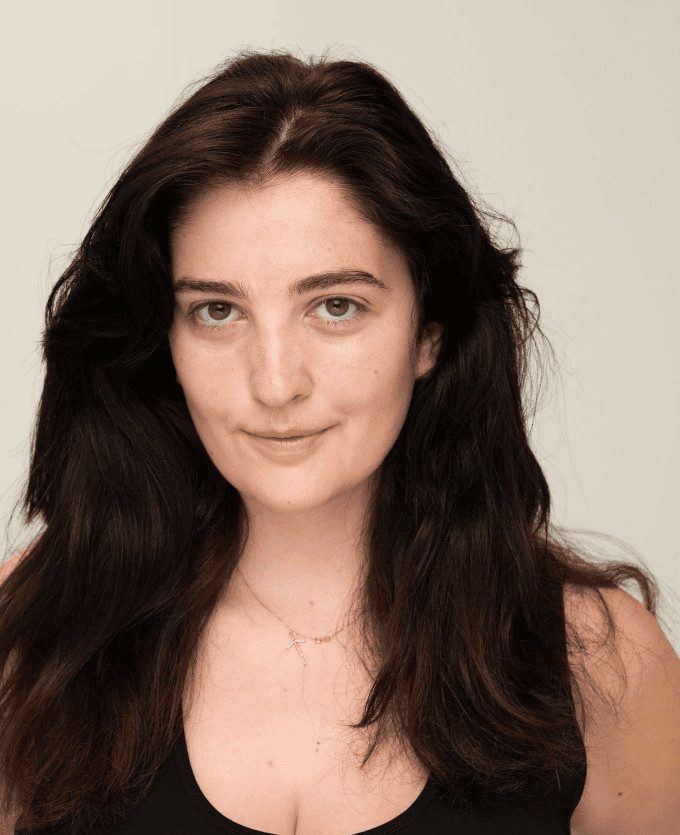
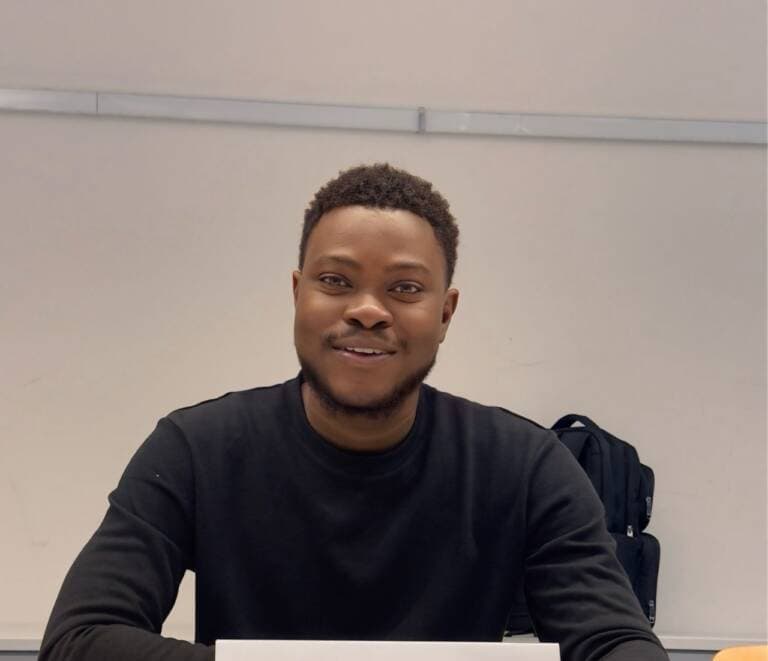
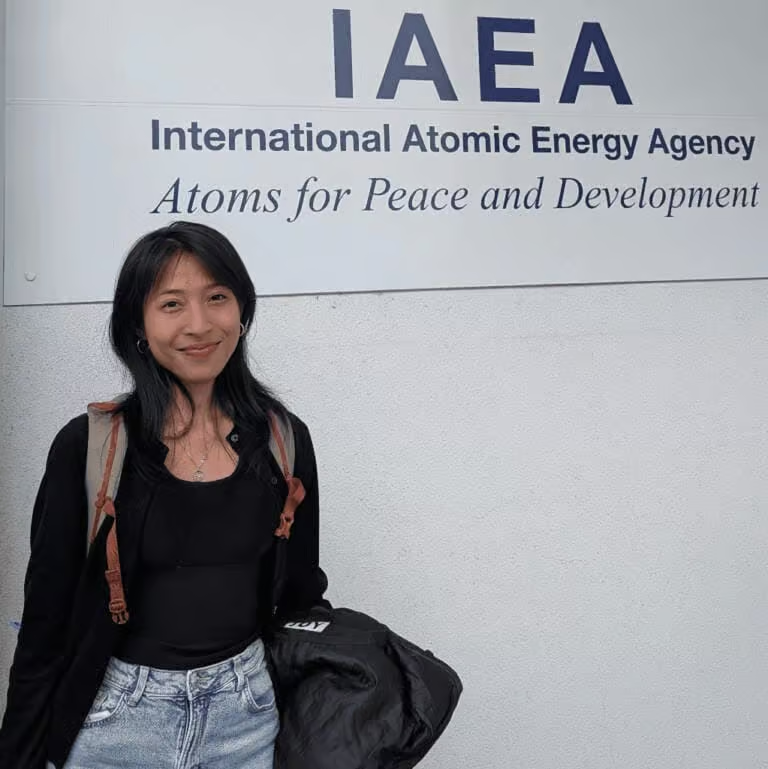
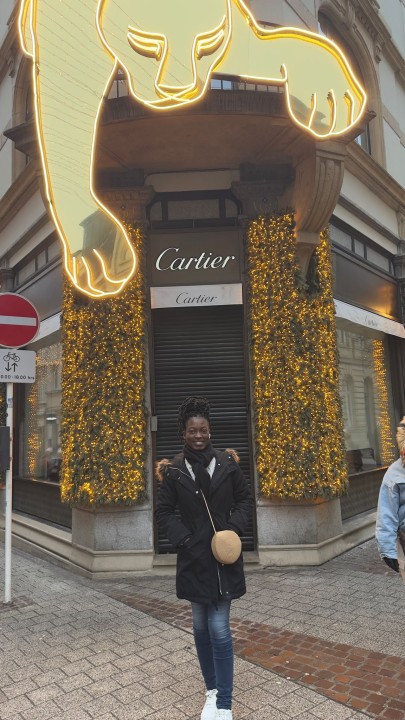
What Scholarship Recipients Say
Advice and insights from international students who successfully secured funding to study at Georg August University of Göttingen.
"I am a recipient of the DAAD Leadership for Africa (LfA) Scholarship, which fully funds my Master’s studies at the University of Göttingen. The scholarship covers my tuition, living expenses, and health insurance, and also includes a German language course before starting my program."
"My advice would be “whatever you have set your mind to achieve can be achieved with determination and doggedness”. Seek information, pursue individuals who have done it in the past and have evidence; they can guide you properly. Also, start early, invest time in researching the institution, faculty, and country."
"My study program is very interesting and unique, as it is interdisciplinary in character and quite flexible. It is called "M.A. in History of Global Markets." The program consists of some mandatory seminars, but it also allows students to form their own profile by choosing classes according to their individual interests and orientations."
"My experience was excellent. I had the chance to learn from experienced professors, engage in research, and collaborate with talented international peers. I rate the university very highly. The courses are rigorous, the research opportunities are strong, and the faculty are internationally active, making it a highly stimulating academic environment."
"I chose the University of Göttingen because it is recognized globally for its excellence in this field and offers a program that aligns closely with my academic and professional goals. The University of Göttingen stood out as one of the best options due to the program’s curriculum, faculty, and international reputation."
"I decided to study in Germany because of the excellent educational and professional opportunities and prospects. Studying at public universities is free for international students (except in some federal states). Students at German public universities do not pay tuition fees but only semester fees (usually between 300 and 400 euros per semester)."
Frequently asked questions
Common questions about scholarships, admissions, and studying at Georg August University of Göttingen.
The University of Göttingen does offer some online course options (for example, “Online Courses in the Life Sciences” that are held online and offered in English), but most scholarships you’ll see linked to Göttingen (Deutschlandstipendium, Niedersachsenstipendium, DAAD-related funding, etc.) typically assume you are enrolled in a full degree programme rather than taking a standalone online course.
Both. Göttingen has a mix of German-taught and English-taught programmes (especially at Master’s and PhD level), and some programmes are bilingual or allow an “entirely in English” path.
Examples from scholarship recipients: Kaifi Ansari answered “In English.” when asked about language of instruction; Azra Farheen wrote her Crop Protection Master’s “is conducted entirely in English”; Abdulrahman Hassan shared “My Master’s program is conducted in English”; and Maria Voronkova said her programme “is taught in English and German, with the possibility of studying entirely in English.”
Most Göttingen-linked scholarships don’t work like “age-cutoff” awards; they usually focus on enrolment status, academic merit, and/or criteria like engagement, background, or fit for a specific funding programme. In other words, eligibility is typically about your profile and programme, not your age.
Generally: across nearly all subjects Göttingen offers. The university’s scholarships and major external options (like DAAD) are not limited to one department, and Göttingen’s 13 faculties cover natural sciences, humanities, social sciences, and medicine (with engineering sciences commonly cited as the main exception).
Medicine: Göttingen does have a Faculty of Medicine, and international students can apply, but medicine/dentistry are typically “state examination” programmes in Germany with extra document requirements and (in practice) strong German-language expectations; scholarships for medicine exist but are often more limited and very competitive.
Engineering: Göttingen is strong in STEM, but it is not usually considered an “engineering sciences” university; you’ll more commonly see scholarships tied to fields adjacent to engineering (e.g., computer science, data science, physics, geosciences, life sciences).
Business/economics: recipients like Ayodele Idowu, Omobolanle Adegbola, and Nigar Mammadzada won funding for Development Economics; humanities/social sciences examples include Maria Voronkova (History of Global Markets) and Kaifi Ansari (Modern Indian Studies); STEM examples include Abdulrahman Hassan (Theoretical Physics) and Azra Farheen (Crop Protection).
Many Göttingen-linked scholarships are effectively open to all nationalities as long as you meet the programme and enrolment requirements (especially university-wide awards like Deutschlandstipendium/Niedersachsenstipendium for enrolled students). Other scholarships are nationality/region-targeted because the funding body is external (for example, some DAAD tracks are region-specific).
Recipient stories illustrate how broad it can be: India (Kaifi Ansari, Azra Farheen), Nigeria (Ayodele Idowu, Omobolanle Adegbola), Egypt (Abdulrahman Hassan), Russia (Maria Voronkova), Azerbaijan (Nigar Mammadzada), and Indonesia (Afiya).
It depends on your programme language and your background. For English-taught programmes, Göttingen commonly accepts certificates like IELTS/TOEFL (thresholds vary by programme and required CEFR level). For German-taught programmes (especially many Bachelor programmes), proof like DSH/TestDaF is commonly required at enrolment.
Recipients show different pathways: Maria Voronkova said she needed “proof of English proficiency (in my case, an IELTS certificate)”; Azra Farheen wrote “Yes, I took both the IELTS and the GRE”; while Kaifi Ansari shared, “I didn’t take any standardised language test… my previous master’s was in English, and I took a written document… which mentioned my English language skills.”
There isn’t one single “minimum grade” for the whole university. Admission is programme-specific (and some programmes are numerus clausus / highly competitive). Scholarships can be even more competitive and often look for strong performance plus other strengths (research, engagement, leadership, fit).
From scholarship stories, successful profiles included a wide range of strong results: Azra Farheen reported CGPA 9.67/10; Maria Voronkova reported GPA 4.9/5; Omobolanle Adegbola wrote she graduated top 1% with 4.50/5.0; and Abdulrahman Hassan noted an undergraduate final grade of 70% and strengthened his profile with the GRE Physics exam.
A “good background” usually combines (1) strong academics for your level, (2) a clear match with the programme, and (3) evidence you’ll contribute (research potential, community engagement, leadership, or relevant work experience, depending on the scholarship).
Examples: Omobolanle Adegbola tied her motivation letter to “teaching and research experience” and “community activities”; Azra Farheen emphasized achievements plus “volunteering and leadership roles”; and Kaifi Ansari described a scholarship that valued socio-political engagement and her background as a first-generation learner.
Document requirements vary by degree level and programme, but commonly include: degree certificates/transcripts (sometimes notarized + translated), proof of language proficiency for the programme, and programme-specific items (CV, motivation letter/statement, recommendation letters, writing sample, etc.). State-exam programmes like medicine/dentistry typically require additional mandatory documents.
Recipients’ document lists make this concrete: Maria Voronkova said she needed “notarized and translated education transcripts… an IELTS certificate, and a letter of motivation”; Omobolanle Adegbola listed “an international passport, a transcript of results, a motivation letter, and a letter of recommendation”; Ayodele Idowu highlighted polishing key application materials and noted his scholarship package included a German language course; and Abdulrahman Hassan added that “No recommendation letters were required” for his application (showing how requirements can differ by programme).
For Master’s applications, Göttingen states there are no application fees. For some Bachelor applications involving foreign qualifications, Göttingen can charge an “evaluation fee” (a per-semester-of-application assessment fee) before processing the application, so it’s important to check which rules apply to your level and citizenship/status.
There are many degrees that are open to international students right now — find yours.
About the Author: Hyun Lee


Leave A Comment