
Carl von Ossietzky University of Oldenburg Scholarships for International Students 2027
Students considering Carl von Ossietzky University of Oldenburg can explore scholarships that range from fully funded support to partial awards. This shortlist highlights higher coverage options first.
For institution funded support at Carl von Ossietzky University of Oldenburg, these scholarships are frequently highlighted when prioritizing higher coverage. Free Tuition is usually considered full tuition, and typical coverage can include full tuition fees for all students, except for those enrolled in long-term, professional development, and fee-based programs.
Outside the university’s own funding routes, Carl von Ossietzky University of Oldenburg students may be eligible for external programs that can offer substantial support. Here are a few to consider. DAAD EPOS (Development-Related Postgraduate Courses) is fully funded and typically covers full tuition fee waiver, health insurance, and A monthly stipend of €934 for Master's students. DAAD Scholarships is commonly categorized as fully funded support, and coverage that often includes €992 for master's and €1,300 for Ph.D. students, health insurance, and one-time research allowance. With Heinrich Böll Foundation Scholarship Program, students may receive partially funded support, and coverage frequently includes monthly scholarship (€992 for master's and €1,500 for PhD), health insurance allowance (up to €100 per month for Master's and up to €200 per month for PhD), and tuition reimbursement in Germany of up to €10,000 per year and where applicable.
This is only a shortlist. Additional scholarships and funding options appear further down on this page.
Carl von Ossietzky University of Oldenburg Scholarships for International Students
The scholarships at Carl von Ossietzky University of Oldenburg can help fund your study expenses. There are currently 7 scholarships being offered to international students at the Carl von Ossietzky University of Oldenburg, all with varying requirements, benefits, and application processes. We have compiled them in this list to help you find the scholarship that best fits you.
Undergraduate Scholarships
Graduate Scholarships
External Scholarships
There are many degrees that are open to international students right now — find yours.
Carl von Ossietzky University of Oldenburg Admissions
Here are the official admission pages for Carl von Ossietzky University of Oldenburg:
| Degree | Admissions Pages |
|---|---|
| Bachelor's | International Students Admissions Page |
| Master's | International Students Admissions Page |
Carl von Ossietzky University of Oldenburg Application Deadlines
Tuition Fees at Carl von Ossietzky University of Oldenburg for International Students
Indicative annual tuition fee ranges for international students at Carl von Ossietzky University of Oldenburg. Exact fees vary by program, so always confirm the current cost on the university's official tuition fee pages.
| Degree Level | Typical Annual Range |
|---|---|
| Bachelor's Tuition | Free |
| Master's Tuition | 0 – 13,000 Euros |
Please note that tuition fees can vary based on the specific program you choose. For the most accurate and current fee information, consult the official tuition fee pages linked above.
Carl von Ossietzky University of Oldenburg Scholarship Recipients
International students who received scholarships to study at Carl von Ossietzky University of Oldenburg, documented by Global Scholarships.
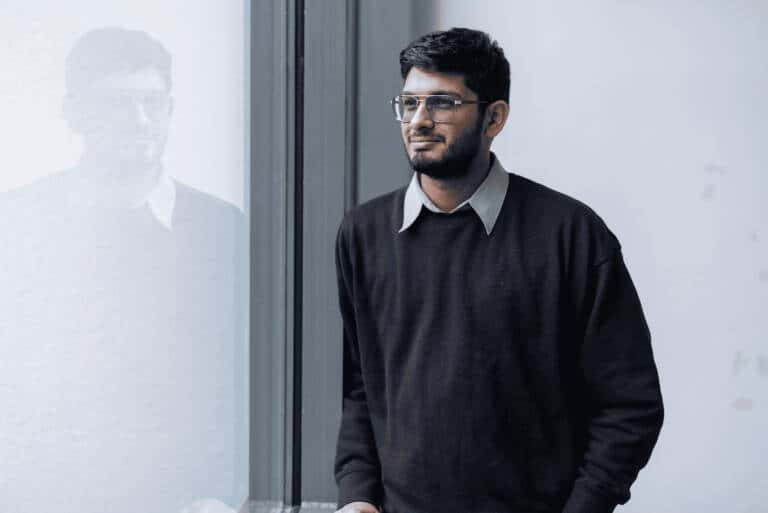

What Scholarship Recipients Say
Advice and insights from international students who successfully secured funding to study at Carl von Ossietzky University of Oldenburg.
"Later, I received a scholarship from the University of Oldenburg in Germany to study Renewable Energy, which aligns perfectly with my long-term goals. The scholarship supports international students and helps cover part of my living and educational expenses."
"Start early, research thoroughly, and apply to programs that align with your bachelor’s degree. Write a clear, focused motivation letter that shows your passion and goals. Highlight academic achievements, work experience, and community involvement. Also, having German language skills is always an added advantage, especially when applying to programs or scholarships in Germany."
"Currently, I’m pursuing my master's degree in Renewable Energy at the University of Oldenburg in Germany, with a focus on solar energy."
Frequently asked questions
Common questions about scholarships, admissions, and studying at Carl von Ossietzky University of Oldenburg.
Most University of Oldenburg scholarships are tied to being enrolled in a degree programme, rather than being “for online courses” specifically.
Both. Many programmes (especially at Bachelor level and state-exam tracks) are primarily in German, and the university requires German proficiency for German-speaking degree programmes. At the same time, Oldenburg offers a number of Master’s programmes taught entirely in English (for example, several “international degree programmes” list English as the programme language). In the recipient stories, Esayas Tekleweyni explains that Oldenburg accepted a Medium of Instruction (MOI) letter confirming his prior degree was taught in English, so he “was not required to take standardized tests like TOEFL, IELTS, GRE, or GMAT.”
For the Deutschlandstipendium at Oldenburg, the university explicitly states you can apply “regardless of age, nationality, or subject” as long as you meet the enrolment/standard study-time requirements. Other scholarship programmes listed by the International Office focus on academic progress, motivation, and (often) financial need rather than listing an age cap. Real applicant paths can be non-linear too: Esayas Tekleweyni describes graduating in 2019 and building work experience before his Master’s, showing scholarships can still be relevant beyond the “fresh graduate” stage.
Generally, scholarships are available across subjects rather than being limited to one department. Oldenburg states that the Deutschlandstipendium welcomes applications from students from “all six faculties,” and the university scholarship listings also include opportunities open to “students of all disciplines.” That means engineering and STEM (like renewable energy, microbiology, neuroscience), business (including business-related programmes), humanities and social sciences, and more can all be eligible, depending on the specific scholarship’s criteria. For medicine: Oldenburg offers a Medicine (State Examination) programme that is admission-restricted, and international applicants can apply (including non-EU/EEA via uni-assist), but they must meet the stated additional requirements such as proof of German language skills (and TestAS for some applicant groups).
It depends on the scholarship. The Deutschlandstipendium call at Oldenburg states enrolled students can apply “regardless of … nationality”. In Global Scholarships’ Oldenburg recipient stories, Esayas Tekleweyni (Ethiopian nationality) describes receiving a University of Oldenburg scholarship, illustrating that non-EU students can be supported too.
It’s programme-dependent. For German-taught programmes, Oldenburg generally requires German proof (the university FAQ mentions a level such as DSH 2 / TestDaF 4×4 for admission to specialised studies, with programme-specific variations). For English-taught programmes, German is often not required, but you may need to prove English proficiency according to the individual programme’s admission requirements. A useful real example is Esayas Tekleweyni, who says Oldenburg accepted a Medium of Instruction letter, so he “was not required to take standardized tests like TOEFL, IELTS, GRE, or GMAT.”
There isn’t one single “minimum grade” for all applicants. Requirements vary by degree programme, and some (like Medicine – State Examination) are explicitly admission-restricted. For scholarships, strong grades help but aren’t the only factor: Oldenburg’s Deutschlandstipendium guidance emphasises talent and performance (“good grades”) while also factoring in volunteering and special personal circumstances. In the recipient stories, Esayas Tekleweyni reports graduating with a GPA of “3.6 out of 4.0,” which is the kind of solid academic performance that typically supports both admission and scholarship competitiveness.
A competitive profile usually combines strong academics with clear fit and evidence you’ll use the opportunity well. Esayas Tekleweyni highlights a “strong academic background,” “three years of practical experience” in renewable energy, community involvement, and a clear motivation for sustainable energy solutions. On the university side, scholarship criteria commonly list academic achievement/progress and require a convincing motivation and reference support.
If you apply via uni-assist, Oldenburg’s uni-assist FAQ lists typical required documents such as your school-leaving certificate, transcripts/records from previous studies (if applicable), your university diploma(s) (if applicable), and proof of German language proficiency (exception: degree programmes taught in English). uni-assist also expects documents in the original language plus translations into German or English when required. Individual degree programmes can add further requirements (for example, proof of English for English-taught programmes), so always check the “Admission requirements” section of your specific programme page.
Document requirements vary by scholarship, but Oldenburg provides clear examples. For the Deutschlandstipendium, the university lists documents such as a CV, enrolment certificate, and grade transcript (plus prior degree documents for Master’s applicants and evidence for special circumstances if relevant). From the recipient side, Esayas Tekleweyni says he gathered “transcripts, motivation letter, and recommendation letters” and highlighted academic achievements and work experience.
If you apply through uni-assist, Oldenburg notes an application fee of EUR 75, and uni-assist explains that the handling fee is EUR 75 for the first chosen programme and EUR 30 for each additional programme in the same semester.
There are many degrees that are open to international students right now — find yours.
About the Author: Hyun Lee


Leave A Comment