
University of Passau Scholarships for International Students 2027
University of Passau is linked to scholarships that can reduce costs in meaningful ways. Here are a few strong options prioritized by funding level.
On the institution side, University of Passau is connected to scholarships that can reduce tuition and sometimes extend to other study costs. These are practical starting points. Free Tuition is usually considered full tuition, and typical coverage can include full tuition coverage.
Beyond campus funding, University of Passau applicants often explore outside opportunities including government backed and independent programs. These are common starting points. DAAD Scholarships is fully funded and typically covers €992 for master's and €1,300 for Ph.D. students, health insurance, and one-time research allowance. DAAD Helmut-Schmidt-Programme is commonly categorized as fully funded support, and coverage that often includes full tuition fee waiver, health insurance, and a monthly stipend of €934. With Heinrich Böll Foundation Scholarship Program, students may receive partially funded support, and coverage frequently includes monthly scholarship (€992 for master's and €1,500 for PhD), health insurance allowance (up to €100 per month for Master's and up to €200 per month for PhD), and tuition reimbursement in Germany of up to €10,000 per year and where applicable.
For the complete set of linked scholarships including additional options and details, continue below on this page.
University of Passau Scholarships for International Students
The scholarships at University of Passau can help fund your study expenses. There are currently 7 scholarships being offered to international students at the University of Passau, all with varying requirements, benefits, and application processes. We have compiled them in this list to help you find the scholarship that best fits you.
Undergraduate Scholarships
Graduate Scholarships
External Scholarships
There are many degrees that are open to international students right now — find yours.
University of Passau Admissions
Here are the official admission pages for University of Passau:
| Degree | Admissions Pages |
|---|---|
| Bachelor's | International Students Admissions Page |
| Master's | International Students Admissions Page |
University of Passau Application Deadlines
| Degree | Admission Deadline |
|---|---|
| Master's | July 31, 2026 |
Tuition Fees at University of Passau for International Students
Indicative annual tuition fee ranges for international students at University of Passau. Exact fees vary by program, so always confirm the current cost on the university's official tuition fee pages.
| Degree Level | Typical Annual Range |
|---|---|
| Bachelor's Tuition | Free |
| Master's Tuition | Free |
Please note that tuition fees can vary based on the specific program you choose. For the most accurate and current fee information, consult the official tuition fee pages linked above.
University of Passau Scholarship Recipients
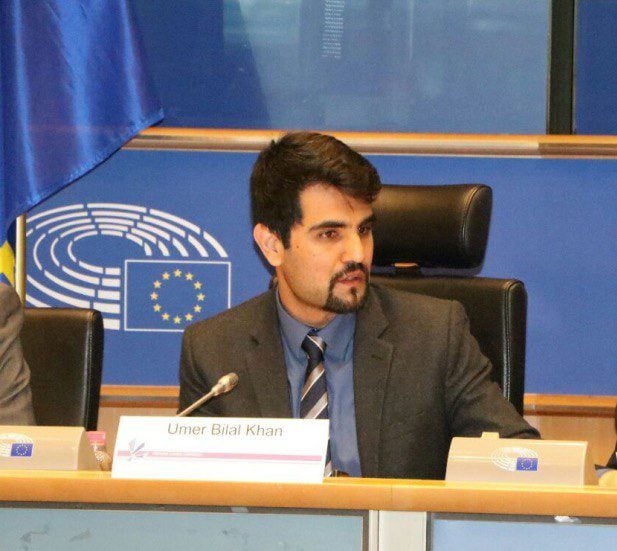
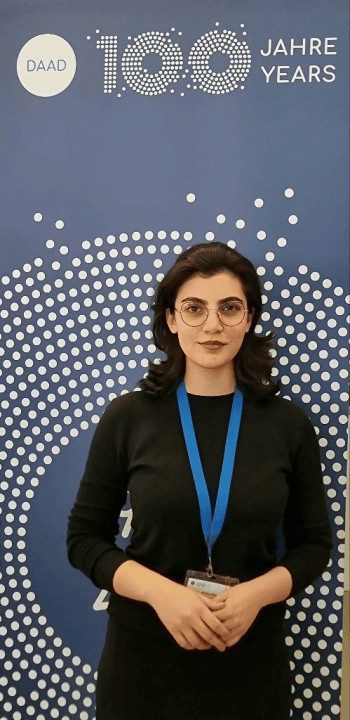
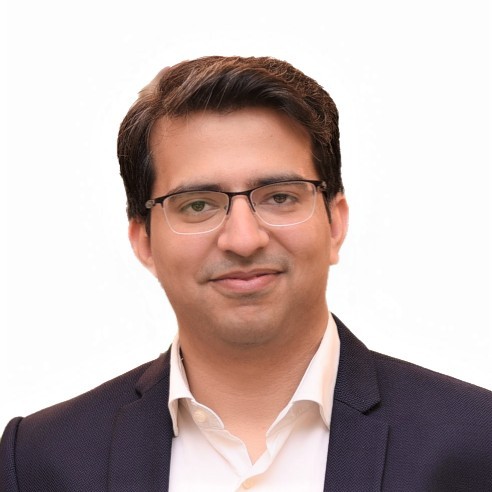
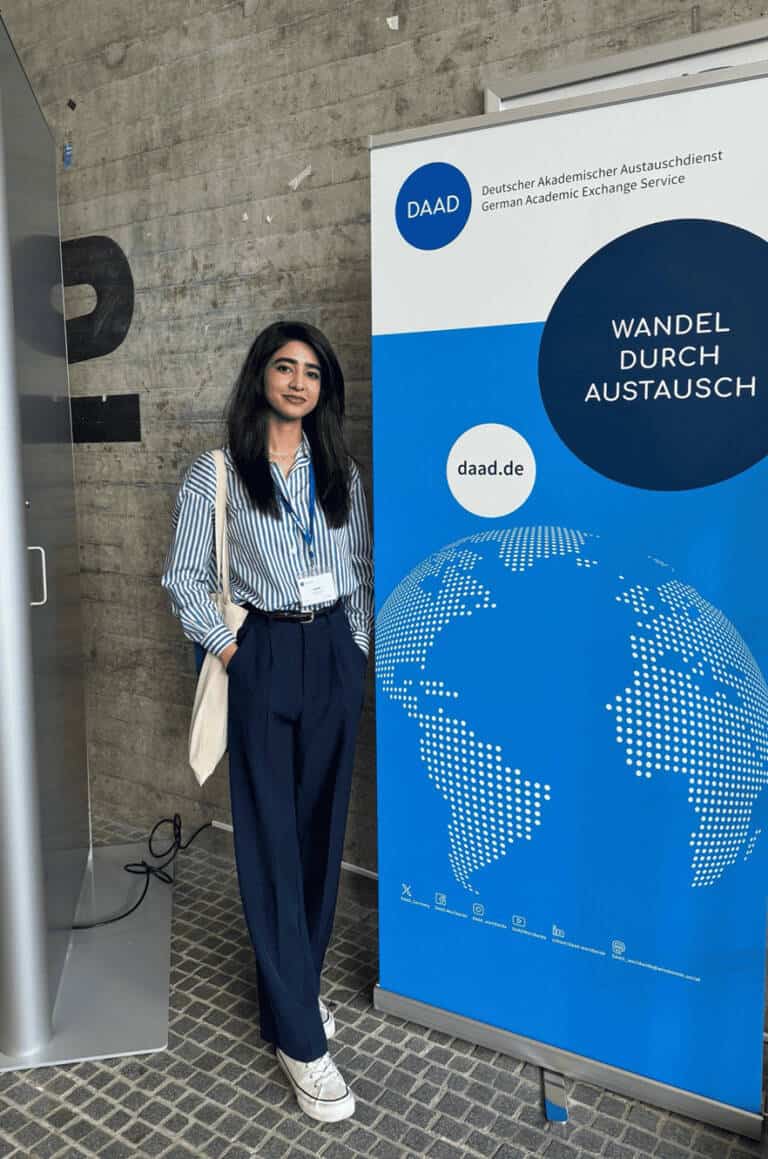
International students who received scholarships to study at University of Passau, documented by Global Scholarships.


What Scholarship Recipients Say
Advice and insights from international students who successfully secured funding to study at University of Passau.
"I was pleasantly surprised to learn that German public universities offer tuition-free education even to international students. In my case, I only paid a semester contribution of about EUR 86 per semester."
"My advice would be to craft your motivation letter carefully. Be honest about your goals, experiences, and aspirations, as authenticity is key to standing out."
"I am a DAAD Helmut Schmidt Scholar currently pursuing my Master's degree in Development Studies at the University of Passau, Germany."
"My experience at the University of Passau was very positive. The research-focused degree taught me valuable skills in academic writing and research methodology."
"The international atmosphere at the university, combined with the intimacy of a small town, made for a very grounded yet globally connected academic experience."
"My Master's experience at the University of Passau was truly exceptional."
Frequently asked questions
Common questions about scholarships, admissions, and studying at University of Passau.
Yes, there are a few distance-learning (online) degree options at the University of Passau (e.g., B.A. Catholic Theology (digital), LL.M. Legal Informatics, and some other programmes listed by the university), but the scholarships for online degrees are limited. Check with the latest guidelines for updated information.
Both, depending on the programme. The university’s degree overview shows many bachelor’s programmes are taught in German, while several master’s programmes are in English (and some are mixed German/English). In the scholarship-recipient stories, Christine Kigaga (M.A. Development Studies) said, “My Master’s program in Development Studies was fully taught in English,” and Hamza Ijaz (M.A. Governance and Public Policy) explained that “all core courses were offered in English” in his DAAD Helmut Schmidt track.
Even if your programme is taught in English, daily life can still require German. Christine also described struggling with a “language barrier” in day-to-day life in a smaller city.
It depends on the scholarship provider. University-linked options like the Deutschlandstipendium are described as supporting students “at all stages” of their degree studies, and the university’s general scholarship pages focus on merit/eligibility conditions rather than a single university-wide age cap. However, external scholarships can be age-restricted: in her story, Christine Kigaga noted that “many of the scholarships available were age-restricted,” and she didn’t qualify because she “was over 30.”
Scholarships at Passau are generally tied to being a student (and meeting the scholarship criteria), not limited to one subject, though some awards are subject-targeted (e.g., STEM-focused support for female students is listed by the university). Academically, Passau highlights fields like Law; Business and Economics; Teacher Education; Computer Science and Mathematics; Media, Cultures and Languages; and Society.
- Business: programmes include Business Administration (and related economics/business offerings), and scholarship recipients like Hamza Ijaz referenced interdisciplinary electives across faculties in an English-taught policy programme.
- STEM: the degree overview includes subjects such as Artificial Intelligence and Mathematics (English-taught at bachelor level) and an M.Sc. in Artificial Intelligence Engineering (English-taught at master level).
- Engineering: while Passau is not a traditional “engineering school” across many engineering branches, it does list engineering-oriented programmes like Artificial Intelligence Engineering (M.Sc.).
- Humanities & social sciences: many programmes sit in languages, cultural studies, communication, history, and society-related fields; scholarship stories at Passau prominently feature Development Studies and Governance/Public Policy (e.g., Aruba Irfan, Monika Ranabhat).
- Medicine: Passau’s published field list and degree overviews do not show a medicine/medical degree track. So scholarships “for medicine at Passau” are typically not applicable; international students aiming for medicine generally need to target medical universities and their specific admission rules.
It varies by funding source. The university explicitly states that the Deutschlandstipendium is available “to all students, regardless of citizenship.” Other options target specific groups (for example, some public support is limited to certain legal statuses, and BayBIDS is aimed at graduates of specific school networks). In the scholarship-recipient stories connected to Passau, you can also see a wide nationality spread—e.g., Christine Kigaga (Kenya), Aruba Irfan (Pakistan), and Monika Ranabhat (Nepal).
For DAAD Helmut Schmidt funding specifically, Aruba Irfan described it as being designed for “graduates from developing countries,” which means nationality (and/or country context) can matter a lot for external scholarships.
Often, yes, but it depends on the programme language and your background. For German-taught degrees, the university publishes programme-by-programme German language requirements and notes it only accepts language certificates issued within the past two years. For English-taught tracks, English proficiency is commonly required: Christine Kigaga said she “sat the IELTS” as part of applying, Monika Ranabhat reported IELTS with “high scores,” and Hamza Ijaz wrote that proof of English proficiency was required and he scored “118 out of 120” on TOEFL.
There isn’t one single university-wide “minimum GPA” that applies to all programmes; requirements vary by degree programme and applicant background (and some international applicants apply via uni-assist, which also provides grade conversion guidance). What you can take from the scholarship-recipient stories is that successful applicants came with different academic profiles: Christine Kigaga reported an undergraduate GPA of “2.4” on the European grading system, Aruba Irfan listed a “CGPA: 3.67,” Monika Ranabhat reported “GPA: 3.96/4.00,” and Hamza Ijaz listed “GPA: 3.11/4.0.”
Strong academics help, but so does fit and evidence of impact. The university describes the Deutschlandstipendium as supporting students who combine excellent educational performance with strong social commitment and having overcome hurdles in life/education. In the recipient stories, personal narrative and relevance mattered a lot: Aruba Irfan emphasized that “the motivation letter is the heart of your application,” while Hajrah linked her success to relevant climate/governance experience and highlighted the value of “the strong recommendation letter” she received from a supervisor.
Practically, the “best” background is the one that matches your programme (e.g., policy/development/social sciences for Governance & Public Policy or Development Studies; quantitative foundations for AI/CS/maths), and is backed by clear goals, good writing, and credible references.
It depends on your route (direct application vs. uni-assist) and programme level, but the university’s international-qualification guidance includes common core items such as: a passport identity-page copy, a chronological CV, certified copies of your university entrance qualification and academic transcripts/certificates (with certified translations into German or English if required), plus a certified copy of the required language certificate (German where applicable). For master’s programmes, additional evidence may be required depending on the programme (e.g., specific skills/criteria).
From the recipient stories, you can also see what this looks like in real life: Christine Kigaga described gathering “academic transcripts and certificates” and taking IELTS; Hamza Ijaz focused on TOEFL proof and a coherent motivation/story; and Aruba Irfan stressed the motivation letter as the part where “your story, goals, and passion come to life.”
For many international applicants, the main application-related cost is not a University of Passau fee but a uni-assist processing fee: the university notes uni-assist charges 75 euros for the first university application and 30 euros for each additional one. So, whether you pay an “application fee” depends on whether your application is handled via uni-assist. Check the latest guidelines for updated information.
There are many degrees that are open to international students right now — find yours.
About the Author: Hyun Lee


Leave A Comment