
DAAD Scholar Samuel Mensah from Ghana Shares His Journey of Securing a Fully Funded Master's at the Technische Universität Dresden, Germany
University: Technische Universität Dresden (TU Dresden)
Degree: MSc in Tropical Forestry
Previous Education: Bachelor’s in Integrated Development Studies (Natural Resources Management option), University for Development Studies
Scholarship: DAAD Scholarship – Full Funding (Tuition Fees, Monthly Living Stipend, Travel Allowance, Health Insurance, Study-Related Expenses)
Social Media
LinkedIn: linkedin.com/in/samuel-mensah-35ba0b1a1/
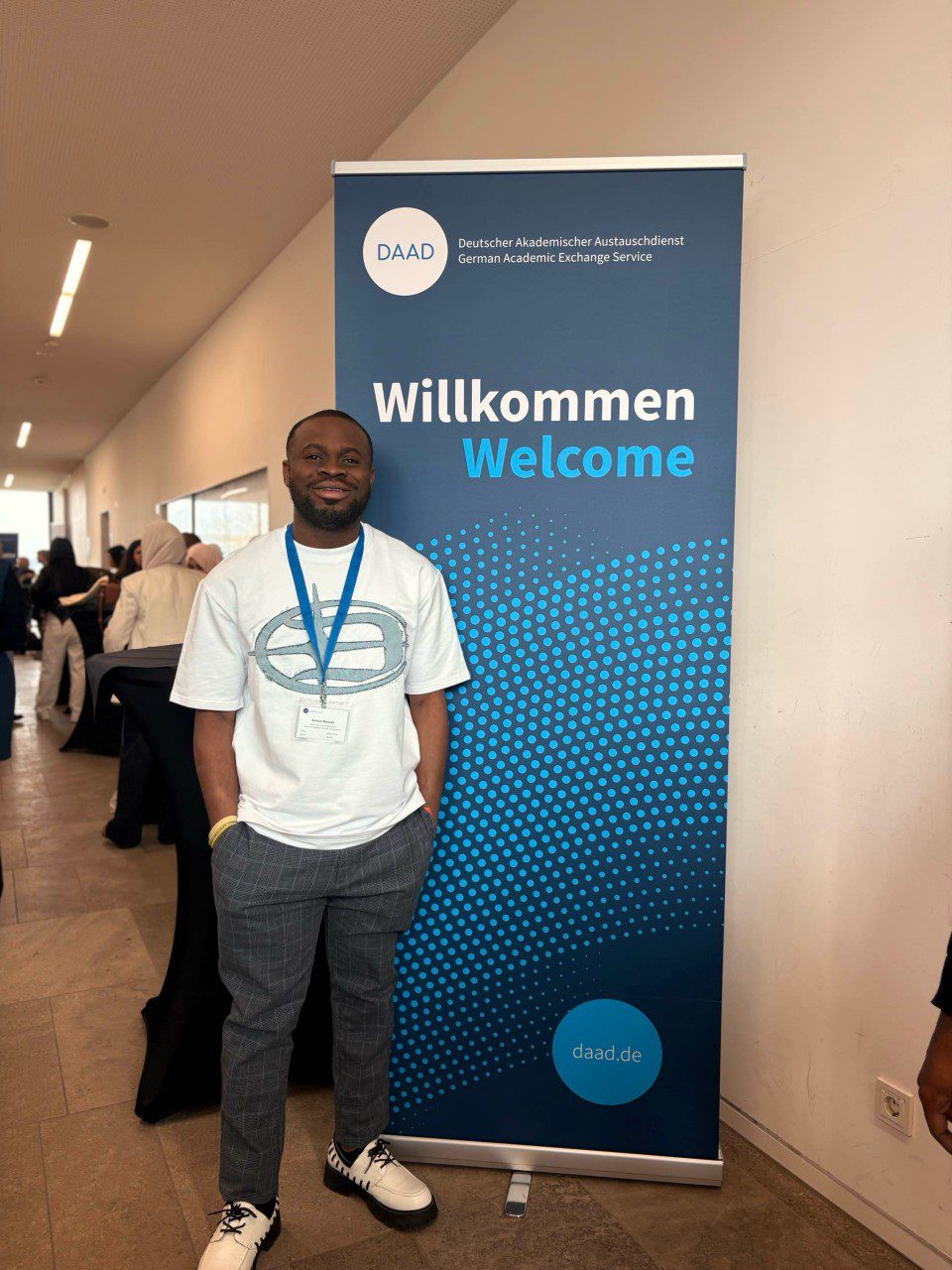
The Journey
My name is Samuel Mensah. I am a Forest Range Manager from Ghana, currently based in Dresden, Germany, where I am pursuing an MSc in Tropical Forestry at Technische Universität Dresden (TU Dresden). I come from the Ashanti Region of Ghana, where I have spent most of my professional career working with the Forestry Commission of Ghana, specifically in the Nkawie Forest District.
My decision to pursue graduate education in tropical forestry was driven by a deep sense of obligation to Ghana's forest landscape and the Forestry Commission of Ghana's focus on sustainability, a landscape I have watched face increasing pressure from illegal mining (galamsey), illegal chainsawing, agricultural encroachment, and weak governance systems. I believe that sound, evidence-based forest management is critical to Ghana's environmental future, and I wanted to gain the scientific and policy expertise to contribute meaningfully to that goal. TU Dresden's globally recognised programme in tropical forestry, combined with Germany's strong tradition of forest science and sustainable forest management in Tharandt, made it the ideal destination for this next step.
DAAD Scholarship Details
Scholarship Name: DAAD Scholarship (Deutscher Akademischer Austauschdienst / German Academic Exchange Service)
Institution: Technische Universität Dresden (TU Dresden), Dresden, Germany
Programme: MSc in Tropical Forestry
The DAAD scholarship covers tuition fees, a monthly living stipend, travel allowance, health insurance, and other study-related expenses, providing comprehensive support for international students pursuing postgraduate education in Germany.
Were You Offered Any Other Scholarships?
The DAAD scholarship was the primary award I pursued and received for this programme. However, I would encourage prospective applicants to also explore the Deutschlandstipendium offered directly by German universities, as well as Erasmus+ partnerships, which may be available depending on your home institution's agreements.
Educational Background
I hold a Bachelor's degree in Integrated Development Studies (Natural Resources Management option) from a Ghanaian university (University of Development Studies), which provided me with a strong grounding in forest ecology, land use planning, and resource governance. My undergraduate studies introduced me to core concepts in forest governance, forest inventory, and environmental policy, all of which were directly relevant to the graduate application.
Prior to my MSc, I also completed several professional certificates, including programmes from Yale University, the University of Florida, and the University of Leiden, focused on forest conservation, sustainability, and environmental governance. These supplementary qualifications helped demonstrate both my commitment to continuous learning and my readiness for advanced academic work.
Professionally, I bring over several years of experience as a Forest Range Manager with the Forestry Commission of Ghana, including regional timber compliance monitoring across multiple districts in the Ashanti Region. This practical field experience, in my opinion, think it was an important differentiator in my application; it showed that my interest in the field went beyond the academic.
How Did You Prepare to Apply to TU Dresden?
I spent a significant amount of time researching which programmes would align with my professional background and research interests. I was particularly interested in programmes that combined tropical ecology with forest governance and policy, not just pure ecology. TU Dresden's MSc in Tropical Forestry stood out because of its interdisciplinary orientation and its strong links to sustainable forest development contexts in the Global South.
I reviewed the faculty profiles of potential supervisors, read recent publications from the department, and ensured that my statement of purpose clearly articulated how my experience in Ghana's forestry sector connected to the programme's research agenda. I also reached out to former DAAD scholars and TU Dresden alumni through online networks to get a clearer picture of the application expectations and life at the university.
How Did You Find Information About the DAAD Scholarships and TU Dresden?
The DAAD website (daad.de) was my primary resource; it provides a comprehensive scholarship database that allows you to filter by country, field of study, degree level, and nationality. I also found the DAAD office in Ghana very helpful; they offer in-country advising and can guide you through the documentation requirements.
Most importantly, with the help of a friend, we did a lot of research, gathered numerous pieces of information about the program in order to deliver or send a strong application.
Did You Take Any Standardised Tests? If So, How Did You Prepare?
I did not take the GRE, as it was not required by TU Dresden's programme. I would advise prospective applicants to carefully check the specific requirements of their target institutions; many European universities do not require GRE scores.
How Did You Prepare to Apply to the DAAD Scholarship?
The DAAD application requires a strong motivation letter, a detailed study plan, academic transcripts, proof of language proficiency, letters of recommendation, and a CV. I started preparing my documents several months in advance of the deadline.
My motivation letter was the element I invested the most effort in. I worked through multiple drafts, ensuring it told a coherent story connecting my upbringing in Ghana, my professional work in the Nkawie Forest District, my NGO work through the Sanitation and Environmental Band (SEB), and my specific research ambitions for the MSc. I was careful not to be generic; DAAD reviewers read thousands of applications, so it was important to be specific about why Germany, why TU Dresden, and why now.
For letters of recommendation, I approached supervisors and colleagues who could speak directly to my technical competence and professional character — not just academics who knew me from coursework. Having referees who could comment on real-world forestry practice made a difference.
How Is Your Experience at TU Dresden?
My experience at TU Dresden has been intellectually stimulating and personally rewarding. The programme attracts students from across the tropics: Southeast Asia, Latin America, and Africa, which creates a genuinely global learning environment. The faculty are highly research-active, and there is a strong emphasis on field-based and applied learning alongside theoretical coursework.
Dresden itself is a beautiful and liveable city. It is smaller than Berlin or Munich, which I actually enjoyed living here, as it makes it easier to focus on studies. The cost of living is relatively manageable by German standards, and the public transport system is excellent.
How Do You Rate TU Dresden Academically?
I would rate TU Dresden's Tropical Forestry programme very highly. The curriculum is rigorous and up-to-date. Fortunately, and luckily for us, we became the first pioneers of a new curriculum introduced over a long time. And I must say this new curriculum is wonderful and highly commendable because of how it combines rigorous fieldwork, excursions, and theoretical outcomes.
How Does TU Dresden Support International Students?
TU Dresden has a dedicated International Office (Akademisches Auslandsamt) that provides orientation, advising, and support services for international students. There are also student buddy programmes that pair new international students with experienced peers, which helps ease the transition both academically and socially. The DAAD itself also provides in-country support through its alumni networks and scholarship holder events throughout Germany.
Is the Programme Free? What Are the Semester Fees?
The MSc in Tropical Forestry at TU Dresden does not charge tuition fees in the traditional sense. However, like all German public universities, there is a semester contribution (Semesterbeitrag) of approximately €300–€350 per semester, which covers administrative costs, public transport within Saxony, and access to student services. This is not covered as part of the DAAD scholarship package, so as a scholarship holder, I paid this out of my DAAD stipend every semester.
Are Classes Conducted in English or German?
The MSc in Tropical Forestry at TU Dresden is conducted entirely in English. This makes it very accessible for international students from Anglophone countries like Ghana. That said, I would strongly recommend learning at least basic German before arriving, as it makes daily life significantly easier and demonstrates respect for the host culture. TU Dresden and the DAAD offer language courses specifically for scholarship holders.
Would Not Knowing German Cause Academic Problems?
For the MSc in Tropical Forestry specifically, all lectures, seminars, and assessments are in English. However, outside the classroom, limited German can create some friction: navigating administrative processes, dealing with landlords, or simply shopping can be more challenging. I would encourage anyone considering studying in Germany to invest in language preparation before departure. Even a basic level of German goes a long way in day-to-day life and builds goodwill with locals.
What Did You Pursue After the Scholarship?
I am currently still in the process of completing my MSc. My thesis focuses on reclaiming mining-degraded forest reserves in Ghana's Nkawie Forest District, combining remote sensing analysis (using Sentinel-2 imagery and NDVI), field ecology, and institutional analysis of reclamation governance. I intend to return to Ghana upon completion, where I plan to apply the research insights to on-the-ground restoration work and continue contributing to forestry policy, particularly around the FLEGT VPA framework and the emerging EU Deforestation Regulation (EUDR). I also have a longer-term interest in pursuing doctoral research in forest governance.
What Do You Think Made Your Application Stand Out?
I believe several things differentiated my application. First, specificity: I did not write a generic motivation letter. I was specific about my work in Ghana, my role in timber compliance monitoring, my NGO (SEB), and the exact research questions I wanted to explore at TU Dresden.
Second, professional depth: most applicants at my stage are recent graduates. Having several years of field experience with the Forestry Commission — including work on real enforcement and compliance challenges gave my application a grounded, applied quality that I think resonated with reviewers.
Third, alignment: I took time to understand TU Dresden's research agenda and made sure my application clearly articulated how my goals connected to the work happening there. I was not just applying to 'study forestry' — I was applying to tackle a specific problem (post-mining forest restoration) with a specific institutional partner.
What Would You Have Done Differently?
I would have started the application process earlier. Gathering transcripts, securing recommendation letters, and preparing a strong study plan all take more time than you expect. I would also have engaged more systematically with DAAD alumni from my country before applying; hearing first-hand experiences would have sharpened my own application strategy.
I would also encourage future applicants to apply to multiple scholarships simultaneously. While DAAD was my primary focus, diversifying applications reduces risk and increases your chances of success.
What Advice Would You Give to Future Applicants?
First, know your 'why'. A scholarship application is ultimately a story reviewers want to understand why you, why this programme, why this moment. The clearer and more genuine your narrative, the stronger your application will be.
Second, use your professional experience as an asset. If you have field or policy experience, do not underplay it. Many applicants lean heavily on academic credentials; real-world context and motivation are powerful differentiators.
Third, seek feedback. Ask professors, mentors, or former scholarship recipients to review your motivation letter and study plan. External perspectives reveal blind spots you cannot see in yourself.
Fourth, be patient and persistent. Scholarship applications are competitive, and rejection is part of the process. If you are not successful the first time, treat it as a learning experience and apply again with a stronger application.
Finally, think beyond the degree. The scholarship is not just about getting a qualification — it is an opportunity to build an international network, deepen your expertise, and position yourself to make a genuine contribution to your field when you return home. Keep that long-term vision in mind throughout the process.
Want to submit your
scholarship journey?
Submit Your Story Here!
More Scholarship Recipients

My name is Humayun Nosheerwan. I am a Chevening Scholar, social entrepreneur, artist, higher education professional, and Fou .... Read more
I'm Hossam Hamdy, an Egyptian from Cairo, now based in Dubai, where I work in venture capital. My career sits at the interse .... Read more
My name is Ahmad Shoeb Hashmi, and I am a dentist from India currently pursuing a dual-degree Master of Public Health (MPH) .... Read more
Leave A Comment