
DAAD Scholar Maaz Iqbal from Pakistan Shares His Journey of Securing a Fully Funded PhD at the Heinrich Heine University Düsseldorf, Germany
University: Heinrich Heine University Düsseldorf
Degree: PhD in Medical Sciences
Previous Education: Bachelor’s in Biotechnology and Genetic Engineering, Institute of Biotechnology and Genetic Engineering (IBGE), University of Agriculture Peshawar; Master’s in Biotechnology and Genetic Engineering, Institute of Biotechnology and Genetic Engineering (IBGE), University of Agriculture Peshawar
Scholarship: DAAD Scholarship – Funding (€1,400 per month, Full Health Insurance Coverage)
Social Media
LinkedIn: linkedin.com/in/maaz-iqbal-5b292a1b6/
The Journey
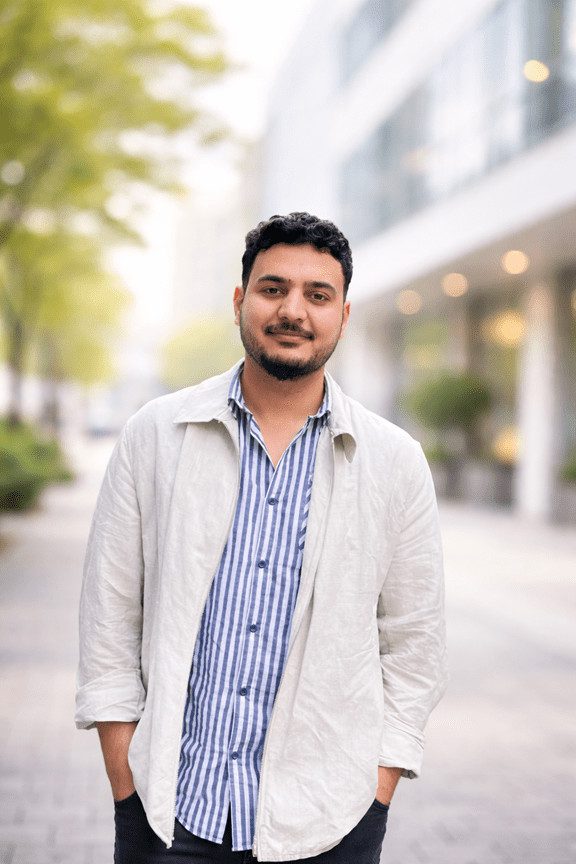
My name is Maaz Iqbal, and I am from Peshawar, Pakistan. I completed both my bachelor’s and master’s degrees in biotechnology and Genetic Engineering from the Institute of Biotechnology and Genetic Engineering (IBGE), University of Agriculture, Peshawar.
DAAD Scholarship Details
- Scholarship Name: DAAD Scholarship
- Institution: Heinrich Heine University Düsseldorf
- Program: PhD in Medical Sciences
- Funding: €1400 per month + full health insurance coverage
Educational Background
I completed both my bachelor’s and master’s degree in biotechnology and Genetic Engineering from IBGE, University of Agriculture Peshawar.
Bachelor’s Degree:
- GPA: 3.79/4.00
- Achievement: Silver Medalist (University Level)
Master’s Degree:
- GPA: 4.00/4.00
- Achievement: Gold Medalist
My academic background played a crucial role in preparing me for my current field. Although my degrees were broadly focused on biotechnology, I gradually developed a strong inclination toward computational biology and vaccine design.
Over time, I realized that I wanted to transition into more translational medical research, which ultimately motivated me to pursue a PhD in Medical Sciences.
How Did You Find Information About DAAD Scholarship and Heinrich Heine University Düsseldorf?
I became aware of several international scholarships early in my bachelor’s degree through word of mouth, including MEXT, King Abdullah, Khalifa University, Chevening, Erasmus Mundus, and, of course, DAAD.
I applied to some of these scholarships over time with limited success initially, but the process itself played a major role in strengthening my profile.
Did You Take Any Standardized Tests? If So, How Did You Prepare for Them?
Yes, I took the IELTS exam and achieved an overall band score of 8.
My primary preparation resource was The Official Cambridge Guide to IELTS for Academic and General Training, which I highly recommend.
How Did You Prepare to Apply for the DAAD Scholarship?
I believe applying early and repeatedly was one of the most important factors in my success. Even when I knew my chances were low, I continued applying.
This helped me:
- Understand the application process
- Identify weaknesses in my profile
- Gradually improve each component year by year
With time, I became a much stronger candidate.
Preparation was continuous; it was always in the back of my mind, and I consistently worked on improving my profile.
Another key aspect is carefully studying scholarship instructions. Applications can be rejected simply due to formatting issues or failure to meet specific requirements. Taking the time to thoroughly read and follow instructions is essential.
How is Your Experience at Heinrich Heine University Düsseldorf?
My experience has been excellent. The environment is highly international, collaborative, and research-oriented.
How Do You Rate Heinrich Heine University Düsseldorf Academically?
Academically, the institution is outstanding. It promotes integrative and translational research. Since I work in the university clinic, I have direct exposure to real-world medical applications, which significantly enhances my research experience.
How Does Heinrich Heine University Düsseldorf Support International Students?
The university has dedicated support systems for international students. They actively engage students through structured programs, workshops, and credit-based academic work, making the experience both supportive and enriching.
Are Your Classes Conducted in English or German?
While my program is primarily research-focused, workshops and academic activities are offered in both English and German, depending on preference and requirements.
Would Potential Students Have Any Problems Not Knowing German?
Not necessarily. Academically, English is sufficient. However, learning German is highly recommended, as it enhances social integration and opens up additional academic and career opportunities.
What Do You Think Made Your Application Stand Out?
I believe my strong academic record, a research proposal targeting high-value objectives, and relevant research and professional experience helped strengthen my overall profile. Academic excellence and experience are key factors that position you among competitive candidates.
That said, I believe my motivation letter added a unique dimension to my application. It was genuine, expressive, and clearly reflected my motivations. I invested significant amounts of time and thought into writing it, which helped differentiate my application.
What Would You Have Done Differently if You Were Going Through the Process Again?
Since I was successful in my application, it is difficult to say what I would change. Overall, I am satisfied with the approach I took.
What Advice Would You Give Those Looking to Apply for a Similar Scholarship?
Don’t prepare for a scholarship; prepare to become the type of candidate that a scholarship cannot ignore. Treat your development as a long-term project. Start with the fundamentals; strong academic performance is the most obvious and essential foundation. Once that is established, you can begin building on it through practical research experience, internships, and relevant academic exposure.
Extra tip: An additional advantage is learning how to identify research gaps within a specific field and developing the ability to draft a research proposal, even at a basic level. This allows you to demonstrate substance and direction when approaching a potential supervisor.
Finally, start reaching out to potential supervisors well before the application process begins. Many of us hesitate to send emails, but that is precisely why you should start early. It builds confidence, helps you overcome that initial barrier, and teaches you how to communicate effectively with professors in an academic setting.
Want to submit your
scholarship journey?
Submit Your Story Here!
More Scholarship Recipients
My name is Anna Nana Agyeiwaa Mensah, a professional nurse from Ghana. My interest in Global Health grew out of my experienc .... Read more
My name is Ratul Chakraborty, and I am from Bangladesh. My background is interdisciplinary, actually. Before coming to Germa .... Read more
My name is Mabel Zuñiga. I am a graduate student from Panama pursuing a Master’s degree in Public Policy at the Universit .... Read more
Leave A Comment