
DAAD Helmut-Schmidt Scholarship Scholar Ariba Khan Waheed from Pakistan Shares Her Journey of Securing a Fully Funded Master's at the Hochschule Bonn-Rhein-Sieg, Germany
University: Hochschule Bonn-Rhein-Sieg (H-BRS)
Degree: Master’s in Social Protection
Previous Education: Bachelor’s in Public Administration and Governance, National University of Modern Languages (NUML)
Scholarship: DAAD Helmut-Schmidt Scholarship for Public Policy and Good Governance (Helmut-Schmidt-Programm) – Full Funding (Monthly Stipend of €992, Rent Subsidy, Health Insurance, Travel Allowance, Study and Research Allowance, German Language Course)
Social Media
LinkedIn: linkedin.com/in/aribakhanwaheed/
The Journey
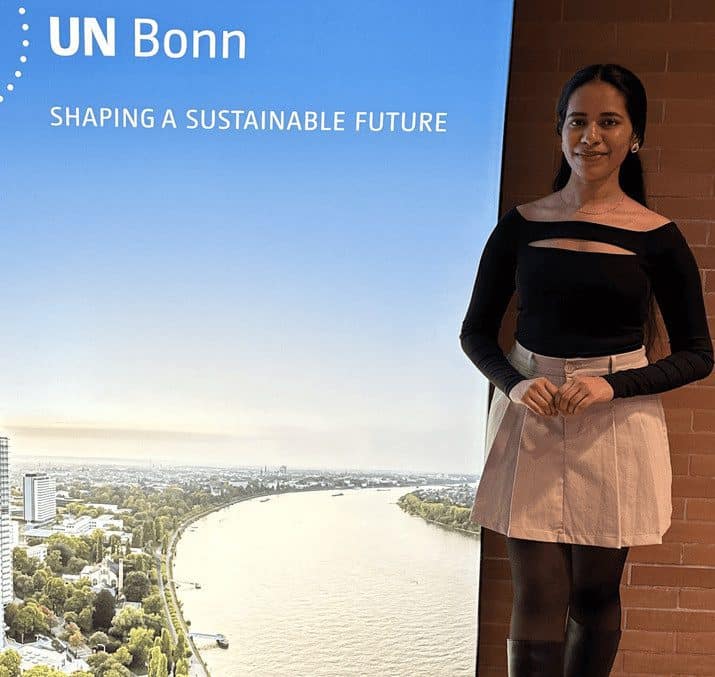
My name is Ariba Khan Waheed and I am from Peshawar, Pakistan. I am currently pursuing my Master's degree in Social Protection at Hochschule Bonn-Rhein-Sieg (H-BRS) in Germany as a DAAD Helmut-Schmidt Scholar.
I would not say that I chose this degree , this degree chose me. I completed my Bachelor's in Public Administration and Governance from the National University of Modern Languages (NUML) in Islamabad, graduating with a CGPA of 3.92 out of 4.00 , the second highest in my cohort. My major in Development Studies introduced me to the intersection of governance, public policy, and social welfare, and I knew from that point on that I wanted to go deeper. But I also knew that the kind of education I was looking for , one that was interdisciplinary, applied, and globally oriented, would require me to step beyond the borders of Pakistan. My vision was clear: I wanted to study abroad, and I wanted to do it on a scholarship. Not because I had to, but because earning a scholarship would validate the years of effort I had put in. I had heard about DAAD scholarships for years but always assumed they required extensive professional experience. It was only when I actually sat down and read the eligibility criteria carefully that I realised I was already qualified and that the only thing standing between me and Germany was a strong application.
DAAD Helmut-Schmidt Scholarship for Public Policy and Good Governance Details
I am a recipient of the DAAD Helmut-Schmidt Scholarship for Public Policy and Good Governance (Helmut-Schmidt-Programm). This scholarship is funded by the German Academic Exchange Service (DAAD) and the German Federal Foreign Office. It provides a monthly stipend of €992, a rent subsidy where applicable, health insurance, travel allowance, and a study and research allowance. DAAD also covers the cost of a German language course before the programme begins, which helped me start building my German skills even before arriving in the country. Beyond the financial support, what makes this scholarship truly special is the network it creates, you become part of a community of scholars from across the Global South who are all working on governance, public policy, and social development in their respective regions.
Educational Background
My Bachelor's in Public Administration and Governance gave me a strong foundation in how governments function, how policies are designed, and how institutions serve or fail to serve their citizens. With a major in Development Studies, I was exposed to topics like poverty alleviation, governance reform, gender equality, and international development cooperation. These topics became the building blocks for my Master's in Social Protection.
What truly set me apart, however, was what I did beyond the classroom. During my Bachelor's, I worked as a Research Associate at TADVEEN, an organisation linked to the National Assembly of Pakistan. There, I authored five policy briefs on gender responsive legislation, one of which was formally presented to the Parliamentary Standing Committee. That experience taught me how research translates into real policy change, and it became one of the strongest elements of my scholarship application.
My academic performance, graduating with a 3.92 CGPA as the second highest in my cohort, showed the selection committee that I had the discipline and intellectual rigour to succeed in a demanding international programme. But I believe it was the combination of strong grades, motivation and meaningful work experience that truly made my profile stand out.
How Did You Prepare to Apply to Hochschule Bonn-Rhein-Sieg (H-BRS)?
Preparation was everything. I did not rush into the application. I gave myself months to get it right.
Before I even started writing my application, I made sure all my documents were ready: attested degrees, transcripts, a CV in Europass format, experience letters, and recommendation letters. I kept a written record of everything I had done during my Bachelor's, every project, every volunteer role, every workshop. This sounds tedious, but when you sit down to write a motivation letter, having a detailed inventory of your achievements makes the process so much smoother.
I also had a small group of friends who were applying for scholarships at the same time. We used to review each other's documents, share information about deadlines, and keep each other motivated. There is something powerful about going through the process with people who understand the pressure you are under.
How Did You Find Information About DAAD Helmut-Schmidt Scholarship for Public Policy and Good Governance and Hochschule Bonn-Rhein-Sieg (H-BRS)?
There is always someone you look up to, and in my case, that person was my sister. She is a recipient of the Erasmus Mundus Scholarship, and she paved the path for me in ways I cannot fully express in words. She was the one who first told me that studying in Europe on a full scholarship was not a dream reserved for a lucky few. It was achievable with the right preparation and persistence.
Beyond her guidance, I spent countless hours doing my own research. I used to follow websites like Opportunities Circle and Scholarships Corner religiously, checking for new postings almost every day. I also joined Facebook groups dedicated to scholarships and study abroad opportunities, where students would share deadlines, tips, and their own experiences. LinkedIn was another game changer for me. I used it to connect with scholarship alumni, read about their journeys, and sometimes reached out to them directly for advice.
I remember those days vividly. I was still doing my Bachelor's and giving private tuitions in Pakistan and to students abroad to support myself financially. I used to finish late at night, and instead of resting, I would sit at my laptop for hours, reading scholarship websites, reaching out to alumni, asking them for tips, getting my CV reviewed, and seeking career guidance from anyone willing to help. It was exhausting, but I was driven by something deeper than ambition. I genuinely wanted to build a career that would allow me to contribute to social change, and I knew that this scholarship was my gateway.
The key lesson I learned: information is everywhere, but you have to actively seek it. Nobody is going to hand you a scholarship on a plate. You have to read, research, ask, and then read some more.
Did You Take Any Standardized Tests? If So, How Did You Prepare for Them?
Yes, I took the IELTS exam and scored 7.5 overall.
Since my path was clear early on, I started preparing right before graduating in August 2022. I could not afford expensive coaching centres, so I studied entirely on my own using YouTube channels and official IELTS practice books. I did mock tests consistently for about two months, timing myself under real exam conditions. For the writing section, which is often the trickiest part, I used to write practice essays and have my sister check them. She was brutally honest with her feedback, which is exactly what I needed.
When I felt genuinely ready, I sat the test in October 2022 and got my 7.5. My advice to anyone preparing for IELTS: do not spend money on expensive courses. The resources available for free online are more than enough. What you need is discipline, consistent practice, and someone honest enough to tell you where you are going wrong.
How Did You Prepare to Apply for the DAAD Helmut-Schmidt Scholarship for Public Policy and Good Governance?
The DAAD Helmut-Schmidt Scholarship application was not something I put together overnight. I treated it like a project, one that required careful planning, multiple drafts, and a lot of honest self reflection.
The first thing I did was read the programme description from top to bottom, multiple times. I wanted to understand exactly what H-BRS was looking for in a candidate, what the programme aimed to achieve, and what kind of professionals it wanted to produce. Only after I had a thorough understanding of the programme did I start writing my motivation letter.
The motivation letter alone took me several weeks. I went through at least five or six drafts. Each time, I would write, step away from it for a few days, come back with fresh eyes, and rewrite. My sister, who had gone through the Erasmus Mundus application process herself, was my primary reviewer. She would read each draft and tell me exactly where it was weak, where it was vague, and where it needed more substance. It was not always easy to hear, but that level of honest feedback is what made the final version strong.
The key to my motivation letter was alignment. I did not write about myself in isolation. Every experience I mentioned, every goal I described, I connected directly to the programme. My work at the National Assembly of Pakistan, my policy briefs on gender responsive legislation, my Bachelor's in Public Administration, everything was woven together to tell one coherent story: that I was someone who had already been doing social protection work on the ground and now needed the academic framework to take it further.
The selection process also included an interview, which I prepared for thoroughly. I revisited my motivation letter, anticipated questions about my career goals and how the programme would help me achieve them, and practiced articulating my thoughts clearly and confidently. The interview felt less like an interrogation and more like a conversation, but I believe my preparation is what made it feel that way. When you know your own story inside and out, you can tell it with conviction.
One piece of advice I would give to anyone preparing for a scholarship interview: do not memorize scripted answers. Instead, understand your own journey so deeply that no matter what question they ask, you can respond authentically. The panel can tell the difference between someone reciting a rehearsed answer and someone speaking from genuine experience.
How is Your Experience at Hochschule Bonn-Rhein-Sieg (H-BRS)?
My experience at H-BRS has been overwhelmingly positive, and I say that not as a formality but because it genuinely changed the trajectory of my life.
The programme itself is well structured and incredibly relevant. The modules are designed to give you both a theoretical foundation and practical skills in social protection. You study everything from social security systems and health policy to qualitative and quantitative research methods.
What I appreciated most was the diversity of the cohort. My classmates come from countries across Africa, Asia, Latin America, and Europe. Every classroom discussion feels like a mini United Nations session. You do not just learn from textbooks, you learn from each other's lived experiences. When someone from Kenya shares how social protection works in their context and someone from Brazil shares a completely different model, you begin to understand that there is no one size fits all approach to social policy. That perspective is something no textbook can teach you.
Are Your Classes Conducted in English or German?
English
What Did You Pursue After the DAAD Helmut-Schmidt Scholarship for Public Policy and Good Governance?
I am still completing my Master's thesis, which examines access to basic health services for conflict affected internally displaced children under five in Cameroon, a topic that combines my interest in social protection, child rights, and humanitarian governance.
During my studies, I was able to complete two prestigious internships that shaped my professional trajectory. At the United Nations Research Institute for Social Development (UNRISD) in Bonn, I coordinated high profile international events including UN Bonn Day, a three day course on Feminist Foreign Policy Development with over 40 participants from academia, NGOs, and government ministries, and I independently led the organisation of World Social Work Day. At Kindernothilfe (KNH) in Duisburg, one of Germany's leading child rights organisations, I worked in quality development, compiling and analysing partner data on teenage pregnancies and child marriage, and creating knowledge products used in staff trainings across the organisation.
These internships taught me something no classroom ever could: that the gap between policy research and real world impact is smaller than we think, but only if you are willing to do the unglamorous work of coordination, data analysis, and relationship building
Would Potential Students Have Any Problems Not Knowing German?
Academically, no. The programme is fully in English and the university provides excellent support for international students.
Socially, however, it is a different story. In Bonn and the surrounding areas, many everyday interactions, at the supermarket, the doctor's office, the Ausländerbehörde (immigration office), or even with landlords, happen in German. Not speaking the language can make you feel isolated, and that loneliness can creep up on you quietly if you are not prepared for it. My advice: start learning German before you arrive. Even basic conversational skills will make a huge difference in how quickly you settle in and how connected you feel to the country you now call home.
What Do You Think Made Your Application Stand Out?
Two things, I believe.
First, my work experience at the National Assembly of Pakistan. Most applicants at the Master's level have internships or volunteer experience, but very few can say they authored policy briefs that were formally presented to a parliamentary committee. That experience showed the selection committee that I was not just academically strong. I had already been doing the kind of work the scholarship aims to support.
Second, my ability to align my application with the programme requirements. I did not write a generic motivation letter. I read every single line of the programme description, understood what H-BRS was looking for, and then connected my background, my goals, and my experiences to those specific requirements. Every sentence in my application had a purpose. The selection committee does not want to read about your life story. They want to understand why you, why this programme, and why now.
Looking Back, Would You Have Done Anything Differently During Your Time in the Program?
Honestly, I have no regrets. I invested an enormous amount of time and energy into this process, and it paid off. If there is one thing I did right, it was keeping my circle of advice small. I relied primarily on my sister's guidance. She had been through the process herself and knew exactly what worked and what did not. As the saying goes, too many cooks spoil the broth. When you take advice from too many people, you end up with a confused application that tries to please everyone and impresses no one.
What Advice Would You Give Those Looking to Apply for a Similar Scholarship?
I would say five things.
First, do not reach out to scholarship recipients without reading the requirements yourself. I receive messages almost every week from students asking me questions that are answered on the first page of the DAAD website. When you ask someone a question you could have answered with a simple Google search, you are not showing initiative. You are showing laziness. Do your homework first, and then ask specific, thoughtful questions.
Second, have an inner drive. People can guide you, share their experiences, and point you in the right direction, but they will not write your application for you. I mentor many students, and the ones who succeed are not necessarily the ones with the highest grades. They are the ones with genuine passion, and that passion is visible in every line of their application.
Third, give yourself enough time. Do not start your application two weeks before the deadline. I spent months preparing mine, drafting, editing, getting feedback, rewriting, and editing again. A rushed application reads like a rushed application, and the selection committee can tell the difference.
Fourth, read every single line of the requirements. Not just the eligibility criteria. Read the programme description, the course modules, the faculty profiles, the alumni stories. The more you understand what the programme is about, the better you can tailor your application to show that you belong there.
And finally, believe that you deserve it. Imposter syndrome is real. If it happened to me. It can happen to you, but only if you put in the work.
Want to submit your
scholarship journey?
Submit Your Story Here!
More Scholarship Recipients
My name is Anna Nana Agyeiwaa Mensah, a professional nurse from Ghana. My interest in Global Health grew out of my experienc .... Read more
My name is Ratul Chakraborty, and I am from Bangladesh. My background is interdisciplinary, actually. Before coming to Germa .... Read more
My name is Mabel Zuñiga. I am a graduate student from Panama pursuing a Master’s degree in Public Policy at the Universit .... Read more
Leave A Comment