
RMIT University Scholarships for International Students 2027
Students considering RMIT University can explore scholarships that range from fully funded support to partial awards. This shortlist highlights higher coverage options first.
For institution funded support at RMIT University, these scholarships are frequently highlighted when prioritizing higher coverage. A strong option is Academic Merit Scholarship which is partially funded and often covers 20% reduction in tuition fees. Vice-Chancellor’s PhD Scholarship (VCPS) is partially funded, and coverage often includes stipend of AUD 46,428 per year, research support allowance of AUD 5,000 each year, and RMIT Research International Tuition Fee Scholarship (RRITFS).
Outside the university’s own funding routes, RMIT University students may be eligible for external programs that can offer substantial support. Here are a few to consider. Australia Awards Scholarships is commonly categorized as fully funded support, and coverage that often includes tuition fees, A fortnightly contribution for basic living costs and based on a set rate, and health insurance.
This is only a shortlist. Additional scholarships and funding options appear further down on this page.
RMIT University Scholarships for International Students
The scholarships at RMIT University can help fund your study expenses. There are currently 4 scholarships being offered to international students at the RMIT University, all with varying requirements, benefits, and application processes. We have compiled them in this list to help you find the scholarship that best fits you.
Undergraduate Scholarships
Graduate Scholarships
External Scholarships
There are many degrees that are open to international students right now — find yours.
RMIT University Admissions
Here are the official admission pages for RMIT University:
| Degree | Admissions Pages |
|---|---|
| Bachelor's | International Students Admissions Page |
| Master's | International Students Admissions Page |
RMIT University Application Deadlines
| Degree | Admission Deadline |
|---|---|
| Bachelor's and Master's (Term 1) | March 6, 2026 |
| Bachelor's and Master's (Term 2) | July 22, 2026 |
| Bachelor's and Master's (Term 3) | October 14, 2026 Different Bachelor's and Master's programs have different deadlines |
Tuition Fees at RMIT University for International Students
Indicative annual tuition fee ranges for international students at RMIT University. Exact fees vary by program, so always confirm the current cost on the university's official tuition fee pages.
| Degree Level | Typical Annual Range |
|---|---|
| Bachelor's Tuition | 41,700 – 48,960 AUD |
| Master's Tuition | 40,320 – 49,920 AUD |
Please note that tuition fees can vary based on the specific program you choose. For the most accurate and current fee information, consult the official tuition fee pages linked above.
RMIT University Scholarship Recipients
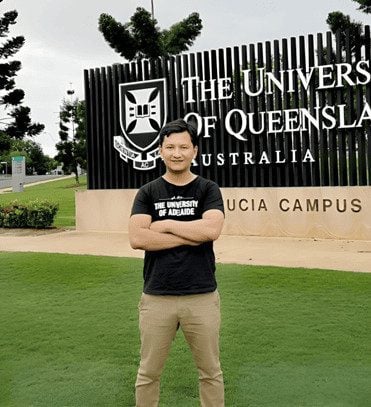
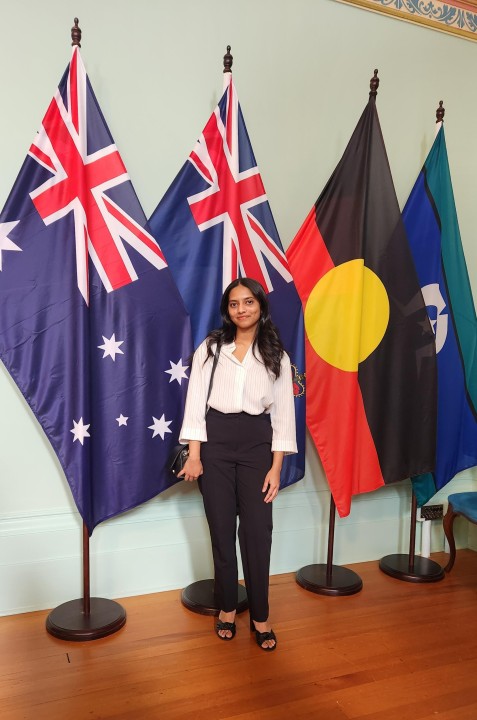
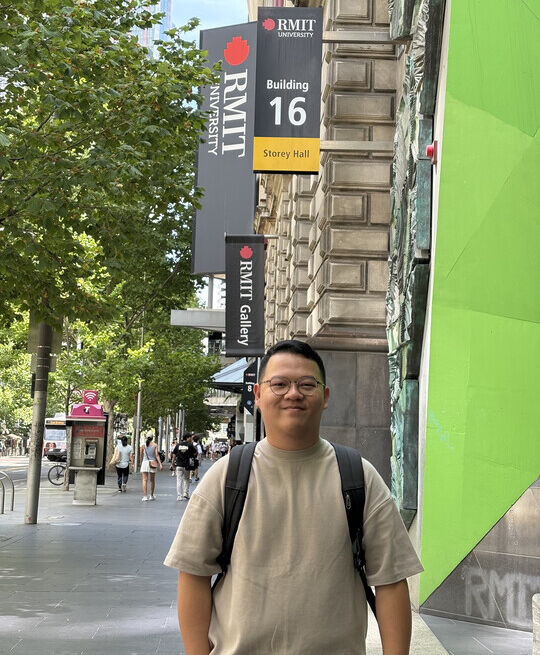
International students who received scholarships to study at RMIT University, documented by Global Scholarships.
What Scholarship Recipients Say
Advice and insights from international students who successfully secured funding to study at RMIT University.
"Thanks to the Australia Awards Scholarship, I’ve been able to follow my passion and pursue this career path, since the biomedical field is not well explored in Fiji. The scholarship covers full tuition fees along with a regular fortnightly stipend to help with accommodation and living expenses."
"So, it’s best to start learning about the scholarship process now, contacting back to your lecturers and supervisors for the recommendation, saving money for the English test, and preparing all your documents. It is never a bad decision to be ready early."
"My name is Sokmeng Chan. I came from Cambodia to study the Master of Communication intake 2025 at RMIT University, Australia, with the support of the Australia Awards Scholarships, fully funded by the Australian Government."
"I chose RMIT University as one of my preferred institutions because of its diverse curriculum that allows me to apply my communication expertise in different settings, let it be at the grassroots level, among development organizations, or delivering my own speech."
"I’m currently in my third year at RMIT University, pursuing a Bachelor of Biomedical Engineering (Honours)."
Frequently asked questions
Common questions about scholarships, admissions, and studying at RMIT University.
Most RMIT scholarships are tied to being enrolled in an RMIT award program (e.g., bachelor’s or master’s).
RMIT scholarships span a wide range of subjects, including engineering and broader STEM (for example, Shavlin Singh is studying Biomedical Engineering), business and management, IT/computing, design/creative fields, and humanities/social sciences (for example, Sokmeng Chan went to RMIT for a Master of Communication). Sokmeng also emphasized why the field mattered to him: “With the right communication, we connect with people, establish a network, and make progress in any development.”
RMIT has scholarships that are broadly open to international students, plus some that are region- or country-targeted. In the Global Scholarships recipient stories, you can see examples like Shavlin Singh (Fiji) and Sokmeng Chan (Cambodia) studying at RMIT through Australia Awards.
For targeted examples, RMIT lists scholarships aimed at specific regions/countries and some scholarships for general audience. Always check the scholarship listing for citizenship/residency rules before applying.
Often yes, RMIT requires evidence of English proficiency for admission unless you meet an exemption pathway. RMIT lists accepted tests (including IELTS Academic and TOEFL iBT, among others), and required scores can vary by program. In recipient experiences, Sokmeng Chan reported “IELTS 8.0,” and on the RMIT recipient page he also warned that even strong applicants should plan ahead because “it’s not always guaranteed that you can get the desired IELTS score.”
There isn’t one single minimum grade for all RMIT programs: entry requirements depend on the course (and your prior qualification/country system). Scholarships also vary: some are merit-based (so stronger grades improve chances), while others consider equity/financial hardship or leadership. As a real example from the stories, Sokmeng Chan entered the process with a prior GPA of “3.49/4.00,” and Shavlin Singh notes “strong external exam results” in his background—both reflecting that competitive academics help, even though the exact “minimum” depends on the program and scholarship.
It depends on the scholarship. RMIT has minimum-age enrolment requirements (and special requirements for under-18 international students), but many scholarships don’t advertise a strict maximum age. However, some major funding programs do: for example, Australia Awards (used by both Shavlin Singh and Sokmeng Chan) has eligibility rules that include age conditions, and some mobility-style scholarships have age bands.
A strong academic record that meets your program’s entry requirements is the baseline for many scholarships, especially merit-based ones (high marks, relevant prerequisite subjects, and sometimes a portfolio for design). For fully funded schemes like Australia Awards, selection can also emphasize leadership, work experience, and fit with development goals. Shavlin Singh highlights the mindset that helps across scholarship types: “Apply as many times as needed, and take each attempt as a learning opportunity.”
For admission, RMIT commonly asks for documents like your passport, certified academic transcripts/results, graduation/completion certificates (with translations if needed), and evidence of English proficiency; some programs (especially design/creative) may require a portfolio or other selection-task documents. RMIT also notes you can sometimes apply first and submit missing documents later, depending on your situation.
For scholarships, requirements vary, but commonly include things like a personal statement, CV/resume, recommendation/referee details, and (for equity/financial hardship scholarships) supporting evidence such as income documentation. On the RMIT recipient page, Shavlin Singh described an “in-depth online form” plus “supporting documents such as a CV and details of two referees,” while Sokmeng Chan advised applicants to “prepare all your documents” early and “contact your previous lecturers… to help you with recommendations.”
Sometimes. RMIT states that applicants from certain countries must pay an application fee (listed as AU$100 on RMIT’s application-fee page), and it is described as non-refundable but credited to your tuition deposit once you accept and commence. If you’re not sure whether your country is on the fee list, check RMIT’s country list before submitting your application so there are no surprises. Always check the latest guidelines for updated information.
There are many degrees that are open to international students right now — find yours.
About the Author: Hyun Lee


Leave A Comment