
Ruprecht Karl University of Heidelberg Scholarships for International Students 2027
If you are planning your budget for Ruprecht Karl University of Heidelberg, these scholarships are a practical place to start. The list is prioritized by typical funding strength.
If you are focusing on university provided awards tied to Ruprecht Karl University of Heidelberg, the following scholarships are commonly among the most impactful options. Hans-Peter Wild Talent Scholarships is partially funded, and coverage often includes a living stipend of €1,000 per month. Robert and Christine Danziger Scholarship is partially funded and typically covers a monthly cash award of €1500 per month for up to 36 months.
External and government scholarships can complement university funding for Ruprecht Karl University of Heidelberg students. The following options are often reviewed alongside campus awards. With DAAD Scholarships, students may receive fully funded support, and coverage frequently includes €992 for master's and €1,300 for Ph.D. students, health insurance, and one-time research allowance. Konrad Adenauer Stiftung Grant (KAS) is a partially funded award, and the listed benefits often include up to 992 euros per month for Bachelor's, master's, and or postgraduate study, up to 1,400 euros per month for PhD study, and health insurance subsidy of up to 120 euros per month. Deutschlandstipendium is usually considered partially funded, and typical coverage can include a monthly stipend of 300 EUR.
More scholarships connected to this institution are listed further down. Scroll to explore the full set of opportunities.
Ruprecht Karl University of Heidelberg Scholarships for International Students
The scholarships at Ruprecht Karl University of Heidelberg can help fund your study expenses. There are currently 7 scholarships being offered to international students at the Ruprecht Karl University of Heidelberg, all with varying requirements, benefits, and application processes. We have compiled them in this list to help you find the scholarship that best fits you.
Undergraduate Scholarships
Graduate Scholarships
External Scholarships
There are many degrees that are open to international students right now — find yours.
Ruprecht Karl University of Heidelberg Admissions
Here are the official admission pages for Ruprecht Karl University of Heidelberg:
| Degree | Admissions Pages |
|---|---|
| Bachelor's | International Students Admissions Page |
| Master's | International Students Admissions Page |
Ruprecht Karl University of Heidelberg Application Deadlines
Tuition Fees at Ruprecht Karl University of Heidelberg for International Students
Indicative annual tuition fee ranges for international students at Ruprecht Karl University of Heidelberg. Exact fees vary by program, so always confirm the current cost on the university's official tuition fee pages.
| Degree Level | Typical Annual Range |
|---|---|
| Bachelor's Tuition | 3,000 Euros |
| Master's Tuition | 3,000 Euros |
Please note that tuition fees can vary based on the specific program you choose. For the most accurate and current fee information, consult the official tuition fee pages linked above.
Ruprecht Karl University of Heidelberg Scholarship Recipients
International students who received scholarships to study at Ruprecht Karl University of Heidelberg, documented by Global Scholarships.
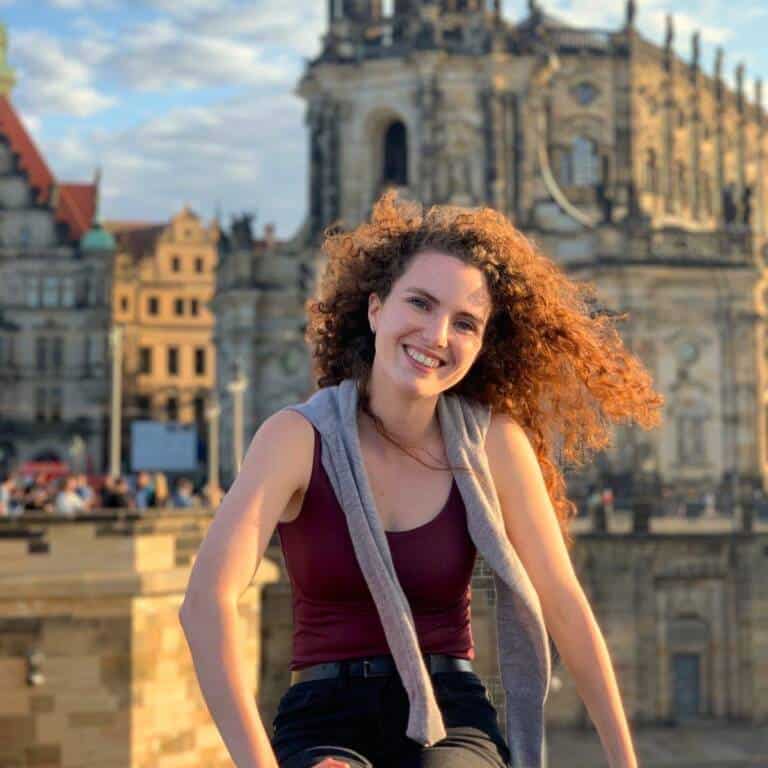

What Scholarship Recipients Say
Advice and insights from international students who successfully secured funding to study at Ruprecht Karl University of Heidelberg.
"In the first month, scholarship recipients receive a stipend of €1,300, a travel grant of €1,000, and a research allowance of €450, with the monthly stipend continuing thereafter. The scholarship also covers insurance, and if rent costs are high, a subsidy is provided. This prestigious award supports all essential needs, making the transition to Germany smoother for students."
"Similar to every application process in my academic education, I prepared by tailoring my CV, cover letter, and application documents for the scholarship. I’ve reached out to students who already received the scholarship and inquired regarding the application process and interviews, as well as doing the same with students and alumni of the research group in which I was interested."
"Be ready to send over 1,000 cold emails and make sure to follow up. Out of those, you may only get 10-100 replies, but persistence is key. Your cold email should be convincing—show professors that you’re prepared to apply for external funding if they don’t have any available."
"Hello! I’m Jayalakshmi (you can call me Jaya), originally from New Delhi, India. I recently embarked on an exciting journey as a Ph.D. student in Medical Microbiology at Universitätsklinikum Heidelberg in Germany."
"While I am working at Ruprecht-Karls-Universität Heidelberg, other members of the doctoral network are in London, Bordeaux, Münster, Amsterdam, Ljubljana, Granada, and Wageningen, and we are required to perform certain parts of our research in at least one additional laboratory among the network’s members."
"I arrived in Germany with a basic level of German, allowing me to converse fluently (even if not eloquently). While this is not required for my professional work, it is pleasant for both my social life abroad and the day-to-day handling to be able to speak the local language. Particularly in Germany, where governmental offices and many services in English are limited."
Frequently asked questions
Common questions about scholarships, admissions, and studying at Ruprecht Karl University of Heidelberg.
Most Heidelberg University scholarships are designed for students who are formally enrolled in on-campus degree programs (Bachelor’s, Master’s, PhD, State Examination), not for fully online-only study. Heidelberg does offer some online/virtual course options in specific contexts (e.g., partner-network course offers), but these are typically course enrollments rather than fully online degrees, and they usually don’t come with dedicated “online-course scholarships.” If you’re mainly planning to study online, you’ll usually need to look at external scholarships or the funding rules of the specific program/provider you’re using rather than expecting a Heidelberg-only “online scholarship.”
At Heidelberg University, the default language is German for all undergraduate programs and for the majority of Master’s programs, so strong German skills are often essential. However, Heidelberg also has English-language Master’s options where German does not need to be proven for admission.
Heidelberg University does not generally publish a single universal age limit that applies to all scholarships; instead, eligibility depends on the specific scholarship and funding body. For example, Jayalakshmi received DAAD funding and described the key requirements as academic/research fit (a supervisor acceptance and a well-defined project proposal), rather than age-based criteria. Always check the individual scholarship call because external funders (or certain scholarship lines) may set their own age or “years since graduation” expectations.
Heidelberg University scholarships span many disciplines, and availability often depends on the faculty, foundation, or donor. You can find scholarships for STEM fields (including biology, physics, and broader research areas), humanities (e.g., faculty-based doctoral funding), and professional tracks. Medicine and dentistry scholarships also exist: for example, the Amirana Scholarship supports international medical and dental students (commonly framed for Global South backgrounds and need-based situations). In recipient stories, Jayalakshmi pursued a PhD in Medical Microbiology and emphasized research alignment and a strong proposal as central to winning funding.
Medicine note for international students: yes, there are scholarships that specifically mention international eligibility for medicine/dentistry (such as Amirana), but medical study in Germany can have additional admission, language, and licensing-related constraints, so scholarship eligibility does not automatically mean admission is straightforward.
It depends on the scholarship. Some Heidelberg scholarships support both German and international students, while others are restricted by region, citizenship, or background. A clear example is the Amirana Scholarship, which is aimed at international students in medicine/dentistry (often described as students from Global South countries and in financial need).
For most Heidelberg undergraduate programs (and many Master’s programs), German is the language of instruction, so you typically must prove strong German proficiency (commonly via exams such as TestDaF/DSH or equivalent pathways, depending on the program). For English-language Master’s programs, German does not have to be proven, but you may need to prove English (often via IELTS/TOEFL or other accepted evidence depending on the program). In her scholarship story, Jayalakshmi also advised that while language exams may not always be mandatory for the scholarship itself, they can strengthen your profile: “If you’re applying for scholarships, especially DAAD, consider taking the IELTS or German language exams (A1-B1). While not mandatory, these can add value to your CV and help you stand out.”
There isn’t one single Heidelberg-wide “minimum grade” that applies to every degree and every scholarship; requirements vary a lot by faculty and program (and restricted-admission programs can be especially competitive). For scholarships, strong grades help. In the recipient story, Jayalakshmi reported high results (Bachelor’s CGPA 9/10 and Master’s CGPA 8.5/10) and also highlighted achievements like awards and publications as part of building a standout profile.
A strong academic background usually means consistently high grades, clear motivation, and evidence you can succeed in the program (and, for research funding, evidence you can do research). In the Heidelberg recipient story, Jayalakshmi framed it as a mix of performance and fit: “I believe that my achievements, passion, and confidence were key factors,” and she added that “having publications and other accomplishments can greatly enhance your CV.” For PhD-oriented funding, she also emphasized the importance of having “a deep understanding of the project you intend to pursue” and building a strong project proposal with a supervisor.
Document requirements vary by program, but commonly include prior degree certificates, transcripts/records, and (for international documents) certified copies and translations as required. For research/PhD funding pathways, the required set often expands: in Jayalakshmi’s DAAD-funded PhD journey, she explained that key requirements included “an acceptance letter from a supervisor,” “a well-defined project proposal,” plus “transcripts and other certificates,” and she described applying using “the completed proposal, my transcripts, and other required documents.”
If you’re applying through Heidelberg’s systems, note that universities often require certified copies later for enrolment/registration even when initial application uploads are digital, so plan ahead for certification and official translations if your documents are not in German/English.
Heidelberg University (Germany) is widely communicated as not charging an application fee for standard applications, but students must pay semester contributions once they enroll, and some students may face tuition fees depending on status/program. For example, Heidelberg publishes semester fees/contributions, and Baden-Württemberg charges tuition fees for many non-EU/non-EEA international students in Bachelor’s and consecutive Master’s programs (commonly €1,500 per semester), which is separate from an “application fee.”
There are many degrees that are open to international students right now — find yours.
About the Author: Hyun Lee


Leave A Comment