
Christian-Albrecht University of Kiel Scholarships for International Students 2027
Funding at Christian-Albrecht University of Kiel can be easier to navigate when you start with the most generous options. Below is a shortlist prioritized by the level of support.
University scholarships associated with Christian-Albrecht University of Kiel often form the core of an applicant’s funding plan. Here are a few notable options to review first. With Free Tuition, students may receive full tuition support, and coverage frequently includes full tuition fees for four years for bachelors degrees, two years for masters degrees, and up to six years for doctorate degrees.
In addition to university awards, students connected to Christian-Albrecht University of Kiel may also consider government and external scholarships. Here are a few widely relevant options. A strong option is DAAD Scholarships which is fully funded and often covers €992 for master's and €1,300 for Ph.D. students, health insurance, and one-time research allowance. Deutschlandstipendium is partially funded, and coverage often includes a monthly stipend of 300 EUR. Heinrich Böll Foundation Scholarship Program is partially funded and typically covers monthly scholarship (€992 for master's and €1,500 for PhD), health insurance allowance (up to €100 per month for Master's and up to €200 per month for PhD), and tuition reimbursement in Germany of up to €10,000 per year and where applicable.
You can find more university scholarships and external or government scholarships further down on this page.
Christian-Albrecht University of Kiel Scholarships for International Students
The scholarships at Christian-Albrecht University of Kiel can help fund your study expenses. There are currently 6 scholarships being offered to international students at the Christian-Albrecht University of Kiel, all with varying requirements, benefits, and application processes. We have compiled them in this list to help you find the scholarship that best fits you.
Undergraduate Scholarships
Graduate Scholarships
External Scholarships
There are many degrees that are open to international students right now — find yours.
Christian-Albrecht University of Kiel Admissions
Here are the official admission pages for Christian-Albrecht University of Kiel:
| Degree | Admissions Pages |
|---|---|
| Bachelor's | International Students Admissions Page |
| Master's | International Students Admissions Page |
Christian-Albrecht University of Kiel Application Deadlines
| Degree | Admission Deadline |
|---|---|
| Bachelor's (Winter) | July 15, 2026 Different Bachelor's programs have different deadlines |
| Bachelor's (Summer) | January 15, 2027 Different Bachelor's programs have different deadlines |
| Master's (Winter) | July 15, 2026 Different Master's programs have different deadlines |
| Master's (Summer) | January 15, 2027 Different Master's programs have different deadlines |
Tuition Fees at Christian-Albrecht University of Kiel for International Students
Indicative annual tuition fee ranges for international students at Christian-Albrecht University of Kiel. Exact fees vary by program, so always confirm the current cost on the university's official tuition fee pages.
| Degree Level | Typical Annual Range |
|---|---|
| Bachelor's Tuition | Free |
| Master's Tuition | Free |
Please note that tuition fees can vary based on the specific program you choose. For the most accurate and current fee information, consult the official tuition fee pages linked above.
Christian-Albrecht University of Kiel Scholarship Recipients
International students who received scholarships to study at Christian-Albrecht University of Kiel, documented by Global Scholarships.
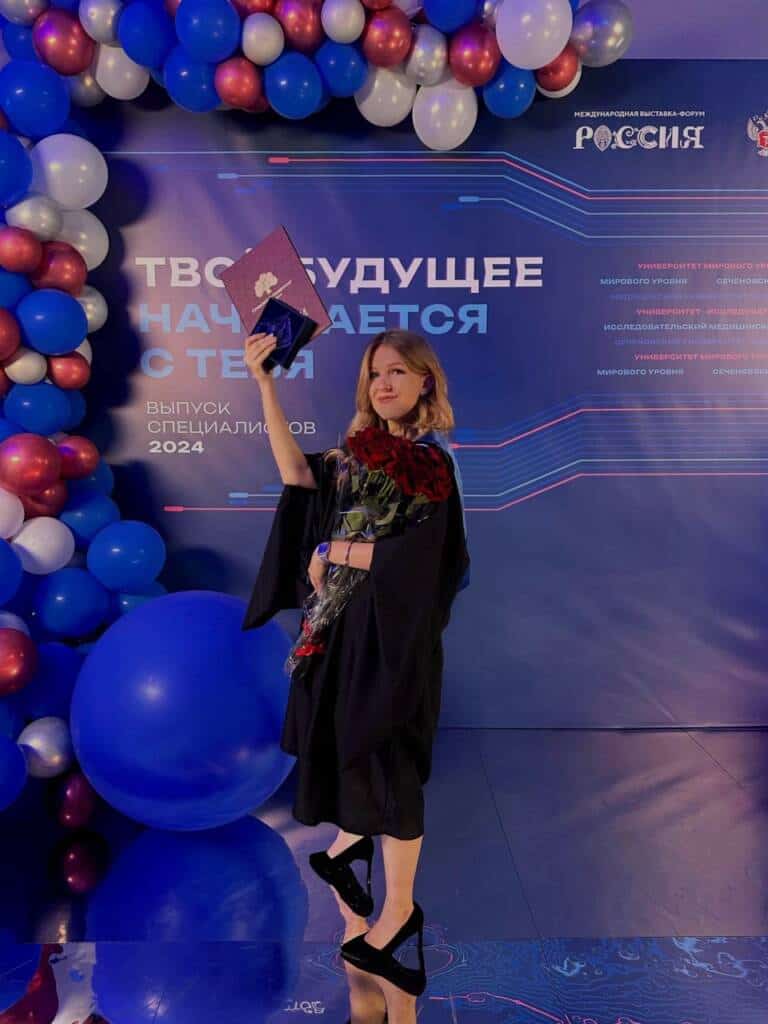
What Scholarship Recipients Say
Advice and insights from international students who successfully secured funding to study at Christian-Albrecht University of Kiel.
"I pursued an LL.M. in International Law at Christian Albrechts University of Kiel (CAU Kiel University) in Germany because I wanted advanced legal training in a globally respected academic environment that was also financially accessible. Germany’s tuition-free public universities made it possible for me to pursue postgraduate studies without the burden of tuition fees, which would otherwise have been out of reach."
"My experience at Kiel University was academically rigorous and rewarding. The program encouraged critical thinking, independent research, and engagement with international legal issues from a comparative perspective in a very practical approach."
"I would rate the institution very highly. The faculty were knowledgeable, the curriculum was well-structured, and the academic expectations were clear and demanding, which contributed to the strong academic development that helped me build a career in the international job market."
"While tuition was free, living costs were a major challenge. International students must still cover accommodation, health insurance, and daily expenses. Also, I was not aware that every student (even those with tuition-free offers) must pay a Semester fee each semester (semesterbeitrag) for administration and public transport, which is about 273 Euros."
Frequently asked questions
Common questions about scholarships, admissions, and studying at Christian-Albrecht University of Kiel.
There’s no Kiel University scholarship that is clearly designed specifically for a fully online degree.
Undergraduate: Kiel states that all bachelor’s programs are taught exclusively in German, so scholarship applicants for undergraduate study should plan for German-language study. Graduate: Kiel says master’s programs are available in German and English, and it lists many English-language master’s options in areas such as AgriGenomics, Economics, Electrical and Information Engineering, Environmental Management, Medical Life Sciences, Molecular Biology and Evolution, and English and American Literatures, Cultures, and Media. A scholarship recipient, Ebrima Sowe said his LL.M. in International Law “was conducted entirely in English,” and he added that students in English-taught programs can do well academically without knowing German, although basic German helps in daily life.
There’s no general university-wide age limit for the main scholarship pages.
Generally, Kiel’s scholarship ecosystem is broad rather than tied to only one narrow field. The Deutschlandstipendium page says students in all subjects and at all levels can apply, so this can include humanities, business, engineering, medicine-related fields, and other STEM areas once you are an applicant or enrolled student. Kiel also offers 190 degree programs overall, so the academic base is wide.
For university-wide merit funding such as the Deutschlandstipendium, there’s no nationality restriction; Kiel says anyone who has applied to study there or is already enrolled can apply, and it also says recognized foreign university entrance qualifications count. So in practice, scholarships can be open to international students from many nationalities if they meet the academic and admission rules.
Undergraduate: Yes, for regular bachelor’s admission, language proof is normally necessary because all bachelor’s programs are taught in German. Kiel’s bachelor’s information sheet lists C1-level German proofs such as TestDaF 4444, Goethe C2, DSH-2, TELC C1 Hochschule, and DSD II. Graduate: It depends on the program language. For English-language master’s programs, Kiel says applicants need to meet the English language requirement set by the department, while German-language master’s programs require German proof. One official example is Dairy Science, which accepts English proofs such as IELTS 6.5 or TOEFL iBT 90. In the recipient story, Ebrima Sowe said his LL.M. was entirely in English and that students in English-taught programs can succeed academically without German.
Undergraduate: Kiel’s general bachelor’s information for international applicants does not publish one single university-wide minimum GPA; the basic requirements are a recognized university entrance qualification and sufficient German, while some restricted-admission programs can be more competitive. Graduate: Many master’s programs do publish program-specific grade thresholds, and a common benchmark is 2.5 on the German scale or better. Official examples include Economics, Environmental Management, and Marine Geosciences.
A strong profile usually combines solid grades, a clear fit with the chosen subject, and evidence that you can handle the academic level of the program. Deutschlandstipendium weighs performance heavily and also values social commitment, special achievements, and personal or family circumstances. For master’s study, several programs also expect a closely related bachelor’s background and sometimes specific ECTS content in the field.
The one Kiel recipient story I found shows what that can look like in practice. Ebrima Sowe came in with an LL.B., a Barrister-at-Law qualification, and a background in public law, human rights, and international legal frameworks. He said he carefully checked “admission requirements and the language of instruction,” made sure his academic documents met the requirements, and later graduated “cum laude.” So a good scholarship background at Kiel is not only a number; it is a strong academic base plus clear preparation and subject fit.
Undergraduate: Kiel’s bachelor’s information sheet for first-time applicants lists a CV, passport or ID copy, school leaving certificate with German or English translation, language proficiency certificate, HAP or FSP if needed or available, university certificates if available, and an APS certificate for applicants from China, Vietnam, and India. For higher-semester entry, you also need proof of previous study time. Graduate: Kiel’s master’s information sheet lists many of the same items, but adds university certificates and the module handbook of the bachelor’s program for uni-assist applications. Some departments also ask for extra program-specific items such as transcripts, motivation letters, or subject-overview tables.
Undergraduate: Yes, for the standard international uni-assist route, Kiel’s official bachelor’s information sheet says the initial application fee is €75 and each additional program at Kiel is €30. Graduate: Kiel’s master’s information sheet gives the same uni-assist fees: €75 for the first application and €30 for each additional program.
There are many degrees that are open to international students right now — find yours.
About the Author: Hyun Lee


I quite appreciate the good works Global Scholarship is doing. Please keep it up.
Thank you!