
Stuttgart Technology University of Applied Sciences Scholarships for International Students 2027
Funding at Stuttgart Technology University of Applied Sciences can be easier to navigate when you start with the most generous options. Below is a shortlist prioritized by the level of support.
In addition to university awards, students connected to Stuttgart Technology University of Applied Sciences may also consider government and external scholarships. Here are a few widely relevant options. DAAD EPOS (Development-Related Postgraduate Courses) is fully funded, and coverage often includes full tuition fee waiver, health insurance, and A monthly stipend of €934 for Master's students. DAAD Scholarships is fully funded and typically covers €992 for master's and €1,300 for Ph.D. students, health insurance, and one-time research allowance. Deutschlandstipendium is commonly categorized as partially funded support, and coverage that often includes a monthly stipend of 300 EUR.
You can find more university scholarships and external or government scholarships further down on this page.
Stuttgart Technology University of Applied Sciences Scholarships for International Students
The scholarships at Stuttgart Technology University of Applied Sciences can help fund your study expenses. There are currently 5 scholarships being offered to international students at the Stuttgart Technology University of Applied Sciences, all with varying requirements, benefits, and application processes. We have compiled them in this list to help you find the scholarship that best fits you.
External Scholarships
There are many degrees that are open to international students right now — find yours.
Stuttgart Technology University of Applied Sciences Admissions
Here are the official admission pages for Stuttgart Technology University of Applied Sciences:
| Degree | Admissions Pages |
|---|---|
| Bachelor's | International Students Admissions Page |
| Master's | International Students Admissions Page |
Stuttgart Technology University of Applied Sciences Application Deadlines
Tuition Fees at Stuttgart Technology University of Applied Sciences for International Students
Indicative annual tuition fee ranges for international students at Stuttgart Technology University of Applied Sciences. Exact fees vary by program, so always confirm the current cost on the university's official tuition fee pages.
| Degree Level | Typical Annual Range |
|---|---|
| Bachelor's Tuition | 3,000 Euros |
| Master's Tuition | 3,000 Euros |
Please note that tuition fees can vary based on the specific program you choose. For the most accurate and current fee information, consult the official tuition fee pages linked above.
Stuttgart Technology University of Applied Sciences Scholarship Recipients
International students who received scholarships to study at Stuttgart Technology University of Applied Sciences, documented by Global Scholarships.
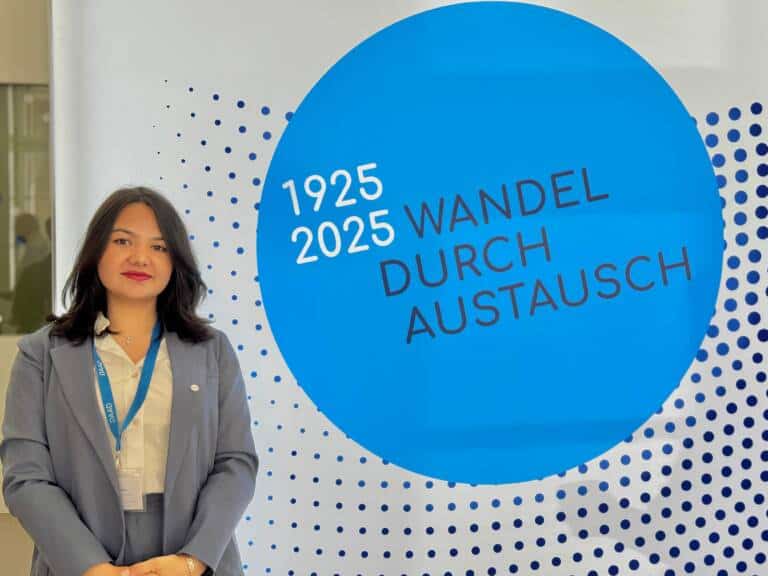
What Scholarship Recipients Say
Advice and insights from international students who successfully secured funding to study at Stuttgart Technology University of Applied Sciences.
"The scholarship covers full tuition fees, living expenses, and travel costs."
"To apply to the institutions, I conducted thorough research on universities offering programs related to Geomatics, remote sensing and Photogrammetry and development studies. HFT Stuttgart stood out due to its strong academic reputation in GIS and its alignment with my professional goals."
"The DAAD EPOS scholarship, which requires applicants to have at least two years of professional experience in the field they intend to study, was the perfect opportunity to build on my professional background and pursue my academic goals in Germany."
Frequently asked questions
Common questions about scholarships, admissions, and studying at Stuttgart Technology University of Applied Sciences.
Most scholarships connected to Stuttgart University of Applied Sciences (HFT Stuttgart) are tied to being enrolled as a student, so they are mainly designed for on-campus (or campus-based) degree study rather than fully online-only study
Both exist, depending on the programme: most Bachelor’s and many Master’s programmes are taught in German, while HFT also runs selected English-taught Master’s programmes. HFT explicitly points international applicants to English-language Master’s options if they prefer studying in English.
In English-taught programmes, you’ll usually need proof of English (e.g., IELTS/TOEFL). For instance, HFT’s Master Photogrammetry and Geoinformatics requires English proficiency (IELTS/TOEFL accepted), and Samida Sher shared that she “had to demonstrate proficiency in English through the IELTS exam.” For German-taught programmes, you’ll usually need a German certificate (commonly TestDaF/DSH or equivalent accepted proofs listed by HFT).
For HFT Stuttgart’s internal scholarships (like the Deutschlandstipendium/Germany Scholarship and foundation scholarships), eligibility is typically based on enrolment and the selection criteria (e.g., grades, life situation, volunteering, talents) rather than a strict age cut-off.
For external funding commonly used by HFT students (e.g., DAAD), there is usually “no fixed age limit,” but some programmes apply additional rules (for example, DAAD EPOS commonly requires that your latest degree is not older than a set timeframe). In her DAAD EPOS story, Samida Sher emphasized professional readiness alongside academics, noting EPOS “requires applicants to have at least two years of professional experience,” which can matter more than age.
HFT Stuttgart scholarships are generally not limited to a single major: the university notes that enrolled students can apply regardless of course of study, and the selection is based on criteria such as grades, special life situations, volunteering, and talents. That means scholarships can support students across HFT’s subject areas (as long as you’re studying an HFT programme).
In terms of fields: HFT is especially strong in engineering and STEM (e.g., civil engineering, geomatics, software/IT, sustainability/energy, built environment). It also offers business/management-oriented programmes (e.g., management and project management-related degrees) and design/built-environment areas that overlap with humanities-style interests (architecture, urban planning, design and society). Medicine is not an HFT Stuttgart degree area, so HFT scholarships generally won’t apply to medicine at this institution; international students interested in medicine in Germany would need to apply to a university that offers medicine and then look at medicine-eligible funding there.
A real example of a STEM pathway: Samida Sher pursued a Master’s in Photogrammetry and Geoinformatics after a GIS/Remote Sensing background, describing her foundation in “spatial data analysis, remote sensing, and photogrammetry.”
HFT Stuttgart’s internal scholarships (like the Deutschlandstipendium/Germany Scholarship and the HFT foundation scholarships) are generally open to enrolled students and are not presented as being restricted to a single nationality; the scholarship criteria focus on merit and personal circumstances, and HFT even explicitly recognizes “tuition fees for international students” as a possible “special life situation” in scholarship applications.
Some external scholarships linked to HFT programmes can be nationality- or region-targeted. For example, DAAD EPOS is designed for graduates from developing and newly industrialised countries, and Samida Sher (from Pakistan) explained that EPOS “supports students from developing countries to pursue postgraduate studies in Germany.”
Often yes, depending on your programme’s teaching language. For German-taught programmes (especially Bachelor’s), HFT’s application checklists include “Proof of German Language,” and HFT lists commonly accepted German proofs (e.g., TestDaF/DSH or equivalent certificates, depending on the programme).
For English-taught programmes, English proof is typically required. HFT’s Master Photogrammetry and Geoinformatics states that English proficiency verification is “absolutely required” and accepts IELTS/TOEFL, and Samida Sher confirmed this experience by sharing she “had to demonstrate proficiency in English through the IELTS exam” and that she “prepared for the exam by taking online practice tests.”
Admission rules vary by programme (and sometimes by applicant group), so the “minimum grade” question depends on what you apply for. Some programmes are competitive or have selection procedures; others focus on meeting stated entry requirements (degree background, language, required documents, and any programme-specific criteria).
For scholarships, many providers evaluate academic performance strongly, but they do not always publish a single universal minimum GPA. HFT’s own scholarship criteria include “Above-average performance” as one key pathway, and DAAD notes that scholarship decisions usually weigh academic performance among other factors. For DAAD EPOS specifically, the selection framework emphasizes strong academic results (commonly described as above-average/upper-third) alongside professional experience and fit.
A strong fit between your prior studies and your intended HFT programme helps a lot (relevant degree background, solid performance, and evidence you can handle the curriculum). For many scholarships, it’s also important to show motivation, impact, and consistency: research experience, internships, projects, or professional work aligned with the field.
HFT’s own scholarship framework explicitly values more than grades: volunteering and special talents can be selection criteria, and students in special life situations can also be prioritized. In the DAAD EPOS example, Samida Sher said her profile stood out through applied impact: “My hands-on work with AKAHP” and commitment “reflected in my volunteer work with CERT Pakistan.”
For admission to HFT Stuttgart, required documents depend on your level (Bachelor/Master), your programme, and whether your prior education is from abroad. For international applicants, HFT highlights steps like certificate recognition, translated documents (where required), and proof of German and/or English. For Bachelor’s applications, HFT’s checklist commonly includes your university entrance qualification, proof of German language, and any programme-specific requirements like pre-study internship evidence (if required).
For HFT Stuttgart scholarships, the university lists typical documents such as an online application form, a letter of motivation and CV, proof of your entry qualification, transcripts/grade overview (and Bachelor’s transcript for Master’s students), and your current enrolment/matriculation certificate; optional evidence (e.g., volunteering proof) can strengthen your case. A recipient example: Samida Sher described her DAAD EPOS package as “including my academic transcripts, a personal statement, letters of recommendation, and a detailed CV,” and noted she shaped her personal statement to “reflect my passion for disaster management.”
HFT Stuttgart’s application process is primarily online, and the university generally emphasizes semester contributions and tuition rules rather than charging a separate “application fee.”
There are many degrees that are open to international students right now — find yours.
About the Author: Hyun Lee


Leave A Comment