
DAAD Helmut Schmidt Scholar Victória Martins from Brazil Shares Her Journey of Securing a Fully Funded Master's in Peace and Conflict Studies at Otto-von-Guericke University Magdeburg, Germany
University: Otto-von-Guericke University Magdeburg
Degree: Master’s in Peace and Conflict Studies
Previous Education: Bachelor’s degree in Journalism, University of São Paulo; Exchange Semester, Monash University
Scholarship: DAAD Helmut Schmidt Scholarship – Full Funding (Monthly Stipend, Flight Tickets, Health Insurance, Study and Research Grant, Intensive German Language Course, Rent Subsidies and Family Allowances as Applicable)
Social Media
LinkedIn: linkedin.com/in/victoriarmartins/
The Journey
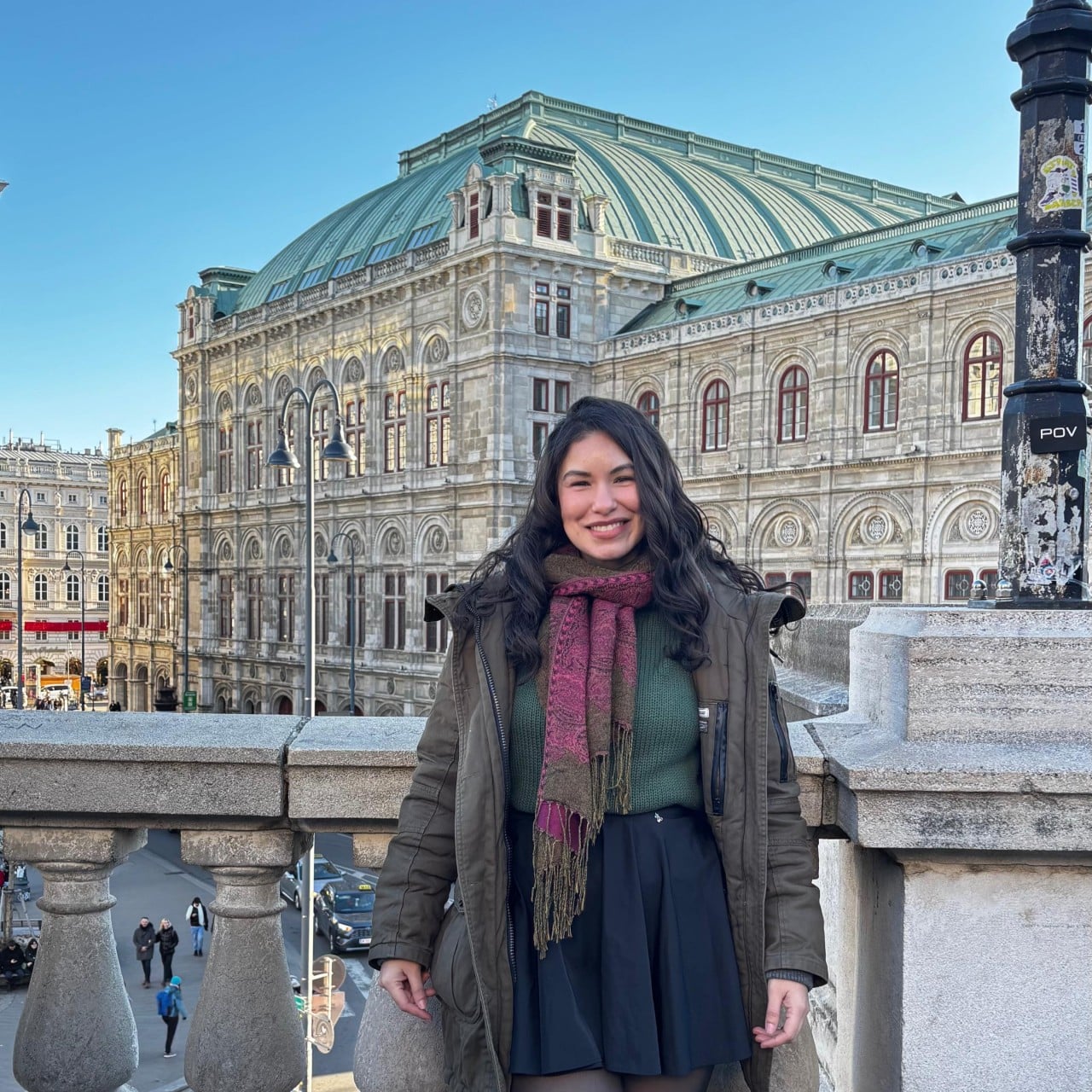
Hello! My name is Victória Martins, I’m 28 years old, and I come from Brazil. I have a Bachelor’s degree in Journalism and, for 6+ years now, I have been focusing my career on using communication for social impact and translating complex policy and science issues into accessible narratives for multiple audiences, with a particular focus on issues of human rights, socio-environmental politics, and gender equality.
A few years ago, however, I felt the need to further specialize in human rights and (inter)national politics and look at those topics from an academic perspective, in order to improve my analytical skills and my competence to connect scientific/theoretical insights and communicational practice.
I then decided to pursue a Master’s program in Europe, and upon researching options, I came across the Master of Peace and Conflict Studies at the Otto-von-Guericke Universität Magdeburg, in Germany. The program is open to individual applicants, but I was admitted through the Helmut-Schmidt-Programme from the Deutscher Akademischer Austauschdienst (DAAD).
What drew me to the program is that it is quite multidisciplinary, with subjects drawing insights from areas such as International Relations, Political Science, Cultural Studies, and Communications. It is also very diverse and international, with participants from all parts of the world, which means that students can engage in lively discussions and come into contact with a multitude of perspectives. Participants are prepared to pursue careers in scientific research as well as practical political work, including in international cooperation, peacebuilding, and conflict mediation. They are also able to specialize in topics such as sustainability and resource governance, the media’s contribution to conflicts and violence, and global justice.
DAAD Helmut Schmidt Scholarship Details
I received the DAAD’s Helmut Schmidt Scholarship, which supports applicants from developing and emerging countries who want to pursue Master’s programs in Public Policy and Good Governance and further prepare to promote democracy and social justice in their regions (and globally).
Currently, it funds scholarships for seven Master’s programs across Germany. These are: 1) “Management in Nonprofit Organisations” at the University of Applied Sciences Osnabrück; 2) “Development and Governance” at the University of Duisburg-Essen; 3) “Social Protection” at the University of Applied Sciences Bonn-Rhein-Sieg; 4) “Peace and Conflict Studies” at the Otto-von-Guericke University Magdeburg; 5) “Public Policy”, at the Willy Brandt School of Public Policy at the University of Erfurt; 6) “Development Studies” and 7) “Governance and Public Policy” at the University of Passau.
To be admitted, candidates go through a unified process, where they are simultaneously accepted into their Master’s program of choice and into the scholarship program.
The Helmut Schmidt Scholarship pays scholars a monthly rate of 992 Euros during the one or two years of the Master’s programs, as well as a stipend for flight tickets and health insurance. The DAAD also pays a study and research grant of 460 Euros each year and, as applicable, rent subsidies and allowances for spouses and/or children. Finally, the DAAD funds up to 4 months of an intensive German language course in Germany.
Educational Background
As mentioned, I hold a Bachelor’s degree in Journalism from the University of São Paulo, in Brazil, with a final mark of 9.3/10. My educational background in a humanities course had already exposed me to discussions on political and social sciences, as well as to academic research skills, which were helpful in the preparation to and during the Master’s degree.
During my Bachelor’s, I also completed an Exchange Semester at Monash University in Australia, with a scholarship from my home university. This semester abroad also strengthened my knowledge in humanities research and in Journalism for social change, and put me in the path that led me to the Master’s.
Did You Take Any Standardized Tests? If So, How Did You Prepare for Them?
I was already looking for and applying to other scholarships to Master’s programs in human rights and political science in Europe, as this was the only way I would be able to afford to access such programs. During my research, I came across the 2022 Helmut-Schmidt-Programme announcement on an educational website in Brazil. It seemed perfectly aligned with my aims, and as I further researched information on the program at DAAD’s website, I was drawn to the Master of Peace and Conflict Studies and decided to apply.
Yes, since I was already interested in pursuing a Master’s degree abroad, I took the IELTS in 2021. I already spoke fluent English at the time, but I prepared for the test specifically by taking some one-on-one speaking lessons focused on test questions and doing practice tests available online.
How Did You Prepare to Apply for the DAAD Helmut Schmidt Scholarship?
I learned about the Helmut-Schmidt-Programme in June 2022, when applications were already open, so I had to quickly fill out the application forms, write a motivation letter, and gather supporting documentation, such as recommendation letters from former professors and supervisors and employment certificates.
Fortunately, since I was already applying to other scholarship programs, I had several of the required documents, such as an English CV in Europass format, certified translations of my Bachelor’s certificate and transcript of records, and the IELTS results, which were extremely helpful during the process. However, I would recommend that future applicants start preparing at least two months prior to the closing of the application period.
How is Your Experience at Otto-von-Guericke University Magdeburg?
My experience at OVGU (Otto-von-Guericke Universität) was very positive! I met excellent and very motivated colleagues, had great support from my professors at all times, and was exposed to interesting, high-quality discussions on international politics, mediation, conflict prevention, conflict analysis, political ecology, gender-based violence, and many other topics. The first semester was somewhat challenging, as my background was in a completely different area than the Master’s, and I had to build my knowledge of themes on Political Science and International Relations from the ground up, but as the program progressed, I felt at ease and found my pace. At the end, I developed a thesis on the resistance efforts of women of the forests, waters, and countryside of Brazil to extractivism, which I loved doing, and whose result made me very proud.
How Do You Rate Otto-von-Guericke University Magdeburg Academically?
I would rate OVGU an 8.5/10. I believe the courses are of really good quality, that most professors are well-prepared and authorities in their fields and that the university offers a good structure for students (including a library, a gym, student housing, and several cafés and canteens). I also think the specialist tracks in the Master’s of Peace and Conflict Studies are well-selected and offer a great opportunity for students to come in contact with relevant, up-to-date discussions in the field. Nevertheless, since students are able to take courses outside of the Peace and Conflict Studies program, I would have appreciated a larger offer of courses in English in other programs.
Is the Institution That You Are Studying at Free for the Master's in Peace and Conflict Studies? If You Had to Pay Semester Fees, How Much Was It?
OVGU does not charge a tuition fee, but students have to pay a semester fee of about 320 Euros. The monthly stipend paid by the DAAD is generally enough to pay for the semester fees.
Are Your Classes Conducted in English or German?
The classes of the Master of Peace and Conflict Studies are fully conducted in English.
What Did You Pursue After the DAAD Helmut Schmidt Scholarship?
I defended my thesis and graduated in March/2026. Ever since, I have been working as a freelance reporter/communications specialist for human rights and social-environmental advocacy. I am also pursuing further long-term professional opportunities in Brazil and internationally, and considering writing research articles based on my thesis’s results.
Would Potential Students Have Any Problems Not Knowing German?
Academically, no, as the course is offered fully in English and professors/university staff are mostly bilingual. However, since Magdeburg is still very German-based, I would recommend students to learn at least basic German. The DAAD funds an intensive German course precisely to prepare students to live in Germany.
What Do You Think Made Your Application Stand Out?
I believe my application stood out because I had a very clear and convincing motivation and a well-thought-out narrative connecting my background in Journalism to my professional experiences, my personal commitments, and my interest in the Master’s of Peace and Conflict Studies. My trajectory seemed intentional, and it made sense that my next step would be a Master’s degree in topics of public policy and good governance.
Looking Back, Would You Have Done Anything Differently During Your Time in the Program?
I would probably have started the preparation for the application earlier, in order to gather all necessary documentation more calmly. This is especially important given that DAAD has very rigid documentation protocols, including certified translations and the use of letterheads and stamps in each document, which may take time to procure.
I would also further prepare for life in Germany, perhaps by learning more about Germany’s bureaucracies and strict systems, understanding more of the culture, and trying to arrive with some basic German skills. German culture is quite different from Brazilian culture, and adapting was somewhat of a challenge. Preparing further would have made the first few months easier.
What Advice Would You Give Those Looking to Apply for a Similar Scholarship?
Be intentional with your motivation letter and clearly demonstrate what makes you stand out. The Helmut Schmidt Scholarship is quite specific, which means several applicants will have similarly strong profiles. You must show what sets you apart and how your personal and professional trajectories align with the scholarship’s mission in such a way that you become an obvious investment. Choose your examples strategically and build a narrative that convincingly connects your life experiences to bigger personal and political commitments to a fairer, more sustainable and democratic world. In addition, research your program of choice deeply and come up with irrefutable arguments as to how it will bring you closer to your long-term goals and give you the necessary tools to lead the change you want to see in the world.
Want to submit your
scholarship journey?
Submit Your Story Here!
More Scholarship Recipients
My name is Shah Hussain, and I am from Khyber Pakhtunkhwa, Pakistan. I completed my Bachelor’s in Psychology at the Univer .... Read more
I am June from the Philippines. I am an educator for Social Sciences and Humanities. I recently earned my Master in Southeas .... Read more
Hi, my name is Abdul Hafeez, and I come from a small town called Nasirabad in Sindh, Pakistan. Currently, I am pursuing a ma .... Read more
Leave A Comment