
How I Secured a Fully Funded Master’s at Saarland University, Germany Through the DAAD Master’s Studies for All Academic Disciplines Scholarship
University: Saarland University
Degree: Master’s in Biotechnology
Previous Education: Bachelor’s in Pharmaceutical Chemistry, Belarusian State University
Scholarship: DAAD Scholarship “Master’s Studies for All Academic Disciplines” – Partial Funding (€910 Monthly Stipend, Health Insurance, and Approximately €1,000 One-Time Study Allowance)
Other Offered Scholarships: Global Undergraduate Exchange Program (Global UGRAD) at the University of Wyoming – Full Funding (Approximately $15,000 Covering Tuition, Academic Costs, Health Insurance, Living Expenses, and Other Program Costs)
Social Media
LinkedIn: linkedin.com/in/alyaksandra/
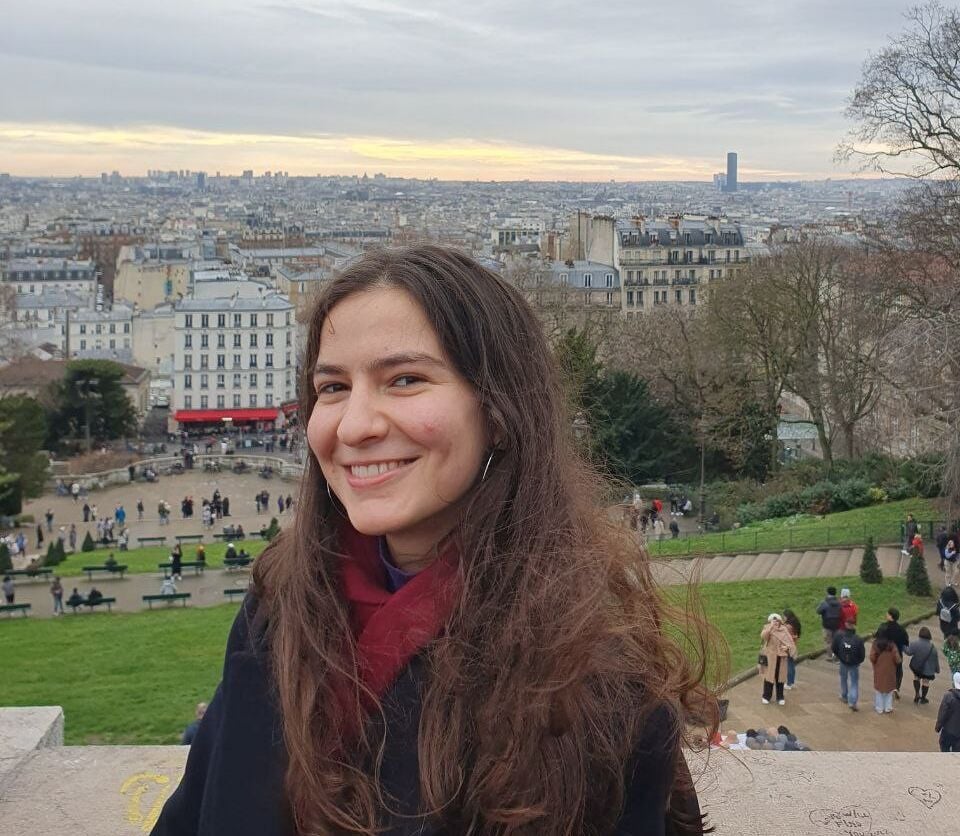
The Journey
My name is Alyaksandra Petrakouskaya, although I usually go by Alex, and I come from Belarus.
I completed my bachelor’s degree in pharmaceutical chemistry in my home country at Belarusian State University. After graduating, I worked for approximately two years as a junior scientist in the chemical industry.
At the same time, I knew that I wanted to move more toward biochemistry. I was especially interested in how biological systems can be used to produce useful compounds that are difficult to make using classical chemistry, so biotechnology felt like the right next step for me.
That is why I decided to pursue a master’s degree in biotechnology in Germany.
I chose Germany because it has many strong pharmaceutical and chemical companies across the country. The number and variety of opportunities in these fields are difficult to find elsewhere in Europe, so Germany felt like the right fit for me.
Germany also offers high-quality education in many different cities, so you do not have to live in the capital or in the most expensive place to study at a good university.
DAAD Scholarship “Master’s Studies for All Academic Disciplines” Details
I received the DAAD scholarship “Master’s Studies for All Academic Disciplines” for my studies at Saarland University, or Universität des Saarlandes in German.
The scholarship provided:
- €910 per month for living expenses;
- health insurance coverage; and
- a one-time study allowance of approximately €1000 at the beginning of the scholarship period.
This financial support allowed me to concentrate fully on my studies and research. Later, I was able to work in my dream lab because I wanted to, not because I needed the money. At the end of my studies, I completed a paid master’s thesis in big pharma, so I no longer received the scholarship during that time.
Were You Offered Any Other Scholarships?
Before beginning my master’s degree, I had already received the Global Undergraduate Exchange Program, or Global UGRAD, scholarship during my bachelor’s studies.
The program was funded by the U.S. Department of State and allowed me to spend one semester studying at the University of Wyoming in the United States.
It was a fully funded scholarship (approximately $15K) covering:
- university tuition and academic costs;
- health insurance;
- living expenses; and
- other program-related costs.
This was my first experience studying abroad, and it helped me a lot later when I applied for my master’s degree.
Educational Background
I completed my bachelor’s degree in pharmaceutical chemistry at Belarusian State University with a GPA of approximately 85 out of 100.
During my bachelor’s studies, I focused particularly on organic chemistry. I worked in a university laboratory and gained practical experience in organic synthesis. During my semester at the University of Wyoming, I continued working in the field of organic synthesis.
After graduating, I worked as a junior scientist in the field of development and production of plant protection products. This work was more closely related to biology than my traditional chemistry studies, so I used this experience to build my motivation for moving into biotechnology.
How Did You Prepare to Apply to Saarland University?
How Did You Find Information About the DAAD Scholarship “Master’s Studies for All Academic Disciplines” and Saarland University?
I first learned about the DAAD scholarship through friends. The scholarship is relatively well known in Belarus, particularly among students who are learning German or considering studying in Germany.
For information about German universities, I used My GUIDE, available through myguide.de. It is a very useful platform for searching for degree programs in Germany.
Because I was moving from chemistry into biotechnology, one of the most important things for me was finding programs that would actually accept students with a chemistry background. Many biotechnology programs mainly expect applicants from biology, so not every program was an option for me.
The program at Saarland University was quite special because it brought together students from different backgrounds. We had people from chemistry, biology, and more technical fields, which made the group very diverse and interesting.
Did You Take Any Standardized Tests? If So, How Did You Prepare for Them?
I took both the TOEFL and the TestDaF exams.
I had already taken the TOEFL for my earlier scholarship in the United States. When I took it again for my master’s application, I did not need extensive preparation. I mainly reviewed the exam structure and practised for a few days.
For my first TOEFL attempt, however, I attended an intensive two-month summer course in Belarus. My general English was already relatively strong, so the main purpose of the course was to become familiar with the format of the examination.
TestDaF
The TestDaF examination was much more challenging for me because my German level was initially quite low. I had approximately one year to learn German from A2 to a decent level and prepare for the examination, so I studied very intensively.
One important lesson I learned is that standardized examinations do not measure only how well you know a language. They also measure how well you understand the structure of that particular examination.
I strongly recommend:
- learning the format of every section;
- practising under time limits;
- becoming familiar with the common question types; and
- completing several (the more the better!) full practice tests.
How Did You Prepare to Apply for the DAAD Scholarship “Master’s Studies for All Academic Disciplines”?
For the study program I selected, knowledge of German was essential, so language preparation was a major part of the process.
For the scholarship application itself, the most important task was creating a clear and convincing narrative from my previous experience.
I was not following the most obvious path from a bachelor’s degree in chemistry to a master’s degree in chemistry. I wanted to move into biotechnology. I therefore had to explain why this change was logical and how my previous studies, laboratory work and professional experience had prepared me for it.
I also asked several friends with strong German skills, including a native German speaker, to review my application. I particularly recommend asking someone who knows you personally. Such a person can evaluate not only whether the grammar is correct, but also whether the letter genuinely sounds like you.
How is Your Experience at Saarland University?
My experience at Saarland University was excellent and closely matched the expectations created by the program description.
The university and the surrounding research environment were developing very dynamically, and I had the opportunity to work in modern laboratories on highly relevant research topics.
I completed study internships at leading research institutions, including the Fraunhofer Institute and the Helmholtz Institute for Pharmaceutical Research (you definitely know them, if you are in the field). I still remember the “wow” feeling when we were growing neurons from stem cells at Fraunhofer!
I felt very welcome, both academically and personally. I had access to excellent researchers, modern equipment, and a highly international scientific environment.
Is the Institution That You Are Studying at Free for Biotechnology? If You Had to Pay Semester Fees, How Much Was It?
I paid a semester contribution of approximately €300 per semester, which also included a public-transport ticket (even for a bus to Luxembourg, how cool is that?!).
Considering that the transport ticket was included, I regarded the program as essentially tuition-free. In Germany, the semester contribution is usually an administrative and student-services fee rather than a traditional tuition fee.
Are Your Classes Conducted in English or German?
My program was approximately 50% in English and 50% in German.
Some lectures, teaching materials, and examinations were in German, while others were in English. Proof of German and English language proficiency was therefore required for admission to the program.
What Did You Pursue After the DAAD Scholarship “Master’s Studies for All Academic Disciplines”?
After completing my studies, I moved into the field of patent law.
I am currently training to become a German and European patent attorney. In this role, I work with clients from different areas of the life sciences and support them in protecting their inventions.
What I particularly enjoy about patent law is that I can use almost everything I have studied. My background in chemistry helps me understand chemical and pharmaceutical inventions, while my biotechnology degree helps me work with inventions in molecular biology, plant science, and other life-science fields.
Would Potential Students Have Any Problems Not Knowing German?
Because my program was approximately 50% German and 50% English, it would have been very difficult to complete it without German-language skills.
Even for students enrolled in fully English-taught programs, I strongly recommend learning German before moving to Germany.
Many people plan to learn German after arriving in Germany. In reality, once you arrive, you have many more responsibilities and stress than in your home country. Therefore, your future self will be extremely grateful if you learn German at home.
What Do You Think Made Your Application Stand Out?
First, I already had professional experience of 2 years. I did not move directly from my bachelor’s degree into a master’s program.
Second, I had previous international experience through the Global UGRAD scholarship at the University of Wyoming, US. This demonstrated that I could adapt to a different country and academic system.
Third, I was able to explain clearly why I wanted to move from classical chemistry into biotechnology. The transition was supported by my previous studies, research and work experience.
During the interviews, I also tried to show both my knowledge of the subject and my genuine enthusiasm for it. Passion is much more convincing when it is supported by actual experience rather than simply written several times in a motivation letter.
What Would You Have Done Differently if You Were Going Through the Process Again?
Although my application was successful, I would definitely have organized the final stages earlier.
I started the process in advance, but the final revision of my motivation letter still became a last-minute sprint. Somehow, even a process that begins early can suddenly decide to become an emergency.
I also asked many different people for advice. Their comments were useful, but they were sometimes completely contradictory. One person would tell me to add more detail, while another would tell me to delete the same paragraph. Feedback is valuable, but at some point, you must stop editing and submit the application.
What Advice Would You Give Those Looking to Apply for a Similar Scholarship?
Learn how to present your experience as a coherent story.
For many people, this does not come naturally. You may have excellent experience but still struggle to explain why it makes you a strong candidate.
There are many useful videos on YouTube about scholarship applications, interviews and motivation letters. Find someone whose advice feels natural and relevant to you. For Russian-speaking applicants, I can strongly recommend Mikhail Portnov’s Silicon Valley Voice content on interview preparation. Although it focuses mainly on job interviews, many of the principles are equally useful for scholarship interviews and motivation letters.
Demonstrate your interest through your actions.
Do not only write that you are passionate about your subject. Showing it through research experience, professional work, internships, summer schools, and even online courses is better than nothing.
Show that your interest in your major extends beyond passing exams.
Include meaningful extracurricular activities.
Show that you care about something outside your immediate academic responsibilities. This might be volunteering, sport, mentoring, creative work, student organizations, or another long-term interest.
Be authentic.
Your application does not need to make you sound perfect. It needs to make your motivation understandable, your preparation credible, and your personality memorable.
You will rock it! Lots of luck!
Want to submit your
scholarship journey?
Submit Your Story Here!
More Scholarship Recipients
My name is Ian Cawich. I’m a proud Belizean, specifically from a small northern town called Orange Walk, which serves as t .... Read more
My name is Miguel Felipe Arévalo Castiblanco, and I'm originally from Colombia. I'm currently a PhD candidate in Electrical .... Read more
My name is Brendon Munashe Mahere, and I am from Zimbabwe. I graduated from Al Akhawayn in 2024 with a BSc in Engineering an .... Read more
Leave A Comment