
Technical University of Munich Scholarships for International Students 2027
Technical University of Munich offers access to scholarships that can reduce tuition burden and sometimes support additional costs. Below are top options prioritized by funding level.
When reviewing university scholarships connected to Technical University of Munich, these are often the first awards worth checking due to the typical scale of support. Student Assistantships is a partially funded award, and the listed benefits often include A wage equal to or higher than 12 Euro and A bonus payment for every month worked.
If you are building a wider scholarship strategy for Technical University of Munich, external and government programs can be important additions. Here are a few to consider. Marie Skłodowska-Curie Actions is fully funded, and coverage often includes living stipend, mobility allowance, and special needs, leave, and and/or family allowance (if applicable). DAAD Scholarships is fully funded and typically covers €992 for master's and €1,300 for Ph.D. students, health insurance, and one-time research allowance. Konrad Adenauer Stiftung Grant (KAS) is commonly categorized as partially funded support, and coverage that often includes up to 992 euros per month for Bachelor's, master's, and or postgraduate study, up to 1,400 euros per month for PhD study, and health insurance subsidy of up to 120 euros per month.
For more opportunities beyond these highlights, explore the scholarship listings below on this page.
Technical University of Munich Scholarships for International Students
The scholarships at Technical University of Munich can help fund your study expenses. There are currently 8 scholarships being offered to international students at the Technical University of Munich, all with varying requirements, benefits, and application processes. We have compiled them in this list to help you find the scholarship that best fits you.
Undergraduate Scholarships
Graduate Scholarships
External Scholarships
There are many degrees that are open to international students right now — find yours.
Technical University of Munich Admissions
Here are the official admission pages for Technical University of Munich:
| Degree | Admissions Pages |
|---|---|
| Bachelor's | International Students Admissions Page |
| Master's | International Students Admissions Page |
Technical University of Munich Application Deadlines
Tuition Fees at Technical University of Munich for International Students
Indicative annual tuition fee ranges for international students at Technical University of Munich. Exact fees vary by program, so always confirm the current cost on the university's official tuition fee pages.
| Degree Level | Typical Annual Range |
|---|---|
| Bachelor's Tuition | 0 – 6,000 Euros |
| Master's Tuition | 0 – 12,000 Euros |
Please note that tuition fees can vary based on the specific program you choose. For the most accurate and current fee information, consult the official tuition fee pages linked above.
Technical University of Munich Scholarship Recipients
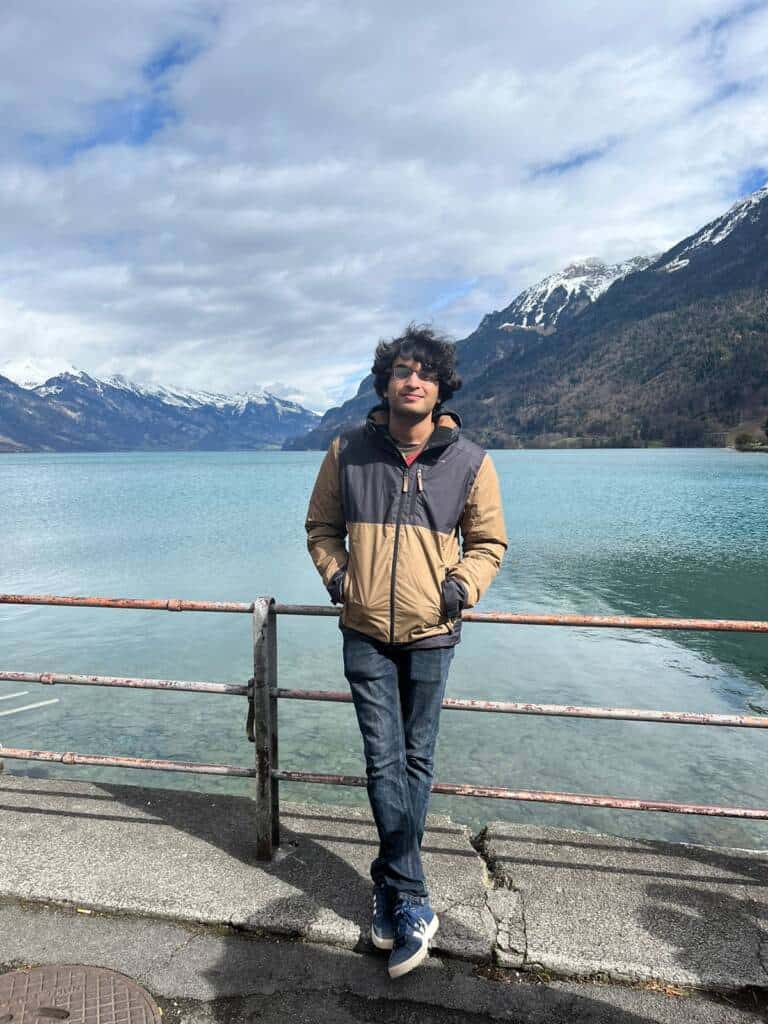
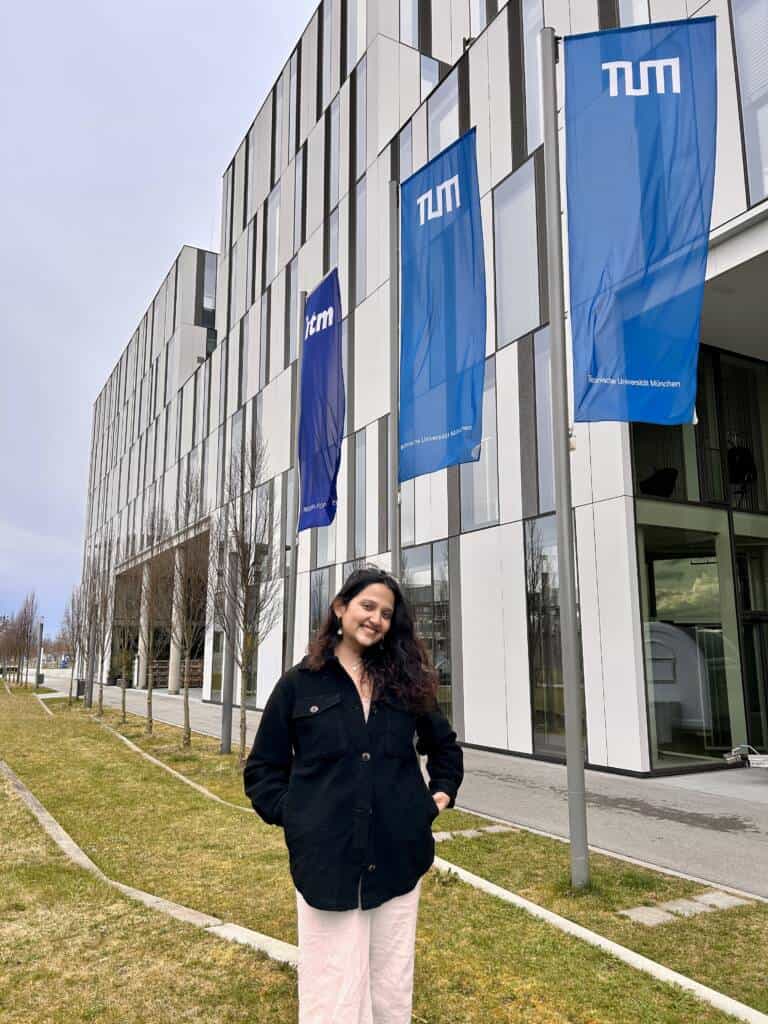
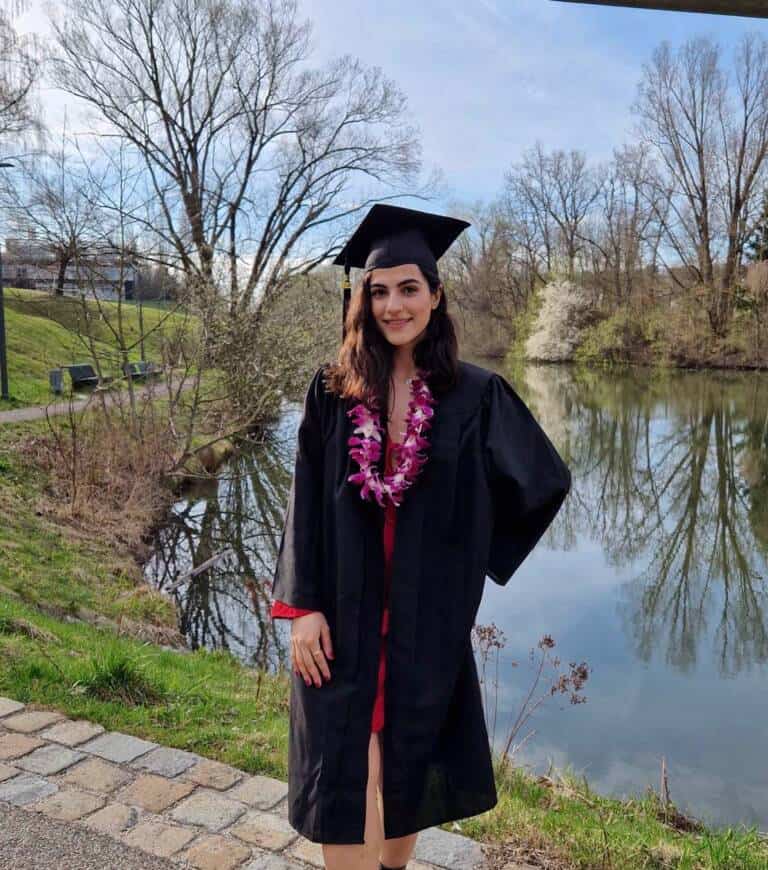
International students who received scholarships to study at Technical University of Munich, documented by Global Scholarships.
What Scholarship Recipients Say
Advice and insights from international students who successfully secured funding to study at Technical University of Munich.
"The DAAD KOSPIE Scholarship is fully funded, providing a monthly stipend of 992 euros."
"Keep pursuing what interests you, and do not be disheartened by failures. Most importantly, don't take yourself too seriously and have fun!"
"Eventually, I discovered the Nutrition and Biomedicine program at the Technical University of Munich (TUM)."
"I chose to join the Technical University of Munich (TUM)."
"It's a fantastic city for students, offering many job opportunities."
"Technical University of Munich offers merit-based and need-based tuition waivers for international students."
Frequently asked questions
Common questions about scholarships, admissions, and studying at Technical University of Munich.
Most TUM scholarships are designed for students who are enrolled in a TUM degree program (Bachelor’s/Master’s/Doctorate).
Both. TUM has degree programs that are fully German-taught, fully English-taught, and some that mix German and English (for example, English-taught modules inside otherwise German programs or bilingual curricula).
Recipients often describe the “program-level” reality: Ghazaleh Mohajeran-Zadeh says her Nutrition and Biomedicine master’s “was conducted entirely in English,” while also noting that “some optional courses are only available in German.”
TUM scholarships are typically not set up with a general “age limit.” Eligibility is usually based on things like enrollment status, academic performance, and sometimes financial need or specific fee status (for example, whether you are subject to non-EU tuition).
Generally, TUM scholarships are available across subjects (not restricted to only one department), but the exact eligibility can depend on the scholarship type (merit/need), your study level, and whether you are already enrolled.
- Engineering & STEM (broadly): Very common among scholarship recipients connected to TUM. For example, Akshay Malviya pursued engineering-focused research at TUM, and Rubaiyana Taskin highlights research work (microplastics) linked to TUM supervision. These profiles align well with merit-based scholarships and research-related funding.
- Business: Business-oriented students (e.g., management, technology management, entrepreneurship) are also typically eligible for university-wide scholarships where selection is not subject-specific.
- Humanities & social sciences: TUM offers programs that sit closer to humanities/social sciences (and many scholarships are university-wide rather than faculty-locked), so humanities-adjacent applicants can still be competitive, especially with strong motivation, engagement, and clear fit.
- Medicine / health: TUM has medicine and health programs, but be aware that Human Medicine is conducted exclusively in German and is highly regulated in Germany. International students can be eligible to apply, but language and admission requirements are strict. On the other hand, some health-related master’s programs are English-taught (and scholarship eligibility then depends on the specific scholarship rules).
Many TUM scholarships are open to a wide range of nationalities, but some are specifically designed for international students (and some tuition-fee waivers target students from non-EU (“third-country”) backgrounds who are subject to tuition fees).
The TUM-linked recipient stories show how broad the international mix can be: Ghazaleh is from Iran, Akshay is from India, and Vicente Algaba Martínez is from Spain and studied at TUM for his bachelor’s.
Often yes, because you must prove proficiency in the language of instruction (English and/or German), depending on the program. English-taught programs commonly accept tests like IELTS/TOEFL, while German-taught programs commonly require German certificates (e.g., TestDaF/DSH) at the required level.
Recipients show both scenarios: Ghazaleh reports “IELTS: 8.0 (C1 level)” and says her program didn’t require German proficiency, while Akshay shares that because his schooling was in English, he “did not have to appear in any exams for English language certificates” for his scholarship pathway.
TUM does not have one single “minimum grade” that applies to every program. Instead, many programs use an aptitude/assessment process that considers your grades plus other factors like course content match, motivation, and sometimes interviews.
In practice, strong grades help a lot: Ghazaleh reports a bachelor’s GPA of “18.5/20 (equivalent to 1.5 in the German system)” and explains that TUM evaluated her GPA, English score, and curriculum alignment, and she received direct admission.
A strong academic background usually combines (1) good grades, (2) clear match between your previous coursework and your target program, and (3) evidence you will contribute, which are research, projects, internships, leadership, or social engagement.
Recipients repeatedly stress that “fit + story” matters, not only grades. Rubaiyana Taskin emphasizes that beyond performance, it is “equally crucial to draft meaningful motivation letters, research proposals, and manuscripts,” because these documents are how reviewers understand your thinking and direction.
If you want a simple benchmark idea from real profiles: Akshay says his master’s CGPA at the time of applying was “9.21,” and he believed that “was a great help,” while Ghazaleh highlights that TUM assessed her GPA and curriculum alignment (so relevant coursework can be as important as raw GPA).
It depends on your degree level and program, but typical documents include: transcripts/grade sheets, degree certificate (if already awarded), CV, motivation letter/statement, proof of language proficiency (English and/or German), passport/ID, and program-specific items (module descriptions, portfolio, research proposal, recommendation letters, etc.). Some programs require a curricular analysis or specific forms.
If you are required to obtain a VPD via uni-assist (common for many international applicants), you typically upload your degree certificate (if available), transcript of records, and translations if documents are not in German or English.
Recipients’ stories show what this looks like in real life: Sandra Adjeiwaa describes preparing “my motivation letter, curriculum vitae, proof of English proficiency, and other supporting materials,” while Vicente says he wrote “very specific motivation letters” for each degree/scholarship, reflecting how tailored documents can be a differentiator.
For many applicants, the main “application-related” cost is not a TUM fee but the uni-assist handling fee (if you must apply for a VPD via uni-assist). uni-assist charges a fee per application semester and per chosen study course in its system.
There are many degrees that are open to international students right now — find yours.
About the Author: Hyun Lee


I want to study BS Astronomy. Please help me.
Hello, please see the Technical University of Munich Admissions Section for more information.