
DAAD EPOS Scholarship Scholar Rohit Juneja from India Shares His Journey of Securing a Fully Funded Master's at TU Dortmund University and Federal University of ABC, Germany and Brazil
University: TU Dortmund University and Federal University of ABC (UFABC)
Degree: Joint Master’s in Regional Development Planning and Management (SPRING – Spatial Planning for Regions in Growing Economies)
Previous Education: Bachelor of Planning (B.Plan), School of Planning and Architecture (SPA), Delhi; Post Graduate Diploma (PGD) in Remote Sensing and GIS with specialization in Urban and Regional Studies, Indian Institute of Remote Sensing (IIRS), ISRO, Dehradun
Scholarship: DAAD EPOS (Development-Related Postgraduate Courses) Scholarship – Funding (Monthly Stipend of €861 in Germany, Monthly Stipend of €800 in Brazil, Travel Allowance of €1,100, Study Allowances, Health Insurance, International Academic Mobility Support)
Other Offered Scholarships (if any): ITC Excellence Scholarship (ITC-ES), University of Twente – Full Funding (€40,495 Scholarship Package Covering Tuition Fee, Living Allowance, and Other Financial Support); Asian Institute of Technology (AIT) Partial Scholarship – Partial Funding (192,000 Thai Baht Toward Tuition and Study Expenses)
Social Media
LinkedIn: linkedin.com/in/rhtjuneja/
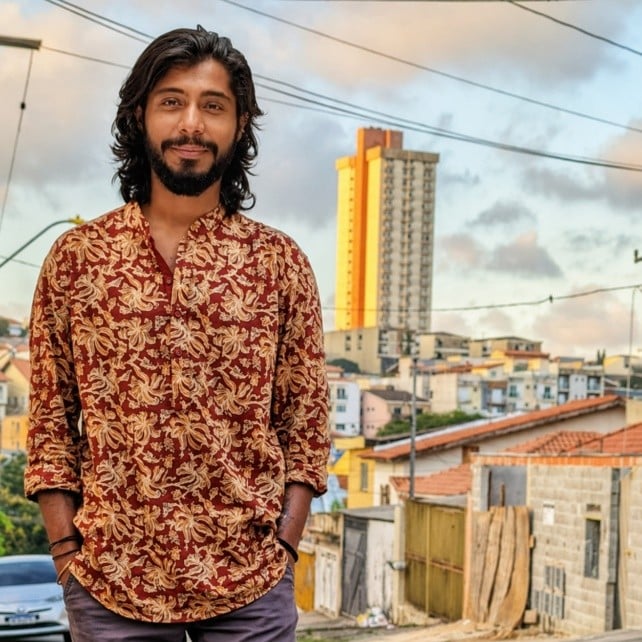
The Journey
My name is Rohit Juneja, and I am from India. I am an Urban Planner with an interest in sustainable urban development, climate resilience, spatial analysis, and improving living conditions in vulnerable communities. For over six years, I have worked on projects related to water, sanitation, and hygiene (WaSH), participatory planning, capacity building, and data-driven decision-making for marginalized settlements.
I hold a Bachelor of Planning (B.Plan) degree from the School of Planning and Architecture (SPA), Delhi (India), and a Joint Master’s degree - MSc. Regional Development Planning and Management (SPRING) - Spatial Planning for Regions in Growing Economies from TU Dortmund University in Germany and Federal University of ABC (UFABC) in Brazil. In addition, I have a Post Graduate Diploma (PGD) in Remote Sensing and GIS with specialization in Urban and Regional Studies from the Indian Institute of Remote Sensing (IIRS), ISRO, Dehradun, India. During my master's studies, I focused on topics such as public policy, territorial planning, sustainability, and urban governance. My thesis examined urban heat vulnerability in Delhi, India, and São Paulo, Brazil, with a particular focus on how environmental and socioeconomic factors influence the vulnerability of residents of precarious settlements.
I decided to pursue further education in urban planning because I wanted to better understand the complex relationship between cities, inequality, and environmental challenges. Growing up in India, I witnessed firsthand the pressures of rapid urbanization and the disparities in access to infrastructure and services. This motivated me to develop the technical and analytical skills needed to contribute to more inclusive, resilient, and sustainable cities. Pursuing postgraduate studies in both Germany and Brazil also gave me the opportunity to learn from different planning contexts and broaden my perspective on urban development challenges around the world.
Today, my academic and professional interests include climate justice, urban resilience, nature-based solutions, informal settlements, spatial data analysis, and participatory approaches to planning. I am particularly interested in using research and evidence-based planning to support communities that are most vulnerable to environmental and social risks.
DAAD EPOS Details
I was awarded the DAAD EPOS (Development-Related Postgraduate Courses) Scholarship by the German Academic Exchange Service (DAAD) to pursue the Joint Master's Programme in Regional Development Planning and Management (SPRING – Spatial Planning for Regions in Growing Economies) at TU Dortmund University, Germany, and the Federal University of ABC (UFABC), Brazil, from 2021 to 2023. During my studies in Germany, I received a monthly stipend of €861. During my second year in Brazil, I received a monthly stipend of €800, along with a travel allowance of €1,100. In addition, I received study allowances at the beginning of each academic year. The scholarship also covered health insurance and supported international academic mobility between Germany and Brazil.
Were You Offered Any Other Scholarships?
Yes. In addition to the DAAD EPOS Scholarship, I was offered the following scholarships:
University of Twente - Faculty of Geo-Information Science and Earth Observation (ITC), Netherlands - I was awarded the ITC Excellence Scholarship (ITC-ES) for the Master's programme in Geoinformation Science and Earth Observation for Urban Planning and Management. The scholarship package included an ITC Excellence Scholarship grant of €28,501 and an additional tuition fee waiver of €11,994. Together, these components provided full coverage of the programme tuition fee and a living allowance (€10,345) and other financial support. The total value of the scholarship package was €40,495 for the full duration of the programme.
Asian Institute of Technology (AIT), Thailand - I was awarded a partial scholarship for the Master's programme in Regional and Rural Development Planning. The scholarship included a fellowship amount of 192,000 Thai Baht toward tuition and study expenses.
Educational Background
As mentioned earlier, I hold a Bachelor of Planning (B.Plan.) degree from the School of Planning and Architecture (SPA), Delhi, India; a Postgraduate Diploma (PGD) in Remote Sensing and GIS with a specialization in Urban and Regional Studies from the Indian Institute of Remote Sensing (IIRS), ISRO, Dehradun, India; and a Joint Master's degree in Regional Development Planning and Management (SPRING) from TU Dortmund University, Germany, and the Federal University of ABC (UFABC), Brazil.
My educational background provided me with a strong interdisciplinary foundation that combines urban planning, spatial analysis, public policy, and sustainable development. During my undergraduate studies, I developed a comprehensive understanding of urban and regional planning principles, land-use planning, infrastructure development, housing, transportation, and urban governance. The programme also equipped me with analytical and problem-solving skills through studio-based projects and fieldwork. My postgraduate diploma at IIRS strengthened my technical expertise in Geographic Information Systems (GIS), remote sensing, mapping and geospatial data analysis. These skills enabled me to integrate spatial technologies into planning processes and undertake evidence-based assessments of urban and environmental challenges. The SPRING Master's programme further expanded my knowledge of public policy, sustainability, climate adaptation, and international planning practices. Studying in both Germany and Brazil exposed me to diverse planning systems and development contexts, while my research on urban heat vulnerability enhanced my quantitative research, data analysis, and scientific writing skills.
Together with my professional experience in water, sanitation, and hygiene (WaSH), participatory planning, and capacity building, this educational background prepared me to work at the intersection of urban development, climate resilience, and social equity. It has provided me with both the technical competencies and the interdisciplinary perspective necessary to address complex urban and regional challenges, particularly in rapidly urbanizing and vulnerable communities.
How Did You Prepare to Apply to TU Dortmund and the Federal University of ABC (UFABC)?
To prepare my applications, I conducted extensive research on universities, degree programmes, and scholarship opportunities that aligned with my academic interests and professional goals. I primarily used university websites, scholarship portals, faculty profiles, webinars, alumni experiences, and education forums to gather information about programmes, their structures, eligibility requirements, funding opportunities, and career prospects. I also connected with former students/alumni to gain firsthand insights into the programmes and application processes.
When evaluating institutions, I focused on programmes that offered a strong combination of technical skills, research-oriented learning, and international exposure, while maintaining close links between academic theory and practical application. This led me to apply to programmes such as the SPRING Master's Programme at TU Dortmund University and UFABC, and the Master's programme in Geoinformation Science and Earth Observation for Urban Planning and Management at the University of Twente (ITC).
As part of my application, I took the IELTS Academic examination to demonstrate English language proficiency. To prepare for the test, I familiarized myself with the exam format, completed practice tests, and regularly worked on reading, writing, listening, and speaking exercises using official preparation materials. My academic background, professional experience, and regular use of English in academic and professional settings also contributed significantly to my preparation. Beyond standardized tests, I invested considerable effort in preparing strong application materials, including statements of purpose, portfolios, motivation letters, research proposals, and scholarship essays. I tailored each application to the specific institution and programme, highlighting how my academic background, professional experience, and long-term career goals aligned with the objectives of the programme and scholarship.
How Did You Prepare to Apply for the DAAD EPOS?
I approached the scholarship application process with the same level of preparation as my university applications. I began by thoroughly reviewing the eligibility criteria, selection process, and objectives of each scholarship to understand what qualities and experiences they were seeking in candidates. This helped me tailor my application materials to demonstrate not only my academic achievements but also my professional experience, leadership potential, and commitment to contributing to the programme and in the field/sector. A significant part of my preparation involved reflecting on my academic journey, professional experiences, and long-term career goals. I carefully developed my motivation letters, statements of purpose, and scholarship essays to clearly articulate why I was pursuing further education, how the programme aligned with my career aspirations, and how I intended to apply the knowledge and skills gained to address development challenges in my home country and beyond.
I also highlighted my professional experience in WaSH, participatory planning, spatial analysis, and work with vulnerable communities, as these experiences closely aligned with the development-oriented objectives of scholarships such as the DAAD EPOS programme. Additionally, I sought feedback from mentors, professors, and colleagues to refine my application materials and ensure that my applications effectively communicated my strengths, achievements, and future potential. Finally, I dedicated considerable time to preparing a strong and coherent application package, ensuring that all supporting documents, academic records, recommendation letters, and required certifications were submitted accurately and on time.
How is Your Experience at TU Dortmund and the Federal University of ABC (UFABC)?
My experience at the institution was extremely enriching, both academically and personally. The SPRING Master's Programme provided a unique opportunity to study in Germany during the first year and to choose a second-year study destination out of Brazil, the Philippines, Tanzania, or Ghana; I selected Brazil, which allowed me to gain exposure to diverse planning systems, development challenges, and cultural perspectives. The international and multicultural learning environment enabled me to collaborate with students and professionals from various backgrounds, broadening my understanding of global development issues.
Academically, the coursework strengthened my knowledge of regional development, public policy, sustainability, urban governance, and spatial planning, while encouraging critical thinking and interdisciplinary problem-solving. The faculty members were highly knowledgeable and supportive, and the programme provided numerous opportunities to engage, collaborate, and discuss the development challenges of our respective countries with fellow students from diverse backgrounds through research, projects, and presentations. One of the most valuable aspects of my experience was writing my research thesis, as it enabled me to strengthen my skills in climate data analysis, research methodology, scientific writing, and comparative urban studies. It also deepened my interest in climate resilience, environmental justice, and evidence-based planning, further shaping my commitment to addressing urban climate challenges through informed and inclusive policy approaches.
Beyond academics, living and studying in Germany and Brazil helped me develop adaptability, cross-cultural communication skills, and a global perspective. The experience significantly contributed to my personal growth and strengthened my commitment to pursuing a career focused on sustainable and equitable urban development.
How Does TU Dortmund and the Federal University of ABC (UFABC) Support International Students?
The institution provided strong support for international students throughout both the academic and administrative aspects of the programme. Before the start of the programme, students received detailed guidance on visa procedures, accommodation options, health insurance, and enrollment processes. This support helped ease the transition to studying and living in a new country. Throughout the programme, the universities offered dedicated international offices and programme coordinators who assisted students with administrative matters, academic requirements, and day-to-day challenges. Faculty members and staff were approachable and supportive, creating an inclusive learning environment where international students felt welcomed and encouraged to participate actively in academic and extracurricular activities.
One of the greatest strengths of the SPRING programme was its highly international student cohort. Students came from diverse countries and professional backgrounds, fostering a supportive peer network and creating numerous opportunities for cultural exchange and mutual learning. The programme also organized academic events, workshops, and networking opportunities that helped students integrate into the academic community and build professional connections. In addition, the programme's structure, which included studying in Germany during the first year and completing the second year at a partner university abroad, provided extensive support for international mobility. Students received guidance and assistance during the transition between countries, helping them adapt to different academic systems and cultural contexts. Overall, the support provided by the institutions played a significant role in ensuring a positive and rewarding international study experience.
Is the Institution That You Are Studying at Free for the Master's in Regional Development Planning and Management? If You Had to Pay Semester Fees, How Much Was It?
The SPRING Master's Programme itself did not charge tuition fees at TU Dortmund University. However, students were required to pay a semester contribution (Semesterbeitrag), which covered administrative costs and student services, including access to public transportation within the region. During my studies, the semester fee was approximately €300–€350 per semester, although the exact amount varied slightly each semester. This was easily covered by the scholarship we received. For the second year at the Federal University of ABC (UFABC) in Brazil, there were no tuition fees or semester fees, as UFABC is a public university and higher education at public universities in Brazil is tuition-free for both domestic and international students enrolled through the programme. As a DAAD EPOS scholar, these costs were easily manageable through the scholarship support provided during the programme.
Are Your Classes Conducted in English or German?
The SPRING Master's Programme was conducted entirely in English, both at TU Dortmund University in Germany and at the Federal University of ABC (UFABC) in Brazil. All lectures, seminars, assignments, examinations, and thesis-related activities within the programme were carried out in English, as the programme is specifically designed for an international student cohort. Although knowledge of the local language was not required for academic purposes, learning basic German and Portuguese was highly beneficial for daily life, cultural integration, and interacting with local communities. During my time in Germany and Brazil, I had opportunities to improve my understanding of both languages through everyday interactions and immersion in the local environment. The use of English as the medium of instruction enabled students from diverse linguistic and cultural backgrounds to learn, collaborate, and exchange ideas effectively throughout the programme.
What Did You Pursue After the DAAD EPOS?
After completing the SPRING Master's Programme, I remained in Brazil and continued my academic and research career. I was awarded a FAPESP (Fundação de Amparo à Pesquisa do Estado de São Paulo - São Paulo Research Foundation) scholarship, which enabled me to pursue research on urban and environmental challenges, building upon the knowledge and skills I developed during my master's studies. Currently, I work as a researcher, and my work focuses on issues related to informal settlements, climate vulnerability, urban resilience, spatial analysis, and equitable urban development. My research combines geospatial techniques and data analysis to better understand the challenges faced by vulnerable communities and to support evidence-based planning and policymaking. The DAAD EPOS scholarship and the SPRING programme played a crucial role in preparing me for this path by strengthening my research capabilities, expanding my international network, and providing me with a global perspective on urban development challenges.
Would Potential Students Have Any Problems Not Knowing German?
No, not necessarily. The SPRING Master's Programme was conducted entirely in English, and all lectures, assignments, examinations, and academic requirements could be completed without prior knowledge of German or Portuguese. Faculty members, programme coordinators, and fellow students were accustomed to working in an international environment, making it possible for international students to thrive academically using English alone.
However, learning the local language can significantly enhance the overall experience. In Germany and Brazil, basic knowledge of German and Portuguese, respectively, can make everyday tasks, social interactions, cultural integration, and travel much easier. Additionally, DAAD EPOS scholarship recipients are required to complete an intensive two-month German language course up to the A1.2 level before the start of the programme, which provides a basic foundation for navigating daily life in Germany. In my experience, while knowledge of the local language was not essential during the course, it was highly beneficial for engaging more deeply with local people and making the most of the experience outside the classroom.
What Do You Think Made Your Application Stand Out?
I believe my application stood out because of the combination of my professional experience, technical expertise, and motivation. Before applying, I had over five years of experience working in urban planning, WaSH, participatory planning, and capacity building. My background in planning, combined with specialized training in Remote Sensing and GIS, provided both practical and technical perspectives on development challenges. Most importantly, my academic interests, professional experience, and commitment to sustainable urban development and social equity closely align with the objectives of the DAAD EPOS programme. I was able to clearly demonstrate how the programme would help me create greater impact through my future work and research.
Looking Back, Would You Have Done Anything Differently During Your Time in the Program?
If I were going through the process again, I would start preparing my applications earlier, pay closer attention to application and scholarship deadlines, and spend more time connecting with current students and alumni before/while applying. I was admitted to several universities and programmes in different countries, but in some cases, I was unable to secure funding because I missed scholarship deadlines or did not fully explore alternative funding opportunities. This taught me the importance of planning ahead and researching all available financial support options as early as possible.
I would also apply to an even broader range of scholarships and universities. Although I was fortunate to receive multiple scholarship offers, applying widely increases opportunities and provides more options when making a final decision. Overall, however, I was satisfied with my application process and the outcome.
What Advice Would You Give Those Looking to Apply for a Similar Scholarship?
My advice would be to start preparing early and invest time in understanding both the academic programme and the scholarship's objectives. Selection committees are not only looking for strong academic candidates but also for individuals who can clearly demonstrate how the programme aligns with their professional experience, career goals, and potential impact. I would also recommend researching multiple universities and funding opportunities rather than relying on a single option.
Most importantly, be authentic in your application. Clearly communicate your motivations, experiences, and future aspirations, and show how the scholarship will help you contribute to your field and community. A strong application is not just about achievements; it is about presenting a coherent story that connects your past experiences with your future goals.
Want to submit your
scholarship journey?
Submit Your Story Here!
More Scholarship Recipients
My name is Shah Hussain, and I am from Khyber Pakhtunkhwa, Pakistan. I completed my Bachelor’s in Psychology at the Univer .... Read more
I am June from the Philippines. I am an educator for Social Sciences and Humanities. I recently earned my Master in Southeas .... Read more
Hi, my name is Abdul Hafeez, and I come from a small town called Nasirabad in Sindh, Pakistan. Currently, I am pursuing a ma .... Read more
Leave A Comment