
Chevening Scholar Heman Das from Pakistan Shares His Journey of Securing a Fully Funded MSc at the London School of Economics and Political Science, United Kingdom
University: London School of Economics and Political Science (LSE)
Degree: MSc in Social Innovation and Entrepreneurship
Previous Education: Undergraduate degree, University of Karachi
Scholarship: Chevening Scholarship – Fully Funded (Full Tuition Fees, Monthly Living Allowance, Return Flights, Arrival Allowance, Travel and Networking Grants)
Other Offered Scholarships (if any): Commonwealth Shared Scholarship, University of Strathclyde – Fully Funded (MSc in Entrepreneurship, Innovation and Technology)
Social Media
LinkedIn: linkedin.com/in/heman-das-535994138/
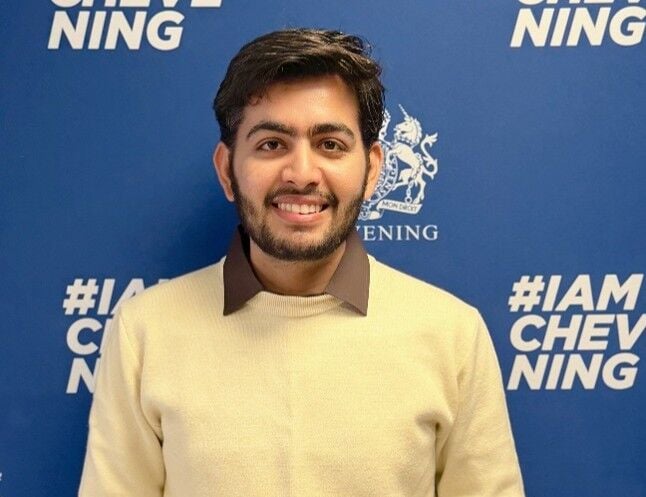
The Journey
My name is Heman Das, and I am from rural Sindh, Pakistan. I am a first-generation university student in my family, which means that every step of my academic journey has been navigated largely without the kind of institutional knowledge or networks that many students take for granted.
I am currently pursuing an MSc in Social Innovation and Entrepreneurship at the London School of Economics and Political Science (LSE), within the Department of Management. I chose this programme because my work over the past few years advocating for minority rights, documenting human rights violations, and supporting marginalised communities in Pakistan and across South Asia showed me that awareness and advocacy alone are not enough. I wanted to understand how to build sustainable, scalable solutions for the communities I serve. Social innovation and entrepreneurship, as a discipline, sits at the intersection of social impact and practical action exactly where I want to be.
Chevening Scholarship Details
I am a Chevening Scholar, funded by the UK Foreign, Commonwealth and Development Office (FCDO). Chevening is the UK government’s international scholarship programme, fully funded and offering comprehensive financial support to outstanding emerging leaders from around the world to pursue a one-year master’s degree at any UK university.
The scholarship covers full tuition fees at LSE, a monthly living allowance, return flights to and from the UK, an arrival allowance, and additional grants for travel and networking. In total, the value of the scholarship is substantial, covering the entirety of my year of study in London, which would have been financially impossible for me otherwise.
My scholarship period runs from September 2025 to September 2026.
Were You Offered Any Other Scholarships?
Yes, I was also selected for the Commonwealth Shared Scholarship at the University of Strathclyde for the MSc in Entrepreneurship, Innovation and Technology. Ultimately, I chose Chevening and LSE because of the programme’s prestige and the unparalleled networking opportunities London offers.
Educational Background
I completed my undergraduate degree at University of Karachi, Pakistan. My CGPA was 2.9, which I want to be transparent about because I think it is important for prospective applicants to know that a less-than-perfect GPA does not disqualify you from world-class scholarships.
What mattered far more, in my experience, was the depth and authenticity of my professional and advocacy work, and how clearly, I could articulate the connection between my past experiences and my future goals.
How Did You Prepare to Apply to London School of Economics and Political Science (LSE)?
I started by getting very clear on what I wanted from a master’s programme. I knew I wanted something that combined social impact with practical, entrepreneurial thinking not just theory. That clarity helped me narrow down programmes quickly.
I researched extensively online, reading programme pages, module descriptions, and faculty profiles. It’s MSc in Social Innovation and Entrepreneurship stood out because of its focus on designing solutions for social problems and its placement within the Department of Management, which gave it a rigorous, applied orientation.
For my application, I invested significant time in my personal statement, making sure it told a coherent story becoming an advocate, and now seeking the tools to turn advocacy into sustainable change. I asked mentors and colleagues to review my drafts. I also secured strong references from my professors who knew my work intimately not just academically, but in the field.
How Did You Find Information About Chevening Scholarship and London School of Economics and Political Science (LSE)?
Honestly, a lot of it was self-directed research. As a first-generation student, I did not have family members or a network of alumni to guide me. I spent hours on the Chevening website, reading FAQs, watching webinars, and studying the profiles of past scholars from Pakistan to understand what kind of candidates were selected.
I also followed Chevening’s social media accounts and joined online communities and forums where applicants shared tips and experiences.
Beyond Chevening, I explored Commonwealth Scholarships, Erasmus Mundus, and various university-specific funding pages. I would advice is to be systematic, create a spreadsheet of deadlines, eligibility criteria, and required documents, and start early.
Did You Take Any Standardized Tests? If So, How Did You Prepare for Them?
Yes, I took the IELTS as it is a requirement for LSE admission. Preparation was largely self-study, I used free online resources, practice tests from the British Council, and YouTube tutorials. I also worked through the Cambridge IELTS 1–18 past sample tests to get familiar with the format, and those exercises really helped me perform well on the actual exam.
My advice for IELTS preparation is not to overthink it if you are already working and communicating in English regularly. Focus on understanding the test format, practice under timed conditions, and pay special attention to the writing and speaking sections where the scoring criteria can be quite specific.
How Did You Prepare to Apply for the Chevening Scholarship?
The Chevening application has several components, four essays (on leadership, networking, studying in the UK, and your career plan), references, and eventually an interview for shortlisted candidates.
I approached each essay as a chance to tell a specific, evidence-based story. For leadership, I drew on my experience founding and hosting Courageous Conversations building it from nothing into a platform with over 45+ episodes amplifying marginalised voices. For networking, I reflected on my work with international bodies through GMRSS in Hungary and my engagement at the World Social Forum in Nepal.
The most important thing I was authentic. I did not try to present a polished, sanitised version of my journey. I believe that honesty and specificity are what panels respond to, they read thousands of applications, and the ones that feel real stand out.
For the interview, I practiced with friends, rehearsed answers to common Chevening interview questions, and made sure I could speak fluently about my career goals and how the UK experience would help me achieve them.
How is Your Experience at London School of Economics and Political Science (LSE)?
My experience at LSE has been transformative, both intellectually and personally. The MSc in Social Innovation and Entrepreneurship is rigorous, the coursework covers everything from understanding social problems and innovation design to managerial economics, marketing for social entrepreneurs, and entrepreneurial finance.
One of the highlights has been the field research component. Our cohort was split between South Africa and Kenya, and I travelled to Cape Town where I worked with TooMuchWifi in Langa township an experience that grounded the theories we studied in real-world complexity.
Being in London as someone from a small town in Pakistan has also been personally significant. It has been a period of enormous growth, though I will be honest that it came with challenges adjusting to a new country, being far from family, and navigating loneliness during the early months. But the programme, the cohort, and the city have stretched me in ways I am deeply grateful for.
I also serve as a Student Ambassador for the Department of Management, which has allowed me to give back by supporting prospective students and sharing my experiences.
How Do You Rate London School of Economics and Political Science (LSE) Academically?
LSE is world-class, and I say that it is not as marketing but from lived experience. The faculty are leading researchers and practitioners, the reading lists are demanding and current, and the intellectual environment pushes you to think critically and rigorously.
What sets LSE apart, in my view, is the diversity of its student body and the quality of classroom discussion that results from it. In any given seminar, you might be learning alongside people from twenty different countries with vastly different professional backgrounds. That diversity of perspective is itself an education.
The Department of Management, specifically, does an excellent job of balancing academic rigour with practical application. Modules are designed to connect theory to real-world impact, and the field research component is a standout feature of the SIE programme.
What Do You Think Made Your Application Stand Out?
I believe three things made the difference. First, authenticity I did not try to be someone I was not. I wrote openly about my identity, about being a first-generation student, and about the specific, sometimes difficult realities that shaped my ambitions. Scholarship committees can tell the difference between a genuine story and a manufactured one.
Second, a demonstrated track record. I was not just talking about wanting to create change I had years of concrete evidence, over 45+ podcast episodes, shadow reports to the UN, presentations at international forums, and sustained research and advocacy work. My application showed commitment over time, not just aspiration.
Third, a clear and specific career plan. I could articulate exactly why I needed this particular programme at this institution, and how it connected to what I wanted to do after. The Chevening essays are structured to assess this, and I made sure every answer pointed towards a coherent vision.
What Advice Would You Give Those Looking to Apply for a Similar Scholarship?
- First, know your story. The most powerful applications are not the ones with the longest CVs they are the ones where the applicant can connect their past, present, and future into a compelling, coherent narrative. Why you? Why this programme? Why now? If you can answer those three questions clearly, you are already ahead of most applicants.
- Second, do not let imperfect grades discourage you. My CGPA was 2.9. What carried my application was not academic perfection but the depth of my real-world engagement and the clarity of my vision. Scholarships like Chevening are looking for leaders and changemakers, not just high achievers on paper.
- Third, be genuine. Do not write what you think the committee wants to hear write what is true. Panels read thousands of applications, and authenticity cuts through the noise. If your journey has been difficult or unconventional, that is not a weakness it is often your greatest strength.
- Fourth, apply broadly and start early. Do not rely on a single scholarship. Research every opportunity available to you, create a timeline, and treat the process like a project. And remember that every application you write even the ones that do not succeed makes the next one stronger.
- Finally, believe that you belong in these spaces. As a first-generation student, I know how easy it is to feel like these opportunities are not meant for people like you. They are. Your perspective is exactly what these institutions and programmes need.
Want to submit your
scholarship journey?
Submit Your Story Here!
More Scholarship Recipients
My name is Shah Hussain, and I am from Khyber Pakhtunkhwa, Pakistan. I completed my Bachelor’s in Psychology at the Univer .... Read more
I am June from the Philippines. I am an educator for Social Sciences and Humanities. I recently earned my Master in Southeas .... Read more
Hi, my name is Abdul Hafeez, and I come from a small town called Nasirabad in Sindh, Pakistan. Currently, I am pursuing a ma .... Read more
Leave A Comment