
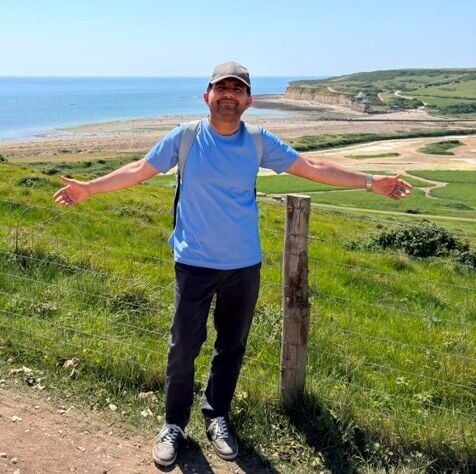
Chevening Scholar Dr Abdul Razzaque Nohri from Pakistan Shares His Journey of Securing a Fully Funded MSc at the University of Birmingham, United Kingdom
University: University of Birmingham
Degree: MSc in Public and Environmental Health Sciences
Previous Education: Doctor of Pharmacy (Pharm-D); Master of Business Administration (MBA); Master of Philosophy (M.Phil); Master of Science in Public Health (MSPH)
Scholarship: Chevening Scholarship – Fully Funded (Tuition Fees, Monthly Living Stipend, Travel Costs, Visa-Related Support, Arrival and Departure Allowances)
Other Offered Scholarships (if any): Commonwealth Shared Scholarship – Fully Funded
Social Media
The Journey
Chevening Scholar | Medical Professional | Public & Environmental Health Specialist | Researcher | Book Author | Top-rated Multi-niche Freelancer
My name is Dr Abdul Razzaque Nohri, and I am from Sindh, Pakistan. I come from a rural background, and my professional journey has been shaped by the realities of underserved communities, particularly in areas affected by poverty, weak health systems, climate vulnerability, droughts, floods, and limited access to mental health and environmental health services.
I am a senior pharmacist, public health specialist, researcher, and Chevening Scholar. I received the Chevening Scholarship to pursue an MSc in Public and Environmental Health Sciences at the University of Birmingham from United Kingdom. I chose this field because public health and environmental health are no longer separate issues. In countries like Pakistan, climate change, heatwaves, unsafe water, air pollution, food insecurity, antimicrobial resistance, and mental health problems are deeply connected. My goal is to use this degree to strengthen climate-resilient health systems and contribute to practical public health policies in Pakistan and beyond.
Chevening Scholarship Details
I received the Chevening Scholarship, funded by the UK Foreign, Commonwealth and Development Office (FCDO). My host institution is the University of Birmingham, where I am studying MSc Public and Environmental Health Sciences.
Chevening is a fully funded scholarship. It covers university tuition fees, a monthly living stipend, travel costs to and from the UK, visa-related support, arrival and departure allowances, and access to a powerful global network of scholars, alumni, leaders, and changemakers. In my case, the tuition fee for the programme was approximately £30,000, in addition to the living and travel support provided by the scholarship.
Were You Offered Any Other Scholarships?
Yes. In addition to receiving the Chevening Scholarship, I was also offered the Commonwealth Shared Scholarship, another highly competitive fully funded UK scholarship.
However, I finally accepted the Chevening Scholarship because it was fully funded and closely aligned with my leadership goals, public health career, and long-term commitment to contributing to Pakistan. Chevening was not only a scholarship for academic study; for me, it was also a leadership platform that connected strongly with my future vision in public health, climate resilience, and health equity.
For future applicants, my advice is simple: never depend on one scholarship only. Apply widely, but keep your story consistent. Your academic field, leadership goals, professional experience, and future impact should connect clearly across all applications.
Educational Background
My academic background includes a Doctor of Pharmacy (Pharm-D), Master of Business Administration (MBA), Master of Philosophy (M.Phil), and Master of Science in Public Health (MSPH). This combination gave me a strong foundation in medicines, health systems, research, management, and population health.
My pharmacy training helped me understand clinical care, medicines, antimicrobial resistance, and patient safety. My public health training helped me move beyond individual treatment and think about prevention, systems, communities, policy, and equity. My research background, including more than 45 research publications and experience as a reviewer, strengthened my ability to identify public health problems, analyse evidence, and communicate findings. These experiences made my application stronger because I was not applying only for a degree; I was applying with a clear purpose, a defined public health direction, and evidence of previous work.
How Did You Prepare to Apply to the University of Birmingham?
I prepared by first identifying my long-term goal and then selecting programmes that matched that goal. I did not choose universities only by ranking. I looked at course content, modules, faculty expertise, dissertation opportunities, public health relevance, environmental health focus, and how the programme could help me serve climate-vulnerable communities after graduation.
I prepared my academic documents, transcripts, degree certificates, CV, personal statement, references, English language evidence, and scholarship essays well before the deadlines. I also reviewed each university’s entry requirements carefully because small mistakes in eligibility, document format, or deadlines can easily damage an otherwise strong application.
I would suggest that future applicants that try to target Russel group universities of UK. Because Russell Group universities are generally seen as more research-intensive, globally recognised, and competitive in the UK.
How Did You Find Information About Chevening Scholarship and University of Birmingham?
I used official university websites, the Chevening website, scholarship portals, alumni stories, webinars, LinkedIn, and guidance from previous scholars. LinkedIn was especially useful because it helped me understand how successful applicants presented their leadership, networking, volunteering, and social impact.
However, the most important lesson is this: do not rely blindly on social media advice. Always verify eligibility, deadlines, required documents, and scholarship conditions from official websites. Many applicants fail not because they lack talent, but because they follow incomplete or outdated information.
Did You Take Any Standardized Tests? If So, How Did You Prepare for Them?
For my UK postgraduate applications, the English language requirement depended on each university and scholarship. I took the PTE. Future applicants should carefully check each university’s requirement because some accept IELTS, TOEFL, PTE, or previous English-medium education.
My preparation was simple and practical. I focused on writing, speaking, reading, and giving clear answers. I also practised explaining my public health work in simple English because scholarship essays and interviews are about clarity, confidence, and purpose.
How Did You Prepare to Apply for the Chevening Scholarship?
For Chevening, I prepared by reflecting deeply on three areas: leadership, networking, and future impact. I reviewed my professional journey and selected examples that showed real action, not just titles. I focused on my work in public health, mental health, research, rural Sindh, climate-vulnerable communities, and health systems.
I also prepared by attending guidance sessions, speaking to alumni, drafting multiple versions of my essays, and improving them repeatedly. The strongest application is not written in one sitting. It is rewritten many times until the story becomes clear, honest, and convincing.
My main strategy was to connect my past, present, and future. My past showed lived and professional experience. My present showed academic readiness. My future plan showed how the scholarship would help me contribute to Pakistan’s public and environmental health sector.
How is Your Experience at the University of Birmingham?
My experience at the University of Birmingham has been academically rich, professionally useful, and personally transformative. The programme has exposed me to public health, environmental health, health protection, food safety, climate change, research methods, and policy-relevant thinking.
Studying in the UK has also helped me understand global public health from a comparative perspective. I have interacted with students and professionals from different countries, participated in academic and policy events, and engaged in Chevening activities. The experience has expanded my confidence, networks, and ability to communicate public health challenges at an international level.
How Do You Rate the University of Birmingham Academically?
I rate the University of Birmingham highly because the academic environment is structured, research-informed, and supportive. The programme encourages critical thinking rather than memorisation. Students are expected to read evidence, question assumptions, apply theory to real-world issues, and communicate professionally.
For a student from a public health background, this is valuable because public health problems are complex. The university environment helps students think across disciplines, including environment, policy, behaviour, systems, and equity.
How Does the University of Birmingham Support International Students?
The University of Birmingham supports international students through orientation sessions, academic guidance, wellbeing services, library resources, careers support, international student advice, student societies, and regular communication from programme teams.
The Careers Network has been especially useful for my professional development. Through it, I completed The Birmingham Award with Distinction and was also selected for the Masters Consultancy Challenge, which gave me valuable exposure to employability skills, teamwork, leadership, and consultancy-style problem solving.
My honest advice to future students is to use these services early. Do not wait until stress becomes serious. Ask for help, attend sessions, meet people, and learn how the UK academic system works.
What Did You Pursue After the Chevening Scholarship?
I am currently completing my scholarship and degree. After completion, my plan is to return to Pakistan and contribute to public health, environmental health, climate-resilient health systems, research, and policy implementation. I am particularly interested in climate change and mental health, environmental health risks, antimicrobial resistance, maternal and reproductive health, and public health systems strengthening in Sindh.
My long-term goal is to bridge research, policy, and community-level action so that evidence does not remain only in reports but reaches the people who need it most.
Would Potential Students Have Any Problems Not Knowing the Native Language?
This question is not applicable because the United Kingdom is an English-speaking country and my programme is taught in English. However, students should still prepare for academic English, especially critical writing, referencing, presentations, and professional communication. Speaking basic English is not enough for postgraduate success; students need to learn how to write and argue academically.
What Do You Think Made Your Application Stand Out?
I believe my application stood out because it had a clear and authentic connection between my background, my work, and my future goals. I did not present myself as a perfect candidate. I presented myself as someone who had worked in real public health settings, understood community-level challenges, and had a serious plan for using the scholarship after returning home.
My rural background, professional experience, research publications, mental health work in Tharparkar, interest in climate-vulnerable communities, and commitment to Pakistan all helped create a coherent story. Scholarship committees are not looking for fancy language. They are looking for clarity, leadership, evidence of impact, and future potential.
Looking Back, Would You Have Done Anything Differently During Your Time in the Program?
I would start even earlier. A strong scholarship application requires time for reflection, documentation, essay writing, feedback, interview preparation, and emotional resilience. I would also organise my achievements, certificates, publications, volunteer work, and leadership examples in a more systematic way from the beginning.
Another thing I would do differently is practise interviews earlier. Many candidates prepare essays well but underestimate interviews. In reality, the interview is where your written story must become a spoken story. If your goals are unclear, the panel will notice.
What Advice Would You Give Those Looking to Apply for a Similar Scholarship?
- First, be honest about your story. Do not copy someone else’s journey. A scholarship application becomes powerful when it shows your real context, real work, real challenges, and real plans.
- Second, build a clear connection between your past, chosen course, and future impact. Do not apply for a degree only because it is popular. Explain why this course matters for your country, your community, and your professional goals.
- Third, show leadership through evidence. Leadership is not only a job title. It can be community work, research, volunteering, mentoring, advocacy, problem-solving, or creating opportunities for others.
- Fourth, apply widely and carefully. Read instructions, respect deadlines, tailor every application, and ask for feedback from people who understand scholarships.
- Finally, do not wait until you feel fully ready. Many strong applicants delay because they think they are not good enough. Start the process, improve step by step, and let your purpose guide you.
A scholarship is not only a personal achievement; it is a responsibility to return with better skills, stronger networks, and deeper commitment to the communities that shaped you.
Want to submit your
scholarship journey?
Submit Your Story Here!
More Scholarship Recipients
My name is Anna Nana Agyeiwaa Mensah, a professional nurse from Ghana. My interest in Global Health grew out of my experienc .... Read more
My name is Ratul Chakraborty, and I am from Bangladesh. My background is interdisciplinary, actually. Before coming to Germa .... Read more
My name is Mabel Zuñiga. I am a graduate student from Panama pursuing a Master’s degree in Public Policy at the Universit .... Read more
Leave A Comment