
Fulbright Scholar Amar Latif Qazi from Pakistan Shares Their Journey of Securing a Fully Funded Master's at the Vanderbilt University, United States
University: Vanderbilt University
Degree: Master of Education in Community Development and Action
Previous Education: Bachelor’s in Social Sciences and Liberal Arts, Institute of Business Administration (IBA), Karachi
Scholarship: Fulbright Scholarship – Fully Funded (Full Tuition, One Round-Trip Flight, Health Insurance, Monthly Living Stipend)
Social Media
LinkedIn: linkedin.com/in/amarlq/
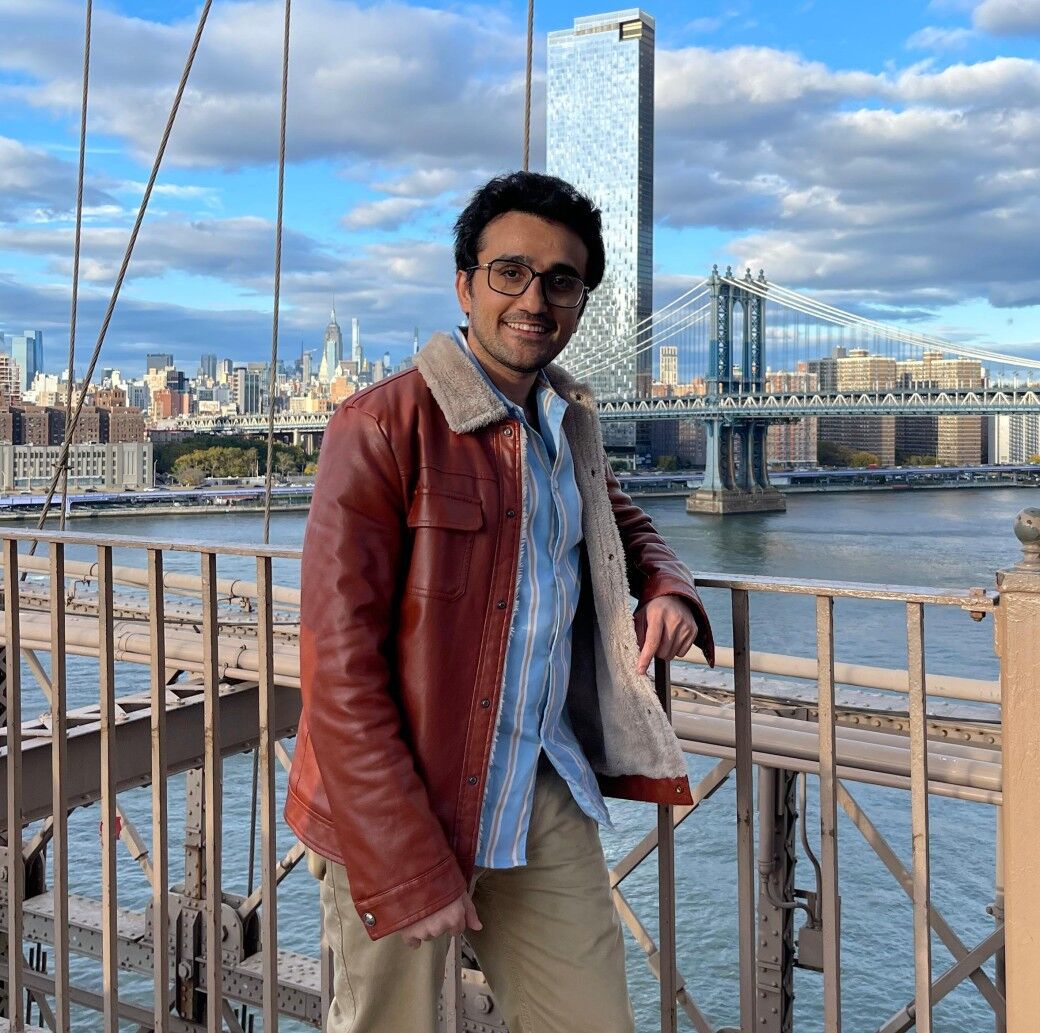
The Journey
Hello! My name is Amar Latif Qazi. I completed my Bachelor’s in Social Sciences from the Institute of Business Administration (IBA) in 2017, and then worked in the non-profit sector for five years, focusing on disability inclusion, data analysis, and monitoring & evaluation.
Over time, I had a growing realization that our work in NGO sector was tackling structural problems with band-aid solutions. I wanted to understand how we could empower communities to build power and resolve inequities, rather than just coping with them through non-profits. That led me to apply for scholarships to pursue higher education, and I was placed by Fulbright to study Master of Education in Community Development and Action at Vanderbilt University. The program was a perfect blend of development theory, community organizing, and action research, which is exactly what I needed.
At Vanderbilt, I threw myself into everything. I was a Graduate Assistant at the Next Steps higher education program for neurodiverse scholars, a Cal Turner Fellow for Moral Leadership, a mentor for incoming international students through International Mentorship at Peabody (map). I facilitated narrative circles, served as treasurer of our student association, and got involved in Nashville's community development scene wherever I could. This included BDS encampment and local activism through Protect Kids Not Guns TN, conducting research on gun laws and helping organize protests. All of this led to receiving the Outstanding Community Development and Action Student Award.
After returning to Pakistan in 2024, I was selected as a dean’s fellow at Habib University. Between that time, I have worked on multiple projects, including community organizing, funded research, and collaborations with other institutions. I just moved to the Netherlands in 2026, and I am excited for this new chapter in my life.
Fulbright Scholarship Details
I received the Fulbright Scholarship, funded by the U.S. Department of State and administered in Pakistan by USEFP. The scholarship covered full tuition, one round-trip flight, health insurance, and a monthly living stipend that varies by state. Our stipend in Nashville was $1,510 per month at that time, and you had to budget very carefully to live within that. Fulbright has since then conducted a major revision of stipends, so new students will have a much better experience.
Were You Offered Any Other Scholarships?
No, but I had applied to multiple other scholarships before applying to Fulbright. This included Chevening, Erasmus (twice), and DAAD. I believe this journey and each application had a significant role to play in being able to secure Fulbright. I was able to build upon my previous drafts, analysing where I went wrong and what I could improve.
Educational Background
My bachelor’s in social sciences and liberal arts from IBA Karachi gave me a good foundation in research and reading dense papers, which was very useful in my master’s.
I had often heard that you need to have a great GPA to secure a scholarship. I had 2.95 GPA in my undergrad and there was a point in time where I was worried this would be a dealbreaker. Luckily it was not. Of course, having a lower GPA makes it harder, but not impossible.
You can make up for low GPA with work experience, research, references, your narrative and social impact. The last one matters a lot for Fulbright specifically. Do not let your past background stop you from carving a new one. Build a strong profile and make sure your application tells a cohesive story.
How Did You Find Information About Scholarships and Institutions?
Fulbright is well-known in Pakistan. The USEFP website was my main source for the application process. For finding the right program, I made a spreadsheet of universities and compared program fit, faculty, and course offerings.
Standardized Tests
I took both the GRE and the TOEFL. For the GRE, ETS gives you two free mock tests when you register. I took the first one immediately to see where I stood, then self-studied using free resources and books at the library, focusing on my weak areas rather than trying to cover everything. I took the second mock test after a few weeks and scored 327. Use your prep time strategically.
For TOEFL, Fulbright provided a voucher after I got selected. If you are already comfortable with English, the content is not the challenge. The format is. Do a couple of practice tests so you know how to pace yourself.
What Do You Think Made Your Application Stand Out?
My work experience in the disability sector and the impact I had, along with references.
I had provided job placements to hundreds of persons with disabilities, trained corporations on disability inclusion, launched an Enterprise Development Center, and grown into a monitoring and evaluation role at the time of application. Besides my professional impact, I was also involved in local activism around housing justice.
The key to making your application stand out is to tie it all together in a cohesive whole. Why did you do what you did? Why do you want to study further, and what will you do after completing your master’s? You may think of your life as a progression through chance, but there is an overarching story, and we have to create parts of that narrative in retrospect.
How Does Vanderbilt University Support International Students?
Vanderbilt, and especially Peabody, has done a lot to support international students – initiatives that I have been part of myself. There are, of course, student clubs and groups that you can join to meet other international students, and we also started the iMAP program at Peabody, in which incoming international students were provided a senior mentor to help them get acclimated to the university and provide support. The students I mentored all became very good friends of mine!
Lastly, there was also the Equity, Diversity, and Inclusion department that provided us support in organizing events and working on inclusion. We organized an iftar dinner, an awareness session about floods in Pakistan, and many other things with the help of the EDI department.
Looking Back, Would You Have Done Anything Differently?
I would have researched more programs, applied to more universities, and mapped out post-graduation career options more clearly. When you are from a developing country, and you secure a fully funded scholarship, there is this tendency to just feel grateful. But you can and absolutely should aim higher and be more intentional about what comes after. I learned later that a PhD is like working at a university and you get paid for it, and a master’s degree is not required for admission in many programs in the U.S.A. If I had known that before, I would have also explored options to do a PhD directly.
What Advice Would You Give Those Looking to Apply for a Similar Scholarship?
Be specific in your personal statement. If you say you want to "make a difference," show what that difference is. What is the exact problem you want to work on, and how will you work on that? What specifically interests you in the program or the scholarship? Specificity goes a long way.
Do not rush into submission. Let your draft sit and look at it after a break so that your eyes have had time to refresh and spot mistakes you might have missed earlier. Get essays reviewed by multiple people, including someone outside your field. If they cannot understand what you have written, you have not explained it well enough.
And finally, apply. You miss 100% of the shots you don’t take. Cheesy cliché, I know, but it is true. Apply not once, but multiple times. Each time you apply, your application and essays become stronger with revisions, and hopefully, you have also become a stronger candidate by working on your professional development during that time.
Want to submit your
scholarship journey?
Submit Your Story Here!
More Scholarship Recipients
My name is Shah Hussain, and I am from Khyber Pakhtunkhwa, Pakistan. I completed my Bachelor’s in Psychology at the Univer .... Read more
I am June from the Philippines. I am an educator for Social Sciences and Humanities. I recently earned my Master in Southeas .... Read more
Hi, my name is Abdul Hafeez, and I come from a small town called Nasirabad in Sindh, Pakistan. Currently, I am pursuing a ma .... Read more
Leave A Comment