
Global Korea Scholarship Scholar Rifah from Bangladesh Shares Her Journey of Securing a Fully Funded Bachelor's at Soonchunhyang University, South Korea
University: Soonchunhyang University
Degree: Bachelor’s degree in Food Science and Nutrition
Previous Education: Higher secondary education from Viqarunnisa Noon School and College, Bangladesh
Scholarship: Global Korea Scholarship (GKS) – Full Funding (One year of Korean language training, four years of bachelor’s degree, round-trip airfare, full tuition fees, monthly stipend of approximately 900,000 KRW in 2022, health insurance, and TOPIK exam support)
Social Media
LinkedIn: linkedin.com/in/rifahsanjidabintealam/
The Journey
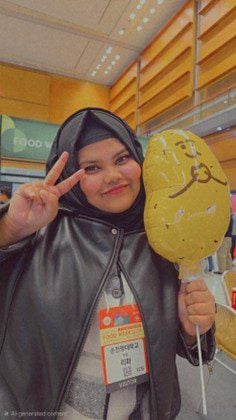
My name is Rifah, and I am originally from Bangladesh. I am currently a fourth-year student in the Food Science and Nutrition program in South Korea as a Global Korea Scholarship awardee.
Growing up, I experienced hormonal health issues, and I also saw my mother face similar challenges. These personal experiences made me realize how important proper nutrition is in managing health conditions. At the same time, I noticed that the nutrition sector in Bangladesh still lacks adequate facilities, awareness, and accessible professional support.
Because of this, I decided to pursue higher education in Food Science and Nutrition. I want to gain strong scientific knowledge and practical skills so that I can contribute to improving nutritional awareness and healthcare support in the future, especially for women dealing with hormonal and diet-related issues.
Global Korea Scholarship Details
I am a recipient of the Global Korea Scholarship (GKS), a fully funded scholarship provided by the National Institute for International Education (NIIED) under the Korean government. I was awarded this scholarship in 2022 for my undergraduate studies.
The GKS undergraduate program consists of one year of Korean language training followed by four years of a bachelor’s degree. I completed my language year at Silla University in Busan, and I am currently pursuing my bachelor’s degree in food science and nutrition at Soonchunhyang University in Asan.
When I first arrived in February 2022, GKS scholars were typically assigned to different universities for language training, which allowed students to explore various regions of Korea and meet people from diverse backgrounds. However, starting from August 2022, NIIED introduced a policy where students complete their language training at the same university as their degree program. This change has advantages, as it reduces the stress of relocating and readjusting right before starting the degree. At the same time, specialized language institutes— like the one I attended—often provided a more intensive and focused Korean language learning environment, which some students may find more beneficial.
In terms of financial support, the GKS scholarship is highly comprehensive. In 2022, it covered:
- Round-trip airfare
- Full tuition fees
- A monthly stipend of approximately 900,000 KRW
- Separate health insurance coverage
- Additional financial support for taking the TOPIK (Korean proficiency) exam twice
Currently, the stipend has increased to approximately 1.2 million KRW per month, although some components, such as separate additional payments, have been adjusted or included within this amount.
Overall, the GKS scholarship has provided me with the opportunity to study abroad, experience Korean culture, and gain quality education without financial burden.
Educational Background
I completed my primary to higher secondary education at Viqarunnisa Noon School and College, one of the leading educational institutions in Bangladesh. Throughout my academic journey, I maintained an excellent academic record, achieving a CGPA of 5.00/5.00.
From as early as the 8th grade, I developed a strong interest in science, particularly in biology. This interest motivated me to actively participate in various academic competitions, including bioscience and nutrition-related Olympiads. These experiences not only deepened my understanding of scientific concepts but also strengthened my analytical thinking and problem-solving skills.
My solid foundation in biology and exposure to science-focused extracurricular activities played a significant role in shaping my academic direction. It prepared me well for pursuing a degree in Food Science and Nutrition by giving me both a theoretical background and the curiosity to explore how science can be applied to improve human health and well-being.
Preparation
During the COVID-19 pandemic, the university admission system in Bangladesh became highly uncertain and frustrating. This situation made me consider pursuing my higher education abroad. However, due to financial limitations, I focused only on fully funded scholarships. While researching, I came across programs like the Global Korea Scholarship (GKS), MEXT Scholarship, and Stipendium Hungaricum. Among these, I chose GKS because I was relatively more familiar with Korean culture, which made me feel more confident about adapting to a new environment.
To prepare for the application, I carefully studied the GKS guidelines multiple times to fully understand the selection process and requirements. As a Bangladeshi applicant, the competition was extremely high due to the limited quota, which motivated me to strengthen my profile. I completed short courses related to my intended major and participated in online internships. At that time, it was uncommon for bachelor’s applicants to have internship experience, so I believed this helped my application stand out.
I dedicated nearly three months to writing and refining my personal statement and study plan. Since AI tools were not widely available then, I revised my essays repeatedly on my own to ensure clarity, authenticity, and strong motivation.
For information gathering, I reached out to a senior from Bangladesh who had received the scholarship the previous year. I also directly contacted universities via email to clarify details such as curriculum structure and graduation requirements, as these can differ from the general guidelines provided by the National Institute for International Education (NIIED). This helped me make more informed decisions.
Regarding standardized tests, I took the IELTS. Due to COVID-19 restrictions, I prepared independently for about 7 days using online resources like YouTube instead of enrolling in coaching classes. I achieved an overall band score of 7.0, which I was satisfied with. Although I did not take the TOPIK at that time due to limited access to Korean language education in Bangladesh, I believe that, currently, having at least TOPIK 1 Level 2 can be more advantageous than English proficiency alone for GKS applicants.
Finally, I applied through the university track directly to Soonchunhyang University. After successfully passing the document screening and interview conducted by the university, I was nominated as a candidate. I then waited for about a month for the final confirmation from the National Institute for International Education (NIIED), which is the main decision-making authority for GKS university track applicants, and was ultimately selected for the scholarship.
Experience at Soonchunhyang University
My experience has been quite diverse because I studied in two different institutions. My Korean language year at Silla University was truly excellent. The instructors were extremely supportive and caring, and classes were divided based on proficiency levels, which made learning much more effective. I personally believe Silla University is among the best institutions for Korean language training. On top of that, living in Busan was an amazing experience; the sea, the environment, and the vibrant lifestyle really helped refresh my mind. I would recommend Busan for living without hesitation.
For my undergraduate studies at Soonchunhyang University, my experience has also been very positive. The professors are highly supportive, and the GKS coordinators are very reliable, we always received our stipend on time, unlike what I have heard from some other institutions. The campus life is warm and friendly, and people here are kind. However, the university is located in a quieter, countryside area, so it may not suit someone who prefers a very active or urban lifestyle. Initially, it was a big adjustment for me after living in Busan, but over time, I came to appreciate the calm environment.
Academic Rating of Soonchunhyang University
I would rate my university around 7.5/10 academically. My department has very supportive professors, and there are strong laboratory and practical training opportunities, especially in food analysis, microbiology, and clinical nutrition. The curriculum is well-structured and focuses on both theory and hands-on experience, which is very helpful for future careers. However, accessibility and transportation outside campus can sometimes be challenging.
Support for International Students
Soonchunhyang University has a diverse international student community, with many students from Uzbekistan, Mongolia, China, Vietnam, and Indonesia. The university is quite welcoming to foreign students, and administrative support is generally helpful. However, living in Korea means that learning Korean is essential. No matter how international-friendly a university is, knowing the language significantly improves both academic and daily life experiences.
Language of Instruction
My major, Food Science and Nutrition, is conducted almost entirely in Korean. In rare cases, some professors may allow English exam papers, but this is not common. Therefore, to maintain good grades, it is important to have strong Korean skills. Taking some elective courses in English can help balance academic performance.
Future Plans After Scholarship
I have not graduated yet, but I am close to completing my degree. I will be doing my second field training for a nutritionist position in the upcoming summer. After graduation, I plan to pursue a 6-month internship to gain practical experience before entering the workforce.
Challenges Without Knowing Korean
Yes, students may face difficulties if they do not know Korean. Coming directly from high school without prior university experience and studying in a foreign language can be overwhelming. I personally struggled in my first semester, especially because conversational Korean and academic Korean are very different. I would strongly recommend learning Korean before coming to Korea.
What Made My Application Stand Out
I believe my application stood out because of my strong academic record (5.00/5.00 CGPA), participation in Olympiads, and additional efforts like online internships and courses related to my field. Also, I spent a significant amount of time carefully writing and refining my personal statement and study plan, making sure they clearly reflected my motivation and goals.
What I Would Do Differently
If I could go through the process again, I would start learning Korean earlier and try to take the TOPIK before applying. This would have made my academic transition much smoother.
Advice for Future Applicants
Do very detailed research about the country you are applying to. Studying abroad for 4–5 years is almost like relocating your life. If you are young, make sure you understand the culture, lifestyle, and possible restrictions. For example, having dietary preferences (like halal food) can affect your daily life.
Also, don’t rely only on K-dramas or K-pop as your motivation. Try to connect with students from your own background who are already studying there and learn from their real experiences. Most importantly, be prepared to adapt, especially by learning the local language, as it plays a huge role in your overall experience.
Want to submit your
scholarship journey?
Submit Your Story Here!
More Scholarship Recipients
My name is Shah Hussain, and I am from Khyber Pakhtunkhwa, Pakistan. I completed my Bachelor’s in Psychology at the Univer .... Read more
I am June from the Philippines. I am an educator for Social Sciences and Humanities. I recently earned my Master in Southeas .... Read more
Hi, my name is Abdul Hafeez, and I come from a small town called Nasirabad in Sindh, Pakistan. Currently, I am pursuing a ma .... Read more
Leave A Comment