
From Asokore to the World: The Blueprint That Won Me the DAAD EPOS Scholarship
University: Universität Bremen
Degree: M.Sc. International Studies in Aquatic Tropical Ecology (ISATEC)
Previous Education: B.Sc. in Aquaculture and Water Resources Management, KNUST, Kumasi
Scholarship: DAAD EPOS — Development-Related Postgraduate Courses — Fully Funded
(Full Tuition, EUR 934/month Stipend, Health/Accident/Liability Insurance,
Return Airfare, Travel Allowances, Housing Support)
Other Funding: BMBF TransTourism Project — Research Funding (Fieldwork in Gili Trawangan, Indonesia);
Cocoa Farmers Scholarship Award
LinkedIn: LinkedIn Profile
Portfolio: Research Portfolio
GitHub: GitHub
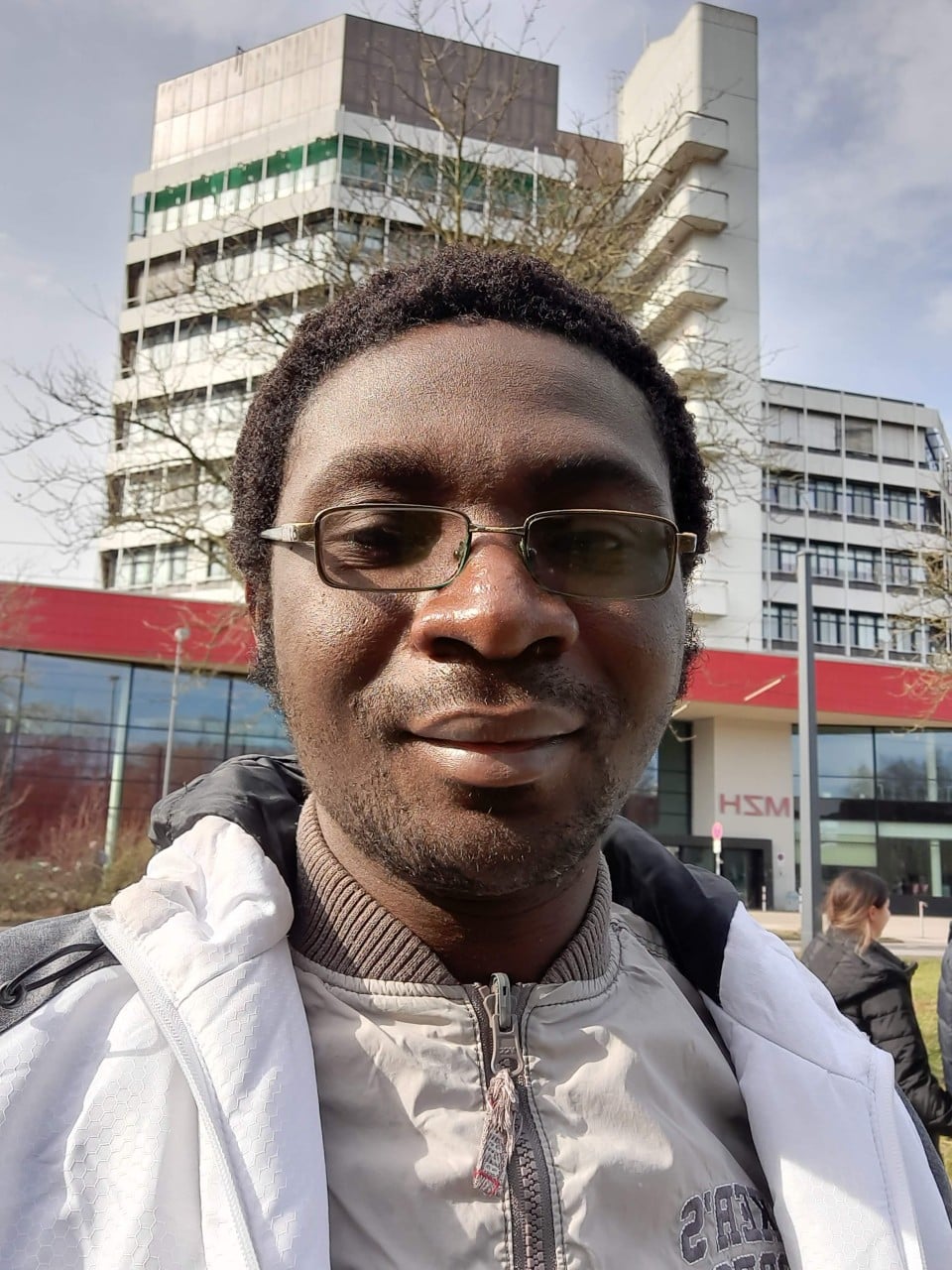
The Journey
Some stories begin with a single extraordinary moment. This one begins with many ordinary ones — a boy studying by lamplight in Asokore, a student teaching other people’s children before chasing his own dreams, a young scientist boarding a plane to Germany with a published paper in his file and a determination that no committee, no distance, and no circumstance could dim.
Jack Pumpuni Frimpong-Manso grew up in Mampong, Ashanti Region, Ghana, from a Royal Asante family with deep roots in the neighbouring community of Asokore — his late beloved mother’s hometown. He graduated first out of 199 students at KNUST with First Class Honours, won the fully funded DAAD EPOS Scholarship to pursue his M.Sc. at Universität Bremen, conducted thesis fieldwork on a small Indonesian island, and published three peer-reviewed works spanning aquaculture, marine ecology, microplastics science, and aquatic food systems. He has since built himself into an AI/ML Engineer — holding 100+ professional certifications from IBM, Google, Microsoft, NVIDIA, and NASA, alongside online courses affiliated with leading universities including Stanford, Oxford, Cambridge, Harvard, and the Wharton School, and completing 50 AI/ML projects spanning production pipelines, deployed applications, and IBM capstone and lab implementations. Bremen has become his home; he has lived and worked there since completing his studies.
His journey was not created by one achievement or one application. It was built quietly, over many years, through faith, discipline, mentorship, and a commitment to excellence long before any scholarship committee knew his name.
This is the story of how that profile was built — and what every aspiring scholar can take from it.
Key Takeaways
- Excellence is a pattern, not a moment. Jack was not suddenly excellent at KNUST. He was Best Student at JHS, Best in the Sekyere East District, top performer at Prempeh College — then 1st out of 199 at KNUST. Excellence compounds. Selection committees recognise patterns, not isolated performances. Start building yours today, wherever you are.
- A published paper changes everything. A peer-reviewed publication at the undergraduate level moves an applicant from “promising student” to “practising scientist.” It is a paradigm shift. Fight to publish a strong thesis before applying for postgraduate scholarships.
- Giving back before moving forward is a strategy, not a sacrifice. Jack spent a year teaching at Nasir Children Training Centre before proceeding to university. That decision demonstrated development commitment before any scholarship required it. Committees distinguish those who have already served from those who merely promise to.
- The scholarship is the beginning, not the destination. Three publications, 50 AI/ML projects, 100+ certifications, international research affiliations — none of this was given by DAAD. It was built daily through discipline. A scholarship is a door. One still has to walk through it, every day.
- Interdisciplinary thinking is a superpower. Jack recognised that skills built in marine ecology — modelling, statistics, GIS, programming — were directly transferable to AI engineering. The scientists and engineers who will shape Africa’s future are those who boldly cross disciplines and connect what others keep separate.
- Mentorship multiplies potential. A friend named Bismark Essel was the first to encourage Jack to look beyond Ghana’s borders. Prof. Benjamin Betey Campion gave the most transformative piece of advice in the entire process: build a research record before you apply. Jack had already done so. Seek mentors with the same intentionality you bring to your studies.
- Faith is not separate from ambition — it is the foundation of it. From Assistant Prayer Secretary at school to House Pastor at Prempeh College to his anchor at St. Johann Church in Bremen — faith has been the constant beneath every achievement in this story.
Pros & Cons of the DAAD EPOS Scholarship
✓ Pros
Fully funded and genuinely comprehensive. The package covers full tuition, EUR 934/month stipend, full health, accident and liability insurance, return airfare, travel allowances, and housing support. DAAD EPOS removes every material barrier to full academic focus.
World-class academic environment. Germany’s research infrastructure is among the finest on Earth. As an ISATEC student, Jack had direct access to ZMT, AWI, and the Max Planck Institut für Marine Mikrobiologie — three world-class institutions that few programmes anywhere can match.
International fieldwork as a core component. Jack’s thesis fieldwork in Gili Trawangan, Indonesia, was the heart of his degree. Very few postgraduate programmes build cross-continental fieldwork into the curriculum as a standard expectation. ISATEC does.
Development focus attracts mission-driven cohorts. The programme attracts people motivated by more than personal success. The shared commitment to impact creates a powerful learning environment — and a network that lasts a lifetime.
Free German language learning — built in. The university offers free German language courses throughout the programme. Jack took full advantage — and impressed the DAAD selection committee by demonstrating some German during his interview, a signal that carried real weight in a competitive field.
Life and career transformation — not just a degree. The confidence, the network, the international experience, and the scientific credentials provide a multiplier effect on every subsequent opportunity.
✗ Cons
The application process is intensely competitive. DAAD EPOS attracts outstanding applicants worldwide. First Class results, a strong research profile, and genuine development commitment are table stakes, not differentiators.
The stipend requires careful budgeting. EUR 934 per month is meaningful — but Germany’s cost of living demands disciplined financial management. Rent, food, transport, and incidentals can absorb the stipend quickly if not planned carefully.
Distance from home carries a real personal cost. Living thousands of kilometres from family and familiar culture is genuinely challenging — even for someone who, like Jack, has since made Germany his home. Loneliness, homesickness, and cultural adjustment are real, and they do not disappear simply because a person chooses to stay.
The development return obligation is real and non-negotiable. DAAD EPOS is explicitly designed for scholars committed to contributing to their home countries. Applicants primarily motivated by personal career advancement, without genuine development commitment, are not the right fit.
Research-intensive programmes demand intellectual independence. ISATEC demands original research capability and resilience when fieldwork or data analysis does not go as planned.
The Story
Roots — Where Excellence Begins
Excellence rarely announces itself. It accumulates — in families, in classrooms, in small acts of discipline that no one witnesses but that form the bedrock of everything that follows.
Jack’s earliest years were spent in Asokore Ashanti — his late beloved mother Mary Osei Tutu’s hometown — before he continued at Kings International School, Kumasi. By the time he sat his JHS final examinations, he had been elected Main School Prefect and President of the Students’ Representative Council. He graduated as the Overall Best Graduating Student of his year and was honoured as the Best Student of the Sekyere East District Vacation Classes — an award established by the Paramount Chief of the Asokore Traditional Council, Nana Dr. Susubiribi Krobea Asante, Fellow of the Ghana Academy of Arts and Sciences.
These were not isolated prizes. They were the first evidence of a pattern: consistency, responsibility, and an instinct to lead through service rather than ambition alone.
Faith was inseparable from all of it. Jack served as Assistant Prayer Secretary — the first of many expressions of a spiritual commitment that would run unbroken through secondary school, university, fieldwork in Indonesia, and his life in Germany today.
Behind every young person’s achievement is usually someone who created the conditions for it. For Jack, that person was his sister Leticia Opoku — Head of Department, Ghana Library Authority, Effiduasi Branch — whose steadfast support throughout his entire education gave him the stability to pursue excellence with undivided focus.
The foundations were in place. The next chapter would test whether they would hold.
Prempeh College — Character Forged Under Pressure
Admission to Prempeh College, Kumasi, raised the stakes. Jack studied General Science in an environment where excellence was not admired — it was expected.
Beyond the classroom, Prempeh shaped his character as deeply as it sharpened his mind. He served as Ramseyer House Fellowship President (House Pastor), Assistant Organiser of the Catholic Students Union, Assistant Prayer Secretary of the Scripture Union, and Vestry Boy on the Chaplaincy Board. Service was not an addition to his academic life. It was woven into it.
The Ghana Cocoa Board recognised his academic merit with the Cocoa Farmers Scholarship Award. He graduated with outstanding WASSCE results: Grade A1 in Chemistry, Elective Mathematics, Physics, Core Mathematics, Integrated Science, and Social Studies.
Behind those grades stood educators whose investment lives on in everything their students go on to build — among them Mr. Maxwell Frimpong-Manson and Mrs. Josephine Frimpong-Manson, whose teaching of Biology made the life sciences come alive, and the late Mr. Agyenim-Boateng, whose dedication to Chemistry laid the quantitative foundation Jack would carry into research laboratories on three continents.
Prempeh had done its work. But before Jack would pursue his own future, he chose to invest in someone else’s first.
Giving Back Before Moving Forward
Many students treat the period between secondary school and university as a waiting room. Jack treated it as a calling.
Before beginning university, he returned to Asokore — his late beloved mother’s hometown — and spent one year teaching at Nasir Children Training Centre, where he was appointed Head of the English Department. He prepared students rigorously for the Basic Education Certificate Examination, and they passed with distinction. He also led the school to victory in the Sekyere East District athletics competition.
This was not a pause in his story. It was its foundation. The DAAD EPOS Scholarship does not simply seek accomplished graduates — it seeks people already committed to development. Jack had made that commitment visible through action, long before any application form asked him to.
He entered university carrying that principle in his bones. What followed would redefine what was possible.
KNUST — Building the Foundation
Jack enrolled at the Kwame Nkrumah University of Science and Technology (KNUST), Kumasi, to study B.Sc. Aquaculture and Water Resources Management. His admission was made possible through the generous intervention of Dr. Kwasi Amakye Boateng of KNUST — a door opened at exactly the right moment, by exactly the right person.
At KNUST, academic excellence and leadership developed in parallel. He served as Class and Student President and as Bible Studies Teacher of the Catholic Charismatic Renewal. He built his quantitative foundations under the guidance of mentors including Prof. Kwasi Adu Obirikorang, Dr. Collins Duodu, Dr. Raphael Nsiah-Gyambibi, Dr. Gifty Anane-Taabeah, and Dr. Yaw Boamah Ansah.
The most consequential experience was his participation in a landmark DAAD/DANIDA-funded research project on the effect of dietary protein levels on water quality and growth performance of Oreochromis niloticus — made possible through the vision of Prof. Daniel Adjei-Boateng of KNUST.
Supervised by Dr. Thomas Kwaku Agyemang and the late Dr. Godfred Owusu-Boateng, the thesis was judged the best in the entire Faculty of Renewable Natural Resources and subsequently published as a peer-reviewed paper. That publication — rare at the undergraduate level in any discipline, anywhere in the world — became the single most powerful differentiator in Jack’s DAAD EPOS application.
Many applicants have excellent grades. Far fewer have published research. Jack had both.
The Graduation That Changed Everything
By the close of his undergraduate years, Jack had achieved what very few students accomplish anywhere in the world:
- Overall Best Student, Faculty of Renewable Natural Resources
- 1st out of 199 students, First Class Honours
- Best BSc Thesis Award
- Appointed as a Teaching and Research Assistant by his Dean and lecturers
- Recognised as a KBN Scholar through the Students’ Representative Council–KBN Fund
The DAAD EPOS Scholarship was not searching for high-performing students. It was searching for future development leaders. Jack was already becoming one.
But before Germany, there was one more chapter of service to write.
CSIR Ghana — Science in the Service of the Nation
Before departing for Germany, Jack served as an Engineer Intern at the Council for Scientific and Industrial Research (CSIR), Ghana, conducting in-depth climate change impact studies and hydrological analysis that informed national water management policy recommendations. He had the invaluable opportunity to learn from Dr. Anthony Yaw Karikari, whose expertise in aquatic and environmental science deepened his understanding of Ghana’s water systems in ways that would shape both his DAAD application and his subsequent research trajectory.
When he arrived at Universität Bremen, he was not beginning his scientific journey. He was continuing one that had already produced real work, real mentors, and real national impact.
The scholarship committee could see exactly that.
Winning the DAAD EPOS Scholarship
The DAAD EPOS Scholarship is among the most competitive fully funded scholarships available to graduates from developing countries. Jack’s application did not succeed because it was polished. It succeeded because it was true — and because every element of it was backed by evidence built over years, not assembled for an application.
The cornerstone was his published undergraduate thesis, submitted as primary proof of research capability at a stage when most applicants had none. Combined with First Class Honours as 1st out of 199 students, his CSIR internship, DAAD/DANIDA research involvement, and strong recommendation letters from Prof. Steve Amisah, Prof. Nelson Winston Agbo, Dr. Thomas Kwaku Agyemang, and the late Dr. Godfred Owusu-Boateng, the selection committee was confronted not with promise, but with proof.
Jack had also proactively learned some German before his interview — and when he demonstrated this to the selection panel, it stopped them. It signalled something that no certificate or transcript can convey: that this applicant had already begun to integrate, mentally and practically, before being given any reason to. It impressed the committee and distinguished him further in a field of outstanding candidates. His motivation letter — shaped in part by Prof. Regina Esi Edziyie and the late Dr. Godfred Owusu-Boateng — did not describe ambition in the abstract. It connected his lived experience to a specific, urgent problem: the fragility of aquatic food systems and water resources in Ghana and across Africa. That combination — evidence, commitment, and a story only he could tell — was unbeatable.
The Bremen Experience — Where the World Opened
The ISATEC programme at Universität Bremen sits at the intersection of tropical ecology, marine biogeochemistry, GIS, quantitative modelling, and international field research — with direct access to three world-class institutions: ZMT Leibniz Centre for Tropical Marine Research, the Alfred Wegener Institut (AWI), and the Max Planck Institut für Marine Mikrobiologie. For a scientist with Jack’s formation, it was precisely the right environment at precisely the right time.
The defining experience of his degree was his MSc thesis fieldwork in Gili Trawangan, Indonesia — funded by the BMBF TransTourism Project. His thesis examined the impact of tourism-generated wastewater on the tropical coastal marine ecosystem of a small island subjected to intense mass tourism pressure: a question at once scientific, environmental, and deeply human.
His principal supervisor, Prof. Dr. Marie Fujitani of ZMT, made a commitment that Jack has never forgotten. “I will supervise your thesis wherever I find myself, even if I am not at ZMT,” she told him — and she kept that promise. Co-supervisors Prof. Dr. Nils Moosdorf of ZMT and Dr. Nurliah Buhari of Universitas Mataram made equally essential contributions to the work.
During this period, Jack held an affiliation as Visiting Research Scientist at Universitas Mataram — where he also delivered a guest lecture on E. coli and total coliform determination — and maintained a Guest Scientist affiliation at ZMT Bremen. He also co-authored a peer-reviewed seminar paper on the trophic transfer of microplastics in aquatic ecosystems with fellow researcher Ivonne Amelia Vivar Linares — work presented at Universität Bremen in April 2019 and published via ResearchGate (DOI: 10.13140/RG.2.2.11637.32481). He volunteered with the Gili Eco Trust, contributing to beach clean-up and waste recycling. Science and stewardship — together, as they should be.
Jack remains deeply grateful to every lecturer who shaped his thinking at Universität Bremen: Prof. Dr. Wolff Matthias, PD Dr. Auel Holger, Prof. Dr. Bischof Kai, PD Dr. Breckling Broder, Dr. Breckwoldt Annette, Dr. Ekau Werner, Dr. Ferse Sebastian, Dr. Glaser Marion, Prof. Dr. Harder Jens, PD Dr. Jennerjahn Tim, Dr. Kunzmann Andreas, Dr. Nordhaus Inga, Dr. Rabe Benjamin, PD Dr. Reuter Hauke, Prof. Dr. Schlüter Achim, Dr. Springer Karin, Dr. Teichberg Mirta, Prof. Marin Zimmer, and Dr. Véronique Helfer. Special appreciation goes to ISATEC coordinator Dr. Oliver Janssen-Weets. He also credits Prof. Seth Mensah Abobi — affiliated with ZMT and UDS — whose R programming course built the statistical foundation that would later become the bridge between environmental science and artificial intelligence.
Bremen gave Jack far more than a degree. It gave him a city he chose to make his own. He found community through Bremen’s Ghanaian network and the English-speaking congregation at St. Johann Catholic Church — a spiritual home that has remained his anchor ever since. Bremen has become his home; he has lived and worked there since completing his studies.
The Pivot to Artificial Intelligence
After completing his studies, Jack made one of the most quietly radical decisions of his career — and it began not with a plan, but with a recognition.
Aquatic ecology and artificial intelligence appear, at first glance, to occupy entirely different worlds. But Jack saw what others missed: the skills that had defined his scientific formation — statistical modelling, GIS, programming, data analysis, hypothesis-driven problem-solving — were the exact foundations on which modern AI is built. The scientist and the engineer were not two people. They were one, waiting to be connected.
He invested in that connection with characteristic discipline — earning 100+ professional certifications from IBM, Google, Microsoft, NVIDIA, and NASA, alongside online courses affiliated with leading universities, and completing 50 AI/ML projects spanning production pipelines, deployed applications, and IBM capstone and lab implementations. These included a SpaceX Falcon 9 landing prediction pipeline, a coastal water quality ML system achieving R² > 0.98, an AI emotion detection application achieving a perfect PyLint score of 10/10, and an XGBoost financial delinquency risk system using SHAP explainability.
In February 2026, Jack was named DataCamp Machine Learning and Data Analytics Champion — 1st Place, Bit League — placing at the top of a global leaderboard against competitors from around the world.
Today, he works as an ICQA Associate at Amazon Logistik Achim GmbH (BRE4) in Achim, Germany, maintaining near-perfect inventory accuracy, while volunteering as a Financial Analyst for Amazon Community Achim and building toward his long-term vision.
That vision is specific and urgent: Ghana’s coastal fishing communities — more than two million people — depend on healthy marine ecosystems for their food security and their livelihoods. Yet real-time water quality monitoring in West African coastal waters barely exists. Jack’s goal is to change that: to build AI-powered environmental monitoring systems that give Ghanaian policymakers, researchers, and fishing communities the data intelligence they need to protect these ecosystems before irreversible damage is done. The Environmental Data Scientist and the AI Engineer are not two separate people. They are one — and that combination, applied in service of Africa’s development, is rare and necessary.
He is actively pursuing doctoral opportunities in AI-enabled environmental and maritime systems — because the tools being built at the frontier of AI and environmental science are exactly what Ghana’s coastal communities need. A fisherman in Elmina should not lose his livelihood because no early warning system existed to detect the ecological collapse happening beneath the surface. That is the problem Jack Pumpuni Frimpong-Manso intends to help solve.
How to Win the DAAD EPOS Scholarship — Jack’s Advice
Love what you study — genuinely and consistently. Passion creates endurance. It cannot be faked.
Build a research record before you apply. A publication signals a transition: from student to researcher. A strong thesis should not simply be submitted and forgotten.
Write a motivation letter that only you could write. Connect your experiences into a coherent story: where you have come from, what problems you care about, why your programme matters, and how you intend to create impact.
Seek mentors who have walked the path. Find DAAD alumni on LinkedIn. Ask them everything. The most important scholarship advice sometimes comes not from a professor, but from a friend who sees your potential before you fully see it yourself.
Learn some German before you arrive. It signals adaptability, commitment, and genuine desire to integrate — before you have said a single word about your research. Jack demonstrated this to the DAAD selection panel and it made an impression that academic records alone could not.
Demonstrate development commitment before the scholarship. The strongest applicants do not only promise future impact — they already show it.
Do not be discouraged by rejection or delay. Keep refining. Keep applying. Keep believing. For those who persist with integrity and purpose, the path leads somewhere extraordinary.
Academic Excellence — A Philosophy, Not a Checklist
Beyond the scholarship, Jack carries a deeply personal philosophy of academic excellence — forged through years of disciplined study, quiet sacrifice, and faith. These are not techniques to memorise. They are a way of life.
Begin with God. Everything begins here. Before opening a single textbook, Jack prays — committing his work to God and inviting His wisdom into the process of learning. Proverbs 3:5–6 has guided him since his earliest days: “Trust in the Lord with all your heart and lean not on your own understanding; in all your ways submit to him, and he will make your paths straight.” He ends each day of study the same way.
Prepare the instrument. A student’s most important tool is the brain — and it must be maintained accordingly. Jack drinks at least eight glasses of water daily, protects his sleep fiercely, and exercises his mind through chess, puzzles, and logic problems.
Win the day before it begins. Jack wakes early, plans deliberately, and reads ahead — previewing what will be taught tomorrow, so the lecture becomes reinforcement rather than introduction. He reserves Sundays for looking forward through the week ahead.
Study with strategy, not just effort. Jack studies only when rested and alert, begins with his weakest subjects, reviews the day’s material each evening, and revisits the week’s learning on Saturdays.
Master what you learn. After studying a few pages, Jack closes the book and writes — in his own words, without peeking — a summary of what he has just read. If he cannot write it, he does not yet know it.
Go further together. Jack teaches his colleagues — because the best way to understand something fully is to explain it clearly to someone else. He forms small, disciplined study groups of no more than four people.
Perform when it counts. Before every examination, Jack writes out the questions he expects to face and answers them without notes. In the examination room — he reads every question fully before writing a single word.
All of these strategies rest on one foundation: discipline — not intelligence. Every sacrifice made in service of excellence compounds — silently, steadily, and eventually — into something extraordinary.
Development Impact — The Purpose Behind It All
Giving back is not a condition Jack satisfies because DAAD requires it. It is a conviction rooted in the belief that those who are given the gift of opportunity have an obligation — to God, to their communities, and to their continent — to multiply it in service.
- CGIAR Aquatic Foods Initiative Ghana (2022): Co-authoring the Country Workshop report alongside Mary Kudom-Agyemang, Dr. Everisto Mapedza, Dr. Marie-Charlotte Buisson, Dr. Ruby Asmah, and Dr. Lawrence Ahiah — advancing aquatic food production in Ghanaian reservoirs and contributing to SDG 1, SDG 2, and SDG 14.
- CSIR Ghana Climate & Water Research (2018): Climate change impact studies and hydrological analysis informing national water management policy.
- Sekyere East District Community Outreach: Environmental health, water management, and natural resource conservation programmes, reported formally to the District Assembly.
- Gili Eco Trust Volunteering (2019–2020): Beach clean-up and waste recycling in a fragile tropical marine environment.
- Mathematics Tutoring, Germany (2021–present): Supporting young learners through Nachhilfe — a quiet, consistent act of community investment.
- Mentoring African Scholars: Actively sharing scholarship guidance and scientific knowledge through LinkedIn, Quora, and direct engagement.
A Community of Grace — The People Who Carried Him
Behind every great achievement is an invisible scaffolding of love, prayer, and human solidarity. For Jack Pumpuni Frimpong-Manso, that scaffolding stretches from the villages of Asokore and Effiduasi to the universities of Bremen, Oxford, Kassel, Aberdeen, Kingston, and Liverpool.
This story is dedicated, first and foremost, to the memory of his beloved parents:
Mary Osei Tutu of Asokore
and
Andrew Kingsley Frimpong-Manso of Trede
Their values — faith, discipline, humility, service, and perseverance — remain the foundation beneath everything he does.
Spiritual Fathers: Rev. Fr. Prof. John Appiah-Poku, Rev. Osei Kuffour, Rev. Fr. Dr. Victor Quagrain, Rev. Fr. Dr. Peter Addai-Mensah, Rev. Fr. Peter Brenya, Rev. Fr. Dr. Matthew Nwoko, Rev. Fr. Daniel Tetteh Tackie, Rev. Fr. Stephen Opoku, Rev. Fr. Paul Frederick Asante, Rev. Fr. Joseph Nyarko Asare, and Very Rev. Fr. Dominic Amegashitsi.
Family: In December 2019, while in Mataram, Indonesia, Jack encountered Mr. Rudi Filla — affectionately known as Papa Rudi — who offered him a simple lift and became, over time, a true father figure in Germany. Jack’s sister, Leticia Opoku, stood firmly beside him throughout his entire education. His siblings — Dr. Judith Frimpong-Manso (CSIR), Marina Frimpong-Manso (Nurse, Kumasi), Andrew Asamoa Frimpong-Manso (HR, COCOBOD), George Addai Gyimah (Nurse, Brong Ahafo), Elvis Frimpong-Manso (Engineer, Takoradi), and Juanita Casals Boateng (Teacher, Kumasi) — have remained constant sources of strength. His cousin Prince Frimpong has been an equally cherished part of the family circle, a bond that endures across every distance. Gifty Osei Opoku, Juliana Osei Opoku, and Leticia Opoku, together with his nieces and nephews — Sheon Asare, Hadassah Asare, Antoinette Osei-Afful, Addo Daniel Osei Mboribi, Isleen Graham Osei-Afful, David Asare, Caleb Agbo Mawutor, Julien Asare, Elias Asare, Naana Asare, and Eugenia Asare — have each contributed love and encouragement that cannot be measured. From across the Atlantic, Mrs. Angela Ofosu (Nurse, New York) and her husband Dr. Augustine Ofosu (Pharmacist, New York) have been a reminder that family bonds are not limited by distance.
Research Support: Dr. Connie Kwong offered valuable guidance throughout the thesis process. Matthias Birkicht (Dipl.-Ing.) and Christina Staschok guided practical laboratory sessions. Dr. Sarah Zwicker, Dr. Clement Naabeh, and Jones Oyiadzo gave generously of their time to proofread the thesis with meticulous care. Nauras Daraghmeh, Susanne Boin, and Andreas Petermann handled the intricate logistics of shipping laboratory consumables across continents. In Indonesia, Samara Yarasevika came to Jack’s aid when he found himself stranded at Soekarno-Hatta International Airport; Rifki Furquan translated official documents into Bahasa Indonesia; Jarrid Tschaikowski personally brought supplementary consumables from Germany so that data collection could continue uninterrupted; and Mahardika Rizqi Himawan helped Jack find his bearings and introduced him to Dora Nurul Hidayati and Muhammed Ridwan, who sourced the laboratory consumables essential to the work on the ground.
Friends and Colleagues — A Global Network of Goodwill
Stephen Boateng (Asokore) · Dr. Deogratias Kofi Agbotui (University of Kassel) · Dr. Paul Tuda (ZMT) · Patrick Amoako (DAAD scholar) · Samuel Kwasi Sarpong (DAAD scholar) · Victor Nonso Udezo (DAAD scholar) · Prince Akwabeng (DAAD scholar) · Sarah Dan-Zaria (DAAD scholar) · Nalukwago Sarah Ahmed (DAAD scholar) · Omar Haji Omar (DAAD scholar) · Ivonne Amelia Vivar Linares (DAAD scholar) · Paul Dwamena (KNUST) · Gyau Boateng Daniel (Teaching) · Johnpaul Anyabolu (Universität Bremen) · Dr. Desmond Okwabi Ampofo (Universität Bremen) · Dr. Michael Kyei Agyekum (Universität Bremen) · Amy Carmignani (Indonesia) · Kingsley Gambrah Pumpuni (Kumasi) · Sian Williams (Indonesia) · Delphine Robbe (Indonesia) · Janet Atebiya (KNUST) · Dr. Vincent Amoako (UCC) · Dr. Da-Costa Dorkeh Mateli (University of Aberdeen, UK) · Daniel Onwonah-Owiredu (KNUST) · Arnold Karikari (KNUST) · Karikari Williams (KNUST) · Samuel Asare Twumasi Ampofo (University of Oxford, UK) · Dr. James Ziemah (Kingston University, London, UK) · Dr. Nicholas Adjei (Senior Research Fellow, University of Liverpool, UK) · Emefa Sey Suzette (KNUST) · Mrs. Sarah Akplor (KNUST) · Angela Awity (KNUST) · Genievive Naa Asare (KNUST) · Otiwaa Angela (KNUST) · Raymond Opare (Erasmus Mundus scholar) · Dr. Sampson Ayunne (KNUST) · Winston Wotse (KNUST) · Daniel Aggrey (University of Ghana) · Emma Hanrahan (Universität Bremen) · Benjamin Osei-Afful (Accountant, Cape Coast) · Martin Frimpong (Effiduasi) · Rev. Clifford Appiah Boampong (Kumasi) · Emmanuel Hayford (KNUST) · Desmond Mensah Bonsu (Bremen) · Mr. James Takyi (Bremen) · Mrs. Rose Takyi (Bremen) · Patrick Ayeh (Bremen) · Aaron Ofori (Bremen) · Francis Ninson (KNUST) · Kubi Bernard (KNUST) · Laudina Mends (KNUST) · Dr. Julia Atayi (USA) · Edwin Amegashie (Technical University of Munich) · Benjamin Sarfo Okrah (Project Engineer, Germany) · Justice Asare (KNUST) · Michael Nana Frimpong (University of Applied Sciences, Osnabrück) · Evelyn Asantewaa (Bremen) · Yaw Barwuah (CEO, B-Y Foundation e.V.) · Roland Agyei (UK) · Dr. Courage Kwasi Dzaklo (Australia) · Dr. Josiah Boateng Sarpong (Canada) · Dr. Daniel Nkrumah (Canada) · Dr. Isaac Sackey (Nokia, Canada) · Dr. Collins Aboagye (University of Ghana) · Prince Antwi, MD (Duke Department of Neurosurgery, USA) · Dr. Frank Asare (USA) · Dr. Elikem Kumahor (Korle-Bu, Accra) · Joseph Ofori (Materials Engineer, Luxembourg)
Connect With Jack
Conclusion
Jack Pumpuni Frimpong-Manso’s story is not a scholarship story. It is a story about what a person from anywhere — any village, any family, any circumstance — can build when they refuse to let the world set the ceiling.
From a classroom in Asokore to a marine laboratory in Gili Trawangan; from teaching junior high students in his late mother’s hometown to building AI systems that achieve R² > 0.98; from Best Student in the Sekyere East District to DataCamp Machine Learning Champion — every chapter of this life is joined by a single thread: a man who chose, again and again, to go further, give more, and build something that outlasts him.
The DAAD EPOS Scholarship did not create Jack Pumpuni Frimpong-Manso. It recognised him — recognised an excellence that had been compounding, quietly and deliberately, for years before any committee saw his name. Bremen is now his home. The coastal waters of West Africa remain his purpose. The lines of code he writes today are, in the most meaningful sense, continuous with the research he began as an undergraduate in Kumasi, deepened as a scientist in Indonesia, and sharpened as an engineer in Germany.
And it is not finished. The most important chapters of this story are still being written — in laboratories, in datasets, in the lives of young scholars across Africa who read this and recognise, perhaps for the first time, that the distance between where they are and where they want to be is not as vast as it seems.
It has been crossed before. From Asokore — to the world — and back again, in service.
Want to submit your
scholarship journey?
Submit Your Story Here!
More Scholarship Recipients
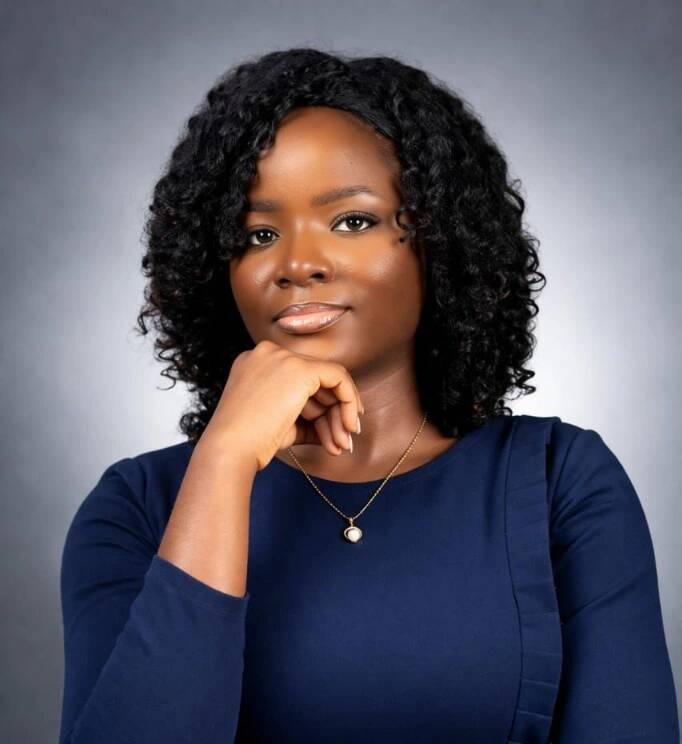
My name is Anna Nana Agyeiwaa Mensah, a professional nurse from Ghana. My interest in Global Health grew out of my experienc .... Read more
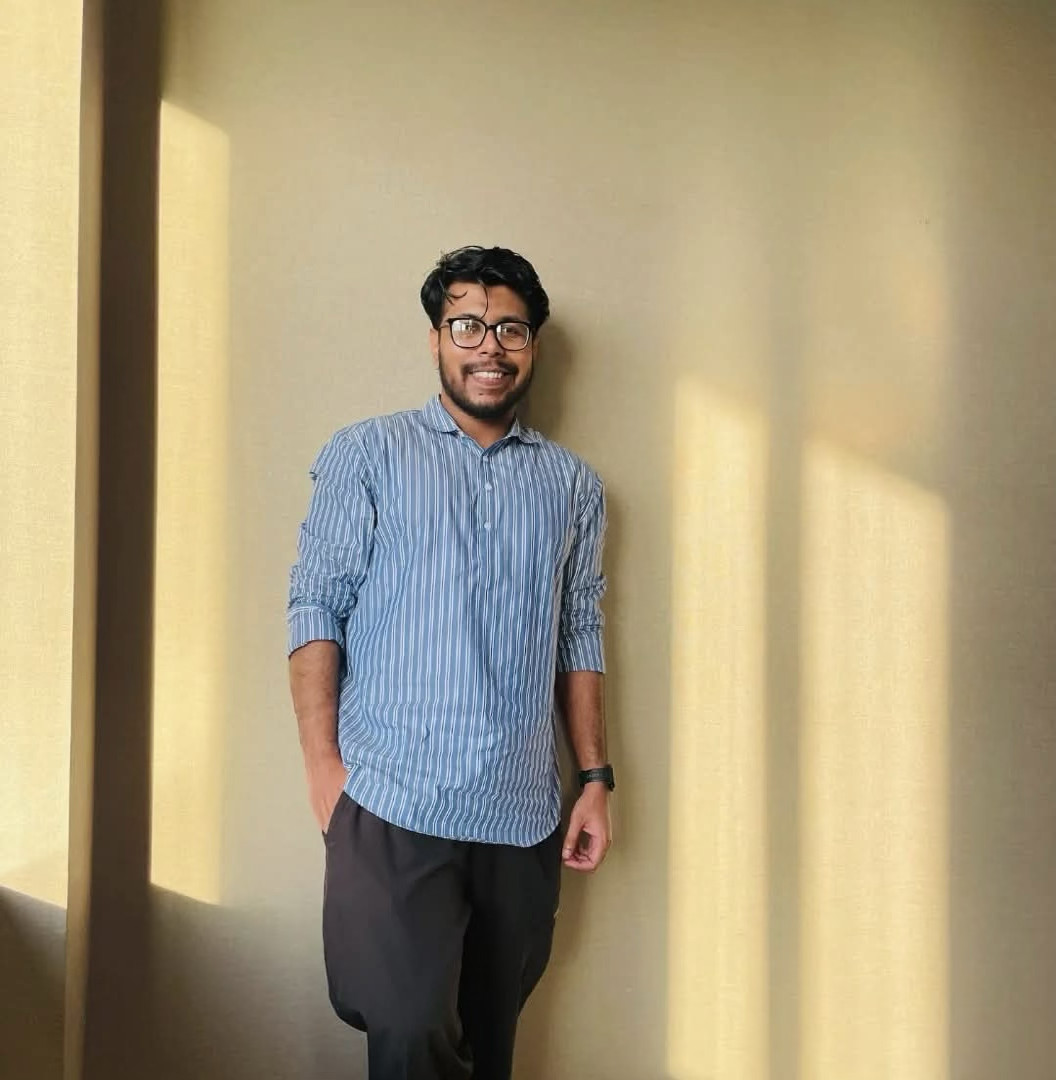
My name is Ratul Chakraborty, and I am from Bangladesh. My background is interdisciplinary, actually. Before coming to Germa .... Read more
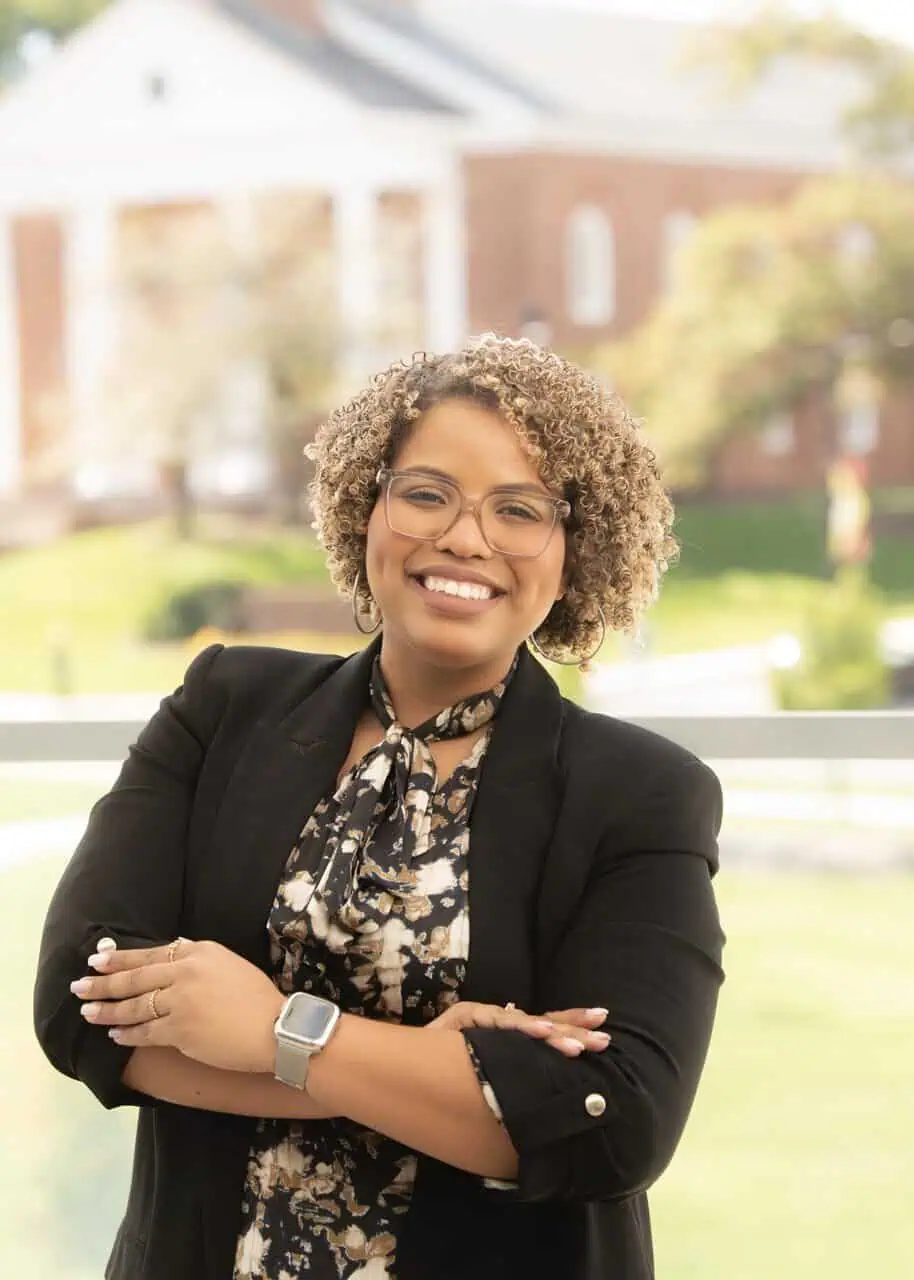
My name is Mabel Zuñiga. I am a graduate student from Panama pursuing a Master’s degree in Public Policy at the Universit .... Read more
Leave A Comment