Deutschlandstipendium 2027
The Deutschlandstipendium is a national public-private partnership scholarship programme established in 2011 by the German Federal Ministry of Education and Research (BMBF, now BMFTR). It supports talented and high-achieving students at state and state-recognised universities in Germany. The scholarship is open to students of all nationalities and is awarded regardless of the student’s or their parents’ income. Half of the funding comes from the Federal Government, and the other half from private donors such as businesses, foundations, or individuals. Selection is carried out by the universities themselves, which set their own admission criteria and application deadlines. In addition to academic achievement, social commitment and personal accomplishments, including the successful overcoming of obstacles in a student’s educational biography, are taken into account. Scholarship funds do not count towards BAföG grants, and no social insurance contributions are payable on the amount received.
Looking for general study options in Germany? You can explore courses in Germany. Please note that these programs are not automatically eligible for Deutschlandstipendium scholarships, so you should verify eligibility on the official scholarship website.
Deutschlandstipendium Coverage
This government partially funded scholarship for international students covers the following:
-
a monthly stipend of 300 EUR
Deutschlandstipendium Eligibility Criteria
To be eligible for Deutschlandstipendium, you need to meet the following criteria:
- Enrolled at, or about to enrol at, a state or state-recognised German university participating in the programme
- New or advanced student (first semester or higher)
- Demonstrates excellent academic and professional promise
- Shows social commitment and/or personal achievement
- Must be within the standard period of study
- Students at federal universities (Hochschulen des Bundes) are NOT eligible
For detailed requirements, refer to the official eligibility page .
Eligible degree levels
Eligible programmes
Eligible nationalities
How to Apply
In this section, we'll provide a clear general overview of requirements and steps to guide you through the application process for Deutschlandstipendium.
To apply for Deutschlandstipendium, please follow these steps:
-
Check whether the university participates in the Deutschlandstipendium programme using the interactive university map on the official website
-
Contact thr university's international office or scholarship office directly to find out their specific admission requirements, application process, and deadlines
-
Prepare and submit your application with all required documents to the university
Important Note: The application procedures and required documents for Deutschlandstipendium may vary depending on your degree, program, nationality and other factors. For specific details regarding the requirements, kindly visit the official website of Deutschlandstipendium.
Application Deadlines
Now that you’re familiar with the application procedure, it’s time to know the application dates! Knowing the dates for Deutschlandstipendium will help you prepare early and it will also give you the time you need to put together a competitive application.
Application deadlines vary
The application deadlines for Deutschlandstipendium vary. It’s important to review official guidelines on the official website or contact administrators for specific deadlines. Make sure to regularly check the Deutschlandstipendium page for the latest and most accurate information on application deadlines.
Deutschlandstipendium Eligible Institutions
The eligible institutions for Deutschlandstipendium are listed below:
A
- Aalen University of Applied Sciences
- Academy of Fine Arts Leipzig
- Academy of Fine Arts Munich
- Academy of Media Arts Cologne
- Albert Ludwig University of Freiburg
- Alice Salomon University of Applied Sciences Berlin
- Anhalt University of Applied Sciences
- Ansbach University of Applied Sciences
- Aschaffenburg University of Applied Sciences
- Augsburg University of Applied Sciences
B
C
F
H
O
R
T
U
- University of Applied Sciences Düsseldorf
- University of Applied Sciences Jena
- University of Bamberg
- University of Bayreuth
- University of Bremen
- University of Cologne
- University of Duisburg-Essen
- University of Education Schwäbisch Gmünd
- University of Education Weingarten
- University of Giessen
- University of Hagen
- University of Hamburg
- University of Hohenheim
- University of Kassel
- University of Mannheim
- University of Munster
- University of Passau
- University of Potsdam
- University of Regensburg
- University of Stuttgart
- University of Trier
- University of Ulm
- University of Wuppertal
- University of Würzburg
Deutschlandstipendium Recipients
Meet students who have received Deutschlandstipendium and learn how they secured their award.
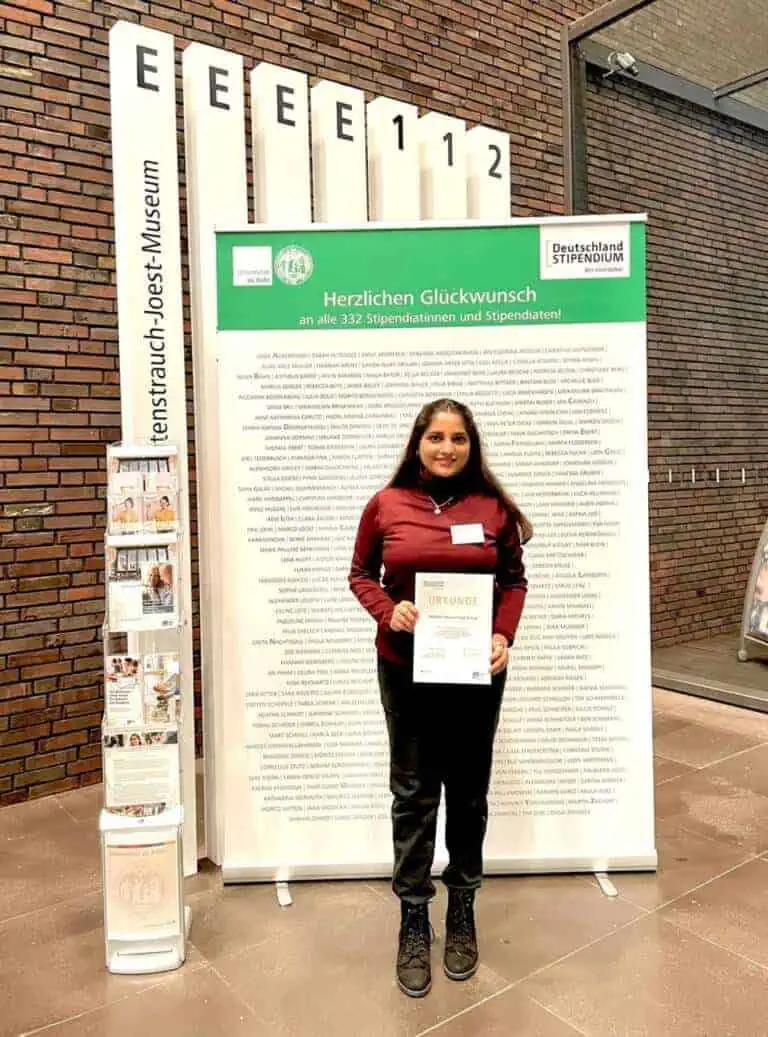

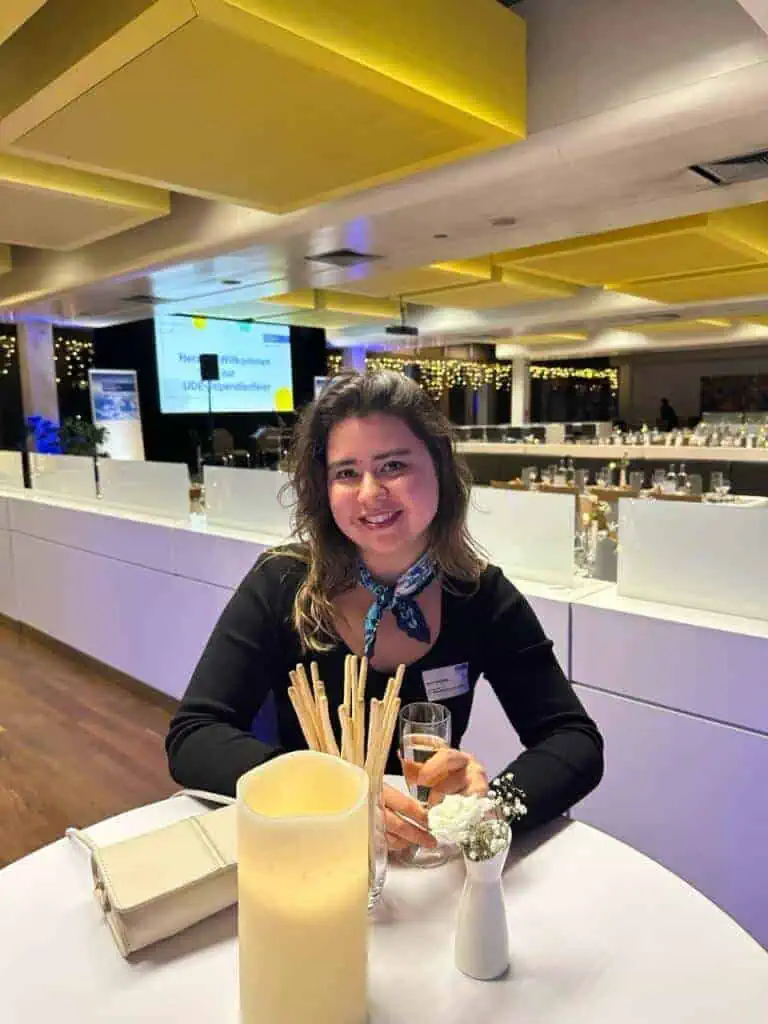
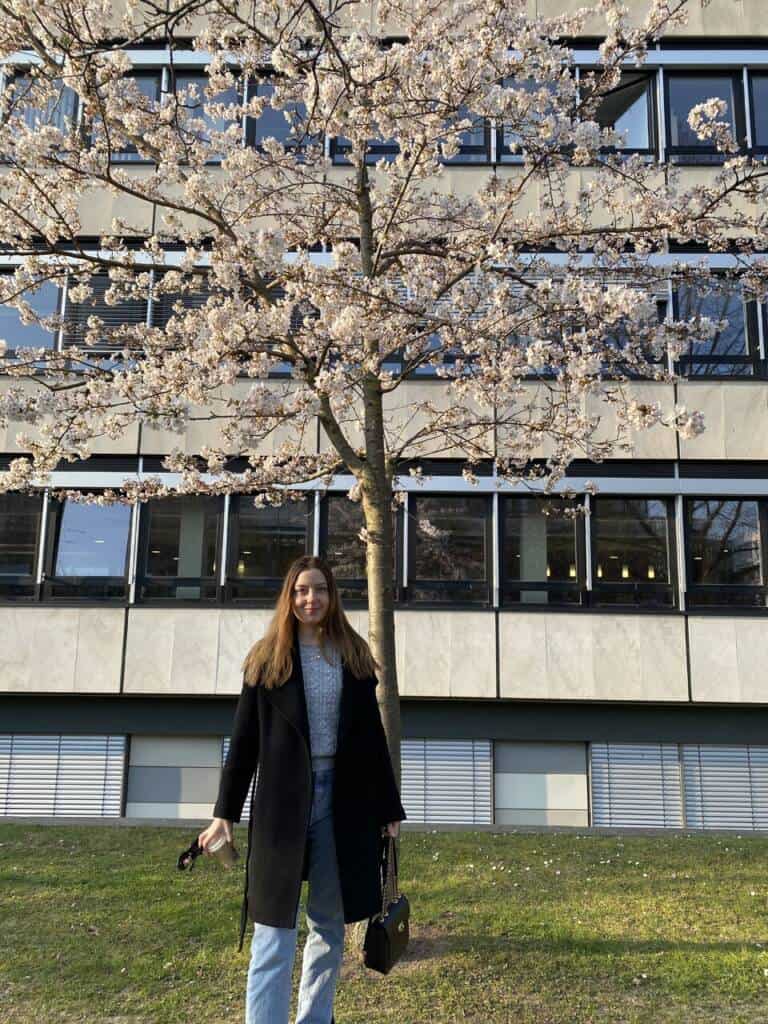
The recipient stories include 5 accounts of degree study supported by Deutschlandstipendium.
Nationalities Represented in the Recipient Stories
| Nationalities | Stories per nationality |
|---|---|
| Pakistani | 2 |
| Indian, Russian, Turkish | 1 each |
Degree Study Reported by Recipients
| Degree level | Stories | Subjects |
|---|---|---|
| Bachelor’s | 1 | Computer Engineering, Software Engineering focus |
| Master’s | 4 | History of Global Markets; Crop Protection; Business Analytics and Econometrics; European Mining Course |
Funding Reported by Recipients
| Recipient and degree/program | Reported coverage |
|---|---|
| Ayse Yaren Bato (From 2022) — Bachelor’s in Computer Engineering, University of Duisburg-Essen | Financial support accompanied by scholar events, workshops, cultural activities and company visits. |
| Maria Voronkova — MA in History of Global Markets, University of Göttingen | €300 per month for one academic year. |
| Azra Farheen — Master’s in Crop Protection, University of Göttingen | €300 per month for one year. |
| Maheen Sohail (2022–2023 funding) — MSc in Business Analytics and Econometrics, University of Cologne | €300 per month for one academic year. |
| Muhammad Aiesh Ghayoor — Joint Master’s in the European Mining Course, Aalto University, RWTH Aachen University and Montanuniversität Leoben | Additional monthly financial support during the Germany phase; separate Finnish, Erasmus+ and FEMP support contributed to the broader joint-degree package. |
Examples of Featured Recipients’ Application Backgrounds
| Recipient and degree/program | Scholarship/application route | Reported background and preparation |
|---|---|---|
| Ayse Yaren Bato (From 2022) — Bachelor’s in Computer Engineering, University of Duisburg-Essen | University scholarship selection | Science high school GPA 95.3/100, followed by English and German preparation. Added online coursework in leadership, management and programming. |
| Maria Voronkova — MA in History of Global Markets, University of Göttingen | University study portal | Prior Sociology bachelor’s and International Law master’s, reported GPA 4.9/5; submitted academic achievements, volunteering and social-engagement evidence. |
| Azra Farheen — Master’s in Crop Protection, University of Göttingen | University scholarship selection | Agricultural Science and Rural Development bachelor’s, reported CGPA 9.67; agriculture-student award, ICRISAT research exposure, volunteering and leadership. |
| Maheen Sohail (2022–2023 funding) — MSc in Business Analytics and Econometrics, University of Cologne | University of Cologne scholarship | Accounting and Finance bachelor’s, German-equivalent GPA 1.1, Silver Medal and a full undergraduate merit award; gathered academic and professional recommendations. |
How Recipients Met Language Requirements
| Language requirement route | Stories / total funded degree-study stories | Recipients and examples |
|---|---|---|
| IELTS | 3/5 | 6.5 (Maheen Sohail); IELTS taken for the application (Azra Farheen, Maria Voronkova). |
Standardized Tests Reported by Featured Recipients
| Test | Stories reporting the test / total funded degree-study stories | Linked recipients and reported scores |
|---|---|---|
| GRE | 1/5 | GRE taken for the application (Azra Farheen). |
Teaching Language Reported by Recipients
| Recipient and degree/program | Reported teaching language |
|---|---|
| Ayse Yaren Bato (From 2022) — Bachelor’s in Computer Engineering, University of Duisburg-Essen | Courses were partly in English and partly in German. |
| Maria Voronkova — MA in History of Global Markets, University of Göttingen | The program offered English and German instruction, including a route that could be completed entirely in English. |
| Azra Farheen — Master’s in Crop Protection, University of Göttingen | The Crop Protection master’s was entirely in English. |
| Maheen Sohail (2022–2023 funding) — MSc in Business Analytics and Econometrics, University of Cologne | The Business Analytics and Econometrics master’s was fully in English. |
| Muhammad Aiesh Ghayoor — Joint Master’s in the European Mining Course, Aalto University, RWTH Aachen University and Montanuniversität Leoben | The joint European Mining Course was entirely in English. |
What Recipients Pursued After Their Scholarship-Funded Studies
| Recipient | Scholarship-funded degree/program | Reported outcome or current status |
|---|---|---|
| Ayse Yaren Bato (From 2022) | Bachelor’s in Computer Engineering, University of Duisburg-Essen | Ongoing study: Computer Engineering with a Software Engineering focus in the bilingual ISE program. |
| Maheen Sohail (2022–2023 funding) | MSc in Business Analytics and Econometrics, University of Cologne | Completed her master’s program and was awaiting official publication of the final results when she wrote the story. |
| Azra Farheen | Master’s in Crop Protection, University of Göttingen | Ongoing study: Crop Protection, specializing in plant pathology; future goal of research that supports sustainable agriculture. |
Other Offers in Featured Applicants’ Journeys
| Recipient | Reported alternative | Decision described in the story |
|---|---|---|
| Muhammad Aiesh Ghayoor — Joint Master’s in the European Mining Course, Aalto University, RWTH Aachen University and Montanuniversität Leoben | Finnish full tuition waiver, Erasmus+ mobility support and FEMP living-cost support for the joint European Mining Course. | Received these alongside additional Deutschlandstipendium monthly support during the Germany phase. |
Applicants Who Declined This Scholarship
| Applicant and intended degree/program | Offer from Deutschlandstipendium | Alternative chosen | Reason described in the story |
|---|---|---|---|
| Shafiq — Bachelor’s in Computer Science, FH Aachen | Deutschlandstipendium offered during his bachelor’s. | Continued with Yayasan Telekom Malaysia support. | Already had a scholarship covering tuition and a monthly allowance. |
| Glyssa May Bosquit — Further study after a Chemical Engineering bachelor’s | Deutschlandstipendium offer. | Did not take up the proposed further studies; reported a current CTBTO internship in Vienna. | Could not finance the remaining study costs. |
What Deutschlandstipendium Scholars Say
Advice and reflections from scholars about the Deutschlandstipendium application process and programme.
"The scholarship amounted to 300 euros per month, and it was possible to reapply for it each academic year."
"German universities offer excellent education at comparatively low tuition costs, making advanced degrees accessible even to students from financially modest backgrounds."
"I would advise prospective applicants to start early and thoroughly research both the scholarship and the institution."
"I dedicated significant time to preparing a detailed motivation letter, academic transcripts, and credential evaluations required for German universities."
"The professors are supportive and highly knowledgeable, and the university provides excellent academic and research facilities for engineering students."
"The academic environment is supportive, research-focused, and well-structured, especially in the field of Crop Protection."
Frequently asked questions
Common questions about Deutschlandstipendium, eligibility, funding, and applications.
No. The Deutschlandstipendium is a partially funded scholarship that provides 300 Euros per month, rather than a full package covering all tuition, housing, airfare, or living expenses. According to Maria Voronkova, “The scholarship amounted to 300 euros per month.”
In general, applicants must be enrolled at, or about to enroll at, a state or state-recognized German university that participates in the program. The scholarship is open to students of all nationalities, and universities consider academic excellence, professional promise, social commitment, and personal achievement. Students at federal universities (Hochschulen des Bundes) are not eligible.
The scholarship can be received up to 4 years for bachelor’s and up to 2 years for master’s and is subject to renewal. Recipient stories show that many students receive the scholarship for one academic year at a time, depending on university administration and renewal rules. For example, Maria Voronkova said it was “possible to reapply for it each academic year.”
It depends on the university and the degree program. Some master’s programs are fully in English, while some bachelor’s programs are bilingual or mostly German. For example, Maheen Sohail said, “My Master’s degree was fully taught in English.” In contrast, Ayse Yaren Bato explained, “My courses are offered partly in English and partly in German.” Maria Voronkova also described her Göttingen program as being taught in English and German, with the possibility of studying entirely in English.
Not always for admission, especially if your program is English-taught, but German is still highly useful for everyday life, internships, and part-time jobs. Maheen Sohail noted that “learning German is strongly recommended for long-term success in Germany.” Ayse Yaren Bato also explained that many bachelor’s courses in Germany are mainly taught in German, although universities may offer support such as bilingual resources and language cafés.
The general application materials include the university’s application form, academic transcripts, prior certificates, a CV, a motivation letter or personal statement, and proof of social commitment or extracurricular involvement. The exact process is handled by each participating university, so deadlines and required documents can differ by institution. Recipient stories reinforce this: Maheen Sohail prepared IELTS results, recommendation letters, a motivation letter, and credential evaluations, while Maria Voronkova submitted translated transcripts, English-proficiency proof, and a motivation letter.
A strong application usually combines excellent grades with convincing motivation, extracurricular involvement, and evidence of social engagement or resilience. Azra Farheen said her application stood out because of “academic excellence, research experience, and demonstrated leadership.” Maria Voronkova likewise said she submitted documents confirming her academic performance, volunteering experience, and social engagement.
There are many degrees that are open to international students right now — find yours.

Leave A Comment