
University of New South Wales Scholarships for International Students 2027
Funding at University of New South Wales can be easier to navigate when you start with the most generous options. Below is a shortlist prioritized by the level of support.
University scholarships associated with University of New South Wales often form the core of an applicant’s funding plan. Here are a few notable options to review first. Full-Time MBA Scholarships is a full tuition award, and the listed benefits often include partial or full tuition fee waivers. International Scientia Coursework Scholarship is usually considered full tuition, and typical coverage can include full tuition fee or $20,000 annually paid directly towards tuition fees for the minimum duration of program. A strong option is International Student Award which is partially funded and often covers 20% reduction in tuition fees.
In addition to university awards, students connected to University of New South Wales may also consider government and external scholarships. Here are a few widely relevant options. Australia Awards Scholarships is fully funded, and coverage often includes tuition fees, A fortnightly contribution for basic living costs and based on a set rate, and health insurance. Australian Government Research Training Program (RTP) is fully funded and typically covers tuition fees, living stipend, and allowances to cover additional costs associated with undertaking a Higher Degree by Research.
You can find more university scholarships and external or government scholarships further down on this page.
University of New South Wales Scholarships for International Students
The scholarships at University of New South Wales can help fund your study expenses. There are currently 6 scholarships being offered to international students at the University of New South Wales, all with varying requirements, benefits, and application processes. We have compiled them in this list to help you find the scholarship that best fits you.
Undergraduate Scholarships
Graduate Scholarships
External Scholarships
There are many degrees that are open to international students right now — find yours.
University of New South Wales Admissions
Here are the official admission pages for University of New South Wales:
| Degree | Admissions Pages |
|---|---|
| Bachelor's | International Students Admissions Page |
| Master's | International Students Admissions Page |
Admissions and Scholarship Results at University of New South Wales
Here are some of the admissions and scholarship results from previous applicants to University of New South Wales, which you might find helpful. For more results to University of New South Wales, please see the University of New South Wales Admissions Profile Page .
| Nationality / Region | SAT/ACT | EFC | GPA | Scholarship | Status |
|---|---|---|---|---|---|
| India | 1430 | N/A | N/A | N/A | Accepted |

University of New South Wales Application Deadlines
Tuition Fees at University of New South Wales for International Students
Indicative annual tuition fee ranges for international students at University of New South Wales. Exact fees vary by program, so always confirm the current cost on the university's official tuition fee pages.
| Degree Level | Typical Annual Range |
|---|---|
| Bachelor's Tuition | 46,500 – 58,500 AUD |
| Master's Tuition | 45,000 – 58,000 AUD |
Please note that tuition fees can vary based on the specific program you choose. For the most accurate and current fee information, consult the official tuition fee pages linked above.
University of New South Wales Scholarship Recipients
International students who received scholarships to study at University of New South Wales, documented by Global Scholarships.

What Scholarship Recipients Say
Advice and insights from international students who successfully secured funding to study at University of New South Wales.
"The scholarship covers the full tuition fees for 3.5 years of the PhD program. Covers the health insurance (Overseas Student Health Cover) for the full duration of the program. Stipend to cover the living expenses, which is $39,206 per annum for 2026. This is reviewed every year. Relocation allowance, up to $2,000 for international students."
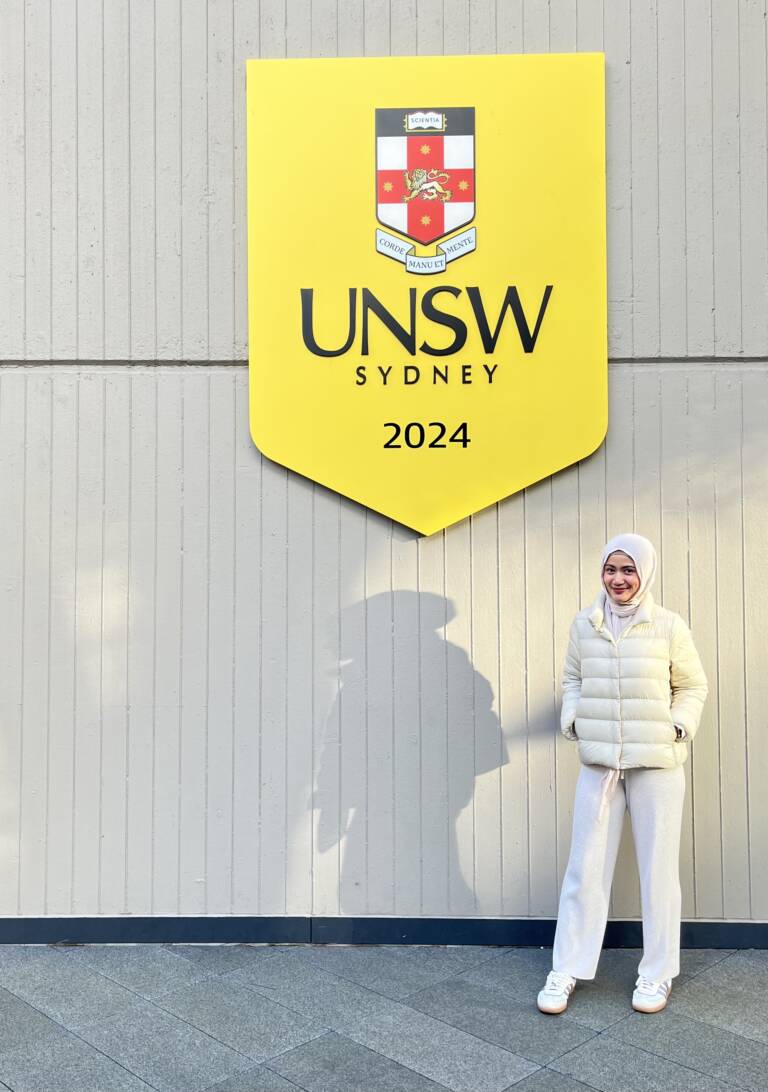
"Preparing for the scholarship required substantial research and planning. I began by identifying the gap between my current qualifications and what I aimed to achieve, then aligned this with how the scholarship could support Indonesia’s development. I created a study plan that outlined the program I wanted to pursue, the skills I aimed to gain, the challenges I might face, and strategies to overcome them."
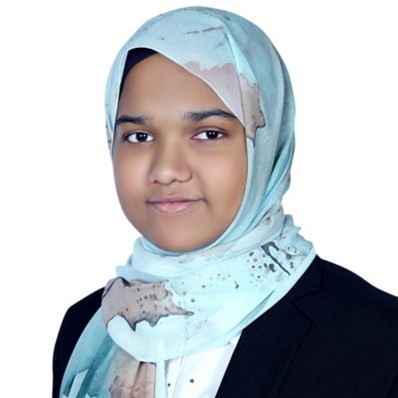
"Hi, I'm Humayra Tasnim Nooha! I'm from Bangladesh and I grew up in the UAE, where I completed my IGCSEs and A-levels. Right now, I'm doing a Bachelor of Science in Computing and Software Systems at the University of Melbourne."
"Unfortunately, the Australian border was closed at that time, and I couldn’t travel onshore. My supervisor, Prof. Ashraf Uddin, was helpful in that situation, and we formulated a research plan so that parts of it can be completed while being offshore. It allowed me to start my degree and be offshore for up to 1 year."
"After a lot of applications for travel exemption, I got approved (thanks to ARC for their support letter) and could come to Sydney on December 2, 2021. My journey throughout the PhD was much swifter afterwards. I got help from my lab-mates, collaborators, Academics, and support staff from the school. This helped me complete my degree in time, though I was offshore for about 9 months."
"Once I was awarded the scholarship, Australia Awards Indonesia assisted in managing the university application process. I only needed to submit my preferred institutions and degree program."
Frequently asked questions
Common questions about scholarships, admissions, and studying at University of New South Wales.
As an international student, you have the chance to study at the University of New South Wales for free by applying for full scholarships. Currently, the university offers the International Scientia Coursework Scholarship program where international undergraduate and postgraduate coursework students have the opportunity to be awarded up to full tuition fee payment. To apply, you need to submit a separate application for the UNSW Scholarships for International Students (PUCA1029). Visit the University of New South Wales scholarship page for more information.
The University of New South Wales has an acceptance rate of approximately 60%. This means that out of every 100 applicants, about 60 are admitted. However, do note that some programs, like engineering and medicine courses, may have lower acceptance rates compared to others. Acceptance rates still vary significantly depending on the program and the applicant’s qualifications, as the selection process can be competitive, especially for international students.
Yes, UNSW does have some scholarships that explicitly include online study options, but many UNSW scholarships are designed for on-campus study.
UNSW scholarships span a wide range of subjects, including STEM fields (engineering, computer science, data science, and science), business (including AGSM programs), humanities and arts, law, and health fields. In Global Scholarships stories, Dr. Shahriyar Safat Dipta studied a PhD in Electrical Engineering (engineering/STEM), while Maudita Dwi Anbarani completed a Master’s in Public Health (health/medicine-adjacent).
UNSW offers scholarships for domestic students and for international students, and many international scholarships are broadly open to “international students” (rather than a single nationality), while some awards are restricted to specific citizenships/countries. The recipient stories show real examples of different nationalities succeeding at UNSW: Maudita Dwi Anbarani introduced herself with, “Hello, my name is Dita, and I am from Jakarta, Indonesia,” and Dr. Shahriyar Safat Dipta earned a fully funded PhD route as an international student. Practically, you’ll want to shortlist scholarships that match your citizenship (or that are open to all international students) and then confirm the fine print for your program.
Often yes, UNSW typically requires proof of English proficiency unless you meet an approved exemption/alternative pathway. Both Global Scholarships recipients at UNSW reported using IELTS: Dr. Shahriyar Safat Dipta explained, “I had to take a standardized English test as I am from a non-English-speaking country,” and Maudita Dwi Anbarani noted she took Academic IELTS and that “the minimum score for a Master’s Award was 6.0” for her Australia Awards pathway. Always match your degree’s English requirement (some programs require higher scores than others).
Yes, but it depends on the exact degree (and on whether you’re applying from high school, a diploma pathway, or a prior university degree). UNSW sets program-specific academic entry requirements, so the “minimum grade” is not one universal number. That said, scholarship winners at UNSW typically had strong academics: Dr. Shahriyar Safat Dipta reported a “CGPA 3.89/4.00,” and Maudita Dwi Anbarani wrote she graduated with a “GPA of 3.74/4.00.” Treat these as real examples of competitive profiles, not guaranteed cutoffs.
Many UNSW scholarships don’t advertise a strict age cap and instead focus on admission status, academic merit, and scholarship-specific criteria. However, some external scholarships that people use to study at UNSW can have age-related rules that vary by country and program. For example, Maudita Dwi Anbarani was funded through Australia Awards, and Australia Awards age rules can differ by participating country (some locations state “no upper age limit,” while others publish an upper range).
A strong academic record helps, but UNSW scholarships can also weigh leadership, extracurricular impact, and fit with program goals. For research scholarships, a research-focused profile is especially important. Dr. Shahriyar Safat Dipta described a very research-driven approach: “My preparations included making a research proposal, engineering my CV to focus on the research and strong areas,” and he emphasized readiness because “having all your documents ready always helps in the application process.” For development-focused awards, clarity of purpose matters too. Maudita Dwi Anbarani wrote, “I created a study plan that outlined the program I wanted to pursue,” and tied it to public health needs in Indonesia.
Document requirements vary by degree and scholarship type, but commonly include academic transcripts/degree certificates, proof of English proficiency (if required), identity documents (e.g., passport), and any program-specific materials. For HDR/research scholarship pathways, applicants often need a CV and a research proposal. Dr. Shahriyar Safat Dipta explicitly mentioned “making a research proposal” and tailoring a CV. For some scholarship-managed pathways, the process can be lighter on the applicant at the university application stage. Maudita Dwi Anbarani said, “I only needed to submit my preferred institutions and degree program,” because the Australia Awards helped manage the university application process. If you’re applying to medicine as an international student, expect extra items like a personal statement and test confirmation as part of the admissions steps.
Yes, UNSW lists an A$150 online application fee for many direct online applications, with exceptions for some applicant categories and program types (for example, certain postgraduate research applications can be treated differently).
There are many degrees that are open to international students right now — find yours.
About the Author: Hyun Lee


Leave A Comment