
Flinders University Scholarships for International Students 2027
To help students manage tuition and living expenses, Flinders University connects to scholarships across different funding levels. Here are several top options to review first.
Among the university based funding routes linked to Flinders University, these scholarships tend to stand out for their level of support and overall value. With Vice-Chancellor International Scholarships, students may receive partially funded support, and coverage frequently includes 50% of tuition fees. Go Beyond Scholarship is a partially funded award, and the listed benefits often include 20% tuition fee reduction for the Global Scholarships, 25% tuition fee reduction for the Excellence Scholarships, and 50% tuition fee reduction for the Vice-Chancellor International Scholarships.
To broaden funding options beyond institutional awards at Flinders University, these external and government scholarships are commonly considered as well. A strong option is Australian Government Research Training Program (RTP) which is fully funded and often covers tuition fees, living stipend, and allowances to cover additional costs associated with undertaking a Higher Degree by Research. Australia Awards Scholarships is fully funded, and coverage often includes tuition fees, A fortnightly contribution for basic living costs and based on a set rate, and health insurance.
To see every scholarship associated with this institution and compare coverage and eligibility, browse the sections below.
Flinders University Scholarships for International Students
The scholarships at Flinders University can help fund your study expenses. There are currently 5 scholarships being offered to international students at the Flinders University, all with varying requirements, benefits, and application processes. We have compiled them in this list to help you find the scholarship that best fits you.
Undergraduate Scholarships
Graduate Scholarships
External Scholarships
There are many degrees that are open to international students right now — find yours.
Flinders University Admissions
Here are the official admission pages for Flinders University:
| Degree | Admissions Pages |
|---|---|
| Bachelor's | International Students Admissions Page |
| Master's | International Students Admissions Page |
Flinders University Application Deadlines
Tuition Fees at Flinders University for International Students
Indicative annual tuition fee ranges for international students at Flinders University. Exact fees vary by program, so always confirm the current cost on the university's official tuition fee pages.
| Degree Level | Typical Annual Range |
|---|---|
| Bachelor's Tuition | 35,700 – 47,300 AUD |
| Master's Tuition | 37,600 – 58,300 AUD |
Please note that tuition fees can vary based on the specific program you choose. For the most accurate and current fee information, consult the official tuition fee pages linked above.
Flinders University Scholarship Recipients
International students who received scholarships to study at Flinders University, documented by Global Scholarships.
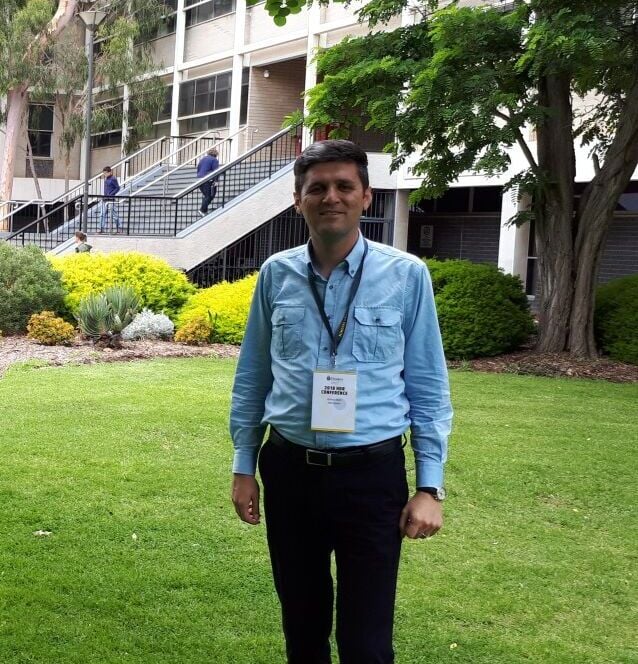


What Scholarship Recipients Say
Advice and insights from international students who successfully secured funding to study at Flinders University.
"These scholarships provided full funding, covering tuition, living expenses, travel, and other academic costs."
"For those applying for Australia Awards, start early and carefully research the scholarship’s criteria."
"Starting this year, I am going to pursue a PhD in Criminology at Flinders University through the Australia Awards Scholarship (AAS)."
"Flinders University stood out because of its reputation for innovative research in criminal justice and its emphasis on practical solutions."
"I pursued further education to deepen my understanding and practical skills of effective teaching methodologies and contribute to improving English language education in Indonesia."
"The AAS is more than just financial aid; it provides professional development opportunities, including leadership training and networking."
Frequently asked questions
Common questions about scholarships, admissions, and studying at Flinders University.
Yes, Flinders has scholarships specifically aimed at fully online study,
Flinders offers scholarships across a wide range of study areas, commonly including business, engineering, STEM fields (such as science and information technology), humanities and social sciences, education, law, and health-related disciplines.
Medicine is offered as a study area, but international tuition-reduction schemes can exclude certain clinical/medicine pathways (for example, Doctor of Medicine and some specific clinical health programs are listed as excluded courses under the some scholarship terms), so international students aiming for medicine should double-check course-by-course eligibility and consider external scholarships too.
In terms of what studying “looked like” for recipients, Flinders scholarship recipient Ainol Mardhiah studied an MA in TESOL, showing that education/humanities-linked programs (language education) can be supported through major external funding routes.
Many Flinders international scholarships are open broadly, while some scholarships have specific nationality requirements.
Often, yes, Flinders’ international admissions guidance states you must meet academic and English proficiency requirements for direct entry, so an English test (or an accepted alternative) is commonly required, depending on your background and course.
In Ainol Mardhiah’s case, she said, “The only test I needed to take was the IELTS,” and she described receiving months of IELTS preparation support through her scholarship pathway.
It depends on the course (and sometimes quotas/competition), but Flinders notes that admission to courses is normally based on academic merit as determined by assessment of qualifications.
Many scholarships don’t list an explicit upper age cap; instead, they focus on student status (e.g., new students), course eligibility, and academic performance. Recipient pathways suggest scholarships can support applicants beyond the “fresh out of school” stage: Ainol Mardhiah pursued her MA and later worked as a lecturer, reflecting a professional-career stage rather than an age-restricted one.
A strong baseline is: meet course entry requirements (academic + English), and then match the scholarship’s specific thresholds and conditions. A “good academic background” can also mean a coherent story linking prior study to your goals. Ainol Mardhiah described earning a bachelor’s in English Language Education, then pursuing her MA to strengthen teaching methodologies and impact English education in her community.
For international applications, Flinders advises that academic documentation submitted electronically must be certified, and in some cases certified copies of passports are required; you typically upload required documents before you can submit your application.
Recipient experience can make this feel more concrete: Ainol Mardhiah wrote, “I ensured all required documents, such as my CV and translated documents, were ready,” which is especially relevant if your documents are not originally in English.
If you’re also being considered for scholarships, be prepared for extra scholarship-specific materials where applicable (for example, some scholarship categories require forms, and most require you to keep meeting GPA/enrolment conditions after you start).
Flinders’ Ask Flinders FAQ states: “A non-refundable application fee of AU$45.00 needs to be lodged with your application.” Check the latest guidelines for updated information.
There are many degrees that are open to international students right now — find yours.
About the Author: Hyun Lee


Leave A Comment