
Chevening Scholarship Recipient Swati Mishra from India Shares Her Journey of Pursuing an MSc in Public Health at the London School of Hygiene and Tropical Medicine (LSHTM)
University: London School of Hygiene and Tropical Medicine (LSHTM), United Kingdom
Degree: MSc in Public Health
Previous Education: Master’s in Social Work – Tata Institute of Social Sciences (TISS), India
Scholarship: Chevening Scholarship – Fully Funded (tuition fees, living expenses, travel, and academic costs, funded by the UK FCDO)
Social Media
LinkedIn: linkedin.com/in/swati-mishra-0a4b2b35/
The Journey
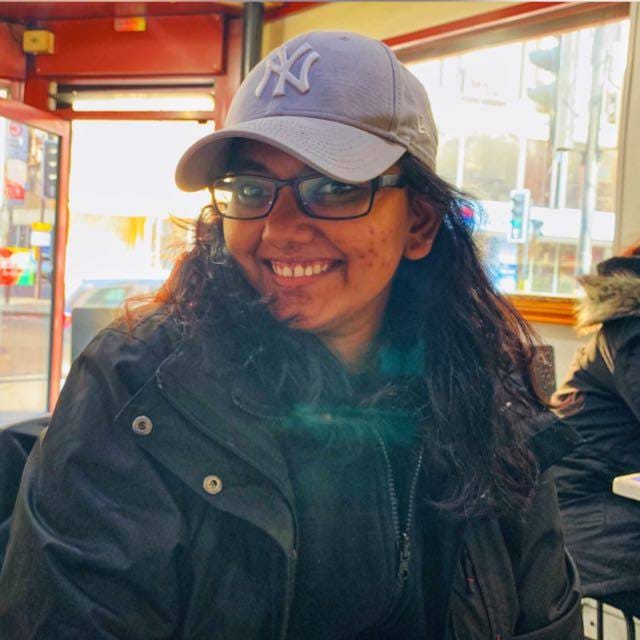
Hello world! My name is Swati Mishra, and I come from Lucknow, Uttar Pradesh—one of the largest and culturally rich states in northern India. I hold a Master’s degree in Social Work from the Tata Institute of Social Sciences, completed in 2017, which laid the foundation for my engagement in social development and grassroots work. Building on this, I pursued a Master’s in Public Health from the London School of Hygiene and Tropical Medicine during the 2018–19 academic year, supported by the prestigious Chevening Scholarship. With a background deeply rooted in public health and development, my decision to pursue further education stemmed from a strong commitment to improve health systems, especially in areas related to maternal and child health, nutrition, and gender equity. This academic journey not only deepened my technical expertise but also broadened my perspective on global health challenges and the importance of inclusive, community-based solutions.
Chevening Scholarship Details
I was honored to receive the Chevening Scholarship, funded by the UK Foreign, Commonwealth and Development Office (FCDO), to pursue my dream of studying in the United Kingdom. I chose to undertake an MSc in Public Health at the London School of Hygiene and Tropical Medicine for the academic year 2018–19.
Chevening is one of the most prestigious and highly competitive scholarships in the world, awarded to individuals with strong academic credentials, leadership potential, and a commitment to driving positive change in their home countries. The scholarship fully funded my education, covering full tuition fees, living expenses, travel costs, and additional academic expenses, amounting to approximately £30,000–£35,000.
Beyond financial support, Chevening provided an enriching platform where scholars from across the globe came together to exchange their lived experiences, build networks, and collaborate across diverse sectors and domains.
While I was also considered for other partial funding opportunities, I fully committed to the Chevening Scholarship upon receiving the offer and did not accept any additional scholarships.
Educational Background
I hold a Master’s degree in Social Work from the Tata Institute of Social Sciences (TISS) with First Class academic standing. During this program, I specialized in the Public Health vertical, equipping myself with core competencies in program planning, health management, community mobilization for health, policy analysis, and rights-based advocacy.
To deepen my technical expertise in public health, I pursued an MSc in Public Health at the London School of Hygiene and Tropical Medicine (LSHTM) in 2018–19, supported by the prestigious Chevening Scholarship. At LSHTM, my coursework focused on epidemiology, health systems strengthening, health policy and financing, nutrition interventions, and program monitoring and evaluation.
This interdisciplinary training across social work and public health has prepared me to critically analyze and design evidence-based programs that address health inequities, particularly in the domains of maternal and child health, nutrition, gender equity, and governance systems. It also strengthened my skills in data-driven decision-making, policy advocacy, and community-centered program development, enabling me to bridge grassroots realities with systemic public health solutions.
How Did You Prepare to Apply to the London School of Hygiene and Tropical Medicine?
Preparing to apply to leading institutions was a well-planned and reflective journey for me. I began by identifying universities that had strong reputations in public health, development studies, and social policy, areas aligned with my professional interests. I thoroughly researched programs at the London School of Economics and Political Science (LSE), the London School of Hygiene and Tropical Medicine (LSHTM), Brighton Sussex Medical School, University of Sussex, and the University College London (UCL). I carefully examined their course structures, faculty expertise, research focus areas, and global alumni networks to ensure the right academic fit.
Understanding the competitive nature of these institutions, I invested significant time in refining my application materials, particularly my personal statements, research interests, and leadership experiences. I sought mentorship from previous Chevening Scholars, faculty members, and senior colleagues, whose feedback helped me strengthen the clarity and coherence of my applications.
My focus was on building a strong professional profile through hands-on fieldwork in maternal and child health, nutrition, and gender equity programs. This practical experience, combined with my academic background, allowed me to present a compelling case for how advanced study would help me scale my impact in the development sector.
Additionally, I devoted attention to improving my academic writing, understanding the expectations of UK institutions, and showcasing a clear linkage between my past experiences, academic pursuits, and future goals.
Talk About How You Find Your Information, as Well as Standardized Test Scores. How Did You Prepare for Those Exams?
A significant part of my preparation involved meeting the English language proficiency requirements. Having studied in a vernacular medium throughout my early education, preparing for international standardized tests like IELTS and TOEFL posed a particular challenge for me. However, recognizing their importance for both university admissions and scholarships like Chevening and Commonwealth, I invested dedicated effort into preparation. I utilized resources such as the British Council IELTS study guides, ETS official TOEFL materials, and online practice platforms, focusing heavily on timed practice sessions to improve both my language skills and exam technique.
As the saying goes, “Practice makes perfect,” and that truly held true for me. Regular mock tests, twice a week, became a cornerstone of my preparation strategy. This consistent effort, combined with focused improvement in writing and speaking, enabled me to achieve strong scores in both IELTS and TOEFL, successfully meeting the eligibility criteria of the institutions I aspired to join.
How Did You Prepare to Apply to the Chevening Scholarship?
Applying for the Chevening Scholarship was a thoughtful, rigorous, and highly structured process. I began by thoroughly understanding the scholarship’s expectations around leadership potential, professional achievements, academic excellence, and a clear, impactful career plan. I attended Chevening-hosted webinars, engaged with alumni, and studied successful past applications to understand how to craft strong, compelling narratives.
The first round of the application involved submitting four carefully written essays on leadership, networking, career goals, and reasons for studying in the UK, along with academic records, a professional CV, and references. My objective was to invest significant time in introspection and multiple drafts, ensuring that my essays captured not only my achievements but also the challenges I had overcome, including studying in a vernacular medium and later preparing for international academic environments. I sought feedback from mentors and peers to refine my essays to a high standard.
After clearing the first round, I was invited to the interview stage, where shortlisted candidates are assessed by a Chevening interview panel. I prepared intensively for this stage by revisiting my essays, staying updated on current global health & development issues, practicing mock interviews, and understanding FCDO’s interest areas in my country to build clarity and confidence. I also reflected deeply on my leadership experiences and my vision for creating change in the public health sector.
Given the highly competitive nature of Chevening, I approached every stage with meticulous planning, authenticity, and a commitment to demonstrating how the scholarship would enable me to contribute meaningfully to my country’s development.
How is (was) Your Experience at the London School of Hygiene and Tropical Medicine?
London School of Hygiene and Tropical Medicine is the ‘Mecca’ of Public Health professionals from all across the globe. From its central London location to its distinguished faculty with expertise spanning diverse geographies, every aspect of the School exceeded my expectations.
My role as a Student Liaison for the MARCH Centre was particularly enriching. It not only helped me forge lasting friendships but also facilitated meaningful engagement with faculty members and fellow students. This experience deepened my academic journey and gave me a strong sense of belonging within the LSHTM community.
How Do You Rate the London School of Hygiene and Tropical Medicine Academically and Why?
I would rate the London School of Hygiene and Tropical Medicine as outstanding in terms of academic excellence. The institution offers a rigorous, research-driven curriculum that is both globally relevant and locally grounded. The faculty comprises leading experts in public health, epidemiology, maternal and child health, and related disciplines, many of whom are actively engaged in shaping global health policies and practices.
One piece of advice for professionals in managerial roles in public health: if you have a keen interest in research and evidence-based policymaking, the London School of Hygiene and Tropical Medicine is the place to be. The School not only deepens your understanding of global health systems but also equips you with the analytical and research skills needed to drive impactful, data-informed decisions in your managerial career.
What Do You Think Made Your Application Stand Out?
I believe my application stood out due to a combination of authenticity and a clear commitment to making an impact in the public health sector. Throughout my journey, I have always been deeply invested in addressing systemic issues, particularly in the fields of maternal and child health, nutrition, and gender equity. My application reflected not only my academic and professional achievements but also my passion for social change and my determination to overcome challenges.
Additionally, my professional experience working with government projects and NGOs in India, focusing on community-based health and nutrition programs, allowed me to provide concrete examples of leadership and impact. I was able to demonstrate how my experiences aligned with the Chevening criteria, particularly in terms of leadership potential and career goals.
Another key differentiator was my ability to show how studying in the UK, particularly at LSHTM, would allow me to enhance my knowledge and bring valuable, research-backed solutions back to India. The integration of my past experiences with my future goals created a cohesive narrative that demonstrated not just academic readiness but also the potential to contribute meaningfully to the development sector in India.
What Would You Have Done Differently if You Were Going Through the Process Again?
One thing I would have done differently is to make better use of my time in London beyond the academic commitments. I had access to some of the world’s finest libraries through my university registration, and I wish I had taken fuller advantage of those resources, spending more time exploring books and expanding my learning beyond the classroom.
As for my application, I wouldn’t change anything. It genuinely reflected my journey, aspirations, and commitment to public health, and it paved the way for an incredibly enriching academic experience.
What Advice Would You Give Those Looking to Apply for a Similar Scholarship?
Over the past five years, since my graduation, I’ve had the opportunity to review several applications for Chevening and various universities. One common gap I’ve observed is the absence of a structured mind-mapping or brainstorming exercise before beginning the application process. Taking time to reflect deeply on your experiences, aspirations, and unique strengths can make a huge difference. This clarity helps in deciding what truly deserves a place in your application, and what can be left out. It's not just about writing well; it's about writing with purpose and focus.
Secondly, for those who may not have been selected, it is important to understand that rejection is not necessarily a reflection of one’s capability or intellect, just as selection is not a definitive measure of merit. Competitive applications like these often hinge on effectively aligning one’s narrative with specific criteria, attention to detail, and understanding the expectations of the selection committee.
Having reviewed and observed numerous applications, I have seen highly competent individuals not make the final list, while others with less conventional profiles have succeeded. These outcomes are often influenced by how well the application is crafted rather than purely by merit. While such opportunities can be transformative, they should be viewed as part of a broader professional journey, not as the sole determinant of potential or success.
Want to submit your
scholarship journey?
Submit Your Story Here!
More Scholarship Recipients
My name is Marcela Gomez, and I am originally from Medellin, Colombia. I hold a Master’s in International Development from .... Read more
- Bachelor's Scholarships
- Canada
- COLFUTURO Loan-Scholarship Program
- Colombian Nationality
- Eiffel Excellence Scholarship
- France
- Fully Funded Scholarships
- International Development
- International Relations
- Karen McKellin International Leader of Tomorrow Award
- Master's Scholarships
- Sciences Po
- University of British Columbia
Hi! My name is Davi Augusto Mattoso, and I am originally from Brazil. I have a Bachelor's in Chemistry from the Federal Univ .... Read more

Hello, my name is Manasi, and I am from India. I completed my Bachelor’s degree in Civil Engineering from Dr. Babasaheb Am .... Read more
Leave A Comment