
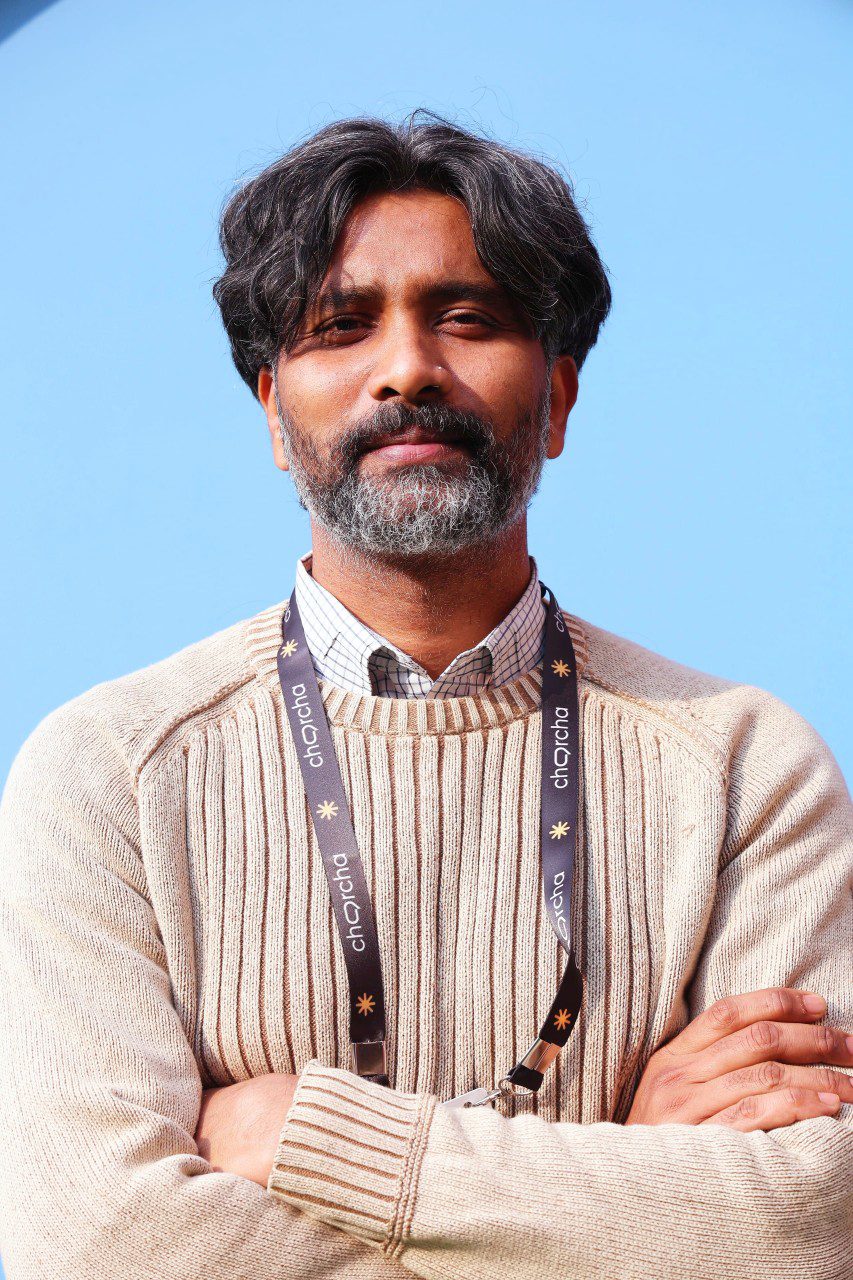
MA Gender and Development Student Rajaneesh Rajan from India Shares His Journey of Studying at the Institute of Development Studies, United Kingdom
University: Institute of Development Studies, University of Sussex
Degree: MA in Gender and Development
Previous Education: Master’s in Development Management, Indian Institute of Forest Management (IIFM)
Scholarship: Chevening Scholarship – Fully Funded (tuition, stipend, airfare, visa, allowances)
Social Media
LinkedIn: linkedin.com/in/rajaneesh-r-830068a7/
The Journey
Hi, I’m Rajaneesh Rajan from Kerala, India, popularly known as “God’s Own Country.” I have been working in the social development sector for the past 10 years. During this time, my work allowed me to engage closely with diverse communities across India and understand development from both policy and grassroots perspectives.
Currently, I am associated with The/Nudge Institute, a nonprofit organization in Bengaluru, where I work on economic inclusion initiatives of the most marginalized communities. focused on rural livelihoods and social inclusion. My work centers on supporting women, farmers, tribal communities, and youth to build their aspirations and enable them to achieve the life they want to live, with greater dignity and an improved standard of living. In other words, I strive to translate impactful development ideas, models, and frameworks into tangible outcomes on the ground.
I believe my education in the UK and the extensive networking opportunities helped me deepen and strengthen my strategic and analytical capabilities. This experience has added a new dimension to my work. With a strong blend of academic exposure and practical, on-the-ground experience, I am now particularly motivated to bridge the gap between policy design and effective implementation.
Beyond my professional commitments, I enjoy playing badminton, cooking, watching films, and staying engaged with current affairs and public policy discussions. These interests help me maintain a balanced perspective and stay connected to broader social and cultural developments.
Chevening Scholarship Details
I was honored to receive the Chevening Scholarship to pursue my MA in Gender and Development at the Institute of Development Studies (2021–22). The Chevening Scholarship is the prestigious UK Government’s fully-funded international awards programme, anchored by the Foreign, Commonwealth and Development Office (FCDO). It supports emerging leaders across sectors from around the world to study one-year master’s programmes at UK universities.
As a Chevening Scholar, I received comprehensive support that included full tuition fees, a monthly living stipend, economy-class airfare to and from the UK, visa-related costs, and additional allowances to help with arrival and departure. Beyond funding, it also offered access to a global leadership network that continues to enrich my professional journey.
Educational Background
I hold a Master’s in Development Management from the Indian Institute of Forest Management (IIFM), Bhopal.
However, I strongly believe what truly shaped my readiness for the application was the combination of academic exposure and deeply grounded professional experience. Working directly with communities helped me see which approaches work, which need adaptation, and why contextualised models for economic and social inclusion matters so much in development. It actually gave me clarity on where I should strategically invest in my professional growth and where my engagements create the most meaningful impact.
How Did You Prepare to Apply to the Institute of Development Studies?
Coming from a non-academic background, it was not easy to build aspirations or clearly understand the path ahead. The journey often felt uncertain and overwhelming. Looking back, I would say three factors played a crucial role in shaping my path: having a mentor who understood my vulnerabilities, a friend who kept me motivated during difficult times, and, above all, perseverance.
vividly remember the long nights spent refining my applications, reworking my Chevening essays for the fourteenth time after incorporating my mentor’s feedback, and revisiting my LSE Statement of Purpose for the eighth round. With each revision, I felt a little closer to articulating what I truly wanted to say. Those moments, though challenging, became defining milestones in my journey.
I believe that when choosing an institute for your studies, the first step is to identify a “magic word” - something that defines your focus, such as a theme, topic, or aspiration. In my case, that word was “Gender”, for others it could be public policy, poverty, environment, entrepreneurship etc. This helped me dive deeper and gain clarity on what I truly wanted to explore further within that area. Once you have this clarity, the next step of narrowing down and identifying the best courses in the UK becomes much more straightforward.
Additionally, I spent time reading official websites, student blogs, and attending webinars to understand what each programme offered and how it aligned with my interests. For those who wanted to apply today, so much information is available online today, it’s just about making the best use of it.
For standardized tests, I took the TOEFL and Duolingo English Test. My English wasn’t very strong at the time, so I focused on understanding the exam format and practicing strategically to meet only the requirements, rather than trying to completely overhaul my language skills. Consistent preparation and familiarity with the tests made the process manageable and effective.
How Did You Prepare to Apply for the Chevening Scholarship?
found the Chevening scholarship application process, in particular, to be a powerful opportunity to reflect on my own journey for the last six professional years. It helped me organize my thoughts and gave me a clearer sense of direction, both in terms of what I have been doing and where I should invest my time and energy moving forward.
I remember speaking about this during my Chevening interview when I was asked what made the experience special for me. I shared that it helped me become a more organized and intentional person. Since the process spans nearly a year - from August to September next year - it requires thoughtful planning. Each day feels purposeful, with something to work towards, and in that sense, the entire journey became something I truly cherish.
To manage this effectively, I structured my efforts into three key areas: college applications, scholarship applications, and English test preparation. While I treated these as distinct components, there was a natural interconnection between them. I initially prioritized my scholarship application, and once about 70% of that work was complete, I shifted my focus to college applications. English test preparation, meanwhile, was a continuous effort throughout the process.
Over time, I noticed that progress in one area supported the others. The clarity I developed through writing my applications helped me express myself better. By the time I appeared for my Chevening interview, I felt more self-assured. I tried my best to respond with honesty and clarity, and I believe that this confidence stemmed from having a clearer sense of purpose.
How is Your Experience at the Institute of Development Studies?
It offered a rich blend of interactions with people from diverse countries and backgrounds, which made the journey truly enriching. It was a wonderful environment to share my thoughts, learn from different perspectives, and understand varied personalities. Being part of different cultures through food, music, movies, festivals, and everyday interactions, was especially enjoyable and added a unique dimension to the experience.
From an academic standpoint, the approach was quite different from what I was used to in Indian universities. In the UK, there is a strong emphasis on self-learning and independent exploration. It is largely up to the student to decide how much they want to engage and how best they can make use of the opportunities available.
would say I wasn’t a reasonably good student academically, though I must admit that I spent a significant amount of time exploring the broader aspects of university life. I actively engaged with diverse communities, student groups, non-curricular platforms, and sports activities, which, in many ways, became equally valuable learning experiences for me.
How Does the Institute of Development Studies Support International Students?
The institution provides comprehensive support for international students through a range of academic, administrative, and social initiatives. The orientation program, which extends over 10 days, is particularly helpful in facilitating a smooth transition into the new environment. It includes a charity market where students can purchase essential items such as books, kitchen utilities, clothing, and other necessities from previous batches, campus tours, meetings with faculty members, and sessions that explain the course curriculum in detail.
In addition, the institution has clear and strictly enforced policies on anti-ragging, POSH, and zero tolerance towards racism and any form of violence. All relevant information is systematically disseminated to new students to ensure awareness and safety during this orientation time itself. Furthermore, students are encouraged to engage with diverse communities, participate in cultural/socio-political and ideological platforms, and access mentoring systems, all of which contribute to a well-rounded experience and support their academic as well as social integration.
What Do You Think Made Your Application Stand Out?
This is a question I have often found difficult to answer, as I have seen individuals with greater enthusiasm, stronger capabilities, and more extensive experience not always navigate the process successfully. However, reflecting on my own journey, I believe a couple of factors stood out for me.
First I believe, my grassroots experience played an important role. Coming from a background where I have worked closely with different marginalised communities, I
have been exposed to multidimensional contexts. Further, I realized that telling your story is also just as important as the journey itself. Rather than focusing solely on what I had done, I made a conscious effort to articulate the process and how it connects to my aspirations.
What Would You Have Done Differently if You Were Going Through the Process Again?
If I were to go through the process again, I would focus more on bringing out my personal stories in both my writing and storytelling. Through reflection, I realized that beyond academic and professional experiences, it is often one’s personal traits and character that truly shape the profile. In hindsight, I would have worked on better techniques to effectively incorporate these personal elements into my applications, ensuring they are communicated more clearly and meaningfully. For instance, as an aspiring gender studies student, I feel I could have more clearly articulated the personal motivation behind this interest. My mother has been the first and most influential example in my life of how women’s empowerment can transform an individual’s journey. Observing her resilience and growth gave me a deep, lived understanding of the subject. However, in my application, I leaned more toward examples from my professional experience, whereas I could have better balanced it by highlighting this personal connection more explicitly.
What Advice Would You Give Those Looking to Apply for a Similar Scholarship?
I would highlight two key aspects: mentorship and structured planning.
Having a mentor who has been through the same experience can make a significant difference, as the process demands consistency and perseverance over a long period. A mentor not only guides you but also helps you stay focused and accountable.
At the same time, it is essential to approach the year with a clear and realistic plan, as you will be managing multiple tasks in parallel. Being mindful of your limitations, rather than only focusing on strengths, helps in structuring your time and efforts more effectively.
Want to submit your
scholarship journey?
Submit Your Story Here!
More Scholarship Recipients
My name is Roha Naz, and I am a recipient of a fully funded DAAD and Commonwealth Scholarship (CDLS). As a DAAD scholarship .... Read more
My name is Prathiba Annam, and I am originally from India. I am a graduate of a Master of Public Health (MPH) in Epidemiolog .... Read more

My name is Olujumoke Adesola Ogunrayi, and I am an environmental and climate change professional from Nigeria with over a de .... Read more
Leave A Comment