
SAIC Scholarship Scholar Nivas from India Shares His Journey of Securing a Fully Funded Master's at the University of Stirling, United Kingdom
University: University of Stirling
Degree: MSc in Sustainable Aquaculture
Previous Education: Bachelor of Fisheries Science (BFSc) from the Fisheries College and Research Institute, Tuticorin, under Tamil Nadu Dr. J. Jayalalithaa Fisheries University
Scholarship: Sustainable Aquaculture Innovation Centre scholarship by Sustainable Aquaculture Innovation Cluster, previously known as Sustainable Aquaculture Innovation Centre – Full Fee Scholarship (Tuition Fees) (Value around £25,000 )
Other Offered Scholarships (if any): ACES-STAR Erasmus Mundus Joint Master’s Program in Sustainable Aquaculture – Partial Scholarship (£15,000 )
Social Media
LinkedIn: linkedin.com/in/nivas-g-r-m-a2ba7b137/
The Journey
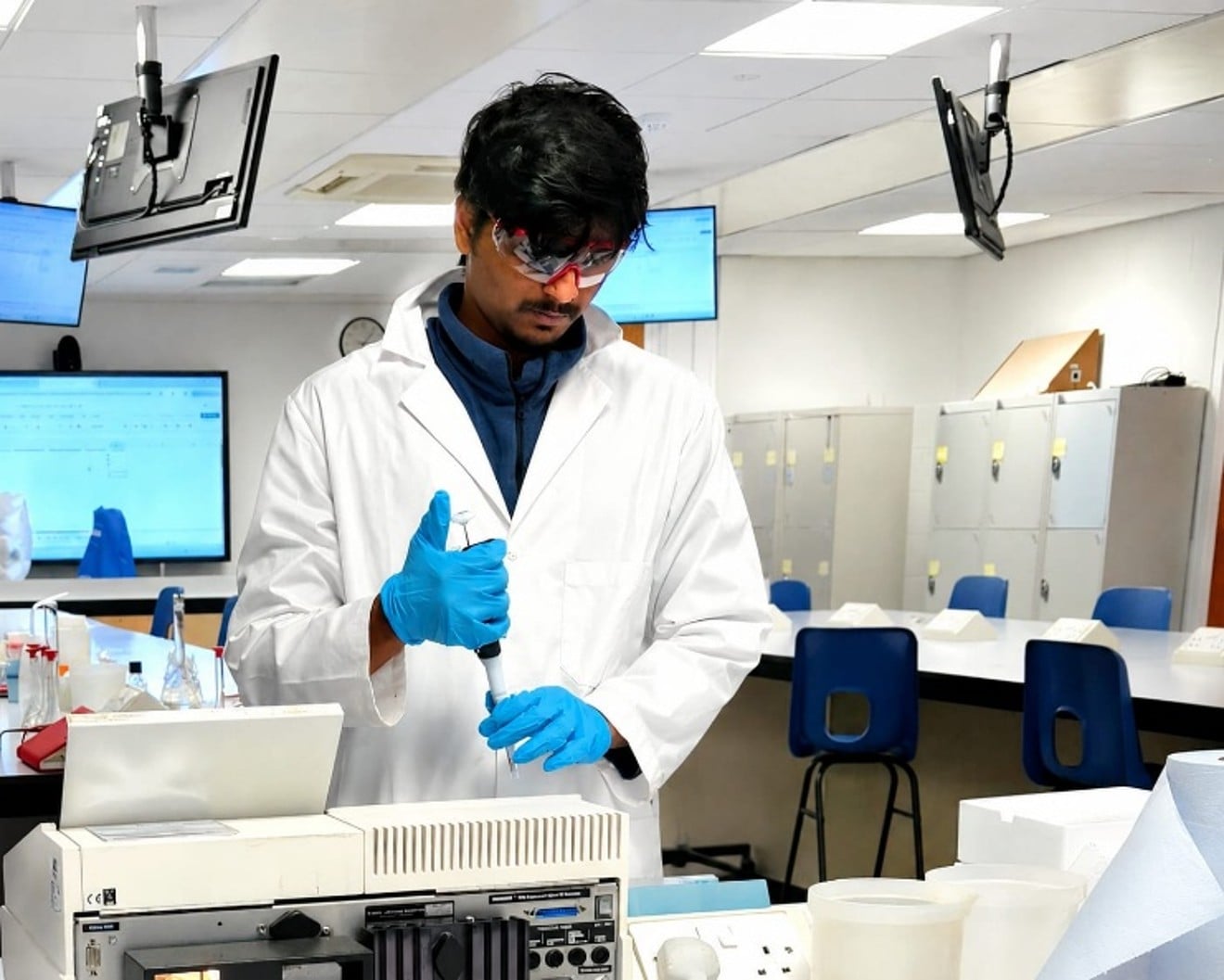
My name is Nivas, and I am from India. I am currently pursuing an MSc in Sustainable Aquaculture at the University of Stirling in the United Kingdom under a scholarship funded by the Sustainable Aquaculture Innovation Cluster (SAIC).
I completed my Bachelor of Fisheries Science (BFSc) from the Fisheries College and Research Institute, Tuticorin, India. After graduation, I worked for nearly two years in the aquaculture and seafood sector with Fishin Resources India Pvt. Ltd., which was involved in projects related to REN Seafoods in Alabama, USA.
During my professional experience, I was exposed to different seafood processing and aquaculture-related operations, including cold-water species such as salmon and trout. That exposure gradually strengthened my interest in sustainable aquaculture, cold-water fisheries, and advanced aquaculture systems.
Although I had already entered full-time professional work, I always aspired to continue my academic journey through higher education. My long-term goal is to contribute to the aquaculture sector through research, sustainability-focused development, and industry innovation.
Sustainable Aquaculture Innovation Cluster Scholarship (SAIC) Details
I received a full-fee scholarship funded by the Sustainable Aquaculture Innovation Centre scholarship by Sustainable Aquaculture Innovation Cluster, previously known as Sustainable Aquaculture Innovation Centre, for pursuing my MSc in Sustainable Aquaculture at the University of Stirling in the United Kingdom. The scholarship covered my full tuition fees and played a major role in making my postgraduate studies possible. Receiving this scholarship was especially meaningful to me because the selection process was highly competitive, and I was initially placed on the reserve candidate list before eventually being awarded the scholarship.
Were You Offered Any Other Scholarships
Yes, I was also offered a partial scholarship with a tuition fee waiver under the ACES-STAR Erasmus Mundus Joint Master’s program in Sustainable Aquaculture. However, since the scholarship did not fully cover living expenses and other financial requirements associated with studying abroad, it was financially difficult for me to pursue the program at that stage. Although I could not accept the offer, the experience motivated me to continue applying for other scholarship opportunities. Later, I was awarded the SAIC full-fee scholarship for the MSc Sustainable Aquaculture program at University of Stirling, which I accepted.
Educational Background
I completed my Bachelor of Fisheries Science (BFSc) from the Fisheries College and Research Institute (FCRI), Thoothukudi (Tuticorin), under Tamil Nadu Dr. J. Jayalalithaa Fisheries University. My undergraduate studies provided me with a strong foundation in fisheries and aquaculture-related subjects including fish biology, aquaculture systems, fish nutrition, aquatic ecology, fish health, genetics, seafood technology, and environmental management.
During my degree, I developed a growing interest in sustainable aquaculture and aquatic animal production systems. The program also gave me practical exposure through laboratory work, field visits, hatchery activities, and technical training, which helped me understand both the scientific and applied aspects of the fisheries sector.
After completing my degree, I worked for nearly two years in the aquaculture and seafood industry with Fishin Resources India Pvt. Ltd., which further strengthened my understanding of seafood operations and aquaculture-related systems. My industry experience, especially exposure to cold-water species such as salmon and trout, helped shape my academic interest toward sustainable aquaculture and cold-water fisheries.
Although I was not academically among the very top-ranking students, I believe my combination of academic background, practical industry experience, clarity of goals, and genuine interest in aquaculture helped prepare me well for postgraduate study in sustainable aquaculture.
Scholarship Journey
- My scholarship journey began in December 2024 while I was still working full-time in the aquaculture and seafood sector with Fishin Resources India Pvt. Ltd., which was involved in projects related to REN Seafoods in Alabama, USA. My work schedule was demanding, and I was frequently assigned night shifts lasting nearly 10 hours. Even while working professionally, I always had a strong aspiration to return to academics and pursue a master’s degree in aquaculture.
- During my work in the seafood industry, I was exposed to cold-water species such as salmon and trout, which gradually increased my interest in cold-water aquaculture and sustainable fisheries systems. That industry exposure played a major role in shaping my academic interests and long-term career goals.
- Around November 2024, I started seriously researching international scholarships and universities. My primary target was fully funded Erasmus Mundus scholarships, especially the ACES-STAR program in sustainable aquaculture. I spent months preparing applications, researching programs, improving my statement of purpose, and understanding scholarship requirements.
- At the same time, I used most of my annual leave from work to prepare for IELTS, scholarship applications, interviews, and university admission processes. Balancing full-time work with preparation for international applications was one of the most challenging parts of the journey.
- After progressing through the selection process, I was offered a partial scholarship instead of full funding because of the high level of competition. Although it was disappointing initially, the experience motivated me to continue applying rather than give up on studying abroad.
- During this process, I also received valuable guidance and encouragement from Dr. Somu Sundar Lingam and Dr. Ahilan. Their timely advice helped me remain focused and better understand the scholarship application process during a stressful period.
- In January 2025, I made the difficult decision to focus more seriously on university applications, scholarship opportunities, and preparation for studying abroad. Alongside Erasmus Mundus programs, I also applied to universities including University of Stirling and University of Plymouth.
- While applying to the University of Stirling, I noticed a scholarship opportunity funded by the Sustainable Aquaculture Innovation Cluster (SAIC), formerly known as the Sustainable Aquaculture Innovation Centre. I submitted my application through the university portal and waited several months for the outcome.
- Due to the large number of applicants, I was not selected immediately and was instead placed on the reserve candidate list. At that stage, I genuinely started losing hope because financial limitations were still a major obstacle to studying abroad.
- Eventually, around July 2025, I received confirmation that I had been awarded the scholarship from the University of Stirling. However, even after securing the scholarship, the challenges did not completely end. I still needed to prove sufficient financial support for living expenses, visa requirements, and other study-related costs.
- By that stage, I had already left my full-time job and committed fully to pursuing higher education abroad. During August 2025, I spent a significant amount of time exploring financial options and arranging funding support to meet the remaining requirements.
- Finally, on September 5, 2025, I received my education loan sanction letter, which became one of the most important turning points in my journey. A few weeks later, on September 22, 2025, I officially joined the University of Stirling to begin my MSc in Sustainable Aquaculture.
Looking back, the entire process taught me that scholarship journeys are not only about academic performance. Persistence, clarity of goals, genuine motivation, financial planning, communication skills, and the ability to continue despite uncertainty all play an important role. I also realized that even though I was not academically a top-scoring student, my industry experience, interest in sustainable aquaculture, exposure to cold-water species, and the way I presented my goals and motivations during interviews helped strengthen my applications.
What Do You Think Made Your Application Stand Out?
I believe my application stood out because it combined academic background with real industry experience and a clear long-term goal in aquaculture. Although I was not academically among the top-scoring students, I was able to present a genuine and realistic story about why I wanted to return from full-time industry work back into higher education.
After completing my Bachelor of Fisheries Science under Tamil Nadu Dr. J. Jayalalithaa Fisheries University, I worked for nearly two years in the aquaculture and seafood sector with Fishin Resources India Pvt. Ltd. During that period, I gained exposure to seafood operations and cold-water species such as salmon and trout, which gradually strengthened my interest in sustainable aquaculture and cold-water fisheries.
I think the way I connected my academic background, professional experience, and future goals helped strengthen my application. My motivation for studying sustainable aquaculture was not something written only for the application process; it developed naturally through both my education and industry exposure.
I also believe the way I presented myself during the interview played an important role. I focused on being honest about my journey, explaining my interests clearly, and showing genuine motivation toward sustainable aquaculture rather than trying to give overly perfect or scripted answers.
Another important factor was clarity and consistency. My applications consistently focused on sustainable aquaculture, industry development, sustainability, and long-term contribution to the aquaculture sector through either research or professional work.
Through this process, I learned that scholarship applications are not always decided only by grades. Genuine motivation, practical experience, communication skills, clarity of purpose, and the ability to justify your goals honestly can also make a significant difference.
What Would You Have Done Differently if You Were Going Through the Process Again?
If I were going through the process again, I would start preparing much earlier and apply to a wider range of scholarships and universities from the beginning. Initially, I focused heavily on a small number of highly competitive fully funded opportunities, especially Erasmus Mundus programs. Looking back, I realized it is important to build multiple options rather than depending too much on one result.
I would also spend more time preparing scholarship essays, organizing financial planning earlier, and connecting with previous scholarship recipients or current international students to better understand the overall process.
Another thing I would do differently is prepare earlier for the financial requirements beyond tuition fees. One of the biggest lessons from my journey was understanding that even after receiving a scholarship, students may still need to arrange living expenses, visa-related funds, and other financial documentation.
At the same time, I do not regret the overall journey because the challenges, uncertainty, waitlisting process, and transition from full-time work back into academics taught me patience, persistence, and adaptability.
How is Your Experience at the University of Stirling?
My experience at the University of Stirling has been academically challenging but highly valuable. The MSc Sustainable Aquaculture program combines scientific theory, industry applications, laboratory training, and environmental assessment, which gives students both technical and practical understanding of the aquaculture sector.
Coming from an industry background, one major adjustment for me was returning to academic life after nearly two years of full-time work. However, the learning environment, research exposure, and interaction with students from different countries have helped me grow both academically and personally.
The course also exposed me to areas such as environmental impact assessment, fish health, sustainability, and aquaculture systems at a much deeper level than I had previously experienced during industry work.
How Do You Rate the University of Stirling Academically?
I would rate the University of Stirling highly for aquaculture-related studies because it has a strong international reputation in aquaculture research and industry collaboration.
One of the biggest strengths of the university is that the program is not purely theoretical. Many modules are connected to real industry problems, environmental sustainability, and applied research. The university also has experienced academic staff, research facilities, and strong links with the aquaculture industry, which is important for students planning careers in research or commercial aquaculture.
For students interested specifically in sustainable aquaculture, fish health, environmental management, or cold-water aquaculture species such as salmon and trout, the academic environment is highly relevant.
How Does the University of Stirling Support International Students?
The University of Stirling provides support for international students through academic guidance, international student services, accommodation support, library resources, career services, and student wellbeing initiatives. The university also organizes orientation activities and student engagement programs that help international students adapt to a new academic and cultural environment.
One thing I personally appreciated is the diverse and international atmosphere on campus, where students from different countries and academic backgrounds can interact and learn together.
Alongside my studies, I also work with the university as a student ambassador, which has helped me become more involved in university activities and connect with prospective and current students from different parts of the world. The experience has helped me improve my communication skills, confidence, and understanding of the international student community.
At the same time, international students should understand that studying abroad also requires personal adjustment, financial planning, independence, and the ability to adapt to a completely new environment outside academics.
What Did You Pursue After the Scholarship? (Future Plans)
Currently, I am pursuing my MSc in Sustainable Aquaculture at the University of Stirling. My long-term goal is to build a career in the aquaculture sector through either advanced research or industry-based innovation.
I am particularly interested in sustainable aquaculture systems, cold-water aquaculture species such as salmon and trout, fish health, environmental sustainability, and aquaculture production technologies. My previous industry experience and current postgraduate studies have strengthened my interest in the salmon aquaculture sector, which continues to grow globally and offers strong opportunities in research, production, fish health, nutrition, environmental monitoring, genetics, and aquaculture technology.
One of the reasons I chose to pursue higher education in Scotland was because of its strong global reputation in salmon aquaculture and sustainable seafood production. The salmon industry, especially in countries such as Scotland and Norway, has a significant demand for skilled professionals with technical and scientific expertise in aquaculture.
In the future, I aim to either pursue a PhD in aquaculture-related research or work with leading aquaculture companies such as BioMar or Landcatch, particularly in areas related to sustainable production, fish nutrition, environmental assessment, fish health, or aquaculture innovation.
I hope to combine my industry experience and academic training to contribute to the long-term development of sustainable seafood systems and responsible aquaculture practices.
Would Potential Students Have Any Problems Not Knowing English?
Since the United Kingdom is an English-speaking country and the program is conducted fully in English, students generally do not face academic difficulties related to language if they meet the university’s English language requirements.
However, strong communication and academic writing skills are still very important, especially for assignments, presentations, and research-based work.
Additional Reflection
One thing I learned throughout this journey is that scholarship applications are not always won only by students with the highest academic scores. Genuine motivation, relevant industry exposure, clarity of goals, and the ability to present your story honestly can also make a strong impact.
For me, my experience in the seafood industry, exposure to cold-water species such as salmon and trout, and my long-term interest in sustainable aquaculture helped shape a more realistic and focused application narrative.
Want to submit your
scholarship journey?
Submit Your Story Here!
More Scholarship Recipients
My name is Shah Hussain, and I am from Khyber Pakhtunkhwa, Pakistan. I completed my Bachelor’s in Psychology at the Univer .... Read more
I am June from the Philippines. I am an educator for Social Sciences and Humanities. I recently earned my Master in Southeas .... Read more
Hi, my name is Abdul Hafeez, and I come from a small town called Nasirabad in Sindh, Pakistan. Currently, I am pursuing a ma .... Read more
❤️Congratulations from the bottom of my heart!❣️ Your achievement is truly inspiring and brings me so much happiness. Your journey is a source of motivation for many aspiring students. Wishing you a wonderful journey ahead, filled with success, happiness, and new opportunities. ✨You deserve every bit of it. 🎉Wishing you continued success in both your academic and professional career🥳.