
How I Secured a Fully Funded PhD at North Carolina State University, United States Through the Fulbright Foreign Student Program Scholarship
University: North Carolina State University
Degree: PhD in Civil Engineering (Construction Engineering)
Previous Education: Bachelor’s in Civil Engineering, UNITEC Honduras; Master of Science in Structural Engineering, University of Birmingham
Scholarship: Fulbright Foreign Student Program – Full Funding (Tuition, Airfare, Living Stipend)
Other Offered Scholarships: Chevening Scholarship – Full Funding (Tuition, Airfare, Living Stipend), University of Birmingham
Social Media
LinkedIn: linkedin.com/in/josembardales/
The Journey
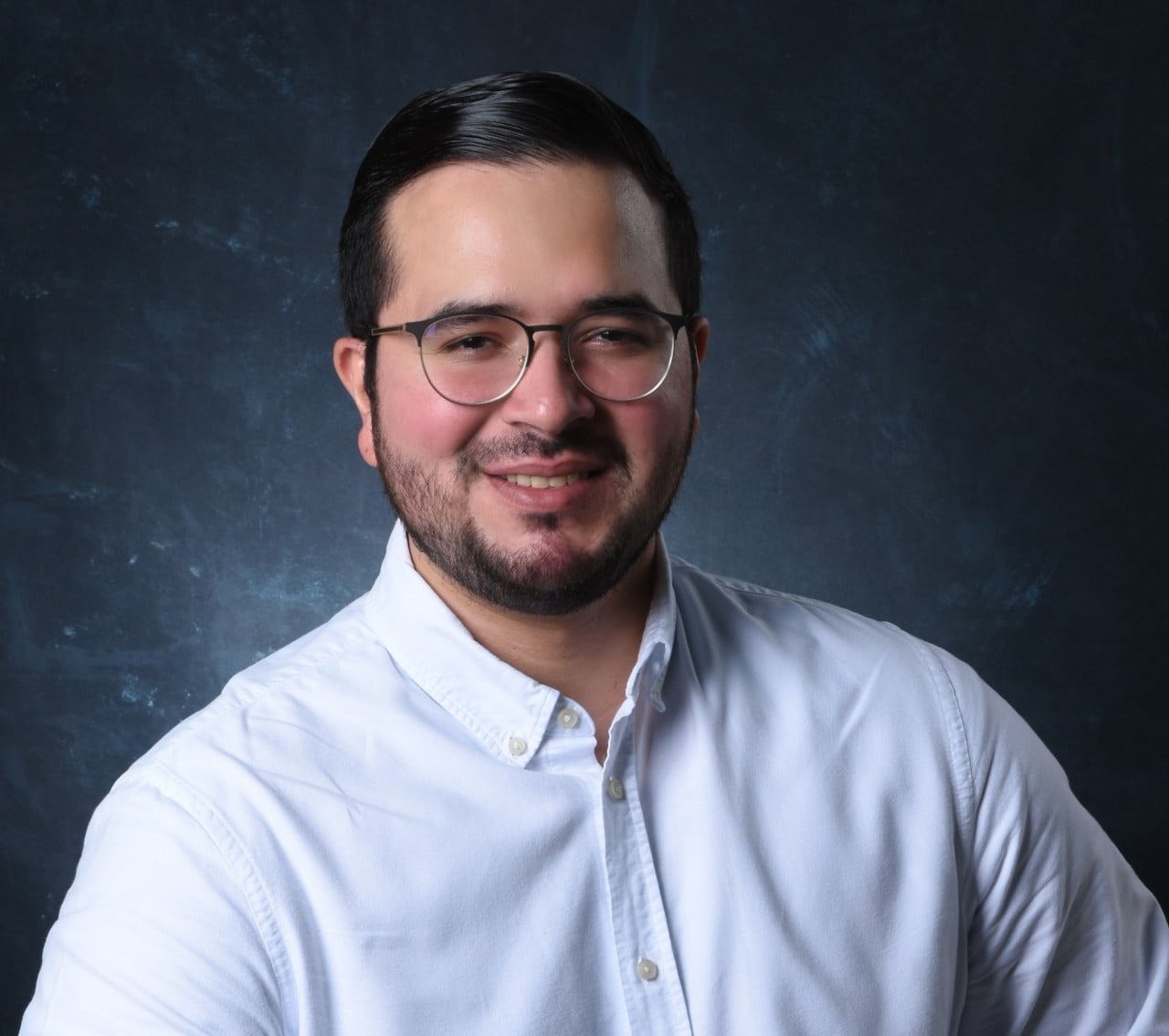
My name is José Bardales, and I am from Honduras. I am currently pursuing a PhD in Civil Engineering with a concentration in Construction Engineering at North Carolina State University in Raleigh, North Carolina, as a Fulbright Scholar.
My academic and professional career has been centered on civil engineering, construction, infrastructure, research, and higher education. Before beginning my PhD, I worked in academia in Honduras, including serving in an academic leadership position in Civil Engineering. These experiences allowed me to see both the significant infrastructure challenges that countries such as Honduras face and the potential for research, technology, and education to contribute to addressing them.
I decided to pursue doctoral studies because I wanted to strengthen my research and computational skills and apply them to increasingly complex infrastructure problems. My current research interests include infrastructure decarbonization, energy systems, construction electrification, simulation, optimization, and computational methods for infrastructure planning and operation.
Fulbright Foreign Student Program Details
I received a Fulbright Scholarship through the Fulbright Foreign Student Program to pursue my PhD in Civil Engineering in the United States. I am currently completing the degree at North Carolina State University.
The scholarship provides comprehensive financial support, including university tuition, airfare between Honduras and the United States, and a stipend that helps cover my living expenses while completing my studies.
Having this support has allowed me to focus on my doctoral studies and research while also experiencing the academic and cultural exchange that is an important part of the Fulbright program.
Were You Offered Any Other Scholarships?
Before receiving Fulbright, I was also a recipient of the Chevening Scholarship from the United Kingdom government. Through Chevening, I completed my Master of Science in Structural Engineering at the University of Birmingham.
The Chevening Scholarship provided comprehensive support that included tuition, airfare between Honduras and the United Kingdom, and a stipend to cover living expenses.
Receiving both Chevening and Fulbright has given me the opportunity to study in two different international academic environments and has played an important role in my development as an engineer, researcher, and educator.
Educational Background
I earned my bachelor’s degree in civil engineering from UNITEC Honduras in 2016.
I later received the Chevening Scholarship to pursue graduate studies in the United Kingdom and completed a Master of Science in Structural Engineering at the University of Birmingham, graduating with Distinction.
My undergraduate education provided the technical foundation in civil and structural engineering that I needed to begin my professional career. My master’s degree subsequently exposed me to a more research-intensive international academic environment and strengthened my analytical and engineering skills.
My professional experience after these degrees was equally important. Working in engineering education and academic leadership helped me develop communication, teaching, management, and leadership skills while giving me a better understanding of the challenges facing engineering education and infrastructure development in Honduras.
Together, these academic and professional experiences prepared me to pursue a PhD and gradually expand my work into areas such as energy systems, optimization, simulation, sustainability, and computational engineering.
How Did You Prepare to Apply to North Carolina State University?
I approached the university application process by looking beyond rankings alone. I wanted to identify programs where my academic background, professional experience, research interests, and future goals would fit well.
I researched Civil Engineering and Construction Engineering programs in the United States, faculty members, research groups, funding opportunities, and the type of research being conducted within each department.
Finding a good research fit was particularly important. A PhD is not simply about attending a highly ranked university. The relationship between your research interests, your advisor, and the research environment can significantly influence your doctoral experience.
I also spent considerable time preparing my application materials and making sure that my academic and professional experiences formed a coherent story rather than simply presenting a list of accomplishments.
How Did You Find Information About Fulbright Foreign Student Program and North Carolina State University?
I researched universities and scholarship opportunities online and made extensive use of the information available through university websites and scholarship programs.
For universities, I looked carefully at departmental websites, faculty profiles, research publications, admission requirements, and funding information. I also researched the work being conducted by individual professors to determine whether their research interests were compatible with mine.
One recommendation I would give future PhD applicants is to investigate individual professors and research groups instead of evaluating universities only according to their overall rankings. A university can have an excellent reputation, but for doctoral studies, finding the appropriate research environment and advisor is extremely important.
Did You Take Any Standardized Tests? If So, How Did You Prepare for Them?
Yes. Standardized testing was part of my preparation for graduate study in the United States. I took the TOEFL and received a score of 112 out of 120.
I also had the advantage of previously completing my master’s degree entirely in English at the University of Birmingham in the United Kingdom, which meant that I was already comfortable studying, writing, conducting research, and communicating in an English-speaking academic environment.
My recommendation for applicants is to begin preparing for language and standardized testing early. Even when these examinations represent only one component of an application, completing them early gives you more time to focus on your essays, university selection, recommendation letters, and other important parts of the process.
How Did You Prepare to Apply for the Fulbright Foreign Student Program?
For scholarship applications such as Chevening and Fulbright, I tried to present more than my academic qualifications.
I focused on explaining my professional development, leadership experience, work in engineering education, international experience, interest in contributing to Honduras, and the reasons why further education abroad would allow me to generate a greater impact in the future.
I believe that a strong scholarship application needs a coherent story. Your previous education, professional experiences, leadership activities, future goals, and reasons for pursuing further study should reinforce one another.
I also tried to demonstrate that pursuing graduate education was not simply a personal goal. I wanted the knowledge, international exposure, and research experience I gained to eventually contribute to engineering education, infrastructure development, and the solution of problems that are particularly relevant to countries such as Honduras.
Having gone through the process successfully for both Chevening and Fulbright reinforced my belief that scholarship applications are not only about demonstrating what you have already achieved. They are also about clearly communicating what you intend to do with the opportunity.
How is Your Experience at North Carolina State University?
My experience at NC State has been very positive. One of the aspects I value most is the opportunity to work closely with faculty members and participate in research that combines several areas of engineering.
My doctoral studies have allowed me to expand significantly beyond the areas I knew before beginning the program. I have worked with optimization, energy system modeling, simulation, programming, infrastructure decarbonization, and construction electrification, among other topics.
The experience has also taught me that completing a PhD involves much more than taking advanced classes. Research requires learning how to formulate meaningful questions, work independently, manage uncertainty, receive criticism, revise your work repeatedly, and communicate complex results clearly.
I have also appreciated the opportunity to interact with researchers and students from different countries and disciplines. That environment has helped me think more broadly about how engineering research can contribute to real-world infrastructure challenges.
How Do You Rate North Carolina State University Academically?
I rate North Carolina State University very highly academically.
The university has a strong engineering environment and provides access to faculty, courses, research resources, and interdisciplinary opportunities that allow students to approach problems from different perspectives.
For me, one particularly valuable aspect has been the flexibility to combine Civil Engineering and Construction Engineering with topics such as energy systems, computational modeling, optimization, construction technology, and sustainability.
That flexibility has allowed my research interests to evolve considerably since beginning the PhD and has helped me develop skills that extend beyond traditional civil engineering.
How Does North Carolina State University Support International Students?
NC State provides dedicated resources for international students, including support related to immigration requirements, maintaining student status, university procedures, and adjusting to studying in the United States.
As a Fulbright Scholar, I also receive support through the Fulbright program and the Institute of International Education. Having both university and Fulbright resources available provides an additional level of guidance for navigating academic, administrative, and immigration related matters.
What Did You Pursue After the Fulbright Foreign Student Program?
I am currently completing my Fulbright-funded PhD, so this part of my journey is still being written.
At this stage, I am interested in continuing to develop as a researcher while remaining open to both academic and industry career paths.
My longer-term goal is to apply the knowledge and research skills I am developing in areas related to infrastructure, construction, energy systems, sustainability, and computational engineering while maintaining a connection with challenges that are relevant to developing countries such as Honduras.
What Do You Think Made Your Application Stand Out?
I believe one of the strongest aspects of my application was the combination of academic preparation, professional experience, leadership, international experience, and a clear sense of purpose.
When I applied, I was not simply presenting myself as someone who wanted another academic degree. I had completed my Civil Engineering education in Honduras, obtained international graduate experience through Chevening, worked in engineering education, taken on academic leadership responsibilities, and developed a clearer understanding of some of the challenges facing engineering and infrastructure development in my country.
I think another important factor was establishing a clear connection between what I had done previously, what I wanted to learn through the scholarship, and what I hoped to accomplish afterward.
Receiving both Chevening and Fulbright has also taught me that highly competitive scholarship programs are looking for more than academic performance alone. Academic preparation is important, but leadership, professional experience, communication skills, service, international outlook, and the potential to create an impact can be equally important.
Most importantly, applicants need to demonstrate a credible sense of purpose. The selection committee should understand not only why you want the opportunity, but also why giving you that opportunity could eventually benefit other people.
What Would You Have Done Differently if You Were Going Through the Process Again?
If I were beginning the process again, I would start preparing even earlier, particularly when researching universities and potential doctoral advisors.
I would spend more time identifying professors whose current research closely aligns with my interests before submitting university applications. After beginning my PhD, I came to understand even more clearly how important the relationship between a doctoral student and an advisor can be.
I would also worry less about trying to create a perfect profile.
Scholarship applicants sometimes compare themselves with candidates who have extraordinary academic records, publications, professional accomplishments, or international experiences and conclude that they have little chance of being selected.
A strong application is not necessarily the application with the longest list of accomplishments. What matters is being able to explain how your experiences have shaped you, where you want to go next, and why the scholarship is important for helping you get there.
What Advice Would You Give Those Looking to Apply for a Similar Scholarship?
My first recommendation would be simple, and it is to send that application!
Do not reject yourself before the selection committee even has the opportunity to evaluate you. Scholarships such as Fulbright and Chevening are extremely competitive, and there are never guarantees, but not applying guarantees that you will never receive the opportunity.
Second, build a coherent story. Do not treat your CV, essays, academic history, professional experience, leadership activities, and future goals as unrelated pieces. By the time someone finishes reading your application, they should clearly understand where you came from, what you have accomplished, why you need this opportunity, where you want to go next, and how you hope to use the experience afterward.
Third, begin preparing early. Research universities, understand admission requirements, prepare for language or standardized examinations when required, contact people who can provide strong recommendations, and give yourself enough time to revise your essays several times.
Fourth, do not underestimate professional and leadership experience. Academic achievement matters, but programs such as Fulbright and Chevening are also interested in people who demonstrate leadership, engagement with their communities, and the potential to create an impact.
Fifth, research the universities and programs carefully. Particularly for doctoral applicants, do not choose institutions based exclusively on prestige. Look at professors, research groups, facilities, current projects, and whether the academic environment actually supports what you want to accomplish.
Finally, do not allow your country of origin to determine how ambitious you are allowed to be. I studied Civil Engineering in Honduras and eventually received Chevening to complete a master’s degree with Distinction at the University of Birmingham and later Fulbright to pursue a PhD in Civil Engineering in the United States.
Those opportunities once seemed very distant as well.
You cannot control the final selection decision, but you can give yourself the opportunity to compete. Prepare seriously, tell your story authentically, and apply.
Want to submit your
scholarship journey?
Submit Your Story Here!
More Scholarship Recipients
My name is Shah Hussain, and I am from Khyber Pakhtunkhwa, Pakistan. I completed my Bachelor’s in Psychology at the Univer .... Read more
I am June from the Philippines. I am an educator for Social Sciences and Humanities. I recently earned my Master in Southeas .... Read more
Hi, my name is Abdul Hafeez, and I come from a small town called Nasirabad in Sindh, Pakistan. Currently, I am pursuing a ma .... Read more
Leave A Comment