
How I Secured a Fully Funded Master’s at University for Continuing Education Krems, Austria Through the Erasmus Mundus Scholarship
University: University for Continuing Education Krems; Tampere University; Osnabrück University of Applied Sciences; Eötvös Loránd University; University of Aveiro; Beijing Normal University; Thapar Institute of Engineering & Technology
Degree: Master’s in Research and Innovation in Higher Education (MARIHE)
Previous Education: BS (Hons) in Psychology, University of Sargodha; MPhil in Educational Leadership and Management, Beaconhouse National University, Lahore
Scholarship: Erasmus Mundus Scholarship – Fully Funded (Tuition Fees, Travel Expenses, Monthly Living Stipend)
Other Offered Scholarships: Global UGRAD Exchange Program; International Visitor Leadership Program (IVLP) nomination; International Research & Exchanges Board (IREX) and Pakistan-U.S. Alumni Network small grants program
Social Media
LinkedIn: linkedin.com/in/maryamgul18/
The Journey
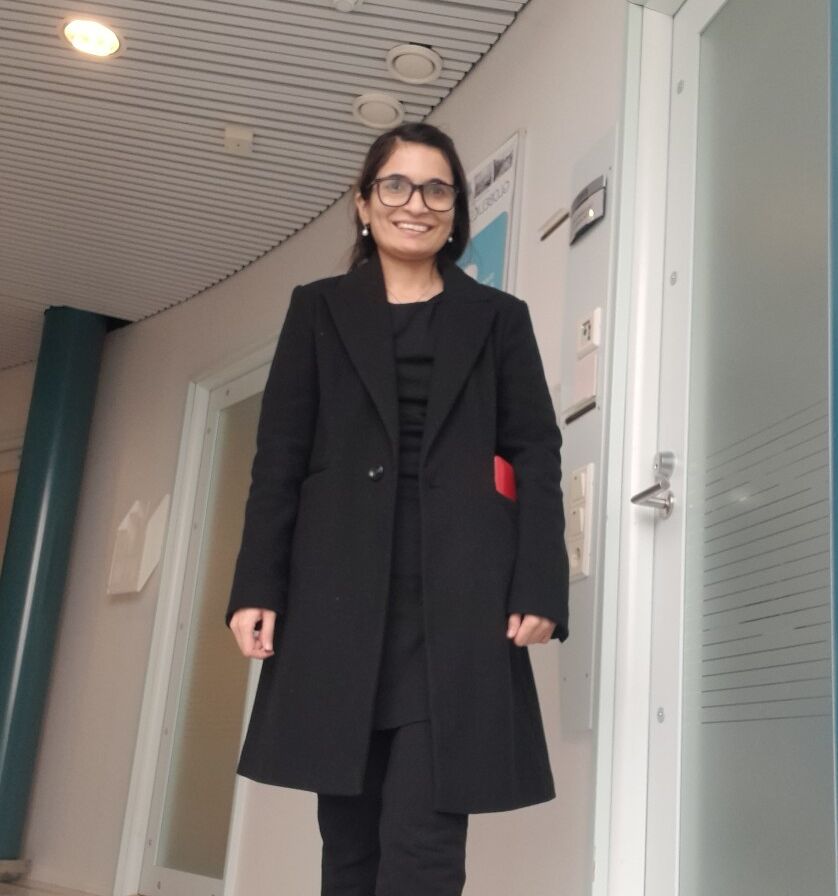
My name is Maryam Gul, and I'm from Pakistan where I've spent over a decade building and leading student support functions at the university level. My background is in psychology,. My undergraduate exchange program UGRAD which is actually what drew me to higher education administration and leadership in the first place, this was the first time i realised the importance of educational leadership .
Throughout my career, I have often worked on building systems from the ground up. This included establishing a Career Development Centre without any existing structure, initiating volunteer mentorship programmes, setting up summer schools, supporting the introduction of MOOCs where none existed before, and developing standard operating procedures for exchange programmes that had never been formally documented.
Over time, I began to notice a pattern. I was repeatedly filling gaps within institutions without fully understanding why those gaps existed in the first place. This made me realize that I wanted to move beyond solving isolated problems and instead focus on understanding their root causes, so that I could contribute to more sustainable and systemic solutions.
Through my international experience and professional exposure, I reached a stage where I could clearly identify these recurring institutional challenges. However, I needed a stronger theoretical and comparative framework to address them at a broader level. This is what led me to pursue the Erasmus Mundus MARIHE programme, a Master’s in Research and Innovation in Higher Education.
Erasmus Mundus Scholarship Details
I received the Erasmus Mundus Scholarship funded by the European Commission to pursue the MARIHE (Master in Research and Innovation in Higher Education) programme.
MARIHE is an international joint master’s degree delivered by a consortium of universities across Europe and Asia, including the University for Continuing Education Krems (Austria), Tampere University (Finland), Osnabrück University of Applied Sciences (Germany), Eötvös Loránd University (Hungary), University of Aveiro (Portugal), Beijing Normal University (China), and Thapar Institute of Engineering & Technology (India).
The Erasmus Mundus Scholarship is a fully funded award valued at approximately €55,000. It covers tuition fees, travel expenses, and a monthly living stipend. It is highly competitive and awarded to outstanding candidates from outside the European Union.
Were You Offered Any Other Scholarships?
Prior to receiving the Erasmus Mundus Scholarship, I was selected for two U.S. Department of State programmes: the Global UGRAD Exchange Program and a nomination for the International Visitor Leadership Program (IVLP).In addition, I received community-focused funding through the International Research & Exchanges Board (IREX) and the Pakistan-U.S. Alumni Network small grants program to implement local community service projects.While these were not degree-based scholarships, they played an important role in shaping my professional journey. They allowed me to apply and adapt my international learning in local contexts, strengthen my leadership and community development skills, and deepen my understanding of cultural sensitivity and cross-cultural collaboration.
Educational Background
I completed my BS (Hons) in Psychology at the University of Sargodha, followed by an MPhil in Educational Leadership and Management at Beaconhouse National University, Lahore.My academic foundation in psychology proved more practical than it may appear at first glance. It helped me understand human behaviour, motivation, and systems thinking, which are directly relevant to higher education administration and institutional development. My MPhil further strengthened my understanding of leadership, organisational structures, and educational management.
What really shaped my profile, however, was the combination of this academic training with several years of hands-on institutional experience before applying for Erasmus Mundus. I was not a recent graduate entering academia straight away, but someone already working in practice and engaging with real institutional challenges. At that point, I needed a stronger theoretical and comparative lens to align with what I was already doing on the ground, which ultimately made the Erasmus journey feel like a natural next step.
How Did You Find Information About Erasmus Mundus Scholarship and Universities?
I primarily relied on a combination of professional networking and independent research to identify scholarships and institutions. A key part of this process was staying active on professional platforms like LinkedIn, as well as engaging with relevant academic and scholarship-related communities on social media. Over time, I also developed a consistent habit of tracking international funding opportunities, especially after my earlier experience with U.S. Department of State programmes. Once you go through competitive international selections, you become more familiar with how and where such opportunities are announced.
In parallel, I conducted targeted research into programmes that focused specifically on the intersection of higher education management and policy, rather than general education degrees. The MARIHE programme stood out because it was designed for professionals working within higher education systems, not just studying them theoretically.
I carefully reviewed the curriculum and mapped each module to real challenges I had encountered in my own institutional work. That level of alignment also shaped my motivation letter strongly, and I believe it was an important factor in my selection.
Did You Take Any Standardized Tests? If So, How Did You Prepare for Them?
Yes, I took the IELTS.For preparation, I primarily used the official “Road to IELTS” platform, which I accessed after registration. It provided structured practice tests and familiarised me with the exam format, which was helpful for building consistency and confidence across all sections of the test.
How Did You Prepare to Apply for the Erasmus Mundus Scholarship?
I approached the scholarship application as a structured project rather than a one-time submission.
The most important part was treating the motivation letter like a case analysis instead of a personal narrative. Rather than listing achievements, I focused on identifying a clear problem in higher education systems in my context, supported it with my professional experience, and then positioned the MARIHE programme as the exact academic framework needed to address those gaps. I also made sure to explicitly connect specific modules of the programme with real challenges I had encountered in practice. This helped create a strong, evidence-based narrative rather than a generic application.
In terms of process, I started preparation well before the application window officially opened. I worked in parallel on different components such as document verification, drafting my motivation letter, and identifying recommenders. For recommendation letters, I chose individuals who had directly observed my work and understood my professional growth. I also shared my academic direction and interest in educational leadership with them so that their references reflected a consistent narrative.
Additionally, I sought guidance from alumni and people who had previously gone through similar international scholarship processes. Their insights helped me better understand expectations and refine my application strategy.
How is Your Experience at Universities?
My overall experience across the institutions was very positive and enriching. Each university had its own academic strength and focus, which together gave the programme a very well-rounded learning experience.
In Austria, the emphasis was strongly on institutional development and practical implementation within higher education systems. In Finland, the focus shifted more towards policy analysis and understanding education systems at a structural level. In Germany, the experience was more centered on leadership, organisational thinking, and how higher education institutions are managed. This variation across countries was further enriched by the cultural context of each place, which added an additional layer of learning beyond academics.
The facilities and support systems for international students were generally very good across all institutions, and I felt well supported throughout my studies. At the same time, there were some challenges, particularly language barriers in certain contexts, as English is not always the primary language in Europe. However, instead of seeing this as a limitation, I viewed it as an opportunity to step out of my comfort zone, engage more deeply with different cultures, and develop stronger adaptability and communication skills.
Overall, the experience not only contributed to my academic and professional growth but also significantly enhanced my emotional intelligence, cross-cultural understanding, and ability to work in diverse environments.
How Does Universities Support International Students?
Across the institutions I studied in, the support for international students was generally strong and well-structured.
At the academic level, there were clear orientation sessions at the beginning of each semester, which helped with understanding course expectations, academic systems, and assessment methods. Faculty members were also approachable and open to guiding students, especially in navigating different academic styles across countries.
On the administrative side, international offices played an important role in helping with residence permits, documentation, and practical settlement needs. This support was especially valuable during transitions between countries, as the programme required mobility across different universities.
There were also student support systems in place, including peer networks, student unions, and buddy programmes that helped with integration and social adjustment. These networks made it easier to connect with other international students and adapt to new environments more smoothly.
Overall, while each country had its own processes and cultural differences, the institutions were generally well-prepared to support international students both academically and personally, which made the transition and overall experience much more manageable.
Are Your Classes Conducted in English or the Countries Native Languages?
It was in English
Would Potential Students Have Any Problems Not Knowing the Native Languages?
In my experience, studying across non-English speaking countries in Europe was manageable academically even without knowing the local languages, as the programme was delivered entirely in English.
All core lectures, assignments, readings, and assessments were conducted in English, and faculty members were generally comfortable teaching and communicating in it. So from an academic perspective, language was not a barrier to understanding the content or meeting degree requirements.
That said, outside the classroom, the local language does make a difference in daily life. Simple interactions such as administrative tasks, public services, or informal communication can sometimes be challenging without basic knowledge of the local language. However, universities usually provide support through international offices, English-friendly services, and peer networks to help bridge this gap.
Overall, academically there is no major issue, but I would still encourage future students to learn basic phrases of the local language. It not only makes daily life easier but also helps in building stronger cultural connections and a more complete international experience.
What Do You Think Made Your Application Stand Out?
In my view, three elements made my application stand out.
First, I was applying as a practitioner rather than a traditional recent graduate. My background included building institutional structures from the ground up, managing teams, and contributing to policy and programme development in real higher education settings. This practical exposure gave my application a level of depth that goes beyond theoretical interest.
Second, my international exposure was consistent and evidence-based. My selection for programmes such as the U.S. Department of State Global UGRAD, nomination for IVLP, and competitive community grants demonstrated a clear pattern of being chosen for merit-based international opportunities. These experiences collectively reflected not just participation, but sustained engagement in cross-cultural and leadership-focused environments.
Third, my application was highly specific and problem-driven. Instead of making broad statements about improving higher education, I focused on a clear issue within institutional systems, particularly structural silos in higher education. I then directly connected this to specific components of the MARIHE curriculum, showing a precise alignment between my professional experience, the problem I had identified, and the academic tools offered by the programme.
What Would You Have Done Differently if You Were Going Through the Process Again?
If I were to go through the process again, I would place even more emphasis on early structuring and reflection.
One thing I would improve is starting the narrative building much earlier, not just the application preparation. Looking back, the strongest part of my application was the clarity of my story, and that clarity comes from consistently reflecting on your work over time rather than trying to shape it only during the application window.
I would also engage with more current students earlier in the process. While I did speak to alumni, direct conversations with those already in the programme could have given even sharper insights into how the coursework translates into practice and how selection committees interpret alignment.
Finally, I would still maintain the same core approach, but I would refine the supporting documentation even more carefully, especially recommendation letters, to ensure every document reinforces the same central narrative from slightly different perspectives.
Overall, I would not change the direction of my application, but I would make the process more structured, earlier, and even more intentional in how each component is aligned.
What Advice Would You Give Those Looking to Apply for a Similar Scholarship?
A few things I genuinely believe based on my experience:
- Your work experience is not a replacement for academic readiness, but it becomes a strong advantage if it is framed properly. Instead of listing job titles or responsibilities, focus on the problems your work exposed you to and the questions it raised that cannot be answered through practice alone. That shift is what creates academic intent.
- It is also essential to study the programme curriculum in detail before writing anything. Map your real-world gaps directly to specific modules and learning outcomes. The application becomes much stronger when it is clear that you are not just interested in the programme, but that the programme is specifically designed to address the challenges you have already encountered.
- Finally, apply even if you feel you are not fully ready. At the time I applied, I was already working in a university setting and still had doubts about whether I was the “ideal” candidate. But clarity of purpose and alignment often matter more than perceived perfection.
Want to submit your
scholarship journey?
Submit Your Story Here!
More Scholarship Recipients
My name is Shah Hussain, and I am from Khyber Pakhtunkhwa, Pakistan. I completed my Bachelor’s in Psychology at the Univer .... Read more
I am June from the Philippines. I am an educator for Social Sciences and Humanities. I recently earned my Master in Southeas .... Read more
Hi, my name is Abdul Hafeez, and I come from a small town called Nasirabad in Sindh, Pakistan. Currently, I am pursuing a ma .... Read more
Leave A Comment