
Joint Japan/World Bank Graduate Scholarship Program Scholar Dr. Shailey Gokhale from India Shares Their Journey of Securing a Fully Funded Master's at the London School of Economics and Political Science, United Kingdom
University: London School of Economics and Political Science (LSE)
Degree: MSc in Global Health Policy
Previous Education: Bachelor of Homeopathic Medicine and Surgery (BHMS) from Guru Gobind Singh Indraprastha University; Master of Public Health (MPH) in Social Epidemiology from Tata Institute of Social Sciences (TISS)
Scholarship: Joint Japan/World Bank Graduate Scholarship Program (JJ/WBGSP) – Comprehensive Funding (Tuition Fees, Monthly Living Stipend, Health Insurance, Return Airfare)
Social Media
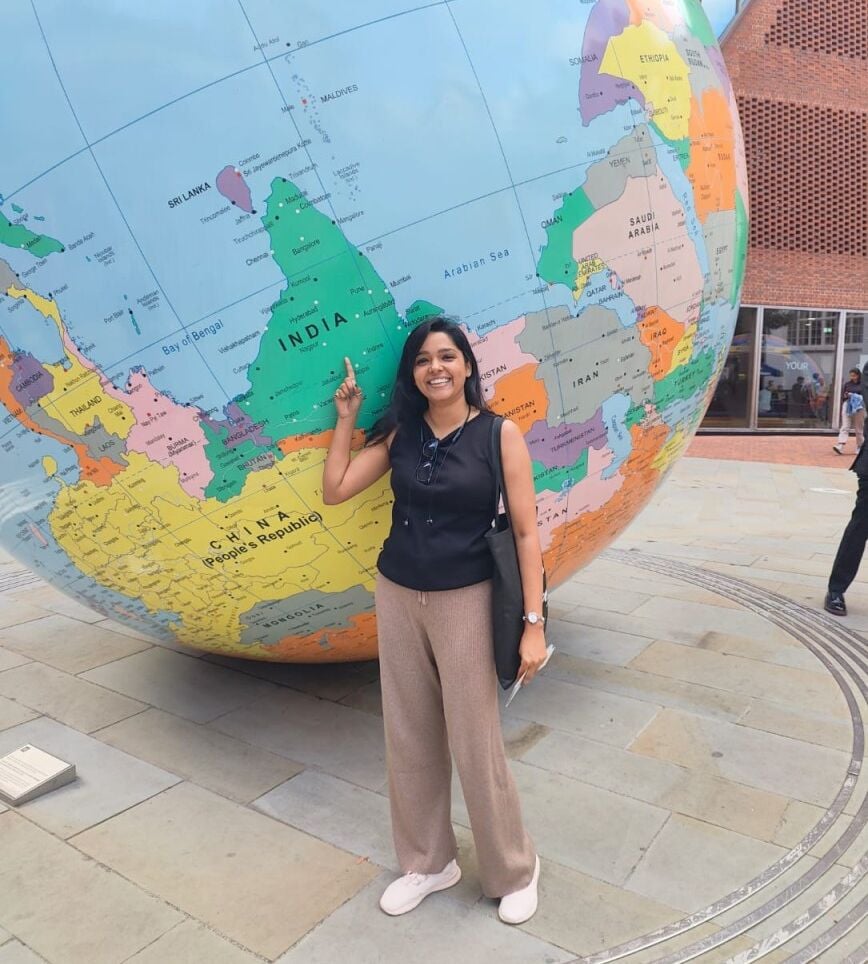
The Journey
My name is Dr. Shailey Gokhale, and I am a public health professional. I grew up in Ratnagiri, a small coastal town in western India, in a middle-class family where education was always viewed as the most powerful pathway to opportunity. This belief shaped many of the decisions I would later make in my academic and professional journey.
My interest in public health began while I was studying medicine and volunteering with the World Health Organization (WHO) during India's final push towards polio eradication (in 2012). Working in underserved communities in Delhi exposed me to the realities of health inequities and showed me how social, cultural, and economic factors influence health outcomes. That experience sparked a lasting commitment to improving health systems and access to healthcare for vulnerable populations.
Over the past eight years, I have worked with organizations including the World Health Organization (WHO), the National Health Systems Resource Centre (NHSRC) under India's Ministry of Health and Family Welfare, and Jhpiego. My work has focused on primary healthcare and health system strengthening. To deepen my understanding of how policy, governance, financing, and politics shape health systems, I pursued the MSc in Global Health Policy at the London School of Economics and Political Science (LSE).
Joint Japan/World Bank Graduate Scholarship Program Details
I was awarded the Joint Japan/World Bank Graduate Scholarship Program (JJ/WBGSP) to pursue the MSc Global Health Policy at the London School of Economics and Political Science (LSE), United Kingdom.
The scholarship provided comprehensive financial support, including tuition fees, a monthly living stipend, health insurance, and return airfare. More importantly, it removed the financial barriers associated with studying abroad and allowed me to fully immerse myself in the academic, professional, and personal opportunities that came with studying at LSE.
For someone who had always relied on merit and hard work to advance academically and professionally, receiving the scholarship was both a privilege and a responsibility. It represented a vote of confidence in my potential to contribute to health systems strengthening and public service in the future.
Educational Background
I completed my Bachelor of Homeopathic Medicine and Surgery (BHMS) from Guru Gobind Singh Indraprastha University, India.
Following this, I pursued a Master of Public Health (MPH) in Social Epidemiology from the Tata Institute of Social Sciences (TISS), Mumbai, India's leading institution for public health and social sciences.
My academic training provided a strong foundation in epidemiology, health systems, social determinants of health, research methods, and health policy. These skills were further strengthened through professional experiences working across the community, district, state, and national levels of India's health system.
How Did You Prepare to Apply to the London School of Economics and Political Science (LSE)?
I started researching universities nearly a year before submitting applications. Rather than focusing solely on rankings, I looked for institutions that offered strong expertise in health policy, health systems research, health financing, and global health governance.
I reviewed course structures, faculty profiles, research centres, and alumni outcomes in detail. I also attended webinars and connected with current students and alumni through LinkedIn to better understand the academic environment and opportunities available at different institutions.
What ultimately attracted me to LSE was its unique ability to combine rigorous policy analysis with a truly global perspective on health systems and governance.
How Did You Find Information About the Joint Japan/World Bank Graduate Scholarship Program and the London School of Economics and Political Science (LSE)?
When I initially received an ‘Unconditional Offer Letter’ from the London School of Economics and Political Science (LSE), I was primarily exploring the university's internal funding opportunities and submitted an application for one of LSE's scholarship schemes.
Following the review of my application, LSE identified me as a strong eligible candidate for the Joint Japan/World Bank Graduate Scholarship Program (JJ/WBGSP) and nominated me to apply. As nomination by a participating university is a prerequisite for the scholarship, LSE provided me with information (link) about the application.
This was my first introduction to JJ/WBGSP. After learning more about the scholarship, its focus on supporting professionals working in development, and its commitment to strengthening leadership in low- and middle-income countries, I felt that it aligned closely with my professional background and career aspirations. I subsequently completed the scholarship application and was fortunate to be selected as a recipient.
Did You Take Any Standardized Tests? If So, How Did You Prepare for Them?
Yes. I took the IELTS examination as part of my application process.
How Did You Prepare to Apply for the Joint Japan/World Bank Graduate Scholarship Program?
Preparing for the scholarship application required significant reflection on my professional journey and long-term goals.
Rather than focusing solely on achievements, I concentrated on demonstrating impact. I reflected on the experiences that had shaped my commitment to public health and highlighted how my work had contributed to strengthening health systems and improving access to healthcare.
One of the most formative experiences occurred during the COVID-19 pandemic while I was serving as a Surveillance Medical Officer with the WHO in Bihar, India. As thousands of migrant workers returned to the district during lockdown, communities faced significant uncertainty and misinformation. Working alongside district authorities and community stakeholders, I helped support large-scale community mobilization efforts, including leveraging more than 3,000 school teachers to strengthen awareness, testing, and surveillance activities. Experiences like these reinforced my belief that effective health policies must be grounded in local realities while drawing upon global evidence.
Throughout my application, I focused on demonstrating leadership, public service, and a clear commitment to improving health outcomes in low- and middle-income countries.
How is Your Experience at the London School of Economics and Political Science (LSE)?
My experience at LSE was transformative.
The MSc Global Health Policy programme brought together students from diverse professional and cultural backgrounds, creating an environment where every discussion incorporated perspectives from different regions of the world. Learning alongside policymakers, clinicians, economists, researchers, and development professionals enriched my understanding of global health challenges.
During my time at LSE, I was elected Academic Representative for the MSc Global Health Policy cohort, which gave me an opportunity to represent student perspectives and engage with faculty on academic matters.
Beyond coursework, I also participated in an industry project conducted jointly by LSE and Practera, where I led a team of eight students in analysing public policy and regulatory frameworks related to corporate social responsibility in India. This experience strengthened my leadership, teamwork, and policy analysis skills.
Perhaps the most valuable aspect of my time at LSE was the opportunity to build friendships and professional relationships with individuals from across the world. These interactions broadened my perspectives and continue to influence how I think about global health and development.
How Do You Rate the London School of Economics and Political Science (LSE) Academically?
Academically, LSE exceeded my expectations.
The teaching was intellectually rigorous, evidence-based, and highly relevant to contemporary policy challenges. Courses such as Measuring Health Systems, Randomized Evaluations: From Program Planning to Implementation, and Economic Analysis of Low- and Middle-Income Countries strengthened my ability to critically evaluate policies and understand how evidence can inform decision-making.
What I appreciated most was the emphasis on critical thinking. Rather than simply learning existing theories, students were encouraged to challenge assumptions, evaluate evidence, and develop independent perspectives on complex policy issues.
How Does the London School of Economics and Political Science (LSE) Support International Students?
LSE provides extensive support for international students through orientation programmes, academic advisers, wellbeing services, career support, student societies, and professional networking opportunities.
The diverse student body also creates an inclusive environment where international students can quickly build friendships and professional networks.
What Do You Think Made Your Application Stand Out?
I believe my application stood out because it demonstrated a combination of academic preparation, professional experience, leadership, and a clear commitment to public service.
Before applying, I had worked across multiple levels of India's health system, from community-based initiatives and district-level implementation to national health programmes and policy support. My experience included strengthening primary healthcare services, developing health workforce initiatives, improving community engagement, and contributing to emergency response efforts during the COVID-19 pandemic.
More importantly, I was able to clearly connect my past experiences with my future goals. From volunteering during India's final push towards polio eradication to supporting national health system reforms, my career has been driven by a commitment to improving health outcomes for underserved populations. The scholarship was not a departure from that mission; it was an opportunity to strengthen my ability to pursue it.
Looking Back, Would You Have Done Anything Differently During Your Time in the Program?
If I were applying again, I would start even earlier.
Although my application was successful, beginning the process sooner would have allowed me to connect more with alumni and current students for their insights on both the scholarship and the student experience.
What Advice Would You Give Those Looking to Apply for a Similar Scholarship?
My biggest advice is to focus on impact rather than accomplishments alone.
Scholarship committees certainly value academic excellence and professional achievements, but they are equally interested in understanding your motivations, values, and long-term goals. They want to know why you are pursuing further education and how you intend to use that opportunity to contribute to your community, country, or profession.
Be authentic in telling your story. Reflect on the experiences that shaped your career choices, the challenges you have faced, and the impact you hope to create in the future.
Most importantly, start early. Strong scholarship applications are rarely written in a single sitting. Give yourself enough time to reflect, seek feedback, revise multiple drafts, and present the strongest version of your story.
A successful scholarship application is not simply a collection of achievements; it is a clear and compelling narrative about purpose, leadership, and impact.
Want to submit your
scholarship journey?
Submit Your Story Here!
More Scholarship Recipients
My name is Shah Hussain, and I am from Khyber Pakhtunkhwa, Pakistan. I completed my Bachelor’s in Psychology at the Univer .... Read more
I am June from the Philippines. I am an educator for Social Sciences and Humanities. I recently earned my Master in Southeas .... Read more
Hi, my name is Abdul Hafeez, and I come from a small town called Nasirabad in Sindh, Pakistan. Currently, I am pursuing a ma .... Read more
Leave A Comment