
Chevening Scholar Busayo Caleb Afolabi from Nigeria Shares His Journey of Studying International Human Rights and Terrorism Law at Lancaster University, UK
University: Lancaster University, United Kingdom
Degree: LLM in International Human Rights and Terrorism Law
Previous Education:
– LLB (Second Class Upper), Obafemi Awolowo University, Nigeria
– Nigerian Law School – Called to Bar as Barrister & Solicitor of the Supreme Court of Nigeria (2019)
Scholarship: Chevening Scholarship – Fully Funded (£21,000 tuition + monthly stipend, flights, visa & medical costs; ~£40,000 total value)
Other Offered Scholarships: Erasmus Mundus Joint Master’s LLM – International Law of Global Security, Peace and Development, University of Glasgow
Social Media
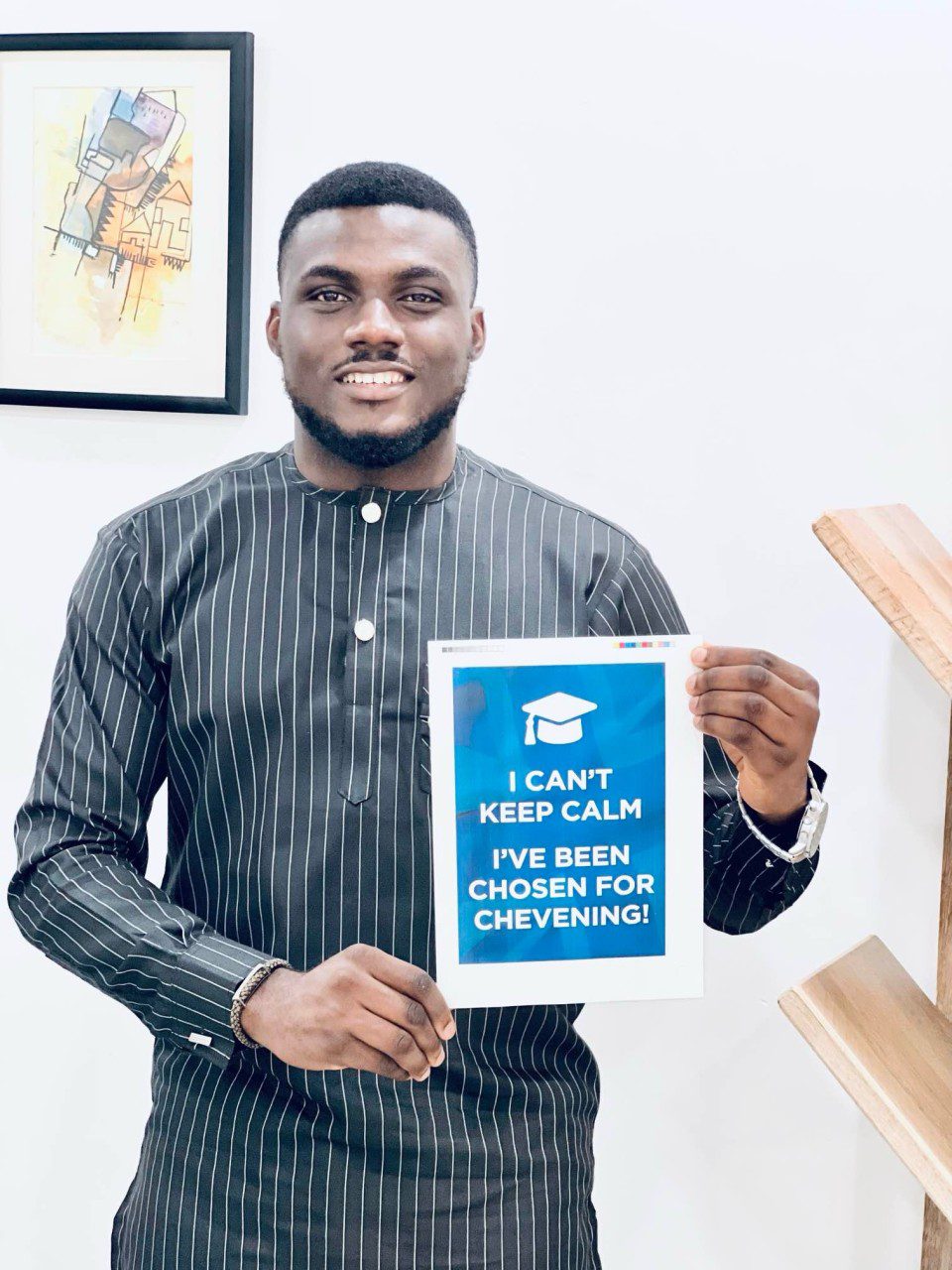
The Journey
I am Busayo Caleb Afolabi, and I obtained my Bachelor of Laws (LLB) degree from Obafemi Awolowo University, one of Nigeria’s most prestigious federal institutions, where I studied between 2013 and 2018. I subsequently attended the Nigerian Law School and was called to the Nigerian Bar in November 2019 as a Barrister and Solicitor of the Supreme Court of Nigeria.
Professionally, I have held several roles through which I developed and refined my litigation and negotiation skills. Since qualifying, I have accumulated over six years of professional experience in litigation and dispute resolution. My legal education and practical experience evolved in tandem, providing me with a solid and practical foundation for rigorous academic research.
In 2020, I secured the position of Personal Research and Judicial Assistant to a Judge of the Lagos State Judiciary, a role I held until September 2022. This appointment was based on the strength of my excellent legal research and writing skills. During this period, I worked closely on complex criminal, civil, and constitutional matters, drafting legal opinions, analysing case law, and contributing to the preparation of judicial decisions.
This close exposure to judicial reasoning significantly shaped my academic interests. Through this experience, I developed a particular focus on international criminal law, transitional justice, and global justice systems, which ultimately informed my decision to pursue further academic study.
Motivated by this intellectual direction, I undertook a fully funded Master of Laws (LLM) in International Human Rights and Terrorism Law at Lancaster University, one of the United Kingdom’s leading institutions (Top 10), which I completed in September 2023.
Chevening Scholarship Details
I was awarded the Chevening Scholarship to undertake this LLM programme and was honoured to be among only 44 Nigerians selected from over 9,000 applicants in 2022. The Chevening Scholarship is the United Kingdom Government’s global leadership programme, funded by the Foreign, Commonwealth and Development Office (FCDO), and is awarded to individuals who have demonstrated strong leadership ability and the potential to contribute meaningfully to their professional fields and communities.
I received admission offers from the University of Essex, Queen Mary University of London, and Lancaster University. I ultimately chose Lancaster University because it offered a combined specialisation of LLM International Human Rights and Terrorism Law, in addition to its strong academic reputation as a top-ranked university in the United Kingdom.
The fully funded Chevening Scholarship covered my tuition fees (£21,000) as well as my living expenses through a monthly stipend, international flight tickets, medicals, and visa costs. Altogether, the total value of the scholarship support could be approximately £40,000, which enabled me to focus fully on my academic and research development during my LLM at Lancaster University.
Were You Offered any Other Scholarships?
I had an offer from the University of Glasgow for the Erasmus Mundus Joint Master's LLM International Law of Global Security, Peace and Development.
Educational Background
I completed my LLB degree from Obafemi Awolowo University in 2018 with a Second Class Upper Division. My educational background also prepared me for international opportunities through the leadership and networking roles I undertook while at Obafemi Awolowo University. Just to mention a few, during my time on campus, I served as the Student Chambers President of Magna Curia Chambers. I also served as General Secretary of the Gospel Students’ Fellowship and held leadership responsibilities within the University Joint Christian Campus Fellowship, where I worked as an Action Committee Member and Drama Coordinator.
Through these roles and others, I developed strong leadership capacity, organisational skills, and the ability to build meaningful relationships across different groups. These experiences significantly strengthened my profile and prepared me for competitive international opportunities such as the Chevening Scholarship.
For students who are still in school and aspire to secure international scholarships, the importance of strong academic performance and personal development cannot be overstated. Focus on maintaining good grades and academic excellence, but also invest in leadership roles, strategic networking, and building meaningful collaborations. Seize opportunities when they arise: set ambitious academic goals, contest for leadership positions, represent your department, attend conferences, participate in competitions, and actively build networks both within and outside your institution.
If you have already graduated, it is still possible to begin building these experiences. Leadership, professional development, and networking can be cultivated at any stage, and taking deliberate steps in these areas can significantly strengthen your profile for future opportunities.
How Did You Prepare to Apply to Lancaster University?
How Did You Find Information About the Chevening Scholarship and Lancaster University?
I first learned about the Chevening Scholarship through LinkedIn. One of the realities of being active on LinkedIn is that you constantly encounter people sharing their achievements and success stories. When I first joined LinkedIn in 2018, this was not easy for me. Seeing people announce one success after another often triggered moments of personal reflection. At the time, I did not even have a properly prepared CV.
My first step, therefore, was to develop my CV and begin intentionally building my professional profile. As I reflected on my experiences, I realised that I was not doing as poorly as I had initially thought, but I also understood that I needed to work harder and position myself more strategically. Over time, LinkedIn became a valuable space for learning, motivation, and professional growth. I grew to genuinely appreciate seeing others succeed.
In 2021, during one of my many visits to LinkedIn, I came across a post by Hajara Kabeer, who was a Chevening Scholar at the time. She had shared information about the Chevening Scholarship. Something about that post caught my attention, and I could not simply scroll past it. I found myself returning to the post repeatedly to read more about the opportunity. That moment marked the beginning of my journey. From then on, I developed a strong interest in the Chevening Scholarship and became determined to pursue it.
When it came to selecting institutions, the process was relatively straightforward for me because I already had a clear sense of my academic interests. My focus was simply to identify universities whose programmes aligned with those interests. The Chevening Scholarship application allows applicants to select three preferred universities, giving candidates some flexibility during the application process. However, if selected for the scholarship, the candidate must ultimately choose one institution from those options.
In my case, I applied to the University of Essex, Queen Mary University of London, and Lancaster University, all of which offered programmes aligned with my academic interests. Fortunately, I received admission offers from all three universities, which meant I had the privilege of choosing between them. In the end, I followed my instincts and chose Lancaster University, which I felt was the best fit for my academic goals and interests.
Did You Take Any Standardized Tests? If So, How Did You Prepare for Them?
No, I did not sit for any standardized tests. The most common test I was aware of at the time was IELTS, which is often required as proof of English language proficiency. However, I did not take this test.
The Chevening Scholarship application process did not require an English language test in my case. In addition, when I applied to the universities, I was granted an exemption because I am from Nigeria, an English-speaking country where English is the official language and the primary language of instruction throughout the education system. My education, from secondary school through university, was conducted entirely in English. English is also the primary language of legal education and professional practice in Nigeria.
Instead, the universities requested my West African Senior School Certificate Examination (WASSCE) results, which they recognised as equivalent to the General Certificate of Secondary Education (GCSE) in the United Kingdom.
It is important to note that the requirements may differ for applicants from other countries, depending on their educational background and the policies of the universities to which they apply.
How Did You Prepare to Apply to the Chevening Scholarship?
As a first-time applicant for the Chevening Scholarship, I initially had very limited information about the programme apart from the post I had seen on LinkedIn. Naturally, I had many questions about the scholarship and how the application process worked. My next step was to visit the official Chevening website, which became my primary source of information.
We live in a digital age where it is possible to research and gather detailed information about opportunities online. For anyone considering applying for the Chevening Scholarship, the first and most important step is to carefully explore the Chevening website. Spend time thoroughly going through it. Almost every question a prospective applicant might have is already addressed there.
One of the strengths of the Chevening website is that it is well organised, easy to navigate, and very comprehensive. It provides detailed information on the eligibility requirements, the different stages of the application process, and guidance on common questions or concerns applicants may have about the scholarship.
In particular, prospective applicants should pay close attention to the Frequently Asked Questions (FAQ) section, which contains detailed explanations covering many aspects of the programme. It is an essential starting point for understanding the scholarship and preparing a strong application.
Beyond the official website, another helpful source of information is YouTube. Many Chevening Scholars share their personal experiences, application strategies, and practical advice on the platform each year. These videos can provide additional insights and perspectives that may help applicants better understand the process and prepare more effectively.
Some channels I recommend exploring include:
AFM Stories by Faith Moyosore Agboola
The YouTube channel of Kuseme Iseh
Scholars Diary by AnuOluwapo Adelakun and Mayowa Tijani
These creators have shared helpful insights about the Chevening journey and the application process.
In addition, a friend and colleague, Chris Agape, who was also a scholar in my 2022/2023 Chevening cohort, prepared a comprehensive guide to support prospective applicants. The guide is very detailed, and he generously made it available for free download online. Interested applicants can search for it on Google using the title “Get the Ultimate Chevening Guide by Chris Agape.”
That said, it is important to understand that you must be prepared to do most of the work yourself. Gather as much information as possible, carefully study the scholarship requirements, and ensure you fully understand what the programme expects from applicants. This approach does not apply only to Chevening; it applies to most competitive scholarship opportunities. Before beginning any application, take the time to thoroughly understand the opportunity and the commitments it requires.
How is (was) Your Experience at Lancaster University?
Studying at Lancaster University was a rewarding experience. During my time there, I also served as a Law School Ambassador, which allowed me to engage with fellow students and the wider academic community. My LLM programme was rigorous and intellectually demanding, and this experience significantly deepened my academic curiosity and strengthened my commitment to pursuing further research in the field of International Criminal Law and Justice.
What Do You Think Made Your Application Stand Out?
I approached the application process with deliberate preparation and focus, fully aware that I was a first-time applicant. I was intentional in every step I took. My extensive leadership and networking experience during my time at university made it easier for me to provide concrete examples throughout the application and interview, drawing on my active engagement in multiple leadership roles and initiatives.
Also, one moment that I believe set me apart occurred during the Chevening interview. When asked to discuss my three chosen universities, I mentioned that I already had unconditional offers from all three. The panel’s reaction was telling; the lead interviewer even said they would verify this with the universities and that I could change my response if I wished. I confidently replied that I would not change my response, as I genuinely held unconditional offers from all three institutions.
I felt a strong sense of affirmation in that moment. I believe it demonstrated my commitment, preparedness, and seriousness about the scholarship. While holding offers that early is not a requirement under the Chevening timeline, having them may have positively influenced my selection.
What Advice Would You Give Those Looking to Apply for a Similar Scholarship?
Give it all takes. It’s difficult but not impossible.
Want to submit your
scholarship journey?
Submit Your Story Here!
More Scholarship Recipients

Hi! My name is Banu, and I come from Kazakhstan. I was born and raised there, and upon high school graduation, I decided to .... Read more
Hello! My name is Yumna Arif, and I am from Pakistan. I hold a PhD in Business and Management from Warwick Business School, .... Read more

I am Vishnu Vardhan. I hail from the Telangana state of India. I hold a bachelor’s degree in electrical and electronics en .... Read more
Leave A Comment