
How I Secured a Fully Funded Research Fellowship at Museo de Historia Mexicana, Mexico Through the Fulbright García-Robles Scholarship
University: University of Colorado Boulder
Degree: Master’s in Peninsular and Latin American Literature
Previous Education: Bachelor’s in English and Spanish Literature, GPA: 3.9
Scholarship: Fulbright García-Robles – Research Scholarship
Social Media:
Website: https://www.myrnalejandracanales-gutierrez.com/
YouTube: https://www.youtube.com/@LaNi%C3%B1ezContada
LinkedIn: https://www.linkedin.com/in/myrnalejandra-canales-gutierrez-04b341379/
https://www.reachtheworld.org/kikis-journey-mexico
The Journey
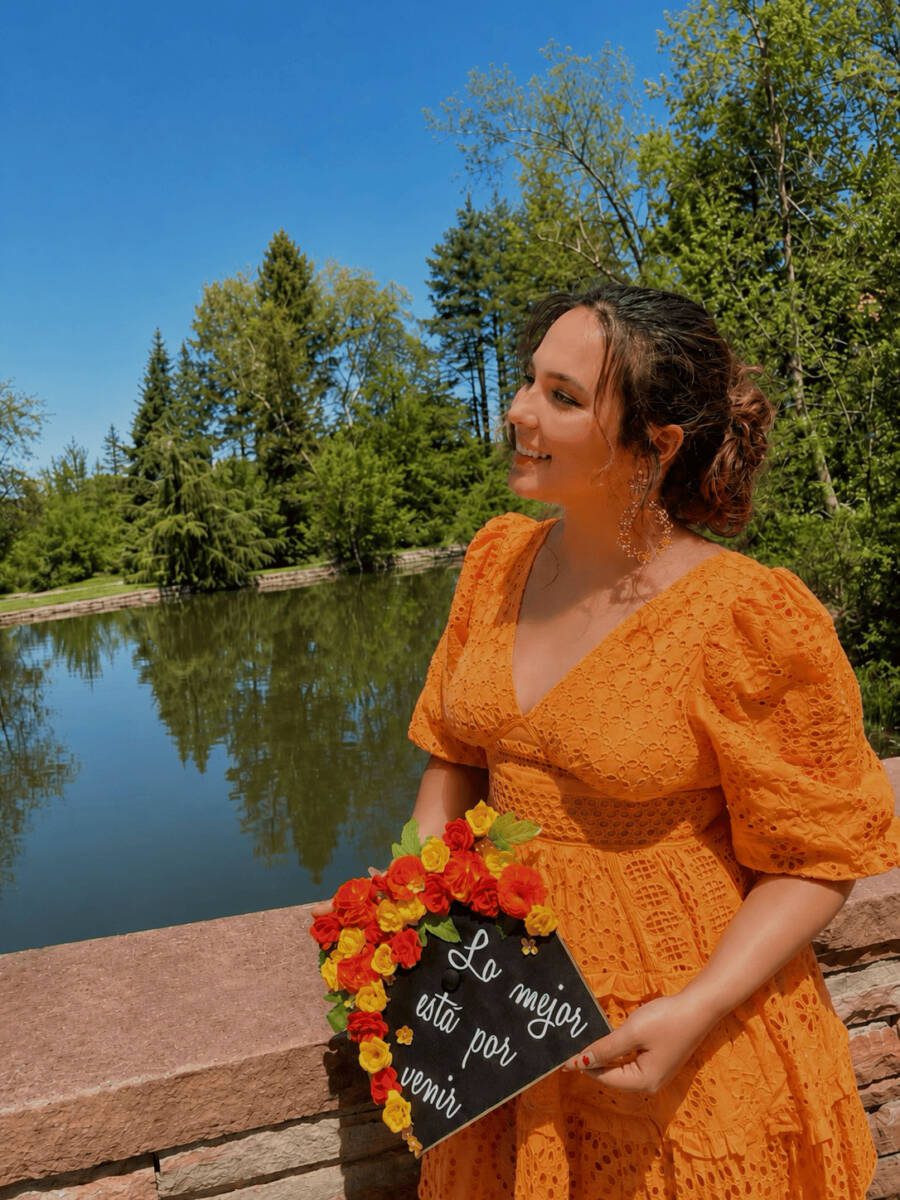
My name is Myrnalejandra Canales-Gutierrez, and I’m from the border town of Laredo, TX. Like many others who had a lackluster pre-collegiate education, I was at a complete loss career-wise when I finished high school. I decided to pursue an English degree at the University of Texas at Austin simply and solely because I had always liked reading and thus began an academic journey that I am endlessly proud of and heavily grateful for.
Less than a year into my program at UT Austin, I began to consider a career as a professor of Comparative Literature and decided to double-major in English and Spanish. After graduating early in 2021, life took me to the sunny state of Colorado, where I attempted to apply directly for PhD programs in English and Spanish Literature at the University of Colorado Boulder. I wasn’t accepted into them because I didn’t have a defined dissertation topic. I was instead accepted into a couple of CU Boulder’s master’s programs, of which I chose Peninsular and Latin American Literature.
As I progressed through my M.A. program, the lack of accessibility of university research began to bother me. I felt that everyone had a right to discuss the concepts I encountered in class, which had an impact on ALL of society, and I became enamored with what I call “bridging spaces.” I was drawn to those institutions which translated the constant stream of niche academic knowledge produced in universities, information which can feel purposefully convoluted and inaccessible, into messaging for general audiences. Namely, I fell in love with museums and libraries.
In the second year of my M.A. program, I added coursework for the Certificate in Museum Studies; this endeavor was happily interrupted by my Fulbright García-Robles research project, and I now plan to complete it by the Spring of 2027. My independent Fulbright research provided me with experience with all sorts of content creation, and I’m now applying for jobs that I didn’t even know existed when I started my bachelor’s degree. I hope this brief anecdote resonates with people who are still figuring out their careers; you can most definitely apply to and receive big scholarships even if you’re unsure of where your education will end up taking you.
Fulbright García-Robles Details
I received the Fulbright García-Robles research scholarship and was hosted by Museo de Historia Mexicana (Museum of Mexican History) in Monterrey, NL. The scholarship consisted of a living stipend meant to allow me to work full-time on my research ($26,000 MXN monthly), a book allowance ($500 USD), and a relocation allowance ($200 USD).
Educational Background
I first graduated from the University of Texas at Austin with a bachelor’s in English and Spanish Literature. My overall GPA was a 3.9; I’d worked diligently to maintain good grades because I knew that applying to graduate school was a possibility, but I balanced this effort with professional development opportunities. Since I had to finance my own education, I worked all throughout my bachelor’s program in a very wide variety of fields. I used these jobs, which were often temporary and grant-funded, to figure out what my professional interests were, and I suggest that anyone who is unsure of their career do the same. I worked in social science, literature, and linguistic research. These jobs helped me acquire skills that are useful in any industry, such as academic and public-facing writing, interviewing and conversation circle facilitation, data entry and management, and a lot more. I would argue that professional development is just as, if not more important than, maintaining a good GPA. The latter is a checked box when applying for graduate school, while the former makes you stand out!
I then graduated from the University of Colorado Boulder with a master’s in Peninsular and Latin American Literature. As before, I ended the program with a 3.9 GPA but admittedly struggled more with the academic rigor – I mention this because I believe students considering graduate studies should be more lenient with themselves where grades are concerned. As I worked to maintain good grades, I made sure to extend my efforts into other areas. Mainly, I worked hard to produce final papers that I could later use for publishing and apply for internships that could bolster my CV experience in the institutions I saw myself working at (museums and libraries). The M.A. program really helped me to solidify my historical and literary areas of interest; it also helped further refine my communication skills in English and Spanish. Having a second language that I’m highly fluent in not only helped me get accepted to the Fulbright, but it has also been one of the most sought-after qualities in the jobs that I’ve applied to.
Currently, I’m finishing up my coursework for the Certificate in Museum Studies at CU Boulder; I hope to complete it by Spring of 2027.
How Did You Prepare to Apply to the University of Colorado Boulder?
I must say that I didn’t do much conscious preparation for my UT Austin application. I scored well on the SAT, was in the top 2% of my graduating class, and took several AP exams; if there was anything that I’d change, it would be taking even more AP exams. I took those that I had a natural inclination towards (English and Spanish) but would’ve benefitted from taking more science tests. The science classes at UT were some of the hardest, and they had little to do with my career path; avoiding them might’ve allowed me to graduate an entire year early, as opposed to just a semester!
I did a lot more preparation to get into CU Boulder. I hadn’t been preparing to apply to this school specifically during my bachelor’s, but I knew I wanted to go to graduate school, so I kept my grades up and did a lot of professional development via jobs and fellowships. Once I knew I wanted to go to school in Colorado, I went to CU Boulder in person to talk to the Graduate Program Directors in the departments that interested me. I shared my academic history with them and asked about my chances of being accepted. These turned out to be high, so I applied for multiple departments in the same school, instead of applying to many different schools. My decision was then based on which department offered better financial aid, and which one had more professors that aligned with my research interests!
How Did You Find Information About Fulbright García-Robles and University of Colorado Boulder?
I already knew about the Fulbright program before starting my master’s because I had applied for an English Teaching position in Italy while at UT Austin! I found most of my scholarship applications, however, through campus newsletters. There is typically a scholarship department at every university (mine helped me prepare the application materials), but I also recommend subscribing to departmental newsletters and following these same departments on social media. Even though I was housed by the Spanish and Portuguese Department, I signed up for any newsletters that could coincide with my research interests. For me, these included the following CU Boulder departments: English, History, Religious Studies, Anthropology, Ethnic Studies, Women and Gender Studies, and Museum Studies.
Did You Take Any Standardized Tests? If So, How Did You Prepare for Them?
Yes, I took the SAT but can’t say I had much preparation for it. I simply used some books to study by myself.
How Did You Prepare to Apply for the Fulbright García-Robles?
I will not downplay the amount of preparation it took to apply for a Fulbright research scholarship; it was A LOT. I began with having tough conversations with my fiancé’s bosses about whether they’d allow him to work remotely for a year. Thankfully, they were very supportive! I mention this because applying for programs abroad while managing family dynamics can be difficult and often goes unmentioned; there were numerous Fulbright grantees that got dependent funding for their children and had to coordinate their project timeframes with their spouses. These are tough parts of an application process that affect many people and shouldn’t be ignored.
After getting the okay, I met with numerous mentors to talk about my project ideas. I tend to think big, and I really appreciated their help with narrowing things down. Meeting with experienced professionals helped me differentiate between a realistic, ambitious project and promises that would sound like a fantasy to my application reviewers. Once I had the outline of what was feasible, I reached out to all my references and to Museo de Historia Mexicana, my desired host institution, so that we’d be in contact throughout the application process. I began working on my application essays several months before their due date, so that I could share these in full with my recommenders before they wrote their recommendation letters. I really suggest giving yourself a lot of time to complete your essays; in my experience, 3 rounds of rewriting are a minimum, and it benefits you to meet with a wide array of reviewers before submitting. My project involved researching a children’s literature collection, so I met with a topic expert, an ex-Fulbright interviewer, and with personal connections (mom, sister, etc.) who could tell me where I’d gone too far with my use of jargon. I always recommend this last set of personal reviewers because the people considering your Fulbright application aren’t always professionals in your field.
Once my materials were submitted, several months went by before I got an interview. To prepare for the interview, I input all my application materials into ChatGPT, as well as a description of the scholarship, and asked it to give me likely questions. I answered these aloud to myself while completing tasks like cleaning or driving and then did mock interviews with some of my peers and mentors. The day of the interview, I got all dressed up, avoided caffeine, and meditated a bit before joining the Zoom meeting. When the interview began, I answered the questions clearly and confidently, but I had only used up half of my time when the interviewers ran out of questions. Instead of letting the meeting end awkwardly, I asked the group if it would be alright for me to share why I thought I ought to be awarded the scholarship. They gave me the green light, and I went on to share almost all the information I’d been preparing for about a month. I really recommend this strategy for anyone who feels their interview has been too brief; this is your chance to share all your strengths, even those that interviewers haven’t asked you about.
It wasn’t until almost a year after I started this entire process that I got accepted. By this time, I had already applied to several other opportunities (one of which I was able to complete before leaving for Mexico) and had made myself comfortable with the idea of not receiving the scholarship. I think this strategy is best for the nerves; if I got the Fulbright, it would be exciting, but if I didn’t, life would go on, and I already had other plans!
What Did You Pursue After the Fulbright García-Robles? Work, further study, research, or something else?
I just wrapped up my Fulbright term on June 30th and have been in the process of applying for full-time jobs! I feel that my career potential is just as varied as my previous work experience – another reason I suggest trying different jobs out – and I would be thrilled to work in museums, libraries, or non-profit organizations. I’m planning on continuing some of the activities I started with the Fulbright; specifically, the academic article I wrote is still in the editing process with Latin American Literary Review, and I will continue my podcast on children’s literature! Up until now, all the content I’ve produced has been in Spanish for the channel La Niñez Contada, but I will soon be adding an English extension to the show entitled Childhood as Written!
Would Potential Students Have Any Problems Not Knowing the Native Language?
I do think that students would find it hard to move through Mexico without knowing Spanish. Here in Monterrey, NL, you might get away with it in academic spaces, seeing as the proximity to the border leads a lot of people to learn English. The further south you move, however, the less likely it is for people to know conversational English (barring big cities).
What Do You Think Made Your Application Stand Out?
I think that my mentors were pivotal in making my application stand out; they really helped me highlight what made my project innovative. I was repeatedly asked to clarify what I was contributing to the literary field, why it was important, and how it would impact future studies. Sometimes, when we spend a lot of time researching a topic that we love, we start feeling that its importance is self-evident. This, however, is rarely the case – you need to explain why what you’re doing is important and necessary.
I also think I did a good job of crafting a cohesive professional narrative. As someone with a wide array of work experience, my CV can read as ‘random’ if not contextualized properly. My personal statement started with a vulnerable admission of my lack of direction upon graduating high school. I then mapped the development of my career interests – moving from universities to museums and libraries. I recognized where I lacked experience and explained why this was the case. I was not someone who grew up in academia; before starting college, I could count on one hand the number of times I’d visited a public library or museum. This honesty wasn’t meant to mark me as a victim of circumstance or anything of the sort; it was merely a direct way of explaining why it had taken me so long to join a Museum Studies program and start working/interning in museums and libraries. I really recommend that when you start crafting your personal statement, you think of your experiences as a story. What parts of this story need to be told for reviewers to understand who you are? Sometimes it’s not the experiences themselves that capture the readers’ attention, but the way they’re told – with honesty and personal flair.
What Would You Have Done Differently if You Were Going Through the Process Again?
If I were doing the application again, I would adopt a stoic attitude towards the results earlier on in the process. For some of these big scholarships/fellowships, the application process can last more than a year. After my interview, I was told that it would be another couple of months before I got any news about being accepted. For quite some time, I struggled with the uncertainty of it all, especially because I felt that getting the scholarship would mean turning down any full-time jobs I applied to and got offers for. I ended up limiting myself to applying for summer internships and was thankfully able to complete one at the Denver Museum of Nature and Science before I left for Mexico. Knowing what I do now, however, I would’ve simply applied to the full-time jobs and – if/when awarded the scholarship – considered it against my job offers to see if it was still the most advantageous move careerwise. When you work so hard to acquire a scholarship, it can be easy to forget that declining in lieu of another opportunity can be a wise decision. I have no idea if this would’ve been the case for me, as I did not apply to any full-time positions, but it’s always possible.
What Advice Would You Give Those Looking to Apply for a Similar Scholarship?
The best advice I can give is to ask for help! I’d already applied to the Fulbright program once before and hadn’t been awarded the scholarship. Instead of letting that deter me, I decided that the next time I applied, I would seek extensive help with my application. Seeing how many industry pointers my mentors gave me and how much my application materials changed between the first draft and final submission made me realize that I had really shot myself in the foot the first time I applied by doing a single revision with one mentor. Applying for funding is a skill set and, for many of us early-career professionals, it’s one that we haven’t fully figured out yet. Going to your professors, lab leaders, etc., who have made an entire career out of securing funding for their projects, can really mean the difference between acceptance and rejection!
Get to know me:
If you liked any of the advice I gave or want to learn more about my Fulbright experience, please check out the following links:
La Niñez Contada: https://www.youtube.com/@LaNi%C3%B1ezContada
- In this Spanish podcast, I interview children’s literature authors to talk critically about their texts. These interviews are interspersed with mini-lessons that contextualize our conversations on history, literature, and culture! An English version of this podcast will be coming up on the same channel very soon.
Reach the World: https://www.reachtheworld.org/kikis-journey-mexico
- This amazing organization pairs U.S. students studying or working abroad with a K-12 classroom to inspire young students to travel! If you’d like to learn more about the organization or about my experiences in Mexico, feel free to read through the articles I wrote for Ms. Rivera’s 6th grade class.
Personal Website: https://www.myrnalejandracanales-gutierrez.com/
- Here you can learn a bit about my published projects, including the one I completed during my Fulbright term. This article explores gendered messaging in Biblioteca del niño mexicano, a children’s series depicting the formation of the Mexican state. In it, I argue against the assumption of a completely masculine audience and explore the ways in which the author and illustrator use Indigenous women for nation-building purposes.
Want to submit your
scholarship journey?
Submit Your Story Here!
More Scholarship Recipients
I am Provakar Baruri, and I am from Durgapur, West Bengal, India. I am currently pursuing my Master's in Materials Science a .... Read more
I’m Shehla Inam from Pakistan. I’m a PhD student in Biomedical Engineering. My thesis subject focuses on developing a mo .... Read more
My name is Chiambeng Ignatius Munchim Junior, and I am from Cameroon. I was born in Yaoundé and grew up with a strong inter .... Read more
Leave A Comment