
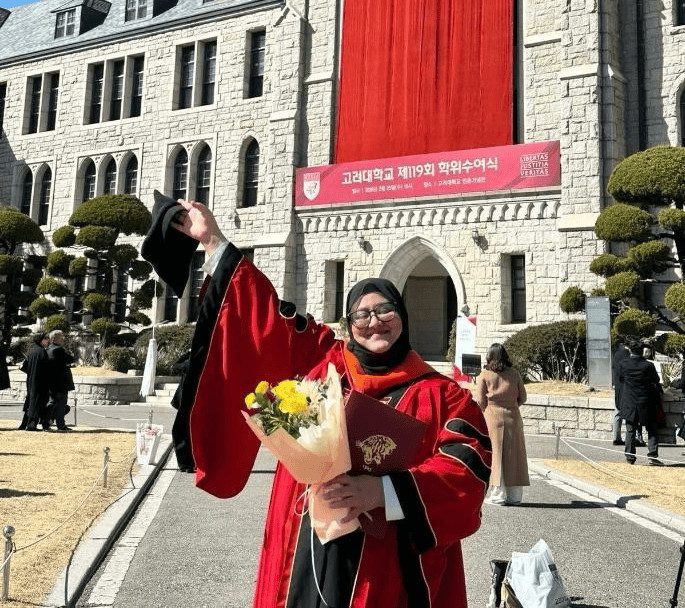
I did my Bachelor's in Software Engineering in Pakistan. I have always been passionate about technology and artificial intelligence, especially computer vision and machine learning. Pursuing graduate studies in AI allowed me to deepen my research skills while studying under world-class professors in one of the most technologically advanced countries in the world.
Global Korea Scholarship Details
Scholarship: Global Korea Scholarship (GKS) 2022
Institution: Korea University
Degree: Master's in Artificial Intelligence
Tracks: University Track, Embassy Track
Scholarship Coverage: Full scholarship funded by the Korean Government, including tuition, monthly stipend, airfare, settlement allowance, Korean language training, medical insurance, and research support.
Application: Graduate (Feb-Mar), Undergraduate (Sep-Oct)
Were You Offered Any Other Scholarships?
N/A. The Global Korea Scholarship (GKS) was the only scholarship I applied for, and fortunately, I was selected. I applied through Embassy Track 3 universities and got accepted at all.
Educational Background
Before coming to Korea, I completed my Bachelor of Science in Software Engineering at the International Islamic University Islamabad (Pakistan), graduating with a CGPA of approximately 3.5/4.0. Since grading systems vary across countries, the Global Korea Scholarship (GKS) uses its own GPA conversion appendix to convert applicants' grades into a standardized percentage or equivalent scale during the evaluation process.
Throughout my undergraduate studies, I built a strong foundation in programming, software development, algorithms, databases, web technologies, and software engineering principles. As I progressed through my degree, I became increasingly interested in artificial intelligence and machine learning, which motivated me to pursue graduate studies in AI.
Beyond academics, I believed it was important to develop a well-rounded profile. I actively participated in numerous extracurricular activities, including technical workshops, seminars, online certification programs, internships, volunteer work, student ambassador programs, sports, acting, leadership activities, and part-time jobs. These experiences helped me strengthen not only my technical skills but also my communication, teamwork, leadership, and problem-solving abilities.
I also completed several professional certifications from internationally recognized organizations such as Google, IBM, DeepLearning.AI, and Coursera, which allowed me to explore emerging technologies beyond my university curriculum and demonstrate my commitment to continuous learning.
Looking back, I believe my educational background prepared me for the GKS scholarship not only because of my academic performance but because it showed consistent growth, curiosity, leadership, and a genuine passion for learning. My combination of academic achievements, practical experience, and extracurricular involvement gave me a strong foundation for pursuing advanced research in Artificial Intelligence at Korea University..
How Did You Prepare to Apply to Korea University?
Did You Take Any Standardized Tests? If So, How Did You Prepare for Them?
I started preparing long before the application period opened. Rather than focusing only on my grades, I worked on building a well-rounded profile. I participated in:
- Professional certification courses
- Technical workshops
- Research seminars
- Sports and extracurricular activities
- Acting and public speaking activities
- Social work and volunteering
- Student ambassador programs
- Internships
- Part-time jobs
- Leadership opportunities
I also completed many online certifications from internationally recognized organizations such as:
- IBM
- DeepLearning.AI
- Coursera
These experiences strengthened both my CV and my personal statement by demonstrating consistent learning, leadership, and commitment beyond academics.
I researched extensively through the official Study in Korea website, university websites, YouTube videos, Facebook groups, and online communities where scholars shared their experiences. Reading previous applicants' stories helped me understand the application process and prepare the required documents well in advance.
No. I did not take IELTS, TOEFL, GRE, or any other standardized English test because my university issued an English Language Proficiency Certificate, and since English is one of Pakistan's official languages and the language of instruction at my university, this certificate was accepted.
At the time of my application, I also completed the EF SET English Test, which was widely accepted and commonly used. Additionally, I completed several Korean language courses offered through Yonsei University and Sungkyunkwan University (SKKU) on Coursera to prepare myself before moving to Korea. For current applicants, I would highly recommend taking official English language tests such as IELTS or TOEFL and also TOPIK if possible, as the latest GKS guidelines award additional points for recognized language certificates.
How Did You Prepare to Apply for the Global Korea Scholarship?
Preparation was the key to my success. I spent months organizing every required document before applications opened. I carefully prepared my essays, recommendation letters, certificates, extracurricular records, and supporting documents.
I also spent significant time improving my personal profile rather than relying only on my academic performance. Most importantly, I worked hard on writing strong and authentic personal statements that reflected my goals, motivation, and passion for studying in Korea.
Student ambassador experience
My experience at Korea University was amazing. Studying at one of Korea's top universities allowed me to work with excellent professors and talented researchers from around the world. The academic environment encouraged independent research, collaboration, and innovation.
The university also provided many opportunities to participate in seminars, conferences, research projects, and networking events that helped me grow both academically and professionally.
How Do You Rate Korea University Academically?
I would rate Korea University 9/10 academically. As one of Korea's prestigious SKY universities, it consistently ranks among the top universities in the world. The quality of education, research facilities, laboratories, professors, and academic support exceeded my expectations. The university places a strong emphasis on research-based learning and provides excellent resources and opportunities for graduate students.
One thing I would emphasize is that your overall experience can be greatly influenced by finding a supportive professor whose research interests align with yours. A good advisor can make a significant difference in both your academic and personal growth. Of course, this is true not only at Korea University but at universities everywhere.
How Does Korea University Support International Students?
Korea University provides outstanding support for international students. The university offers orientation programs, international student services, counseling, language support, cultural activities, academic advising, and various student organizations. Whenever international students face administrative or academic difficulties, there are dedicated offices that are always willing to help.
Are Your Classes Conducted in English or Korean?
When I applied, the program description indicated that courses would be approximately 50% English and 50% Korean. However, during my Master's degree, all of my courses were offered entirely in English. I have also heard that if a required course is normally taught in Korean, students may request English instruction from professors depending on the department and course availability. Completely depends on your university, department, and Major.
What Did You Pursue After the Global Korea Scholarship?
After completing my Master's degree, I decided to continue my professional career in South Korea. I am currently working in Korea, where I am able to apply the knowledge and research experience I gained during my studies.
Would Potential Students Have Any Problems Not Knowing Korean?
Not really. One of the greatest advantages of the GKS Scholarship is that it includes one year of intensive Korean language education before students begin their degree programs. So, you need to pass TOPIK level 3 to start your degree, but graduation requirements can be different for different universities. In my case, I needed TOPIK level 4 to graduate. This allows scholars to build a solid foundation in Korean before starting university. That being said, I highly recommend learning some Korean before arriving. Even basic Korean can make everyday life much easier, help you adapt more quickly, and allow you to communicate more comfortably with local people.
What Do You Think Made Your Application Stand Out?
I believe several factors strengthened my application. Rather than relying only on grades, I built a balanced profile that demonstrated continuous personal and professional growth. My application included:
Workshops and seminars
- Strong personal statements
- Leadership experience
- Volunteer work
- Internships
- Sports and extracurricular activities
- Professional certifications from organizations such as Google and IBM
- Research interests aligned with my chosen degree
- Getting Certification from the Presidential Institute.
I believe these experiences showed that I was motivated, proactive, and genuinely committed to my future goals.
What Would You Have Done Differently if You Were Going Through the Process Again?
Looking at the current GKS guidelines, I would probably prepare official English language certificates such as IELTS or TOEFL and TOPIK because they now provide additional evaluation points. Aside from that, I would prepare exactly the same way because I started planning early and collected all my supporting documents well before the application period. Preparing early significantly reduced my stress during the application process.
What Advice Would You Give Those Looking to Apply for a Similar Scholarship?
First of all, don't doubt yourself. Many applicants convince themselves that they are not good enough before they even apply. Build your profile gradually instead of rushing at the last minute. Participate in workshops, internships, volunteer work, leadership activities, certifications, research projects, and anything that genuinely interests you. Write honest essays that reflect your personality, your goals, and your passion rather than trying to impress the reviewers with complicated language. Most importantly, start preparing early. Even if you think your chances are small, give it your best effort and apply. You never know what opportunities may come your way until you try. Good luck to everyone applying for the Global Korea Scholarship. I hope your journey is just as rewarding as mine has been!
Embassy Track vs. University Track
The Global Korea Scholarship (GKS) offers two main application pathways, but you can choose only one track to apply to:
Embassy Track
You apply through the Korean Embassy in your home country. The embassy reviews your application, conducts interviews (if required), and nominates successful candidates to NIIED. Embassy Track usually allows applicants to choose from multiple universities and generally offers more university options; you can apply to 3 universities in total. It can also be more competitive because applicants from across the country apply through the embassy.
University Track
You apply directly to a participating Korean university. The university evaluates your application first and then recommends selected candidates to NIIED for final approval. In this track, you apply to only one university, making it a good option if you already know where you want to study.
Which Track Did I Choose?
I applied through the GKS Embassy Track. The application process began with submitting my documents to the Korean Embassy in Pakistan. After the document screening, I was invited for an interview at the embassy. Candidates who successfully pass the embassy evaluation are then nominated to NIIED (National Institute for International Education). NIIED conducts the next stage of the selection process and forwards the shortlisted applicants' files to the universities selected in their application (up to three universities under the Embassy Track). Each university independently reviews the application and makes its admission decision.
I was fortunate to be accepted by all three universities I applied to. After receiving the admission results, I selected Korea University for my Master's degree in Artificial Intelligence and informed NIIED of my final university choice. The Embassy Track gave me the opportunity to be considered by multiple universities before making my final decision, which was one of the reasons I chose this application route.
Both tracks lead to the same GKS scholarship benefits, so neither is "better" than the other. Choose the track that best fits your situation. If you have a dream university in mind, the University Track may be suitable. If you want more flexibility in university placement, the Embassy Track is worth considering. Before applying, carefully read the
This is such an inspiring and practical writeup. The way you balanced strong academics with certifications, leadership, volunteering, and real extracurriculars really stands out, it shows intentional, long term preparation rather than last minute scrambling. Your advice about starting early, writing honest personal statements, and not underestimating yourself is especially valuable for future applicants. Congratulations on the fully funded Master’s at Korea University and on building a path that continues in Korea. Thank you for sharing the details so generously. This will genuinely help a lot of people.