
Fulbright Foreign Student Program Scholarship Scholar Alexander Valdelamar from Panama Shares His Journey of Securing a Fully Funded Master's at the University of Tulsa, United States
University: University of Tulsa
Degree: Master’s in Electrical Engineering
Previous Education: Undergraduate degree in Electrical Engineering from the Technological University of Panama; Professional Energy Manager-related certification through Schneider Electric’s Energy University
Scholarship: Fulbright Foreign Student Program Scholarship – Full Funding (Tuition, Living Expenses, Other Academic Support)
Other Offered Scholarships (if any): Graduate Student Scholarship from the University of Tulsa – Partial Funding (Approximately 75% of Tuition); Panama SENACYT Scholarship Program – Support for Advanced Academic and Research Opportunities
Social Media
The Journey
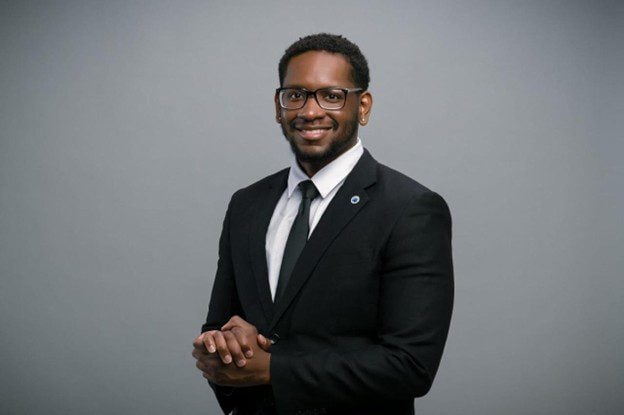
My name is Alexander Valdelamar, and I’m from Panama. I’m an electrical engineer with a Master’s degree in Electrical Engineering from the University of Tulsa. I also completed my undergraduate studies in Electrical Engineering at the Technological University of Panama.
I chose electrical engineering because it is one of those fields that is involved in almost everything. I have always been passionate about understanding how systems and processes work, and how they can be optimized through automation, data, and technology. I also have a strong interest in programming, algorithms, and computer science, so electrical engineering felt like the right balance between physical systems and computational thinking.
Pursuing further education in this field allowed me to strengthen my technical foundation and apply it to areas such as energy efficiency, reliability, automation, artificial intelligence, and data-driven engineering solutions.
Fulbright Scholarship Details
I was awarded the Fulbright Foreign Student Program scholarship in 2022 to pursue my Master’s degree in Electrical Engineering at the University of Tulsa in the United States.
The Fulbright scholarship was a full scholarship that covered tuition, living expenses, and other academic support during my graduate studies.
Were You Offered Any Other Scholarships?
Yes. In addition to the Fulbright scholarship, I was also offered a Graduate Student Scholarship from the University of Tulsa, which covered approximately 75% of tuition.
I also received support through Panama’s SENACYT scholarship program, which supports Panamanian students pursuing advanced academic and research opportunities.
Educational Background
I completed my undergraduate degree in Electrical Engineering at the Technological University of Panama, graduating with a GPA of 3.85. I later completed my Master’s degree in Electrical Engineering at the University of Tulsa, where I graduated with a 4.0 GPA.
I also earned a Professional Energy Manager-related certification through Schneider Electric’s Energy University, which helped introduce me more deeply to energy management, sustainability, and efficiency projects.
My educational background prepared me very well for my graduate studies. Electrical engineering gave me strong fundamentals in analysis, systems, mathematics, and problem-solving. From there, I expanded into areas like energy efficiency, reliability, automation, and machine learning.
A lot of that growth also came from independent learning. Outside of formal classes, I spent a lot of time studying programming, computer science, and different languages such as Python, C++, and JavaScript. I also studied technical topics related to energy systems and commercial refrigeration, which later became very useful in my professional work.
Today, I serve as CTO of EC.DATA, where I work on energy analytics, automation, artificial intelligence, and data-driven solutions for energy systems. Recently, our company won first place in the Daikin AirTech Challenge, selected from more than 800 applications. As part of that experience, I also had the opportunity to travel to Japan, which was a very meaningful milestone in my professional journey.
How Did You Prepare to Apply to the University of Tulsa?
My preparation process was not traditional. I found out about the Fulbright scholarship only about a week before the application deadline in Panama, so I had to move very quickly.
After I was accepted into the scholarship program, I became more intentional about choosing the right university. I wanted to study at an institution that was strong academically but not too large, where I could have closer interaction with professors and access to opportunities.
The University of Tulsa was a great fit for me. Tulsa is also a city with a growing technology ecosystem, and I saw it as a place where I could grow academically, professionally, and personally.
How Did You Find Information About Fulbright Scholarship and University of Tulsa?
I found information mainly through official scholarship and university websites, and by researching programs that aligned with my academic and professional goals. Once I knew I had the opportunity through Fulbright, I focused on finding a university that matched my interests in electrical engineering, technology, energy, and innovation.
Did You Take Any Standardized Tests? If So, How Did You Prepare for Them?
Yes, I took the TOEFL and the GRE.
Because I had limited time, my preparation was very intensive. I studied for around four full days, dedicating about five hours per day to practice and review. It was not the ideal preparation timeline, but I had to make the most of the time I had while also balancing work and other responsibilities.
How Did You Prepare to Apply for the Fulbright Scholarship?
For the Fulbright scholarship, I focused on being sincere and clear in my application. Since I did not have a lot of time before the deadline, I could not overthink the process too much.
I simply explained my background, my goals, and why I wanted to pursue graduate studies.
I think that authenticity helped. My application was natural and honest, and I believe that made a difference.
How is Your Experience at the University of Tulsa?
My experience at the University of Tulsa was very positive. There were many resources available, and the professors were approachable and willing to help. That made a big difference in my academic experience.
I also worked as a teaching assistant for Digital Circuits, which was a great opportunity. It helped me strengthen my technical knowledge while supporting other students.
Beyond academics, I built meaningful connections and learned from people with very different backgrounds and perspectives. Overall, it was a very enriching experience, both professionally and personally.
How Do You Rate the University of Tulsa Academically?
I would rate the University of Tulsa very highly. The engineering department is strong, and there is a lot of collaboration across different areas.
One of the things I appreciated the most was the low student-to-professor ratio. You could sit down with professors, discuss ideas, talk about research, and even explore business or practical applications. Many professors were experienced not only academically, but also in real-world and industry contexts.
That access to faculty and the practical orientation of the program made the academic experience very valuable.
How Does the University of Tulsa Support International Students?
The University of Tulsa provides strong support for international students. They help students adjust to campus life and to the city. There were also events, networking opportunities, workshops, and informal activities that helped international students feel more connected.
Even small things, like helping students navigate transportation and campus resources, made the transition easier.
What Did You Pursue After the Fulbright Scholarship?
After completing my studies, I participated in the post-academic training opportunity offered through the Fulbright program and worked in the United States for a period of time.
I started working as an AI product developer, focusing on fault detection algorithms and internal research for the development of new technology products. That work later became part of the foundation for the solution we used to compete in the Daikin AirTech Challenge, where our team won first place.
Since then, I have continued working in the energy and technology space, especially in areas related to energy intelligence, automation, power quality, and AI-driven analytics.
Would Potential Students Have Any Problems Not Knowing the Native Language?
Since I studied in the United States, English is very important. All lectures, assignments, materials, and communication are in English, so students need to be able to understand and communicate well.
You do not need to speak perfectly, but you do need a strong enough level to follow classes, participate in discussions, write reports, and communicate with professors and classmates.
What Do You Think Made Your Application Stand Out?
I think my application stood out because it combined a strong academic record with realworld experience and a clear sense of direction.
I had a strong GPA, but I also had practical experience in engineering, energy, sustainability, and applied research. I was able to connect my academic background with real problems and explain how I wanted to use my education to create impact.
I also think Fulbright values candidates who can help strengthen relationships between the
United States and their home countries. In my case, I wanted to bring knowledge back to Panama and contribute to the development of technology and energy solutions in the region.
What Would You Have Done Differently if You Were Going Through the Process Again?
I would have started earlier. Having more time would have allowed me to prepare in a more structured way, especially for the essays, standardized tests, and university selection process.
I would also have spoken with more people who had already gone through the process. Hearing different perspectives can help you understand what to expect and avoid mistakes.
What Advice Would You Give Those Looking to Apply for a Similar Scholarship?
Be sincere and give it your best shot. Do not try to create a story that is not yours. Focus on clearly explaining who you are, what you have done, and where you want to go.
If you know people who have gone through the process, ask them about their experience. Getting different perspectives can help you prepare better and approach the application more strategically.
Most importantly, apply. Sometimes people do not apply because they think they are not ready or not competitive enough. But you never know what can happen until you try.
Want to submit your
scholarship journey?
Submit Your Story Here!
More Scholarship Recipients
My name is Shah Hussain, and I am from Khyber Pakhtunkhwa, Pakistan. I completed my Bachelor’s in Psychology at the Univer .... Read more
I am June from the Philippines. I am an educator for Social Sciences and Humanities. I recently earned my Master in Southeas .... Read more
Hi, my name is Abdul Hafeez, and I come from a small town called Nasirabad in Sindh, Pakistan. Currently, I am pursuing a ma .... Read more
Leave A Comment