
Master’s Service Design Strategies and Innovation Student Tooba from Pakistan Shares Her Journey of Securing a Fully Funded Master’s at the Erasmus Mundus Joint Master’s Programme, Europe
University: Art Academy of Latvia; University of Lapland (Finland); Estonian Academy of Arts (Estonia)
Degree: Master’s in Service Design Strategies and Innovation
Previous Education: Bachelor’s in Product Design, National College of Arts, Lahore
Scholarship: Erasmus Mundus Joint Master’s Degree Scholarship – Full Funding (Tuition, Stipend, Mobility Support)
Social Media
The Journey
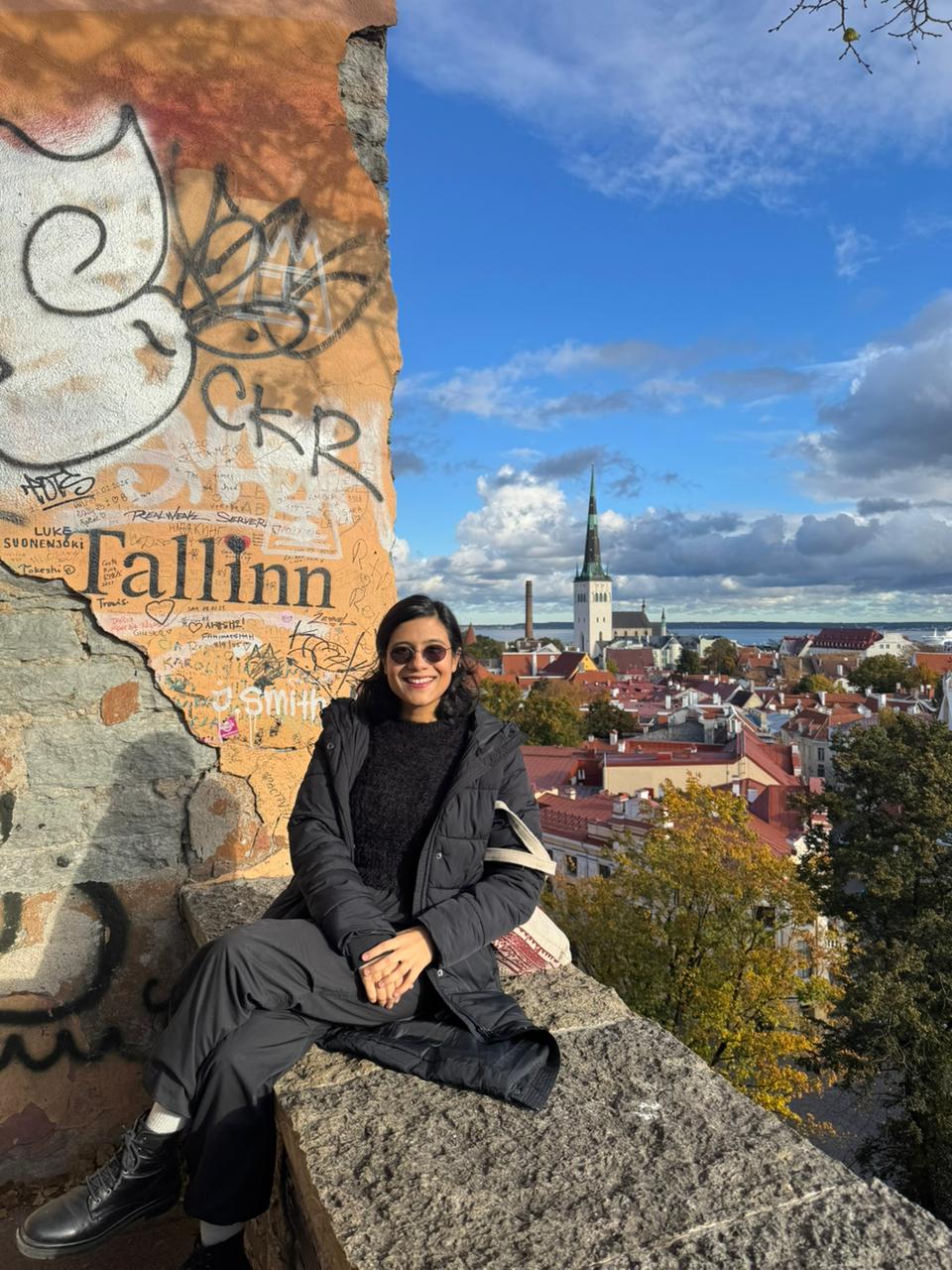
Hi! My name is Tooba, and I’m a 28-year-old Erasmus Mundus Joint Master’s student who has been moving around Northeastern Europe for the past year and a half, currently writing to you from snowy Lapland in Finland.
I’m studying Service Design Strategies and Innovation, a programme that has taken me from Latvia to Estonia and now to Finland. Before my Master’s, I worked with an NGO called the Childhood Cancer Care Foundation, supporting children and families through creative and psychosocial programmes. That experience is what pushed me to apply for this Master’s, to better understand how systems thinking and future-focused approaches can be used to design services that actually work for people.
Educational Background
Before joining the Erasmus Mundus programme, I completed my Bachelor’s degree in Product Design at the National College of Arts in Lahore. Over four years, I learned the foundations of design thinking and the practical tools needed to bring ideas to life, but just as importantly, I studied in a culturally rich environment shaped by art, history, and creative expression.
Through art history courses focused on European movements and daily interactions with classmates from across Pakistan and beyond, I was constantly exposed to different perspectives shaped by varied social backgrounds, geographies, and traditions. Those years helped me become comfortable working in diverse groups and appreciating how culture influences creativity and problem-solving.
Alongside my studies, I was actively involved in student societies, which taught me how to balance multiple commitments, collaborate with others, and manage my time between academic responsibilities and creative pursuits.
How Did You Prepare to Apply for the Erasmus Mundus Joint Master's Scholarship?
I had long been drawn to the idea of Erasmus Mundus. The opportunity to live and study in several European countries over two years, rather than simply visiting as a tourist, felt especially appealing, as I wanted the time and immersion needed to truly understand local cultures, ways of working, and everyday life. I have always admired Europe’s rich artistic and architectural heritage, but I also kept an open mind toward other prestigious opportunities such as the Fulbright in the United States and Chevening in the United Kingdom.
During 2022–2023, I carefully researched my options and ultimately decided to apply for both Erasmus Mundus and Fulbright. The two processes were quite different: Erasmus Mundus required applying directly to a specific programme, while Fulbright involved competing for the scholarship before applying to universities, which added uncertainty around programme choice due to funding limitations. The Erasmus application process was also faster and more straightforward, with fewer standardised test requirements. When I discovered the SDSI programme, its focus on service design, systems thinking, and innovation closely matched both my academic background and professional experience, which led me to prioritise that application.
The competition was intense, with over 700 applicants worldwide and only a limited number of scholarships allocated to each region. I believe what strengthened my application was the clarity of my motivation and the close alignment between my profile and the programme. Rather than spreading my energy across many applications, I focused on presenting a coherent narrative about my goals and experiences. I also invested significant effort into the required assignments, which were graded as part of the selection process; performing strongly in this stage helped me progress to the interview round.
Above all, I think having a clear sense of what I wanted to study, and why, made my application compelling. That focus, combined with careful preparation, ultimately helped me secure the scholarship.
Could you Briefly Discuss the Erasmus Mundus Program You Pursued and the Specific Field of Study it Focused on?
I pursued the Erasmus Mundus Joint Master’s programme in Service Design Strategies and Innovation (SDSI), an interdisciplinary field that brings together design, business, and systems thinking to improve how services function. While the title may sound relatively new, the core idea, designing meaningful and effective experiences for people, has always been central to how societies and organisations create value.
Service design focuses on understanding the needs of both service users and service providers, and then designing the structures, interactions, and processes that connect them. This includes developing service blueprints, identifying pain points, and creating solutions that make services more efficient, accessible, and human-centered.
The programme equipped me with transferable skills such as user research, systems thinking, strategic planning, and collaborative problem-solving. These skills are highly adaptable and applicable across multiple sectors, including communications, public services, innovation, and organisational development, not just traditional service design roles.
How Did the Cost of Living Vary Across the Countries You Studied In? Which Country Was the Most Affordable or Expensive, and How Did You Manage Financially?
The cost of living across Latvia, Estonia, and Finland did not vary as significantly as one might expect, although Finland was slightly more expensive overall. The Erasmus Mundus stipend was sufficient to live comfortably in all three countries with mindful budgeting.
Before arriving in Europe, there were some initial costs that were not covered by the scholarship. As a Pakistani student, I had to travel to Abu Dhabi because there is no Latvian embassy in Pakistan. This involved expenses for travel, accommodation, visa fees, VFS fees, and residence permit fees. These are important upfront costs that students should plan for, as some administrative processes cannot be completed locally.
Once in Latvia, I lived in Kuldīga, a small tourist town without dedicated student housing, which made accommodation slightly more expensive compared to larger cities. However, groceries and daily expenses were affordable, and the stipend allowed a comfortable lifestyle with opportunities to save and travel.
In Estonia, the cost of living was quite similar. Student accommodation was more accessible and affordable, although grocery prices were slightly higher than in Latvia. Overall, the total monthly expenses were comparable.
Finland was somewhat more expensive, particularly for groceries and services, but the availability of good student housing and generous student discounts helped balance costs. With proper budgeting, it was still possible to live comfortably.
Overall, while Finland was the most expensive and Latvia and Estonia were slightly more affordable, the difference was not drastic. The Erasmus Mundus stipend was well-structured to support students across all three countries.
Did You Face Any Language Barriers, and if So, How Did You Overcome Them? Did the Language of Instruction Change from One Country to Another?
One of the best things about the Erasmus Mundus Joint Master's Degrees is that you are immediately surrounded by a very diverse and international group of students. This means that your primary social and academic environment operates in English, which makes communication easy and comfortable from the start. The language of instruction remained English in all three countries I studied in, Latvia, Estonia, and now Finland, so there was no academic language barrier.
The situations where language barriers appeared were mostly in everyday life, such as at grocery stores, government offices, hospitals, or service centers. In Latvia, this was slightly more noticeable because I lived in a small and remote town with many elderly residents who were less comfortable speaking English. In those moments, tools like translation apps from Google were incredibly helpful, not just for conversations, but even for simple things like understanding product labels while shopping.
I also made an effort to learn a few basic phrases in each local language. Even small gestures like saying hello, thank you, or complimenting something in the local language helped create warmer interactions and showed respect for the culture. Platforms like Duolingo and university-offered language courses were very helpful in this regard.
Overall, while there were occasional small challenges in daily life, they were easy to overcome with technology, curiosity, and a willingness to learn. Academically and socially, English was more than sufficient, and learning bits of the local language actually became an enjoyable part of the cultural experience.
Would You Recommend the Erasmus Mundus Program to Others? What Advice Would You Give to Someone Considering This Scholarship?
I would highly recommend the Erasmus Mundus Joint Master's Degrees to anyone who values experience as much as education. It is especially suited for people who are not only focused on studying at a single prestigious university but are excited by the idea of living in multiple countries, experiencing different cultures, and learning through immersion. The program allows you to grow not just academically, but also personally. You learn adaptability, independence, and how to see the world from different perspectives.
My biggest advice would be to apply with genuine intention. Don’t apply just because it is a fully funded scholarship; apply because the specific program excites you and the mobility aspect appeals to you. The experience comes with constant change, and having an open mind and strong motivation makes a big difference.
It also helps to be very clear about why you chose that particular field and how it connects to your past experiences and future goals. When your motivation is honest and specific, it naturally strengthens your application. Erasmus Mundus is not just about getting a degree; it is about shaping how you think, work, and see your place in the world.
Looking Back, Would You Have Done Anything Differently During Your Time in the Program?
Since I am still in my final semester of the Erasmus Mundus Joint Master's Degree program, I feel like I am still living this experience rather than looking back at it from a distance. What I feel most, above anything else, is gratitude for the growth, the challenges, and the person I have become through this journey.
If I could do one thing differently, I would document it more. There were so many small, meaningful moments, arriving in a new country for the first time, learning how to build a life from scratch again and again, and meeting people who changed how I see the world. At the time, you are busy adapting and moving forward, and you don’t always pause to capture it.
I think documenting those moments would not only have helped me reflect more deeply but also allowed me to share that journey with others, especially young people like me, who come from places where opportunities like this can feel distant or impossible. This experience taught me that with clarity, persistence, and courage, things that once felt out of reach can become real.
Want to submit your
scholarship journey?
Submit Your Story Here!
More Scholarship Recipients
Hi! My name is Davi Augusto Mattoso, and I am originally from Brazil. I have a Bachelor's in Chemistry from the Federal Univ .... Read more
Hello, my name is Manasi, and I am from India. I completed my Bachelor’s degree in Civil Engineering from Dr. Babasaheb Am .... Read more
Hi, I am Malik Nauman Rauf, currently a Master's in Aerospace Engineering student and a Fulbright Scholar at Georgia Institu .... Read more
Leave A Comment