
Fulbright Scholar Tatiana Torres Montenegro from Chile Shares Her Journey of Securing a Partially Funded LL.M. in International Human Rights Law at Northwestern University, United States
University: Northwestern University
Degree: LL.M. in International Human Rights Law
Previous Education: Law degree, University of Concepción; Diploma in Human Rights and Public Service, University of Bío-Bío; Online diploma on integrating human rights and gender equality perspectives into public policies, programs, and projects, Organization of American States (OAS) / Inter-American Commission of Women (CIM)
Scholarship: Fulbright Scholarship through Fulbright Chile – Partial Funding (Airfare, Living Expenses)
Other Offered Scholarships: National Institute of Human Rights of Chile Scholarship – Full Funding (Diploma Program Cost); Organization of American States (OAS) / Inter-American Commission of Women (CIM) Scholarship – Full Funding (Online Diploma Program Cost)
Social Media
LinkedIn: linkedin.com/in/tatiana-torres-montenegro-804709a3/
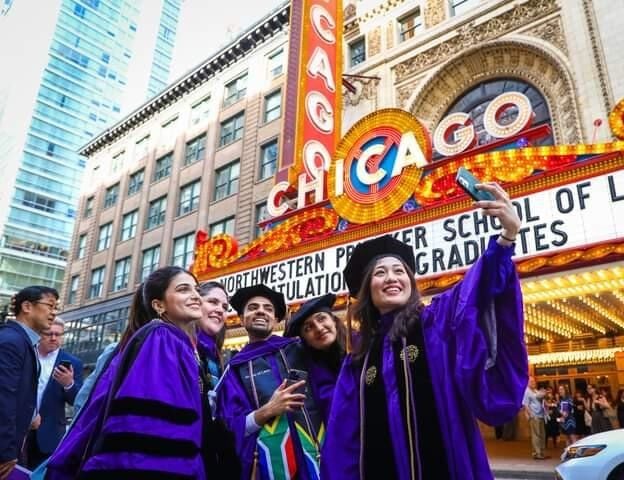
The Journey
My name is Tatiana Torres Montenegro, and I am from Concepción, Chile. I earned my law degree from the University of Concepción and have spent the last ten years working in public service. I began my career at the Ministry of Housing and Urban Development and later joined the Ministry of Women and Gender Equality.
Throughout my professional experience, I became increasingly interested in human rights and their role in shaping public policies. Before pursuing graduate studies, I had already completed several diploma programs on related topics, which motivated me to deepen my knowledge and gain a more comprehensive understanding of international human rights standards.
I decided to pursue an LL.M. in International Human Rights Law at Northwestern University because I wanted to strengthen my ability to contribute to public policies that are aligned with human rights principles. I believe that working in government provides a unique opportunity to help drive meaningful change, whether through interpreting existing policies from a human rights perspective or contributing to the development of new policies that better respond to people's needs.
My goal has always been to contribute to a more equitable society and to remain aware of and responsive to situations where human rights may be at risk. Studying human rights at the graduate level gave me valuable tools to advance that work and broadened my perspective through engagement with diverse ideas and experiences from around the world.
Fulbright Scholarship Details
Before receiving the Fulbright scholarship, I had the opportunity to pursue specialized training in human rights through two scholarship programs.
First, I was awarded a scholarship from the National Institute of Human Rights of Chile to complete a diploma program in Human Rights and Public Service at the University of Bío-Bío. The scholarship covered the full cost of the program and provided me with a strong foundation in the application of human rights principles within public institutions.
Later, I received a scholarship from the Organization of American States (OAS), through the Inter-American Commission of Women (CIM), to complete an online diploma program on integrating human rights and gender equality perspectives into public policies, programs, and projects. This scholarship also covered the full cost of the program and further strengthened my interest in promoting human rights-based approaches in government work.
Subsequently, I received a Fulbright scholarship through Fulbright Chile while pursuing an LL.M. in International Human Rights Law at Northwestern University.
The support I received covered my airfare and living expenses during my studies in the United States. One aspect of the Fulbright Program that I found particularly interesting is that funding arrangements vary by country and are administered through local Fulbright commissions and partner organizations. As a result, the type and scope of financial support may differ among scholars. For example, some of my fellow Fulbright students from other countries received funding packages that included additional expenses, while the support provided through Fulbright Chile focused on travel and living costs.
Together, these scholarship opportunities played an important role in my professional development and allowed me to deepen my knowledge of human rights and public policy, which I continue to apply in my work in the Chilean public sector
Educational Background
I earned my law degree from the University of Concepción in Chile, graduating with a final grade of 6.0 on a 7.0 scale. During my studies, I developed a strong interest in public law, social justice, and the role of government institutions in promoting and protecting fundamental rights.
After graduating, I continued to expand my expertise through specialized training in human rights and public policy. I was awarded a scholarship from Chile's National Institute of Human Rights to complete a Diploma in Human Rights and Public Service at the University of Bío-Bío. Later, I received a scholarship from the Organization of American States (OAS), through the Inter-American Commission of Women (CIM), to complete a diploma program on integrating human rights and gender equality into public policies, programs, and projects.
Alongside my professional development, I remained actively engaged in legal research and academic writing. I have authored three articles published in peer-reviewed legal journals, experiences that strengthened my analytical skills and allowed me to contribute to discussions on public law and governance.
My academic training was complemented by more than a decade of experience in the Chilean public sector. I began my career at the Ministry of Housing and Urban Development before joining the Ministry of Women and Gender Equality, where I worked on legal and policy matters aimed at advancing equality and strengthening institutional responses to complex social issues. These roles provided valuable insight into how legal frameworks are translated into public action and reinforced my interest in rights-based policymaking.
Together, these academic and professional experiences provided a strong foundation for graduate study. They inspired me to pursue an LL.M. in International Human Rights at Northwestern University, where I sought to deepen my understanding of international legal frameworks and further develop the skills needed to contribute to more effective and inclusive public institutions.
Did You Take Any Standardized Tests? If So, How Did You Prepare for Them?
Preparing my application required considerable research and planning. I knew I wanted to pursue graduate studies abroad, so I began searching for scholarship opportunities that would allow me to continue specializing in human rights and public policy. During that process, I came across the Fulbright Chile website and started learning more about the program and its opportunities. I later attended an informational session organized by Fulbright, which helped me better understand the application process, eligibility requirements, and the experience of studying in the United States.
As I explored different graduate programs, I focused on institutions that offered strong academic training in international human rights law and that aligned with my professional experience and long-term goals in public service. I relied primarily on university websites, program information sessions, and conversations with former scholarship recipients and professionals who had studied abroad.
As part of the application process, I took the TOEFL exam to demonstrate my English proficiency. Preparing for the test was challenging because I was working full-time while completing the application process. I prepared by practicing all sections of the exam, particularly speaking and listening, and by incorporating English into my daily routine through reading, podcasts, and academic materials. The preparation process not only helped me achieve the required score but also gave me greater confidence in my ability to succeed in a graduate program taught entirely in English.
Looking back, the application process required commitment, organization, and perseverance, but it was also a valuable opportunity to reflect on my professional goals and identify the academic path that best aligned with my interest in advancing human rights through public service.
How Did You Prepare to Apply for the Fulbright Scholarship?
My preparation for the Fulbright application began by carefully reviewing the eligibility requirements and selection criteria. I wanted to understand not only which requirements I already met, but also which aspects of my profile I could strengthen before applying.
One of the areas I focused on was academic and professional development. During this period, I wrote and published my first legal article, which helped demonstrate my interest in research and my ability to contribute to discussions on legal and public policy issues.
I also made sure to highlight the extracurricular and leadership experiences that had shaped my personal and professional growth. For example, I was a member of a soccer team, studied Japanese as a foreign language, and served as a representative of the association of contract-based employees at the Ministry of Housing and Urban Development. These experiences taught me the importance of teamwork, perseverance, leadership, and working collaboratively toward common goals.
In addition, I shared my experience as a volunteer with Fundación Protectora de la Infancia, where I worked with girls who had been placed under state protection due to serious violations of their rights. This experience had a profound impact on me and reinforced my commitment to human rights, public service, and the protection of vulnerable populations.
Throughout the application process, I also researched graduate programs, attended informational sessions organized by Fulbright Chile, and prepared for the TOEFL exam. Most importantly, I spent time reflecting on my professional goals and how graduate studies in International Human Rights Law would strengthen my ability to contribute to public policies that promote and protect human rights.
Looking back, preparing for the scholarship was not only about completing an application. It was a process of identifying my strengths, addressing areas for growth, and demonstrating how my academic, professional, and community experiences aligned with Fulbright's mission of leadership, service, and international exchange.
How is Your Experience at Northwestern University?
My experience at Northwestern University was both academically challenging and personally enriching. Coming from a legal and public policy background in Chile, I was excited to engage with new perspectives on human rights and to learn from professors and classmates with diverse professional and cultural experiences.
One of the aspects I valued most was the opportunity to study alongside students from different countries and backgrounds. Classroom discussions were enriched by the variety of perspectives represented, allowing me to better understand how legal systems and public institutions address similar challenges in different parts of the world. These exchanges encouraged me to think critically about my own assumptions and broadened my understanding of international human rights issues.
Academically, the program was rigorous and intellectually stimulating. The courses challenged me to deepen my understanding of international human rights law and to analyze legal and policy issues from a comparative perspective.
Beyond the classroom, living in the United States allowed me to experience a different culture, build lasting friendships, and become part of a global network of scholars and professionals. As a Fulbright scholar, I also had the opportunity to connect with individuals who shared a commitment to public service, leadership, and international cooperation.
Overall, my experience at Northwestern University strengthened both my professional skills and my personal growth. It provided me with new knowledge, valuable professional connections, and a broader perspective that continues to influence my work in the Chilean public sector and my commitment to advancing human rights through public policy.
What Did You Pursue After the Fulbright Scholarship?
After completing my LL.M. in International Human Rights Law at Northwestern University, I returned to Chile and continued my career in public service. Shortly after my return, I transitioned to a new role at the Ministry of Women and Gender Equality, where I currently work as a legislative advisor.
In this position, I support the drafting of bills and their legislative process before the National Congress. This role allows me to contribute directly to the development of public policies and the legal frameworks that support them. It also provides an opportunity to incorporate a human rights perspective into legislative discussions and policy development.
My graduate studies strengthened my understanding of international human rights standards and their practical application in public institutions. The knowledge and skills I gained during the program continue to inform my work, particularly when analyzing legislative proposals and considering their potential impact on different groups within society.
Looking back, the Fulbright experience played an important role in my professional development. It not only expanded my academic knowledge but also reinforced my commitment to public service and to promoting policies that advance human rights, gender equality, and social inclusion in Chile.
What Do You Think Made Your Application Stand Out?
Looking back, I believe my application stood out because it reflected a consistent commitment to public service, education, and human rights over many years. Rather than presenting graduate studies as an isolated goal, I was able to demonstrate how the program fit into a broader professional trajectory and a long-term commitment to contributing to positive social change in Chile.
At the time of my application, I had already accumulated significant experience working in public institutions and had pursued specialized training in human rights, public service, and gender equality. I had also published legal research and demonstrated a sustained interest in strengthening my academic and professional qualifications.
also believe that my personal story contributed to my application. I attended public schools throughout my primary and secondary education, and I was admitted to law school while five months pregnant with my daughter. As a single mother, completing a demanding law degree while raising a child required determination, discipline, and resilience. Graduating with a final grade of 6.0 on a 7.0 scale was not only an academic achievement but also a reflection of my commitment to building a better future for myself and my family despite significant challenges.
Beyond academics and professional experience, I highlighted activities that reflected leadership, community engagement, and personal growth. These included serving as a representative of contract-based employees in my workplace, volunteering with
Fundación Protectora de la Infancia, studying Japanese, and participating in team sports. Together, these experiences helped demonstrate qualities such as perseverance, teamwork, leadership, and a commitment to serving others.
Most importantly, I was able to clearly explain why I wanted to pursue an LL.M. in International Human Rights Law and how I intended to apply that knowledge upon returning to Chile. I had a clear vision of using advanced legal training to strengthen public policies and legal frameworks through a human rights perspective. I believe that this combination of professional experience, academic preparation, personal resilience, and commitment to public service was what made my application distinctive.
Looking Back, Would You Have Done Anything Differently During Your Time in the Program?
If I were going through the process again, I would begin preparing much earlier. Looking back, I would have been more intentional about building a strong academic and professional profile from the moment I graduated from law school, rather than focusing on these elements only when I decided to apply for graduate studies abroad.
For example, I would have pursued research and academic writing opportunities earlier, sought additional professional and leadership experiences, and developed a more structured long-term plan for graduate studies. Although I was ultimately able to build a strong application, starting sooner would have made the process less demanding and given me more time to strengthen different aspects of my profile.
would also have started preparing for the TOEFL much earlier. As a non-native English speaker, achieving the required score required significant effort while balancing work and family responsibilities. Earlier preparation would have reduced some of the pressure and allowed me to feel more confident throughout the application process.
That said, the process itself taught me valuable lessons about planning, perseverance, and self-confidence. While there are aspects I would approach differently, I am grateful for the path I followed and for the opportunities that ultimately led me to the Fulbright experience.
What Advice Would You Give Those Looking to Apply for a Similar Scholarship?
My main advice would be to start preparing as early as possible and to think of the application as the result of a long-term process rather than a single event. Scholarships such as Fulbright are not awarded solely based on academic achievements; they also consider professional experience, leadership, community involvement, and a clear sense of purpose.
I would encourage prospective applicants to invest in building a well-rounded profile over time. This can include gaining professional experience, participating in volunteer activities, developing leadership skills, pursuing research opportunities, and engaging in activities that reflect their interests and values. It is also important to prepare for any required standardized tests well in advance, particularly if English is not your first language.
One of the most important lessons I learned is the value of having a clear and specific plan for what you intend to do after completing your studies. It is not enough to say that you want to improve public policies or contribute to social change. Applicants should be able to explain which issues they want to address, why those issues matter, and how the knowledge and skills gained through the program will help them make a concrete contribution. The more specific and realistic the plan, the more convincing the application will be.
I would also advise applicants not to underestimate their own experiences. People often focus on what they believe is missing from their profile, but experiences gained through work, family responsibilities, community engagement, or overcoming personal challenges can be just as valuable as traditional academic achievements. What matters is being able to explain how those experiences have shaped your goals and motivated your desire to pursue further education.
Finally, I would encourage applicants to be authentic. The strongest applications are those that clearly communicate who they are, what they hope to achieve, and how they plan to use the opportunity to contribute to their communities after completing their studies. A compelling application is not only about accomplishments but also about purpose, commitment, and a realistic vision for creating positive impact.
Want to submit your
scholarship journey?
Submit Your Story Here!
More Scholarship Recipients
My name is Shah Hussain, and I am from Khyber Pakhtunkhwa, Pakistan. I completed my Bachelor’s in Psychology at the Univer .... Read more
I am June from the Philippines. I am an educator for Social Sciences and Humanities. I recently earned my Master in Southeas .... Read more
Hi, my name is Abdul Hafeez, and I come from a small town called Nasirabad in Sindh, Pakistan. Currently, I am pursuing a ma .... Read more
Leave A Comment