
A Commonwealth Scholarship Journey: It's Never Too Late to Start An interview with Rupsa Chakraborty, Commonwealth Shared Scholar at LSE
University: London School of Economics and Political Science (LSE), United Kingdom
Degree: MSc in Global Health Policy
Previous Education: Bachelor’s and Master’s Degrees in Journalism and Mass Communication – India
Scholarship: Commonwealth Shared Scholarship (CSS) – Fully Funded (Tuition, Visa Fee, Monthly Stipend, Health Insurance)
Other Offered Scholarships: Chevening South Asia Journalism Programme Fellowship (University of Westminster, UK); Eligible for Joint Japan/World Bank Graduate Scholarship Programme (Not Accepted)
Social Media
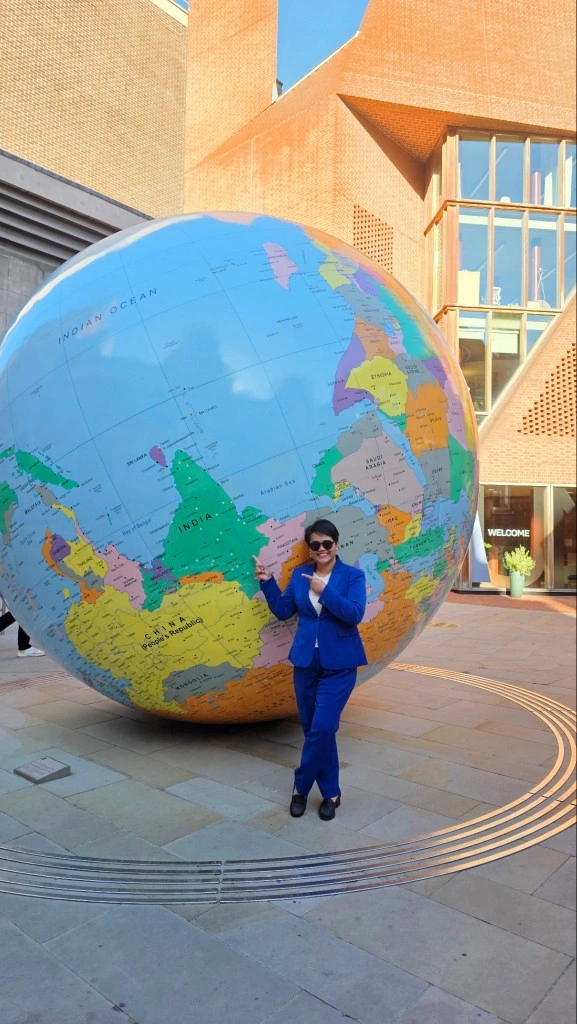
The Journey
I'm Rupsa Chakraborty, a health journalist from India with 14 years of experience in investigative reporting. My bylines have been published in national daily newspapers, including The Indian Express, Hindustan Times, Mid-Day, The Times of India, and international publications like the British Medical Journal and Global Health Now at Johns Hopkins.
I'm currently pursuing an MSc in Global Health Policy at the London School of Economics and Political Science (LSE) through the Commonwealth Shared Scholarship (CSS). I'm also a 2024 Chevening Fellow; one of the few Indians who hold both a Chevening Fellowship and a Commonwealth Scholarship. Let me clarify that, as a mid-career professional in my 30s, my advice is tailored for those with work experience rather than recent graduates.
What Made You Decide to Pursue Further Education Now?
Honestly, it wasn't part of my plan. Between family responsibilities and money constraints, going back to school felt impossible. After my marriage in 2023, my husband kept telling me that age is just a number and I should follow my passion. That's when I started seriously considering it in 2024.
But the real push came from my work. I spent years reporting from the ground, seeing policies fail, and watching patients suffer because of implementation gaps. In India, even basic health data has massive discrepancies. I realised I wanted to do more than just write about these problems. I wanted to understand policy formulation deeply enough to actually contribute to solutions, either as a researcher or a public health practitioner.
To my surprise, in my first year of applications, I got three offers from top-tier colleges in London along with the CSS. I was living with imposter syndrome at that point.
Stepping back into academia in your 30s as a woman from Asia isn't easy. Social expectations and obligations are real barriers. I'm sharing my story because I want other women to know: it's never too late to study, to change direction, or to chase a dream that feels overdue.
Tell Us About the Commonwealth Shared Scholarship.
The Commonwealth Shared Scholarship is jointly funded by the UK's Foreign, Commonwealth & Development Office (FCDO) and individual universities. It's different from the regular Commonwealth Master's Scholarship because it's only available for specific courses at select UK universities. Each university bids for particular programmes, and only approved ones receive funding.
The scholarship covers full tuition, a VISA fee, a monthly stipend, and health insurance. For LSE in 2025-26, there were only four scholarship places across eight eligible courses. I was selected for one of them out of thousands of applicants globally.
Were You Offered Other Scholarships?
As a 2024 Chevening Fellow, I wasn't eligible to apply for the Chevening Scholarship. I was also excluded from several others, like the Inlaks Shivdasani Foundation Scholarship and Aga Khan Foundation Scholarship, due to age restrictions. Many scholarships have upper age limits that exclude mid-career professionals, which is frustrating.
I was eligible for the Joint Japan/World Bank Graduate Scholarship Programme, but I chose CSS instead because it aligned better with my goals.
Tell Us About Your Chevening Fellowship Journey.
In 2024, I was selected for the Chevening South Asia Journalism Programme Fellowship at the University of Westminster. The eight-week programme focused on media accountability in democratic processes, misinformation challenges, press independence, and digital transformation in ethical journalism and audience engagement.
For my fellowship project, I reported on mental health in the geriatric population, a comparative study between the UK and India. I analysed data from the NHS and surveys in India to understand how both healthcare systems address elderly mental health challenges.
What About Your Educational Background? How Did It Prepare You?
I have an undergraduate and a postgraduate degree in journalism and mass communication. But honestly, more than my degrees, it was my field experience that mattered for this scholarship.
I worked as an investigative health reporter across seven national newsrooms in India, specialising in data journalism. That meant years of reading medical journals, understanding policy gaps, learning about implementation challenges, analysing epidemiological data, covering everything from COVID-19 frontlines to rural malnutrition to mental health system failures.
The CSS also looks for mid-career professionals with proven track records. They want people who'll take their learning back to create real-world change. My selection was based on professional achievement, not just academic grades.
How Did You Find Information About Scholarships and Prepare Your Applications?
I spent August and September 2024 researching university websites, scholarship databases, past scholars, and online forums. Everything is available online; you just need to be patient and thorough in your search. Convert the information into Excel sheets categorically for better data management; it can become overwhelming quickly. For Commonwealth Shared, each university lists eligible courses on their website. You apply to the university first, then indicate you're applying for the scholarship.
I didn't take standardised tests like the GRE or GMAT because my programme didn't require them. I did take IELTS, which I prepared for over a month using online resources, practice tests, and YouTube videos. Honestly, YouTube is one of the best free resources out there.
The key is starting early. I began researching in early 2024 for a September 2024 intake. Applications typically open around October.
What Do You Think Made Your Application Stand Out?
Frankly, I followed my curiosity; I didn't have some master plan.
Every fellowship I pursued came from actual gaps in my reporting. The Chevening fellowship helped me understand geriatric mental health and how the NHS works. The Dart Centre fellowship at Columbia focused on early childhood health. The Rare Disease fellowship taught me about diagnostic challenges. MSF let me investigate health disparities. WHO-SRFI focused on rural mental health.
I did these fellowships not out of strategy, but to learn, which gradually helped in my applications. They showed my genuine interest in learning and using knowledge in reporting and policy implementation.
Here's my advice: Don't manufacture a narrative. Selection committees can tell when you're forcing a story. What they actually want is genuine intellectual curiosity and proof that you act on it.
Choose references wisely: This is huge and often overlooked. Two of my references were former editors who didn't just say I'm good at my job; they explained why my work mattered, how my investigations sparked policy debates, and how I exposed systemic failures. My third reference was my college Head of Department, who could frame my journey differently from my editors, showing how my academic roots led to professional recognition, including winning India's highest journalism award.
Talk to your references. Give them specific examples. Ask them to highlight what makes you different, not just competent. Don't settle for generic recommendation letters.
Show impact, not just activity: It's not about how much you've done but what changed because of it.
My investigation into tribal health neglect won national recognition because it exposed systemic failures and led to actual inquiries. My work on undocumented maternal deaths in Mumbai slums won the UN Population Fund's Laadli Award and led to investigations. Other stories sparked tangible change too: my reporting contributed to the formulation of Maharashtra's first climate health action plan, my surrogacy investigation influenced state-level policy reforms, my reporting on rare disease patients dying without medicines led the National Human Rights Commission to take cognisance, and my COVID-19 coverage resulted in a committee being formed to help COVID widows.
Frame everything in terms of impact: What gaps did you fill? What conversations did you start? What systems did you challenge? Scholarship committees fund people who create change, not just collect credentials.
Be honest about your non-linear journey: Pretending doesn't help anyone.
I didn't claim I'd been planning this since college. I was upfront about family obligations, financial constraints, and coming to this later in life. Mid-career applicants have something that fresh graduates don't: lived experience, professional credibility, and clarity about why we're doing this.
Your "late start" isn't a weakness; it's proof you're doing this for the right reasons, not because you're following some template. Own it.
Go beyond requirements: During my Chevening fellowship, I pursued an opportunity on my own to explore a medical journal's newsroom and ended up getting an article published. My intention was simply to learn, but this apparently helped my Commonwealth application. It showed I didn't just complete fellowship requirements but took initiative independently.
Scholarships like Commonwealth want people who'll actually apply what they learn, not just collect certificates.
What Would You Have Done Differently?
Nothing. It wasn't perfect, but it wasn't supposed to be. Those imperfections make you who you are and the right candidate for your path.
What’s Your Advice for Others, Especially Mid-Career Professionals and Women?
First, be genuine. Tell your story. They don't just want your grades; they want to know you. We have stories worth sharing. Don't hesitate. I started my SOP with a personal touch that worked for me. Connect the dots; what motivated you to take the current work, what you learnt and how you would use it in the future for LMICs after the course, and how the course would help. Give examples, real-life examples.
Second, create a dedicated routine for your applications. I had a hectic job as a journalist working around the clock, so I carved out two hours daily after my 10-hour workday. I would switch off my phone completely during those two hours. It's not easy, but consistency matters more than long marathon sessions. Even with demanding jobs, disciplined daily work adds up.
Third, when writing your statement of purpose, research the faculty. Know which professors interest you, what modules align with your goals, and why. For Commonwealth Shared, you select three Sustainable Development Goals. Mine were health, climate, and equity. I mentioned specific professors and courses that aligned with these to show I wasn't faking interest just for the scholarship. Design your future work plan, create a brain map on paper, outline your short-term aims and long-term goals. This clarity will strengthen your application and help you articulate your vision convincingly.
Fourth, if you're a woman or mid-career professional thinking "am I too old?" or "is this the right time?"; stop. The right time is when you decide it is. Age restrictions on some scholarships are frustrating, but don't let that discourage you. Commonwealth Shared specifically values mid-career professionals.
Fifth, your experience matters more than you think. Those years in the field, those professional achievements, that track record of impact; that's your strength. Use it.
What Advice Would You Give to Those Applying for Scholarships?
- Start your research early (by April): Identify colleges and programmes that align with your vision and interests. Research thoroughly; don't just pick prestigious names, pick programmes that genuinely match your goals.
- Create a tracking system: Make an Excel sheet with all your target colleges, listing deadlines, requirements, modules, and application components. Create a separate sheet for scholarships with their deadlines, eligibility criteria, and specific essay questions. This helps you stay organised and spot overlaps.
- Begin writing essays by June: Start drafting your statements of purpose early. Ask friends, past scholars, or mentors to review them. Rewrite multiple times to improve clarity and impact. Always focus on answering the core question: "Why should they select me?" Address what's being asked in the application, not just what you want to say.
- Apply to colleges by October: Most scholarships have early deadlines, so submit your college applications by October. Starting early is the biggest secret to success; it gives you time to refine applications and reduces last-minute stress.
- Choose references who genuinely know you: Select trustworthy references who understand your work and impact. Don't chase famous names if they barely know you. Titles don't matter; what they write does. Give them specific examples of your achievements and impact to help them craft strong, detailed recommendations.
- Be transparent and authentic: Don't lie or exaggerate. Dishonesty might get you somewhere initially, but not beyond that. Selection committees can sense inauthenticity, and it will eventually catch up with you.
- Show impact and future goals, not just achievements: Focus on demonstrating real change from your work and clear future goals. Selection committees want to see what changed because of you and what you'll do with their investment. Impact matters more than a long list of accomplishments.
What’s Your Best Advice for Overcoming Imposter Syndrome When Applying for Scholarships?
The biggest hurdle isn't your application is your self-doubt. Trust me, I had plenty of it until my husband became my unofficial life coach, repeatedly telling me to stop overthinking and just apply. That voice saying "I'm not enough" stops so many eligible, qualified people from even applying. Here's the truth: there's no harm in trying. The worst that happens? You don't get in. But what if you do? What if you become the first person from your family to study at a top-tier institution? What if that "impossible" dream becomes reality? You have nothing to lose by applying. In places where you hear rejections, write to them asking for feedback and work on it.
Here's a practical strategy: divide your applications into three tiers. Apply to top-tier colleges (1 application), second-tier colleges (2 applications), and third-tier colleges (1 application). This approach balances ambition with realism and increases your chances without overwhelming yourself. Don't let imposter syndrome rob you of opportunities before you even try. The selection committee will decide if you're qualified; don't make that decision for them.
All the best!
Want to submit your
scholarship journey?
Submit Your Story Here!
More Scholarship Recipients
My name is Mona Perlingeiro, and I am from São Paulo, Brazil. São Paulo is the Brazilian city with the largest number of m .... Read more
I am Ludmille Lyvert, and I am from Haiti. I hold a master’s degree in Women’s Studies, and I am currently a Ph.D. stude .... Read more
My name is Leisha Ravindra Babu, and I am from India. I am currently a Global Korea Scholarship (GKS) scholar completing my .... Read more
Leave A Comment