
How I Secured a Fully Funded Master's at Emory University, United States Through the Fulbright Foreign Student Program
University: Emory University
Degree: Master of Public Health in Global Health with Certificate in Infectious Disease Epidemiology
Previous Education: Doctor of Pharmacy
Scholarship: Fulbright Foreign Student Program Scholarship – Full Funding (Full tuition, monthly stipend)
Social Media
LinkedIn: linkedin.com/in/omar-souabni-0a261a286/
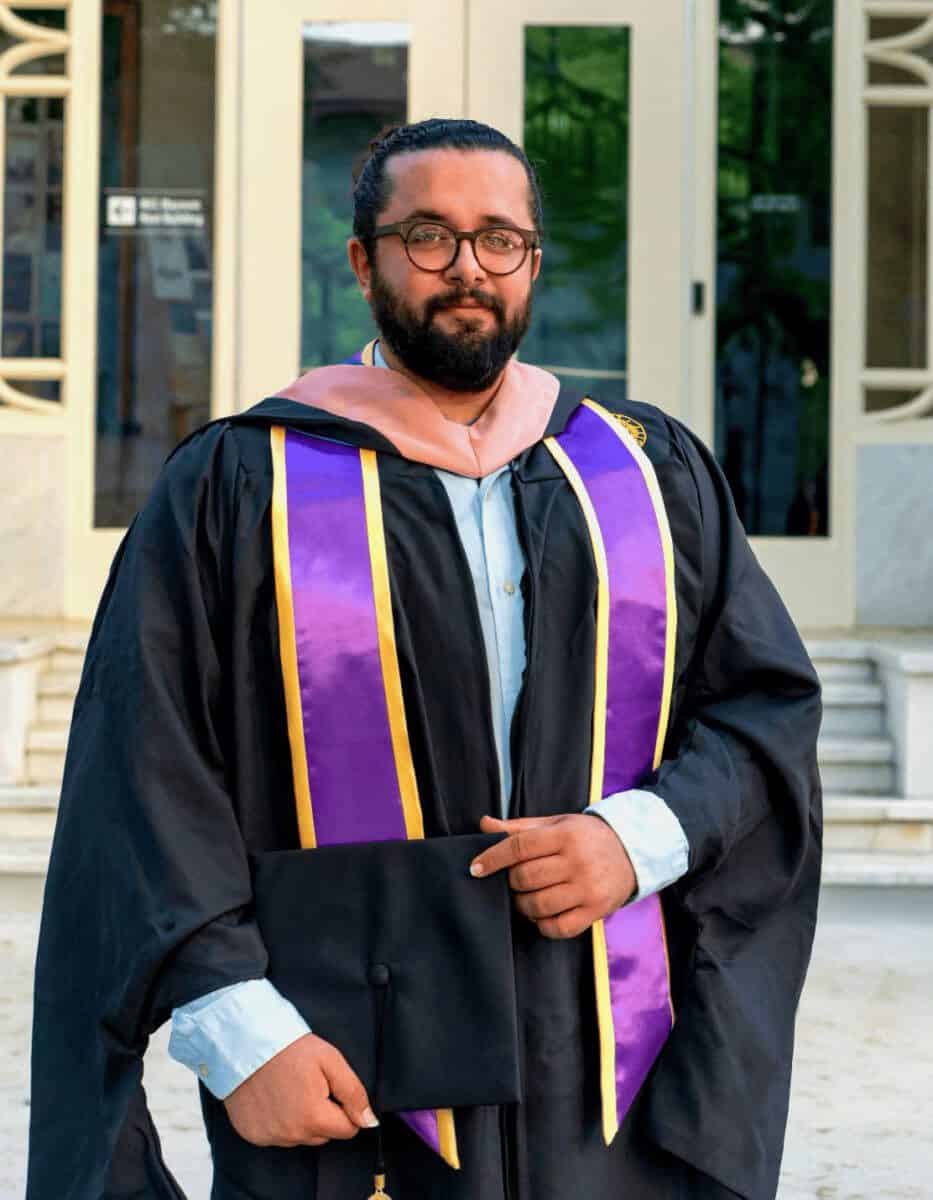
The Journey
My name is Omar Souabni, and I am originally from Tunisia. I hold a Doctor of Pharmacy degree and a Master of Public Health from the Rollins School of Public Health at Emory University, complemented by a Certificate in Infectious Disease Epidemiology. After completing my PharmD, I was determined to specialize further in public health. As pharmacists, our work is centered on healthcare, but it also touches on multiple dimensions of patient wellbeing and safety. While treatment is essential, its success depends on far more than clinical efficacy; it requires consideration of social determinants of health, patient behaviors and attitudes, and broader systemic factors that shape outcomes.
My PharmD thesis focused on antimicrobial resistance, and through this research I developed a deeper interest in how public health strategies, programs, and policies can be leveraged to combat such global threats. This experience revealed the importance of moving beyond the individual patient level to address population-wide challenges, and it inspired me to pursue advanced training in public health. For me, earning an MPH was the natural next step, allowing me to bridge my clinical background with broader epidemiological approaches and contribute to building stronger, more resilient health systems.
Fulbright Scholarship Details
I was awarded the Fulbright Foreign Student Program scholarship. This scholarship supported my graduate studies at the Rollins School of Public Health, Emory University, where I pursued a Master of Public Health in the Global Health department with a certificate in infectious disease epidemiology. The award covered full tuition and provided a monthly stipend, which enabled me to sustain my studies and living expenses.
Educational Background
Before pursuing my Master of Public Health, I studied pharmacy and earned my PharmD. What I value most about this degree is its diversity. It provided me with a strong foundation in the sciences, including chemistry and biology, while also exposing me to clinical pharmacy, health management, and public health subjects such as epidemiology, vaccination, and surveillance of water- and foodborne diseases. Among these, microbiology quickly became my favorite area of study. I was deeply interested in understanding how microorganisms cause disease and how they can be treated, which motivated me to seek opportunities beyond the classroom.
I volunteered with student organizations focused on public health events, participated in trainings and workshops, and joined a student exchange program at the University of Granada in Spain. There, I contributed to a parasitology research project and had the chance to take part in the Annual European Researchers’ Night, a continent-wide science outreach event that brings research closer to the public through interactive demonstrations, exhibitions, and discussions. This experience was pivotal; it sparked my passion for research and showed me the importance of engaging communities in science.
My interest in microbiology and infectious diseases continued to grow. In my final year of pharmacy school, I deliberately chose internships in the infectious disease and microbiology departments of one of Tunisia’s largest hospitals. During this time, I conducted my PharmD thesis research on antimicrobial resistance, an experience that solidified my commitment to pursuing a career in public health and infectious disease research.
How Did You Prepare to Apply for the Fulbright Foreign Student Program Scholarship?
The Fulbright Program opens applications every year, and I had known about it since my student days. However, it was only after gaining a few years of professional experience that I felt it was the right time to apply. I began by exploring the many resources available online, reading about the program’s history, its application process, and the experiences of past scholars. I watched videos, read articles, and even reached out to alumni to learn from their journeys. Balancing this preparation with full-time work was challenging, but I used every spare moment to study and prepare.
The application itself was extensive, requiring personal statements, essays, and letters of recommendation. One of the most difficult parts was deciding which degree path to pursue. Public health is a broad field, encompassing behavioral health, health policy and management, epidemiology, data science, and program design. I carefully explored each area to identify where my interests and career goals aligned, which ultimately guided me toward the right institution and department. I believe the key to success in such applications lies not only in selfconfidence but also in a clear sense of mission, vision, and future goals, convictions that allow you to inspire others with your aspirations.
After submitting my application, I waited several months before being invited to interview. For selected candidates, Fulbright requires the TOEFL and GRE exams, both of which are financed by the program. Preparing for these exams while working full-time required discipline. I relied on preparation books, online simulations, and mobile apps to strengthen my vocabulary and practice test strategies during breaks and evenings.
Once the exams were completed, the next step was selecting universities. Fulbright applicants can only choose four institutions, so the decision must be strategic. I reviewed multiple MPH programs, but Emory University stood out. Ranked among the top public health schools in the United States, its Global Health department offered exactly what I was seeking: courses in program management and planning, monitoring and evaluation, epidemiology, and both quantitative and qualitative research methods. Despite the competitive acceptance rate, I applied and was fortunate to be admitted.
How is Your Experience at Emory University?
My time at the Rollins School of Public Health (RSPH) was truly remarkable. Located in Atlanta, Georgia, RSPH offered not only an outstanding academic program but also the chance to immerse myself in a vibrant, cosmopolitan city. The diversity I encountered was exceptional. I met peers from all over the world as well as local students and residents who were welcoming and supportive, helping me navigate both the academic and cultural aspects of the experience.
Beyond the classroom, I had countless opportunities to engage on a human and cultural level. I joined student organizations, participated in numerous events, and built friendships that enriched my journey. These experiences allowed me to learn more about the United States, explore different cities, and broaden my perspective. Living and studying in Atlanta was not just about academic growth; it was also about cultural exchange, personal development, and building connections that continue to shape my outlook today.
How Does Emory University Support International Students?
Emory University hosts a large community of international students and provides strong support through the International Students and Scholars Services (ISSS) as well as dedicated advisors within the Rollins School of Public Health. Thanks to these resources, I always felt well guided and informed, whether it was selecting classes each semester, navigating university services, or accessing professional opportunities through career fairs and webinars. The support extended beyond academics to everyday life, helping me discover the city, manage paperwork, and adapt to public transportation. Overall, my experience was enriching both academically and personally, and I felt truly surrounded by a welcoming and supportive environment.
What Did You Pursue After the Fulbright Foreign Student Program Scholarship?
After completing my MPH, I returned to Tunisia, where I had the opportunity to join the World Bank as a public health consultant. In this role, I played a central part in strengthening pandemic prevention and preparedness through strategic planning, stakeholder coordination, and monitoring and evaluation of projects. My work has focused on conducting assessments to evaluate the needs of public laboratories, with the goal of optimizing the diagnostic network and ensuring equitable access to reliable testing. In addition, I have contributed to building interoperable surveillance systems that integrate human, animal, and environmental health data to enable early detection, risk assessment, and informed decision-making for epidemic-prone diseases.
What Do You Think Made Your Application Stand Out?
I believe what made my application stand out was the clarity of my vision and the ability to communicate it in a way that anyone could understand, regardless of their background. It is not enough to simply have strong credentials; you must be able to articulate your future goals with conviction and simplicity, allowing others to see your dedication and imagine the impact of your work. In the end, applications are about telling a story, one that conveys not only your achievements but also your mission, your passion, and your commitment to making a difference. Success does not necessarily come from having the “best” story, but from presenting it in a way that convinces others of your vision and inspires them to believe in your potential. My application reflected both my professional journey and my personal drive, and I think that combination of authenticity, clarity, and purpose is what truly set it apart.
What Would You Have Done Differently if You Were Going Through the Process Again?
If I were to go through the application process again, I would approach it with less stress and more confidence in my preparation. At the time, I often worried about every detail, but looking back, I realize that the most important part is staying focused on your goals and presenting your story clearly. The process is demanding, but it is also an opportunity to reflect on your vision and communicate it with authenticity. I would remind myself to trust the journey, pace my efforts, and enjoy the learning experience rather than letting anxiety take over.
What Advice Would You Give Those Looking to Apply for a Similar Scholarship?
My main advice for anyone applying to a scholarship like Fulbright is to accept failure as part of the journey and keep going. The process is long and often stressful, but it should be seen as a learning experience. Take your time, build your vision, and know exactly what you want to achieve, because clarity of purpose is what will carry you through.
Before applying to Fulbright, I explored multiple opportunities and even applied to the Chevening Scholarship first. I was rejected that year, but instead of giving up, I used the experience to prepare better. The following year, I applied again, this time to both Chevening and Fulbright. I was shortlisted for Chevening and ultimately accepted for Fulbright. It wasn’t because I suddenly “knew how to do it,” but because I had learned from my mistakes, practiced, and refined my approach.
Scholarship applications are not about perfection; they are about persistence, growth, and resilience. You may fail once, twice, or more, but each attempt teaches you something valuable. If you keep learning and improving, success will eventually follow. The outcome is worth the effort, because beyond funding your studies, these programs open doors to incredible opportunities and experiences that can transform your career and your life.
Want to submit your
scholarship journey?
Submit Your Story Here!
More Scholarship Recipients
My name is Shah Hussain, and I am from Khyber Pakhtunkhwa, Pakistan. I completed my Bachelor’s in Psychology at the Univer .... Read more
I am June from the Philippines. I am an educator for Social Sciences and Humanities. I recently earned my Master in Southeas .... Read more
Hi, my name is Abdul Hafeez, and I come from a small town called Nasirabad in Sindh, Pakistan. Currently, I am pursuing a ma .... Read more
Leave A Comment