
Erasmus Mundus Scholar, M. Zain Khalid from Pakistan, Shares His Journey of Pursuing a Master’s in Advanced Methods in Particle Physics (IMAPP) Across Europe
University: TU Dortmund (Germany); University of Bologna (Italy); University of Clermont Auvergne (France)
Degree: MSc in Advanced Methods in Particle Physics
Previous Education: Bachelor of Science in Physics – The Islamia University of Bahawalpur, Pakistan (CGPA 3.85/4.00)
Scholarship: Erasmus Mundus Joint Master’s Scholarship – Fully Funded (tuition fee waiver, €1,400 monthly stipend for 24 months, health insurance, travel and relocation allowances)
Social Media
LinkedIn: linkedin.com/in/zain-khalid-5136641a6/
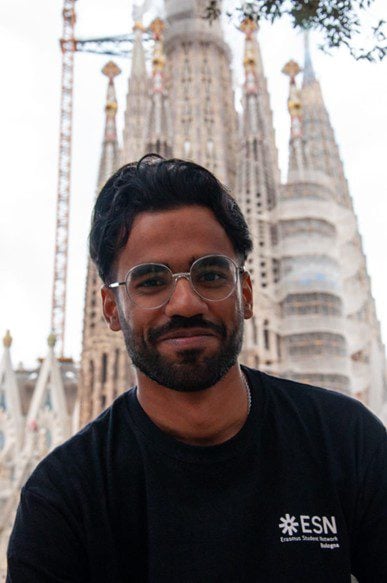
The Journey
My name is M. Zain Khalid, and I am from Pakistan. I completed my Bachelor’s degree in Physics at the Islamia University of Bahawalpur. With a strong interest in combining physics with computer science, I chose to pursue the Erasmus Mundus Joint Master’s program in Advanced Methods in Particle Physics (IMAPP).
The program’s strong focus on computational methods, data analysis, and programming, alongside advanced physics, aligned perfectly with my academic goals. Studying across different European countries has also allowed me to travel extensively, experience diverse cultures, and collaborate with people from all over the world. These travel and international experiences have broadened my perspective, strengthened my adaptability, and made the scholarship a truly transformative journey both academically and personally.
Erasmus Mundus Scholarship Details
The Erasmus Mundus Joint Master’s Scholarship is funded by the European Union. Upon selection, scholars are granted a full tuition fee waiver at all consortium universities participating in the program. In addition, the scholarship provides comprehensive health insurance coverage and a monthly living allowance of €1,400 for a duration of 24 months.
Depending on the scholar’s country of origin and mobility requirements, the scholarship may also include travel and relocation allowances to support international mobility throughout the program.
Educational Background
I completed my Bachelor of Science in Physics from the Islamia University of Bahawalpur, Pakistan, graduating with a CGPA of 3.85/4.00. My undergraduate studies provided me with a rigorous foundation in core areas of physics, including classical mechanics, electromagnetism, quantum mechanics, statistical physics, and mathematical methods. This strong theoretical training sharpened my analytical thinking and enabled me to approach complex scientific problems with precision and structure.
In parallel with theoretical coursework, I developed a growing interest in the computational and data-driven aspects of physics. Through programming-based assignments and independent learning, I gained experience in numerical methods, scientific computing, and data analysis, which highlighted the increasingly important role of computer science in modern physics research. This interdisciplinary exposure allowed me to see physics not only as a theoretical discipline but also as a field deeply connected to computation, simulation, and large-scale data analysis.
My academic background, combined with strong quantitative skills and a consistent academic record, prepared me to successfully apply for advanced, internationally competitive programs such as the Erasmus Mundus Joint Master’s in Advanced Methods in Particle Physics (IMAPP). The program’s emphasis on combining physics with advanced computational techniques aligned naturally with my prior training and academic aspirations, making it a logical and well-prepared next step in my educational journey.
How Did You Prepare to Apply to Institutions?
In preparation for applying to international institutions, I placed strong emphasis on developing a well-rounded profile beyond academics. During my undergraduate studies, I founded the High Energy Physics (HEP) Society at my university, an initiative aimed at creating a collaborative platform for students interested in advanced physics. Through this role, I organized academic discussions, peer-learning sessions, and outreach activities, which strengthened my leadership, communication, and organizational skills.
Alongside this, I actively pursued leadership roles in student and academic communities, both at the university level and within international student networks and societies. Being part of these diverse communities exposed me to multicultural teamwork, cross-disciplinary collaboration, and global perspectives, an experience that closely mirrors the international environment of programs such as Erasmus Mundus.
To further complement my formal education, I completed multiple online courses from platforms such as Coursera in areas including programming, data analysis, and emerging interdisciplinary fields. These courses allowed me to broaden my skill set, demonstrate intellectual curiosity, and show a commitment to continuous learning beyond the classroom.
Collectively, these extracurricular and leadership experiences played a crucial role in preparing me for applications to competitive international institutions, as they demonstrated not only academic readiness but also initiative, adaptability, and the ability to thrive in global and interdisciplinary academic settings.
Talk About How You Find Your Information, as Well as Standardized Test Scores? How Did You Prepare for Those Exams?
I relied on a combination of official university websites, scholarship portals, alumni experiences, and academic communities to gather accurate and up-to-date information about international programs and application requirements. Engaging with current students and alumni through online forums and professional networks provided valuable insights into program structures, expectations, and successful application strategies. This approach allowed me to make informed decisions and tailor my preparation effectively.
For standardized language proficiency requirements, I prepared specifically for the IELTS examination to demonstrate my academic English proficiency. My preparation strategy focused on developing strong reading, writing, listening, and speaking skills through consistent practice, mock tests, and targeted feedback. I used official preparation materials and structured study schedules to identify and improve weaker areas while maintaining overall balance across all components.
Rather than approaching standardized tests as isolated hurdles, I treated them as an opportunity to strengthen essential skills required for academic success in an international environment. This disciplined and methodical preparation helped me meet the language and admission requirements confidently and contributed to my overall readiness for graduate-level study abroad.
How Did You Prepare to Apply for the Scholarship?
Preparing to apply for the Erasmus Mundus scholarship involved a deliberate and strategic approach. I dedicated time to planning my application carefully, studying not only program requirements but also the psychology behind successful applications to understand what selection committees value. I strengthened my profile by working closely with professors on research projects and actively participating in extracurricular initiatives, including founding the High Energy Physics Society, joining the Physics Student Club, and engaging with the Social Media Society and international student communities. These experiences enhanced my skills, broadened my perspective, and contributed to extraordinary recommendation letters that reflected both my academic potential and leadership qualities. By combining strategic planning, mentorship, and meaningful engagement, I was able to submit a competitive and compelling application.
What Do You Think Made Your Application Stand Out?
I believe my application stood out because it clearly aligned my academic background, research experience, and international motivation with the core values of the Erasmus Mundus program. I went beyond grades to highlight my hands-on research experience, including my project with CERN, and explained how these experiences prepared me for a rigorous, multicultural academic environment.
I also presented a coherent narrative that connected my academic journey, my interest in studying across different European institutions, and my long-term goals. My leadership experience as Joint Secretary-1 of the IUB Social Media Society demonstrated my ability to engage in diverse communities, communicate effectively, and contribute actively beyond academics. Overall, I focused on showing not only my academic potential, but also my readiness to benefit from, and contribute to, the international and collaborative spirit of Erasmus Mundus.
I believe what made my application stand out was clarity and authenticity. I didn’t try to be perfect or fit into a predefined “ideal candidate” box. Instead, I focused on clearly communicating who I am, what I’ve done, and why this specific program made sense for my journey.
My academic background, international exposure, and extracurricular involvement were all aligned with the program’s objectives. Rather than listing achievements, I connected them into a coherent story that showed growth, curiosity, and purpose. I made sure every part of my application answered one implicit question: Why me, and why this program, right now?
Most importantly, I was honest. I didn’t exaggerate, and I didn’t chase trends. That authenticity helped the reviewers see a real person behind the application.
What Would You Have Done Differently if You Were Going Through the Process Again?
Honestly, I would have done most things the same, but I would have done them more efficiently. With experience, I now see where I could have optimized my time, reduced overthinking, and achieved the same or better results with less effort.
I would also spend more time on self-reflection earlier in the process. Understanding my motivations, strengths, and long-term goals sooner would have made the writing phase smoother and more intentional. Instead of revising content repeatedly, I would refine my narrative upfront and let everything else flow from that clarity.
In short: same strategy, better execution.
What Advice Would You Give to Those Looking to Apply for a Similar Scholarship?
My biggest advice is simple: do not chase, attract. Don’t try to mold yourself into what you think the committee wants. Instead, focus on being genuinely relevant to the program. Relevance always beats perfection.
Write your own story. Scholarship applications are not just about grades or achievements; they are about storytelling. How did your experiences shape you? Why does this opportunity matter to you? Where does it fit in your bigger picture?
Be intentional, be honest, and be yourself. When your story is clear and authentic, the right opportunities naturally align with you.
Good luck! You’ve got this.
Want to submit your
scholarship journey?
Submit Your Story Here!
More Scholarship Recipients
My name is Hajiyev Sarkhan, and I am from Shemkir, Azerbaijan. My academic journey has been shaped by a strong belief that e .... Read more
My name is Nainsi Chauhan, and I am from Mumbai, India. I was born into an economically weak family and raised in an orthodo .... Read more
My name is Swaleha J. Khowaja, and I am from Karachi, Pakistan. I am currently pursuing the MSc in Global Mental Health, a j .... Read more
Leave A Comment