
How I Secured a Fully Funded PhD at KU Leuven, Belgium Through the NANAQUA Marie Skłodowska-Curie Actions Doctoral Network
University: KU Leuven
Degree: PhD in Engineering Technology
Previous Education: Undergraduate degree in Biotechnology Engineering, Universidad Andrés Bello; Master’s degree in Nanoscience and Nanotechnology, Universidad de Barcelona
Scholarship: Marie Skłodowska-Curie Actions Doctoral Network (MSCA-DN) Fellowship / NANAQUA Project – Full Funding (Salary, mobility allowance, and additional benefits depending on personal circumstances)
Social Media
LinkedIn: linkedin.com/in/lucas-argandona/
The Journey
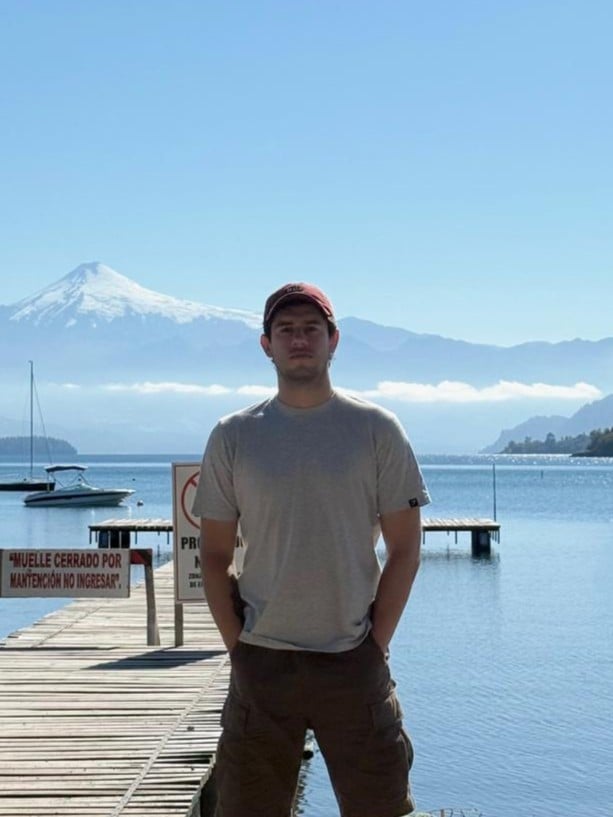
My name is Lucas Argandoña, and I am from Chile. My background is in biotechnology, with a focus on applied research, biomaterials, environmental biotechnology, and technologies with practical impact.
I chose to continue in this field because I have always been interested in the intersection of biology, chemistry, and engineering, especially when science is used to solve concrete problems. Through my previous research experience, I became particularly motivated by projects that translate knowledge into useful applications, from biomedical materials to sustainable water treatment.
I am currently pursuing a doctoral project within the NANAQUA Marie Skłodowska-Curie Doctoral Network. My research focuses on nanotechnology-enabled solutions for water treatment and the biodegradation of micropollutants, combining fundamental science with applied environmental challenges.
Marie Skłodowska-Curie Actions Doctoral Network Details
I received a Marie Skłodowska-Curie Actions Doctoral Network (MSCA-DN) fellowship as part of the NANAQUA project. MSCA-DN programmes are funded by the European Union under the Horizon Europe framework and are designed to train doctoral researchers through international, interdisciplinary, and intersectoral collaboration.
My doctoral position is hosted by PureBlue Water in the Netherlands, where I carry out my research in an industrial setting. KU Leuven in Belgium acts as the academic promoter and provides doctoral supervision. As part of the network, I also participate in training events, workshops, and secondments with partner institutions.
The fellowship supports my PhD through a fully funded doctoral position, including salary, mobility allowance, and additional benefits depending on personal circumstances. Beyond the financial support, the programme offers strong training, career development, and international exposure for researchers interested in both academia and industry.
Were You Offered Any Other Scholarships?
N/A. This was the main fellowship I accepted for my doctoral studies. During the application process, I also explored other international doctoral and research funding opportunities, particularly in Europe, before deciding that the MSCA Doctoral Network was the best fit for my profile and long-term goals.
Educational Background
Before starting my current PhD, I completed an undergraduate degree in Biotechnology Engineering at Universidad Andrés Bello, graduating with a GPA equivalent to approximately 8.6 out of 10, converted from 6.0 out of 7.0. I then completed a Master's degree in Nanoscience and Nanotechnology at Universidad de Barcelona, with a GPA of 8.32 out of 10.
After my Master's, I began doctoral research in polymers and biopolymers. I later changed to the MSCA-DN fellowship because it offered a stronger alignment with my long-term goals in interdisciplinary, international, and industry-connected research.
During my bachelor's studies, I developed a broad foundation in molecular biotechnology, microbiology, bioprocesses, and analytical techniques. I also followed an entrepreneurship-based graduation pathway, where I developed OcreBiotech, a project aimed at translating biotechnological concepts into practical applications. Although I eventually discontinued it, the experience taught me a lot about building a venture, working with external partners, and connecting science with implementation.
In my Master's programme, I specialised in bionanotechnology, working on nanoparticle-based systems evaluated in mouse models of Alzheimer's disease. I also received top academic distinction in drug delivery, which was one of my strongest areas during the programme. This experience strengthened my skills in experimental design, scientific writing, literature analysis, and interdisciplinary collaboration.
I also gained approximately one and a half years of research experience at GBMI (Group of Molecular and Industrial Biotechnology) in Terrasa, Spain, working on polymers and biopolymers as part of my doctoral research. This helped me build a stronger foundation in material science from both academic and applied perspectives. Overall, my background prepared me well for the MSCA position, which requires the ability to integrate biology, material science, environmental applications, and industry-oriented research.
How Did You Prepare to Apply to KU Leuven?
My preparation followed a structured but practical approach. First, I identified the research areas that genuinely interested me. Then I studied how European doctoral programmes and MSCA Doctoral Networks work. Finally, I built an application that clearly connected my background with the specific goals of the project.
For MSCA positions, the selection process is usually not just a single university evaluation. It often involves the host institution, supervisors, and sometimes members of the wider network. Because of that, I tried to understand not only the project itself, but also the expectations of an international and collaborative research environment.
I did not apply randomly. I focused on positions where my experience in biotechnology and applied research could contribute to the project, while also allowing me to grow in new areas. What mattered most was showing a clear scientific fit: not only saying that I was interested, but explaining how my previous work could support the objectives of the PhD.
I spent time refining my CV, preparing my motivation, and practising for interviews. I tried to communicate how I approach problems, how I think through experiments, and how I deal with uncertainty. In research-based applications, grades and technical knowledge matter, but committees also want to see whether you can think critically and develop as a researcher.
To find opportunities, I mainly used Euraxess, applying filters for Marie Skłodowska-Curie Actions positions. I also checked university websites, official project pages, doctoral programme announcements, and LinkedIn. Rather than relying on one source, I combined several channels and then carefully reviewed each call, including the project description, host institution, supervisors, expected skills, and long-term fit.
Did You Take Any Standardized Tests? If So, How Did You Prepare for Them?
I did not need to take standardized tests such as SAT, ACT, GRE, GMAT, TOEFL, or IELTS. For this type of doctoral position, the selection process focused mainly on academic background, research experience, motivation, scientific fit, CV, and interviews. However, being able to communicate clearly in English was essential throughout the process, and as my master studies were in English I had proof of the proficiency.
How is Your Experience at KU Leuven?
My experience so far has been very positive. The project brings together academic research and applied industrial challenges, which is exactly the type of environment I was looking for. Working across a company, a university, and an international doctoral network has allowed me to engage with different perspectives and approaches to research.
At PureBlue Water, I have gained valuable insight into how a company operates, especially in research and development. Beyond academic discussions, I have been able to see how decisions are made, how projects move forward, and how research can become practical products or solutions.
One of the most meaningful aspects of this PhD has been the connection between fundamental research and implementation. The work is scientifically demanding, but it is also aligned with important environmental and technological challenges, which makes the experience both engaging and motivating.
How Do You Rate KU Leuven Academically?
Academically, I would rate the experience very highly. KU Leuven offers a strong research environment, doctoral supervision, training activities, and access to an international academic community. At the same time, being hosted by PureBlue Water gives the project a strong applied dimension. This combination helps me develop as a researcher while also understanding how scientific ideas can be translated into technologies.
How Does KU Leuven Support International Students?
International support has been important throughout the process. Moving between countries involves several administrative steps, but the programme, host institution, and university provide guidance on registration, immigration, employment documents, doctoral enrolment, and other practical aspects of settling in. For international students, this support makes the transition much more manageable.
Are Your Classes Conducted in English?
The doctoral training and research activities are conducted mainly in English. Most courses also offer an English option, which is very helpful in a European doctoral network with researchers from different countries. In my case, as a doctoral candidate of Engineering Technology, I also have flexibility in choosing training activities and ECTS credits, including transferable skills courses.
What Did You Pursue After the Marie Skłodowska-Curie Actions Doctoral Network?
I am currently pursuing the doctoral research supported by the fellowship. After completing my PhD, I would like to continue working in applied research and innovation, either in academia, industry, or at the interface between both. My long-term goal is to contribute to technologies that address environmental and biomedical challenges, particularly in biotechnology, biomaterials, and sustainable water treatment.
Would Potential Students Have Any Problems Not Knowing the Native Language?
Academically, not knowing the native language should not be a major problem, because the research environment and doctoral activities are mainly conducted in English. In the Netherlands, almost everyone speaks English, and in Belgium the situation is similar, especially in academic and professional settings. Still, learning the basics of the local language is useful for daily life, administration, housing, and social integration.
What Do You Think Made Your Application Stand Out?
I think my application stood out because I showed a clear link between my previous research experience and the objectives of the PhD project. I had already worked in interdisciplinary research involving biotechnology, biomaterials, nanostructured systems, and experimental design, which helped me demonstrate that I could adapt to a complex doctoral project.
Another important factor was motivation. I tried to show that I was not only looking for a funded PhD, but that I genuinely understood the project and how it connected with my scientific interests and career goals.
My entrepreneurship experience was also relevant, especially because my position is hosted within a company. It helped me show that I understand not only the scientific side of research, but also how innovation can move towards practical applications. I also believe that independence, critical thinking, and clear communication made a difference.
What Would You Have Done Differently if You Were Going Through the Process Again?
If I were going through the process again, I would start preparing my application materials earlier. A strong CV, motivation letter, and research narrative take time to refine.
I would also keep better track of opportunities, deadlines, required documents, and contact points. International scholarship applications can involve many administrative details, and being organised from the beginning reduces stress.
Finally, I would remind myself not to underestimate my own experience. Many applicants wait until they feel perfectly prepared, but competitive applications are also about presenting your trajectory clearly and confidently.
What Advice Would You Give Those Looking to Apply for a Similar Scholarship?
My main advice is to apply strategically. Do not send generic applications to every opportunity. Instead, choose programmes where your background, skills, and motivation genuinely match the project.
Read the call carefully, understand the research topic, and prepare a motivation letter that explains why you are a good fit. Be specific. Mention the project, the institution, and the skills you can bring.
It is also important to prepare for interviews. Be ready to explain your previous research, but also to discuss challenges, limitations, and what you learned from them. Selection committees are not only looking for perfect results; they are looking for people who can think critically and develop as researchers.
Finally, do not be discouraged by rejection. I applied to many opportunities before receiving this scholarship, and I faced numerous rejections, sometimes without even receiving a response. In some cases, I reached the final interview stage, competing with fewer than 10 or even 5 candidates, and still was not selected. International scholarships are highly competitive, and rejection does not mean you are not capable. It often reflects factors such as fit, timing, or ranking. Keep improving your materials, keep learning, and keep applying.
Want to submit your
scholarship journey?
Submit Your Story Here!
More Scholarship Recipients
My name is Shah Hussain, and I am from Khyber Pakhtunkhwa, Pakistan. I completed my Bachelor’s in Psychology at the Univer .... Read more
I am June from the Philippines. I am an educator for Social Sciences and Humanities. I recently earned my Master in Southeas .... Read more
Hi, my name is Abdul Hafeez, and I come from a small town called Nasirabad in Sindh, Pakistan. Currently, I am pursuing a ma .... Read more
Leave A Comment