
How I Secured a Fully Funded Master of Public Policy as a Costa Rican Student at the University of Virginia, United States Through the Fulbright Program
University: University of Virginia
Degree: Master of Public Policy with a concentration in Leadership and Public Policy
Previous Education: Bachelor’s degree in Public Administration, University of Costa Rica; Licentiate degree in Public Administration, University of Costa Rica; Specialization in Public Budgeting and Finance, University of Costa Rica
Scholarship: Fulbright Program – Comprehensive Support (Airfare, Living Expenses, Full Tuition, Relocation Funding, and Other Benefits; nearly $185,000)
Other Offered Scholarships (if any): Türkiye Scholarships – Full Scholarship (Monthly Stipend, Housing, Turkish Language Courses, Health Insurance, Travel Expenses, and Full Tuition); Batten Family Bicentennial Scholars Fellowship, University of Virginia – $80,000; University of Chicago Harris School of Public Policy Partial Scholarship – $70,000; Heinz College Strategic Partner Scholarship, Carnegie Mellon University – 50% Tuition; University of Texas at Austin Lyndon B. Johnson School of Public Affairs Partial Scholarship
Social Media
LinkedIn: linkedin.com/in/jefferson-rodr%C3%ADguez-n%C3%A1jera/
The Journey
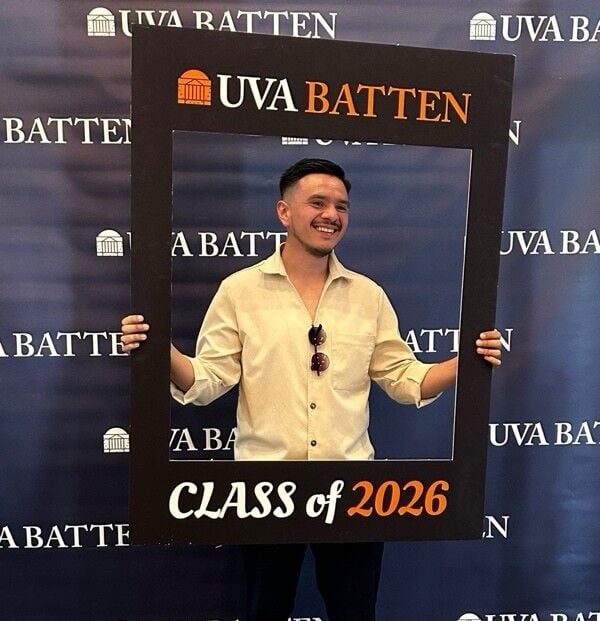
My name is Jefferson Rodríguez Nájera. I was born and raised in a rural area in the mountains of San José, Costa Rica. From a very young age, my desire to help others grew as I watched my parents lead by example. Despite working two jobs to support our family, they always found time to serve our community and local church.
Their example inspired my interest in public affairs and public service. As a result, I pursued a bachelor's degree in Public Administration at the University of Costa Rica, one of the leading universities in Latin America and the top university in Central America. During my undergraduate studies, I received my first scholarship to study public policy for a semester at Universidad de los Andes in Colombia. I saw this as an opportunity to learn how better public policies could be designed and implemented across the region.
After founding the first innovation laboratory at the University of Costa Rica and spending several years working as a consultant, project manager, university instructor, researcher, and public governance professional, I realized that I wanted to continue my education abroad. My goal was to broaden my perspective and deepen my expertise in public policy. This time, I wanted a program that would strengthen both my leadership and research skills.
To achieve that goal, I researched every scholarship opportunity I could find. During my first application cycle, I applied to five scholarship programs without success. In one program, I advanced to the interview stage but mistakenly confused the interview time and missed my opportunity. Even so, I remained determined and continued improving my applications for future cycles.
In my second year of applications, I applied to both the Türkiye Scholarships program and the Fulbright Program. To be honest, I was skeptical about my chances of receiving either scholarship and often doubted whether my profile was competitive enough. To my surprise and great joy, I was accepted into both programs in 2023 to pursue graduate studies in public policy.
Through Türkiye Scholarships, I received a full scholarship to pursue a master's degree in Public Administration at Hacettepe University. The scholarship covered a monthly stipend, housing, Turkish language courses, health insurance, travel expenses, and full tuition at one of Turkey's leading universities.
However, I ultimately declined this offer after being selected for the prestigious Fulbright Program in the United States. As part of the Fulbright process, I applied to four universities and was admitted to all of them with scholarship support:
- University of Virginia, Batten School of Leadership and Public Policy: Batten Family Bicentennial Scholars Fellowship, valued at $80,000.
- University of Chicago, Harris School of Public Policy: partial scholarship of $70,000 for the Master of Public Policy program.
- Carnegie Mellon University, Heinz College of Information Systems and Public Policy: Heinz College Strategic Partner Scholarship covering 50% of tuition for the Master of Science in Public Policy and Management.
- University of Texas at Austin, Lyndon B. Johnson School of Public Affairs: admission with a partial scholarship for the Master of Public Affairs program.
In the end, I chose to attend the University of Virginia to pursue a Master of Public Policy with a concentration in Leadership and Public Policy. The Fulbright scholarship provided comprehensive support, including airfare, living expenses, full tuition, relocation funding, and other benefits, with a total value of nearly $185,000.
I selected this program because its strengths closely matched my professional interests. I was particularly drawn to its strong emphasis on leadership development and economic research. The Batten School teaches leadership through the Adaptive Leadership framework developed by Professor Ronald Heifetz at Harvard University and taught at UVA by Professor Andrew Pennock. This approach challenges students to learn from their own experiences and mistakes, using the classroom itself as a space to practice leadership in real time.
The program also stood out because of its rigorous research training. I wanted to significantly strengthen my quantitative research skills, and Batten offered access to outstanding faculty who were both highly accomplished and accessible to students. During my studies, I had the opportunity to work closely with Professor Molly Lipscomb on development economics research. That experience fundamentally changed my perspective on poverty reduction and economic development.
Educational Background
I completed all of my undergraduate education in Costa Rica. My academic background is in Public Administration from the University of Costa Rica. I earned a GPA of 9.03/10 in my bachelor's degree and 9.45/10 in my licentiate degree. In addition, I completed a specialization in Public Budgeting and Finance at the University of Costa Rica.
My background in Public Administration provided me with a strong foundation for a career in public policy and governance. Early in my professional career, I worked as a consultant and project manager for regional Central American integration organizations and for the University of Costa Rica. At the same time, I began developing my academic career as a university instructor, teaching undergraduate Public Administration courses while also serving as an area coordinator and researcher at the University's Innovation Laboratory.
Later, I joined the Judicial Branch of Costa Rica as a public servant. In this role, I worked primarily on issues related to access to justice, public governance, transparency, open data, and open government, all through a local development perspective. These experiences allowed me to gain firsthand knowledge of how public policies are designed and implemented, as well as the challenges involved in translating policy goals into tangible results.
The combination of my academic training and professional experience prepared me well to pursue graduate studies in public policy. It also helped me develop a competitive profile for scholarship programs and leading universities by providing extensive practical experience in public policy implementation, governance, and public sector management.
How Did You Find Information About the Fulbright Program and the University of Virginia?
I began actively searching for scholarship opportunities in 2020. I made extensive use of publicly available resources, including the websites of foreign embassies in Costa Rica and the Costa Rican Ministry of Foreign Affairs. These institutions regularly organize scholarship fairs and provide information about educational opportunities abroad. It was through one of these scholarship fairs that I first learned about Carnegie Mellon University's graduate program, to which I later applied and was admitted.
Another valuable resource was the guidance I received from EducationUSA and Australian Option Education. These organizations provided significant support throughout my search for academic programs. They helped me understand the different international application processes, identify programs that matched my interests and goals, and navigate the many sources of information available to prospective international students.
Their guidance was particularly helpful during the early stages of my search, as it allowed me to better understand the requirements, timelines, and expectations associated with graduate studies abroad. Combined with the information provided by scholarship fairs and government resources, this support played an important role in helping me identify and successfully apply to competitive scholarship and graduate education opportunities.
Did You Take Any Standardized Tests? If So, How Did You Prepare for Them?
I took both the TOEFL and the GRE as part of my graduate school application process.
For the TOEFL, I prepared by taking one-on-one lessons to become familiar with the structure, timing, and format of the exam. These sessions helped me improve my fluency, respond more quickly, and gain confidence speaking in English, especially since I was not using the language regularly at the time. On my first attempt, I scored 96 out of 120. After additional preparation, I retook the exam and improved my score to 105 out of 120.
I also took the GRE. My performance on this exam was not as strong as I had hoped because I did not have enough time to prepare adequately. However, the Magoosh platform was particularly helpful for practicing and becoming familiar with the different types of questions and test strategies. The practice materials allowed me to better understand the exam format and identify areas where I needed improvement.
For students planning to take the GRE, I would strongly recommend starting their preparation early and dedicating sufficient time to practice. Developing skills in logical reasoning, quantitative problem-solving, and mental agility can make a significant difference in performance and help reduce test-day stress.
How Did You Prepare to Apply for the Fulbright Program?
One of the most important factors in my preparation process was speaking with people who had previously received scholarships. I reached out to both friends and complete strangers who were generous enough to meet with me, have a coffee, and share their experiences. These conversations gave me valuable insights into the application process and helped me better understand what scholarship committees were looking for in candidates.
This networking effort proved extremely valuable. Through these connections, I was able to build a support network of people who reviewed my essays, provided recommendation letters, and offered practical advice throughout the application process. At one point, I had as many as six different people giving me feedback on my application materials.
The process was both rewarding and challenging. My first drafts lacked structure and clarity, and the people reviewing them often returned them with extensive comments and suggestions. In fact, I went through nearly 27 versions of the same personal statement before I felt it was ready. While the process could sometimes be frustrating, it taught me the importance of persistence, humility, and continuous improvement.
Looking back, preparing scholarship applications was much more than an administrative exercise. It became a process of self-reflection and personal growth. Revising my essays repeatedly forced me to think deeply about my experiences, values, goals, and motivations. It helped me better understand my own story and communicate it more effectively to others.
What Did You Pursue After the Fulbright Program?
After completing my graduate program, my professional profile changed significantly. Before pursuing my master's degree, my training was primarily focused on managing public institutions and public administration processes. Through my graduate studies, I shifted my focus toward understanding and evaluating the impacts of public policies and programs.
This experience sparked a strong interest in development economics and policy evaluation. I became particularly interested in using rigorous research methods to better understand the effectiveness of public interventions and identify strategies that can improve people's lives and expand economic opportunities.
As I continue developing my career, I hope to secure a predoctoral research position that will allow me to strengthen my research skills and gain additional experience working on development-related issues. At the same time, I plan to prepare competitive applications for PhD programs. My long-term goal is to build a career as a researcher focused on economic development and public policy, contributing evidence that can help governments and organizations design more effective solutions to development challenges.
What Do You Think Made Your Application Stand Out?
I believe there were two main factors that made my application stand out: honesty and passion.
First, I was honest about both my strengths and my areas for improvement. Rather than trying to hide my weaknesses, I presented them as opportunities for growth. I spoke openly about the skills and knowledge I still needed to develop, and I emphasized my excitement about learning, becoming more curious, and continuing to grow both professionally and personally.
Second, I have a genuine passion for the work that I do and for improving the lives of others. I believe that many scholarship programs and universities are not simply looking for applicants with perfect GPAs or flawless résumés. They are looking for people who are authentic and deeply committed to a purpose. In my case, that purpose has always been public service and creating opportunities that help communities thrive.
What truly makes an application memorable is the authenticity with which a person communicates their motivations, values, and aspirations. Academic achievements and professional accomplishments are important, but passion gives meaning to those experiences. In the end, what creates real impact is not only what we know or what we have accomplished, but also how we approach challenges and how much dedication, energy, and commitment we bring to the work we do.
Looking Back, Would You Have Done Anything Differently During Your Time in the Program?
If I were to go through the application process again, I would do it with greater confidence in myself and my abilities. Looking back, there were programs that I never considered because I assumed I would not be admitted. Those are opportunities that I will never know whether I could have obtained, simply because I did not give myself the chance to try.
One of the most important lessons I learned is the need to manage imposter syndrome. It is important to be realistic about our strengths and weaknesses, but it is equally important not to underestimate our potential. Throughout my application journey, I tended to be overly cautious and focused too much on the reasons why I might not be competitive enough. As a result, I sometimes limited my own ambitions before giving others the opportunity to evaluate my application.
If I could go back, I would allow myself to think bigger and take more chances. I would apply to opportunities even when the outcome seemed uncertain. After all, scholarship committees and admissions offices make their decisions based on the applications they receive. The only guaranteed rejection is the application that is never submitted.
For future applicants, my advice would be to be realistic but also ambitious. Do your research, understand the requirements, and prepare thoroughly, but do not let self-doubt prevent you from pursuing opportunities that genuinely excite you. Sometimes the biggest obstacle is not the competition itself, but the limits we place on ourselves.
What Advice Would You Give Those Looking to Apply for a Similar Scholarship?
The most important advice I would give to anyone applying for a competitive scholarship is to enjoy the process and focus on being authentic.
During my own application journey, someone I deeply admire, who had received several highly competitive scholarships in the United States, gave me a piece of advice that stayed with me: “Learn to enjoy the process. This period of self-reflection and thinking about your story and what you have accomplished will change your perspective.” Looking back, that advice was absolutely right.
Writing my application essays became much more than a requirement for admission. It was an opportunity to reconnect with myself and reflect on the reasons that led me to dedicate my career to public service. It helped me rediscover a sense of purpose and better understand the experiences, values, and aspirations that had shaped my path.
That sense of purpose became the foundation of my essays and applications. More importantly, it was reflected in the intentional actions I took every day to grow, become a better person, and develop as a professional. I believe scholarship committees can recognize when an applicant is genuinely motivated by a clear purpose rather than simply trying to build an impressive résumé.
For that reason, I encourage future applicants to focus less on what they think selection committees want to hear and more on understanding and communicating their authentic story. Academic achievements, test scores, and professional accomplishments are important, but authenticity is what gives those experiences meaning. When applicants are able to clearly explain who they are, why they do what they do, and what impact they hope to make, their applications become far more compelling.
Want to submit your
scholarship journey?
Submit Your Story Here!
More Scholarship Recipients
My name is Shah Hussain, and I am from Khyber Pakhtunkhwa, Pakistan. I completed my Bachelor’s in Psychology at the Univer .... Read more
I am June from the Philippines. I am an educator for Social Sciences and Humanities. I recently earned my Master in Southeas .... Read more
Hi, my name is Abdul Hafeez, and I come from a small town called Nasirabad in Sindh, Pakistan. Currently, I am pursuing a ma .... Read more
Leave A Comment