
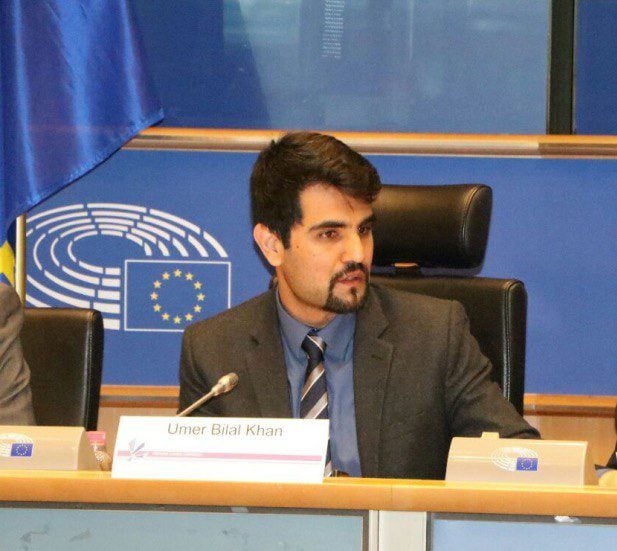
DAAD and Friedrich Naumann Foundation Scholar Dr. Umer Bilal Khan from Pakistan Shares His Journey of Studying Public Policy and Global Governance in Germany
University: University of Passau, Germany (Master’s) / University of Rostock, Germany (PhD)
Degree: MA in Governance and Public Policy / PhD in Global Governance
Previous Education:
– BA (Hons.) in Political Science, GC University Lahore, Pakistan – CGPA 3.57, Graduated with Distinction (3rd in Department)
Scholarship: DAAD PPGG – Helmut Schmidt Program (Master’s) monthly stipend + tuition, health insurance, travel allowance, funded German language course / Friedrich Naumann Foundation (FNF) Doctoral Scholarship (PhD) monthly stipend + health insurance, travel, research & internship support
Social Media
LinkedIn: linkedin.com/in/umer-bilal-khan/
The Journey
I am Dr. Umer Bilal Khan, a German and Pakistani national and the recipient of two prestigious German scholarships: the DAAD PPGG (2015–2017) for my Master's studies and the Friedrich Naumann Foundation (FNF) (2020–2024) for my PhD.
I come from Balochistan, a province in southwestern Pakistan along the Pakistan–Afghanistan border. I was born and raised in Quetta, the provincial capital, where I completed my schooling and intermediate education. In 2008, I moved to Lahore to pursue my undergraduate studies and earned a BA in Political Science from GC University Lahore in 2012, graduating with distinction.
After completing my degree, I followed my original plan and took the Pakistan Civil Services Examination in 2014, but I was not successful. While waiting for the results, I also began preparing for international Master's scholarships, encouraged/advised by a close friend and mentor, Rafiullah Kakar. This effort paid off in 2015, when I was awarded the DAAD Public Policy and Good Governance (PPGG) scholarship to study at the University of Passau.
Growing up in Balochistan, I witnessed how political instability, weak governance, and lawlessness can disrupt everyday life, especially the education system. These experiences shaped my early interest in politics, development, and governance, and they strongly influenced my academic and professional choices. They are also why I first chose to study political science, then sought to enter policymaking through the civil service, and ultimately pursued advanced education in public policy and good governance in Germany, to better understand how institutions can work more effectively and how policy can improve people's lives.
After my master's studies, I did a PhD from the University of Rostock in the field of global governance, focused on the problem of international authority in the larger context of the crumbling liberal world order of norms, laws, and rights. For my PhD, I was awarded the prestigious Friedrich-Naumann-Stiftung (FNF) doctoral scholarship in 2020. According to the FNF country office back in Pakistan, I was the first one in a very long time to have been awarded the FNF scholarship again, something that had reportedly not happened since the 1990s. Before being awarded the FNF doctoral scholarship and starting my PhD, I was serving as a Policy Research and Development Officer at the Planning and Development Department of the Government of Balochistan with regard to the CPEC – China´s BRI project.
Having enjoyed the German academic life tremendously and having learned a lot, I wanted to be back in academia for my PhD. If I were to be honest, I guess I never had any exposure back in Pakistan with such an open, welcoming, and financially facilitated academic environment, which makes even a time-intensive academic commitment like a doctorate also desirable, at least in Germany. It is for this reason that Germany is the preferred destination for further education, especially for the youth like me coming from the middle-salaried class. During my PhD, I was also elected as a coordinator at Friedrich-Naumann-Stiftung, organizing seminars, facilitating new FNF scholarship holders, and managing our working group´s budget.
Both these degrees and the scholarship organizations shaped me as a person and my understanding of world affairs in a constructive way. They enriched me with a broader lens to look at complex issues and analyze them in solution-oriented ways.
DAAD Scholarship Details
DAAD Masters PPGG Scholarship: the Helmut Schmidt Program (2015-2017)
DAAD scholarship is specifically designed for outstanding students from developing and emerging countries who demonstrate a strong commitment to social and political engagement, and it supports them in pursuing master's degrees in fields relevant to good governance, public policy, and development.
Under this program, I received a generous monthly stipend during the period of my studies, which spanned from 2015 to 2017. In addition to the financial support, the scholarship also included comprehensive benefits such as health insurance coverage, travel allowances, and even tuition fee waivers. One of the greatest privileges, and the part I cherish most, of the DAAD scholarship is the mandatory six-month intensive German language course at the Goethe-Institut, which is fully funded as part of the preparatory phase for newly arrived scholarship holders. This program not only eases the pressure of settling in and adapting to life in Germany, but also prepares scholars on multiple levels, personally, culturally, and even academically, for the university experience that follows.
Friedrich-Naumann-Stiftung für die Freiheit (FNF) Doctoral Scholarship (2020-2024)
The FNF doctoral scholarship is awarded by the Friedrich Naumann Foundation for Freedom, which is associated with Germany's liberal party, the FDP. The application cycle opens twice a year for both German and international applicants. Because fewer scholarships are allocated to international candidates, the program is considered highly competitive and is part of the foundation's "Begabtenförderung" (Gifted Support Programme) for high-achieving students.
The application process is conducted in German, and a solid level of German is expected. After being shortlisted, I was invited for an in-person interview at the Theodor Heuss Academy in Gummersbach, Germany. The interview panel consisted of three members, and the interview lasted approximately 45 minutes. Three weeks later, I received confirmation by email that I had been awarded the scholarship.
The FNF scholarship provided a generous monthly stipend. It also covered international air travel, health insurance, and reimbursements for German language courses. In addition, scholarship holders are expected to participate in FNF's mandatory seminars and working group activities. These seminars are free of charge: lodging is provided by FNF, and travel and participation costs are reimbursed. The foundation also supported expenses related to field research and unpaid internships abroad.
The difference between DAAD and FNF scholarship funding is that DAAD is more flat-rate, non-flexible study coverage, whereas FNF is more comprehensive, more flexible, and engaging to meet the needs of the scholarship holders, and in some ways richer. However, I am greatly thankful to both of these organizations for funding my master's and PhD studies.
Educational Background
My academic journey began with a BA (Hons.) in Political Science from GC University Lahore, with minors in English Literature and History. I actively pursued opportunities in both curricular and extracurricular domains, which helped me develop not only academically but also personally and professionally. I graduated as an outstanding student, securing third position in the Department of Political Science with a CGPA of 3.57, and I also served as President of the Quaid-e-Azam Political Science Society at GCU. It was a particular honor, both for me and for my underrepresented home province, to receive a Certificate of Distinction and a Certificate of Merit from the university.
This educational background prepared me for international scholarships and advanced study in several important ways. First, despite my humble beginnings, the academic environment at GCU, shaped by a competent and supportive faculty, along with inspiring peers and mentors, consistently set high standards. It encouraged me to aim for goals that initially seemed out of reach and instilled in me a strong spirit of learning, discipline, and achievement.
Second, the confidence I gained through strong academic performance and active engagement in co-curricular activities gave me an ambitious and optimistic outlook. Coming from a relatively underdeveloped region, this confidence was especially important: it empowered me to compete beyond local limitations and to present myself credibly on international platforms.
In many ways, the competitive environment at GCU and the motivation I drew from my mentors and peers helped cultivate the mindset that later enabled me to pursue and ultimately secure international opportunities such as the DAAD scholarship, the FNF doctoral scholarship, a traineeship at the European Parliament, and advocacy work at the United Nations Headquarters in New York.
How Did You Prepare to Apply to the University of Passau & the University of Rostock?
How Did You Find Information About Scholarships and the University of Passau & the University of Rostock?
I already had a general understanding of scholarship applications because, during my BA at GCU Lahore, I went through the application and interview process for the USEFP semester exchange program. After graduating, I began searching more systematically for suitable degree programs and scholarships. I started with simple online searches, regularly checked global scholarship search engines (which were still quite limited at the time), and created a structured list of potential opportunities, tracking deadlines, eligibility criteria, and required documents.
Through this process, I came across the DAAD scholarship and the PPGG Master's programme in Germany. At that time, DAAD did not yet have the integrated online application portal that exists today. Instead, I had to complete a DAAD scholarship application form in which I listed three preferred master's programs/universities. The DAAD application form then had to be submitted together with the admission application to each targeted university. In other words, I applied to all three universities separately, while also submitting the DAAD scholarship documentation alongside each application. To strengthen my candidacy, I prepared three tailored motivation letters, each reflecting the specific focus and requirements of the respective program. Selection was carried out jointly by DAAD and the university admissions committees, and my award was communicated to me by email through the University of Passau, which also informed the DAAD Pakistan country office for onboarding and further processing.
The process for the Friedrich Naumann Foundation (FNF) doctoral scholarship was different from the more standardized structure of a master's scholarship. In general, before applying for doctoral funding, an applicant needs a clear PhD research proposal and either confirmed supervision by a professor in Germany or formal enrollment as a PhD student. Before applying for funding, I had already secured both PhD supervision and enrollment at the University of Rostock in 2019. After that, and in close coordination with my supervisor, I began submitting doctoral funding applications, since such applications typically require proof of supervision and recommendation letters.
I identified suitable doctoral funding opportunities through sources such as the DAAD funding database and other doctoral scholarship search platforms. Based on my research topic, I also explored German political foundations, which also provide scholarships for degree programs in Germany, including the FNF, as well as foundations associated with other parties, and applied accordingly. Ultimately, my PhD project focused on the international authority problem within the liberal world order, which aligned particularly well with FNF's liberal orientation, and I was awarded funding for my doctoral research. Since the application process is conducted in German, key components of my application, including my CV, motivation letter, recommendation letters, and the abstract of my PhD proposal, had to be submitted in German through FNF's online portal.
Did You Take Any Standardized Tests?
Yes. For both my DAAD Master's application and my FNF PhD application, I took the IELTS exam. I took the first test in Pakistan, and the second one later in Bonn, Germany, since I was already based in Germany at the time.
Although my previous education in English could likely have been sufficient to demonstrate language proficiency, I chose to take a standardized test to strengthen my applications and meet scholarship and university requirements in a clear, internationally recognized way.
How Did You Prepare to Apply to the DAAD Scholarship?
I always assessed the fit between my profile, interests, and a scholarship's requirements before applying, and I approached the process in a deliberately realistic and targeted way. By "realistic," I mean I did not follow a casual "just give it a try" strategy when it was clear that a program was either not aligned with my background or that I did not meet the minimum eligibility criteria, especially in terms of CGPA and financial feasibility.
For example, I did not apply to Oxford because the minimum GPA expectations were around 3.8 and above, and more importantly, the overall cost structure of British education did not match my financial background. Similarly, I did not pursue the Fulbright Master's route in Pakistan, because it required a highly competitive GRE score, and I did not have the budget for multiple attempts, preparation, or additional test costs alongside IELTS. In my situation, I effectively had one serious shot, and I needed that attempt to be well-planned and viable.
Therefore, my scholarship strategy was based on realistic, careful selection rather than idealistic applications that could drain both time and money. Once I had identified scholarships that genuinely matched my profile, the rest of the preparation became more straightforward and standardized, such as listing programs by deadlines, prioritizing them by relevance and interest, and preparing the required documents accordingly.
How is (was) Your Experience at the University of Passau & the University of Rostock?
My academic experience in Germany spans two very different regions, from Passau in southern Bavaria to Rostock in northern Germany on the Baltic Sea. Studying in both places was deeply enriching, not only academically but also in terms of personal growth and cultural exposure.
DAAD Master's | University of Passau:
My Master's experience at the University of Passau was truly exceptional. The campus is among the most beautiful in Germany, located along the River Inn near the Austrian border. Surrounded by lush green hills and shaped by the city's three rivers, Passau offered a setting that often felt like living in a peaceful resort. The natural scenery, the vibrant international student community, and the local Bavarian culture created a rare and inspiring blend of learning and cultural experience.
Academically, Passau was especially attractive because it offered a fully English-taught master's program in Governance and Public Policy, which at the time was still relatively uncommon in Germany. The program was genuinely interdisciplinary and allowed students to personalize their studies. I was able to take courses not only within the governance and policy track, but also from International Relations and Sociology. This flexibility helped me align my coursework with my interests in development policy and global politics, while also gaining analytical tools from across the broader social sciences.
FNF PhD | University of Rostock:
My PhD years at the University of Rostock were equally meaningful, though very different in structure and experience. Unlike Passau's compact campus, Rostock's university buildings are more spread out, often requiring travel by tram or bus. Still, the university environment was well-equipped, supportive, and welcoming.
On a lighter note, the university's Mensa stood out as one of the best I experienced in Germany, both in quality and variety, especially because it was one of the few places where I regularly found fresh, well-prepared fish, which felt fitting given Rostock's proximity to the sea.
PhD life, unlike a master's program, is largely research-centered, so I spent most of my time within my department and office rather than attending courses and interacting with a larger group of students. What made the doctoral period especially rewarding was my active engagement with the funding organization, the Friedrich Naumann Foundation (FNF). FNF offered a wide range of financed seminars across Germany, often on topics related to international political economy and global affairs, as well as study visits and tours. One particularly memorable experience was a study trip to Beirut, Lebanon, which added an invaluable practical dimension to my academic work and made the PhD years feel both intellectually engaging and personally enjoyable.
Another key factor was my research group and supervisor. I worked with colleagues from diverse backgrounds, including international researchers from Indonesia and Latin America, as well as peers from Rostock and nearby regions, which created a positive and collaborative work environment. My supervisor played a central role in making the PhD experience productive and fulfilling. We approached my dissertation as a collaborative intellectual project, learning together about global governance, the liberal world order, and hegemonic politics.
Beyond the university, the city of Rostock offered a fascinating window into East German history, reflected in its architecture and cultural atmosphere. The nearby Warnemünde beach was a major highlight, especially in summer, and the city's touristic energy, with cruise ships departing for Denmark and other destinations, gave Rostock a unique vibe. In many ways, it felt like living and studying in a place where others come for vacation, an experience that made my PhD years even more memorable.
How Do the University of Passau & the University of Rostock Support International Students?
I believe universities in Germany, in general, have very institutionalized support for foreign students because of their designated international offices and international students' welcome centers. The University of Rostock, in particular, had an international students' welcome center in the city center in collaboration with the city administration. This office helped the international students not only with academic affairs on the campus but also with non-academic matters off the campus, like finding accommodation, city registration, foreign office issues in matters of visas and extensions. I also observed a general interest in universities for going international by encouraging more international students and offering more English-taught courses.
Would Potential Students Have Any Problems Academically Not Knowing German?
Academically, not necessarily, especially if students are enrolled in an English-taught program, as many universities in Germany now offer full degree tracks in English (particularly at the master's and PhD level). In that sense, a lack of German language skills usually does not prevent students from keeping up with coursework, research, or academic expectations.
However, outside the campus, students may face challenges in daily life because Germany is not an English-speaking country. Things like housing, bureaucracy (registration, residence permits), healthcare appointments, part-time work, and social integration often require at least basic German. For this reason, some students hesitate to choose Germany when, in parallel, an English-speaking country option is available.
That said, in my view, even though adapting to a new language can be demanding, it brings significant added value. Learning German supports students personally by making everyday life easier and strengthening social integration, and it can also be a real advantage professionally, especially for those who plan to work in Germany or engage with German institutions in the future.
What Do You Think Made Your Application Stand Out?
I believe a clear application package with attention to even the tiniest details and a realistic approach in preparing the application resulted in the expected success. Because if the scholarship program is found on realistic factors of relevance and interest, then the application package will also depict that natural and ideal fit of the candidate for the study program. Other than that, I believe a deep desire for higher studies abroad and experiencing new cultures and academia pushed me with passion while preparing applications.
What Advice Would You Give Those Looking to Apply for a Similar Scholarship?
Take a realistic approach while searching for scholarships and study programs. Liking a program in a country does not immediately translate into you being able to do it or later on profit from it in your career. Liking does not necessarily mean interest and aptitude for that study program. Stick to your core, your inclination, your interest, and aptitude more than just liking while deciding on a study program.
Apart from this, try to be genuine and be yourself in your application, as that is unique. I often get personal statements for review and feedback, and I get sad to see that the candidate has chosen to use some general and marketable persona of him and her in the application instead of their unique individuality and experiences. So never shy away from your personal and true story, even if it depicts hardships, poverty, a disrupted/poor educational background, and unfortunate experiences that have shaped you as a person. Relate the background to your current pathway and future goals, answering how they have fueled you in a specific direction.
The application should show your lived experiences and your motivations based on those experiences, rather than tall claims and unrealistic goals.
Want to submit your
scholarship journey?
Submit Your Story Here!
More Scholarship Recipients
I am Edgar Abaho from Uganda, currently pursuing a Joint Master’s Degree in Mathematical Modelling and Optimization at the .... Read more
Hello, I am Virda from Indonesia. I come from a small city and was fortunate to have the opportunity to pursue my bachelor� .... Read more
Tessia Boateng, affectionately known as AmaTess among family and close friends, is a young Ghanaian professional with a grow .... Read more
Leave A Comment