
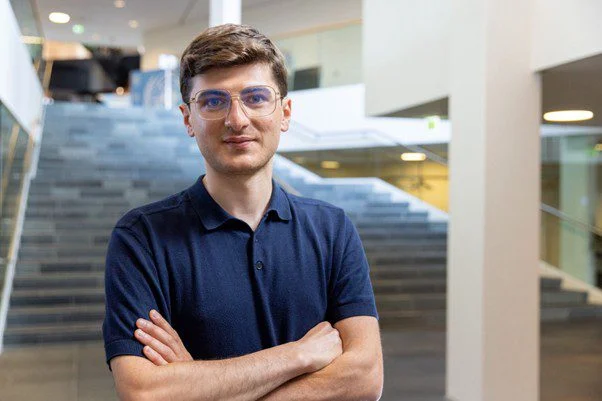
University of Copenhagen Graduate, Can Aygün from Türkiye, Shares His Journey of Pursuing a Master’s in Advanced Migration Studies Through the Danish Government Scholarship
Name: Can Aygün
Country of Origin: Türkiye
University: University of Copenhagen, Denmark
Degree: Master of Arts (MA)
Field of Study: Advanced Migration Studies
Previous Education
Previous Degree: Bachelor of Arts in History, with a Double Major in Sociology and a Minor in International Relations, Koç University, Türkiye
Honors: Magna Cum Laude
GPA: 3.73 / 4.00
Undergraduate Scholarship: Full scholarship covering full tuition, a monthly stipend, and accommodation
Scholarship Received
Scholarship Name: Danish Government Scholarship
Institution: University of Copenhagen
Coverage: Full tuition waiver + monthly stipend
Duration: 2 years
Other Offered Scholarships
- Danish Government Scholarship – Aarhus University
Coverage: Full tuition waiver + monthly stipend (offered) - DAAD Scholarship – Germany
Coverage: Full tuition waiver + monthly stipend (offered) - Radboud University Scholarship – Netherlands
Coverage: Full tuition fee waiver + travel and visa costs (offered) - Central European University (CEU) Scholarship – Austria
Coverage: Tuition fee waiver only (offered) - Stipendium Hungaricum – Hungary
Coverage: Full tuition waiver + monthly stipend (offered)
Social Media
LinkedIn: linkedin.com/in/canaygun/
The Journey
Hello! My name is Can Aygün, and I am from Türkiye. I currently live in Copenhagen, Denmark. After completing my master’s degree in Denmark in 2024, I continued my professional journey by completing an internship at the United Nations High Commissioner for Refugees (UNHCR). I am now working in the energy sector as a Change and Adoption Associate, where I focus on organizational transformation and stakeholder engagement.
My academic background is rooted in the social sciences. During my undergraduate studies in History, Sociology, and International Relations, I became increasingly interested in migration studies and began applying my interdisciplinary training to academic research in this field. Through involvement in academic articles and field-based research projects, my academic path gradually and naturally evolved toward international migration studies.
What Motivated You to Pursue Advanced Migration Studies?
Studying different disciplines within the social sciences significantly shaped my academic curiosity. Exposure to history, sociology, and international relations allowed me to approach migration not only as a policy issue, but also as a deeply social, historical, and human phenomenon. During my undergraduate years, I collaborated with professors from various departments on migration-related articles and field research projects, which further strengthened my interest in this area.
Additionally, Türkiye’s unique position as both a country of immigration and emigration played an important role in shaping my academic focus. Observing migration dynamics firsthand, both domestically and internationally, made migration studies a natural and compelling field for deeper academic engagement. As a result, pursuing a master’s degree in migration studies became one of my primary academic goals.
Why Did You Choose to Study Abroad, Particularly in Europe?
Having completed my undergraduate education at one of Türkiye’s leading universities, I wanted to further challenge myself within a different academic system. European universities, particularly in Western Europe, are highly productive in migration studies and offer strong interdisciplinary programs that combine theory, research, and policy perspectives.
My undergraduate institution followed an American-style education model, and I was eager to experience and develop within the European academic system as well. Moreover, Western European universities offer rich and diverse content in area studies and interdisciplinary master’s programs, making Europe a natural choice for my academic progression.
Why the University of Copenhagen?
The University of Copenhagen is widely regarded as one of Europe’s most prestigious institutions in the social sciences and humanities. Unlike many master’s programs in Europe, the Advanced Migration Studies program has a two-year structure, which allows students to take more specialized courses, deepen their academic focus, and gain practical experience through internships.
I benefited greatly from this structure. During my second year, I had the opportunity to complete an internship at Erasmus University Rotterdam, where I worked on a migration project funded by Horizon Europe. This experience allowed me to connect academic theory with applied research in a real-world policy context.
Another key factor was the structure of the Advanced Migration Studies program itself. The program emphasizes group discussions, presentations, and critical engagement rather than purely lecture-based learning. This approach significantly strengthened my critical thinking, presentation skills, and ability to clearly articulate complex ideas, skills that continue to support me in my professional life.
How Did You Decide Among Multiple Scholarship Offers?
After receiving several scholarship offers, I approached my decision-making process in a strategic and reflective manner. Factors such as the country, program structure, academic reputation, and university rankings played an important role in my final decision.
Equally important was the university’s position within the country and the long-term networking opportunities it offered. I ultimately chose the option that best aligned with my academic interests, career goals, and long-term professional development.
What Did This Application Journey Mean to You?
The master’s application process became a cornerstone in both my personal and professional development. It taught me the importance of discipline, strategic planning, and organization. Most importantly, it reinforced the value of perseverance, showing me that sustained effort and commitment play a decisive role in achieving long-term goals.
What Advice Would You Give to Students Applying for Similar Scholarships?
First and foremost, I believe it is essential for applicants to be clear about the field they want to work in. Having a well-defined academic direction makes it much easier to identify suitable programs and present a coherent application. At the same time, it is important to develop alternative plans. Creating A, B, and even C options allows applicants to stay flexible and motivated. In other words, being able to say, “If Plan A does not work out, Plan B would still make me happy,” is a healthy and realistic mindset during this process.
Another key element is organization. Preparing for the application process well in advance plays a crucial role. This includes completing required standardized tests such as IELTS, TOEFL, or GRE early on, depending on the prerequisites of the programs being considered. Having these results ready reduces stress and allows applicants to focus fully on the quality of their applications.
Equally important is carefully tracking application deadlines for both universities and scholarship programs. Being aware of timelines and strictly adhering to application calendars can make a decisive difference, as even strong candidates can be eliminated due to missed deadlines.
Finally, motivation letters deserve particular attention. I strongly believe that applicants stand out when they clearly explain why they are applying to a specific program, grounding their motivation in concrete academic or professional experiences. Demonstrating how the program aligns with their long-term career goals, and articulating this connection in a clear and honest way can significantly strengthen an application and set it apart from others.
Want to submit your
scholarship journey?
Submit Your Story Here!
More Scholarship Recipients
My name is Mona Perlingeiro, and I am from São Paulo, Brazil. São Paulo is the Brazilian city with the largest number of m .... Read more
I am Ludmille Lyvert, and I am from Haiti. I hold a master’s degree in Women’s Studies, and I am currently a Ph.D. stude .... Read more
My name is Leisha Ravindra Babu, and I am from India. I am currently a Global Korea Scholarship (GKS) scholar completing my .... Read more
Leave A Comment