
Erasmus Mundus Scholar, Adina Shaikh from Pakistan, Shares Her Journey of Pursuing an International Master of Science in Advanced Design of Sustainable Ships and Offshore Structures (EMSHIP+) Across Europe
University: Ghent University (Belgium), Lower Danube University of Galați (Romania), University of Rostock (Germany), École Centrale de Nantes (France), Instituto Superior Técnico (Portugal), University of Liège (Belgium), and the Polytechnic University of Madrid (Spain)
Degree: International Master of Science in Advanced Design of Sustainable Ships and Offshore Structures
Previous Education: Bachelor’s in Mechanical Engineering – National University of Sciences and Technology (NUST), Pakistan (CGPA: 3.97/4.00, Rector’s Gold Medal, Chancellor’s Silver Medal)
Scholarship: Erasmus Mundus Joint Master’s Scholarship – Fully Funded (tuition, monthly stipend, health insurance, travel, and relocation support)
Other Offered Scholarships:
- International Master of Science in Fire Safety Engineering (IMFSE) – Erasmus Mundus Scholarship (Fully Funded)
- Russian Government Scholarship – Fully Funded
- Excellent Foreign Student Scholarship Program, Thailand – Fully Funded
- Chinese Government Scholarship (CSC) – Fully Funded (Tsinghua University, China)
- Southern Illinois University Edwardsville (USA) – Scholarship Opportunity
- Taiwan International Graduate Program (TIGP) Scholarship
Social Media
LinkedIn: linkedin.com/in/adeena-shykh2/
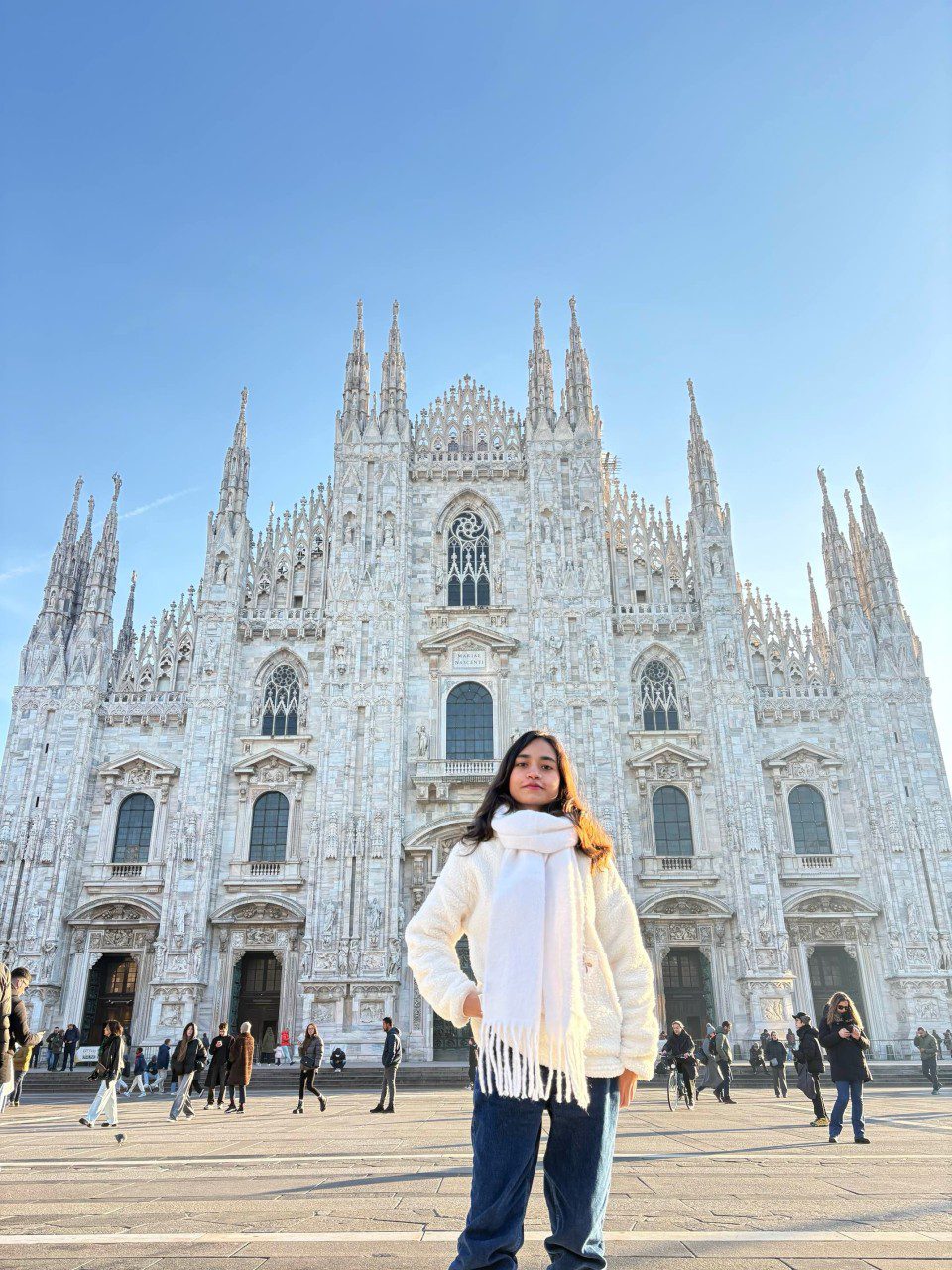
The Journey
Hi, I’m Adina Shaikh, an Erasmus Scholar currently pursuing an International Master of Science in Advanced Design of Sustainable Ships and Offshore Structures (EMSHIP+). My passion for engineering began early, rooted in a deep curiosity about how complex structures withstand immense forces, interact with fluids, and can be designed to serve society more responsibly through sustainability.
I graduated in 2025 with a Bachelor's in Mechanical Engineering from the National University of Sciences and Technology (NUST), Pakistan, earning the Rector’s Gold Medal and Chancellor’s Silver Medal with a CGPA of 3.97. Throughout my degree, I received the Rector’s Scholarship seven times, along with multiple merit-based awards, reflecting a consistent drive for excellence and impact.
My academic path has also taken me beyond Pakistan through international research and industry experiences. In Türkiye, I worked at Turkish Aerospace Industries on aerospace structural design, GD&T, and real manufacturing and assembly environments. In Taiwan, I joined an international research internship focused on scalable vanadium flow redox battery systems for renewable energy storage. Alongside industry work, I have built strong research credentials. I authored a peer-reviewed research article on tidal energy potential in Pakistan’s Indus Delta, exploring the techno-economic barriers and opportunities for clean energy. My academic projects reflect my multidisciplinary approach, including multiphysics optimization of a composite nose radome for supersonic aircraft under Turkish Aerospace Industries’ LiftUp Program, solid oxide fuel cell modeling in MATLAB and Simulink, HVAC load analysis, and the design and fabrication of a functional prosthetic hand.
These experiences across countries strengthened my belief that sustainable engineering is built where rigor, collaboration, and purpose meet, and they continue to shape how I approach my work in EMSHIP+ today.
Educational Background
Before joining the Erasmus Mundus program, my academic foundation was built through a rigorous and highly demanding Bachelor of Science in Mechanical Engineering at the National University of Sciences and Technology in Pakistan. The program emphasized strong fundamentals in mathematics, mechanics, thermodynamics, fluid mechanics, materials engineering, and system design, while also pushing students to apply theory through complex, open-ended engineering problems. Graduating with a CGPA of 3.97 and earning top national academic honors reflected not only academic performance, but also years of disciplined problem solving, time management, and intellectual resilience.
What truly prepared me for the multi-country Erasmus Mundus experience was how my undergraduate journey went beyond classroom learning. I was consistently engaged in research-driven and industry-oriented projects that required adaptability, independent learning, and collaboration across disciplines. My academic projects ranged from multiphysics optimization of aerospace structures to energy systems modeling and biomedical device fabrication. Each project demanded that I quickly learn new tools, software, and theoretical frameworks, often outside the formal curriculum, which closely mirrors the learning style of an Erasmus Mundus program, where adaptability is essential.
International exposure before EMSHIP+ played a major role in preparing me for studying across countries. My internship at Turkish Aerospace Industries immersed me in a high-performance engineering environment where I worked with multidisciplinary teams, strict design standards, and real manufacturing constraints. This experience taught me how to communicate technical ideas clearly across teams with diverse expertise and cultural backgrounds, a skill that is critical in multi-country academic programs. Similarly, my research internship in Taiwan exposed me to a different academic culture focused on innovation, experimental validation, and sustainability-driven research. Working independently in an international research setting strengthened my confidence in navigating unfamiliar academic systems and expectations.
Academically, my background also prepared me to handle the interdisciplinary nature of EMSHIP+. Courses and projects involving fluid flow, structural mechanics, energy systems, and numerical modeling created a natural bridge to ship and offshore engineering, where structures interact continuously with complex fluid environments. My prior exposure to sustainability-focused research, particularly in renewable energy and tidal power, aligned strongly with the program’s emphasis on environmentally responsible marine and offshore design.
Most importantly, my undergraduate experience cultivated a mindset rather than just technical knowledge. It trained me to be comfortable with change, to learn across disciplines and cultures, and to see engineering as a global responsibility rather than a local skill. This mindset made the transition into a multi-country Erasmus Mundus program not just manageable but deeply enriching, allowing me to fully engage with diverse academic systems, perspectives, and collaborative environments across Europe.
How Did You Prepare to Apply to the Institutions?
In the last year of my undergraduate degree, I had a very honest realization: academics are my strength. I genuinely enjoyed studying, I was good at it, and I knew I wanted to go further. Since I was already at Pakistan’s top institute, NUST, I also knew that if I was going to pursue a master’s, I wanted it to be at an even higher level internationally. That is when I started exploring international master’s programs seriously.
I reached out to seniors who were already studying abroad or had completed their master’s. Their guidance changed everything. They helped me understand the process, encouraged me to aim higher, and pushed me to apply for scholarships because my academic record and international exposure gave me a real chance. That advice gave me direction, but the journey itself demanded everything from me.
The final year was intense in a way that is hard to explain unless you have lived it. I was juggling my final year project, classes, exams, and deadlines, while also carrying the responsibility of being the Female NUST Student Representative. On top of that, I was preparing for IELTS and applying to multiple programs at the same time. There were days when I would start classes at 8 am, attend lectures until 2 pm, work on my final year project until 10 pm, and then stay up through the night working on applications, only to wake up and repeat the same routine the next day. It was exhausting, but I kept going because I had a very clear goal.
I wanted to earn a master’s degree from a top-ranked university without spending a penny of my parents’ money. That goal mattered to me, not just financially, but emotionally too. It represented independence, sacrifice, and the belief that hard work could change the direction of my life. Even during the months when I was battling depression and personal trauma, I did not let go of that goal. I showed up, again and again, even when it was difficult to breathe through the pressure.
I still remember giving my EMSHIP+ interview in Ramadan, a sacred month for Muslims. I prayed with everything in me, because by then this was not just an application, it was a dream I had carried through sleepless nights and silent struggles. Three days after the interview, I received an email that began with the words: “Congratulations, Adina!” It genuinely felt like the sweetest love letter I had ever received, because it told me that every sacrifice had counted.
In the end, that season of my life turned into a breakthrough. I was awarded seven competitive scholarships, including the most prestigious one, the Erasmus Mundus Scholarship, which is now taking me on a remarkable journey of learning, growth, and purpose across countries. And whenever I look back, I do not just feel proud of being selected, I feel proud that I did not give up on myself.
How Did You Prepare to Apply for the Scholarship?
I prepared for scholarships with one mindset: stay consistent, stay intentional, and keep improving every single week. After studying the profiles of seniors who had already won major scholarships, I understood that strong achievements alone are not enough. You also need to present your story clearly and strategically. So I worked on how I portrayed my profile and gradually strengthened every part of my application.
I started early and treated the process like a long-term project. I continuously refined my CV, built a portfolio to showcase technical work and projects, wrote motivation letters that were customized for each program, and worked closely with mentors to fine-tune my recommendation letters so they highlighted my strengths with the right tone and evidence. Because I did not leave things for the last minute, I had enough time to iterate and improve, and over time, my documents started to match the level of the opportunities I was applying for. That early preparation helped me find real alignment between my background and each scholarship’s goals instead of submitting generic applications.
Yes, I applied for multiple scholarships before deciding on Erasmus Mundus, including:
- Russian Government Scholarship (fully funded)
- Excellent Foreign Student Scholarship Program, Thailand
- Chinese Government Scholarship (CSC), fully funded at Tsinghua University, China
- Southern Illinois University Edwardsville scholarship opportunity, USA
- Taiwan International Graduate Program scholarship
I ultimately chose Erasmus Mundus after discussing my options with professors and seniors who had experience with international programs. The Erasmus Mundus model stood out because it is not just a scholarship; it is a complete academic and personal transformation. The education standard and research culture in Europe are extremely strong, and the multi-country structure gives you something rare: the chance to study at multiple top universities, learn from different academic systems, work with diverse peers, and develop a truly international engineering perspective. That kind of exposure trains you to adapt quickly, communicate across cultures, and think globally, which matters a lot in engineering fields like sustainable design and offshore structures. On a practical level, the Erasmus stipend and overall funding structure were also the most supportive compared to my other options, which meant I could focus fully on learning and growth without financial pressure.
Erasmus Mundus is also one of the most competitive scholarship opportunities in the world. Thousands of applicants apply every year, and only a small percentage are selected. When I understood how competitive it was, I became even more intentional about how I presented my strengths. I identified what genuinely made my profile different and made sure that those qualities were clear across my CV, portfolio, and especially my motivation letter. I strongly believe the motivation letter can make or break an application because it is where the selection committee sees your purpose, your direction, and your potential beyond grades.
I believe my application stood out because it combined three things in a convincing way: academic excellence, international exposure, and a clear narrative. My CGPA and consistent academic awards showed that I could handle intense coursework. My international experiences demonstrated adaptability and readiness for a multi-country program. And my motivation letter connected everything into one story: why I chose this field, why I was prepared, and how I planned to contribute through the opportunity. That combination, supported by strong recommendations and a well-prepared set of documents, is what I feel made the difference.
Were You Offered any Other Scholarships?
Yes, I was offered multiple international scholarships:
- European Master’s in Advanced Design of Sustainable Ships and Offshore Structures (EMSHIP+)
Scholarship: Erasmus Mundus Scholarship (Fully Funded)
Amount: Fully funded (tuition + stipend) - International Master of Science in Fire Safety Engineering (IMFSE)
Scholarship: Erasmus Mundus Scholarship (Fully Funded)
Amount: Fully funded (tuition + stipend) - Russian Government Scholarship
Scholarship: Russian Government Scholarship (Fully Funded)
Amount: Fully funded - Excellent Foreign Student Scholarship Program, Thailand
Scholarship: Excellent Foreign Student Scholarship
Amount: Full Tuition (tuition) - Chinese Government Scholarship (CSC) at Tsinghua University, China
Scholarship: CSC (Fully Funded)
Amount: Fully funded (tuition + stipend) - Southern Illinois University Edwardsville (USA)
Scholarship: Scholarship opportunity (offer received) - Taiwan International Graduate Program Scholarship
Scholarship: TIGP Scholarship
Could You Briefly Discuss the Erasmus Mundus Program You Pursued and the Specific Field of Study It Focused On?
The Erasmus Mundus program I pursued is the European Master’s in Advanced Design of Sustainable Ships and Offshore Structures (EMSHIP+). It is a highly specialized, multidisciplinary program designed to train engineers for the global maritime and offshore industries, with a strong emphasis on sustainability, safety, and advanced engineering design.
The program focuses on the design and analysis of ships and offshore structures operating in complex marine environments, where structures are continuously exposed to hydrodynamic loads, waves, wind, and harsh operating conditions. It combines core subjects such as structural mechanics, ship hydrodynamics, marine materials, stability, and fatigue with advanced topics including offshore platforms, floating structures, risk-based design, and numerical simulation. A key strength of EMSHIP+ is its balance between theoretical depth and practical application, ensuring that students not only understand governing principles but also learn how to apply them using industry-standard tools and design methodologies.
Sustainability is central to the program’s philosophy. Coursework and projects emphasize environmentally responsible ship design, energy-efficient vessels, and offshore structures that support renewable energy systems. Through project-based learning, students tackle real engineering problems, often inspired by industry challenges, which strengthens their problem-solving ability and prepares them for professional practice or research.
Another defining feature of Erasmus Mundus is its multi-country structure. Studying at different European universities exposes students to diverse teaching styles, research cultures, and engineering standards. This international setup fosters adaptability, cross-cultural collaboration, and a global perspective, all of which are essential in modern engineering careers. Overall, EMSHIP+ provided a comprehensive education that integrates advanced marine engineering, sustainability, and international exposure into a single, rigorous academic experience.
How Did the Cost of Living Vary Across the Countries You Studied In? Which Country Was the Most Affordable or Expensive, and How Did You Manage Financially?
Since I am currently in my first semester of the Erasmus Mundus program, my experience so far has been in Romania. Compared to many other European countries, Romania is relatively affordable, especially for students. Everyday expenses such as accommodation, groceries, public transport, and dining are noticeably lower than in Western and Northern Europe, which makes a significant difference when you are living on a student budget.
With the Erasmus Mundus stipend, managing finances in Romania has been quite comfortable. Rent for student housing or shared apartments is reasonable, public transportation is inexpensive, and basic living costs such as food and utilities remain manageable even without cutting back excessively. This has allowed me to focus on my studies rather than constantly worrying about finances, which is especially important during the first semester when academic workload and adjustment are high.
One of the strengths of the Erasmus Mundus structure is that it takes cost of living differences across countries into account through a fixed monthly stipend. Being placed in a more affordable country like Romania at the start of the program provides a smooth transition into international student life. It also allows students to save part of the stipend or plan ahead for future semesters that may be in more expensive European countries.
Although I have not yet studied in the other countries included in my program, I am aware that living costs can vary significantly across Europe. Countries in Western or Northern Europe generally have higher expenses, particularly for housing. Knowing this in advance has helped me plan carefully by budgeting, tracking expenses, and being mindful of discretionary spending from the very beginning.
Overall, studying in Romania has been financially manageable and well supported by the Erasmus Mundus stipend. The program’s funding structure, combined with the relatively low cost of living here, has made it possible for me to live comfortably, adapt to a new academic environment, and focus fully on my studies while preparing for future mobility within Europe.
Did You Face Any Language Barriers, and if So, How Did You Overcome Them? Did the Language of Instruction Change from One Country to Another?
Language has never felt like a barrier to me, mainly because I see it as a bridge rather than an obstacle. Whenever I move to a new country, I make a conscious effort to learn the local language as early as possible, even at a basic level. This mindset has helped me adapt quickly and feel more connected to the places I have lived in.
When I went to Türkiye, I actively learned Turkish soon after arriving. Being able to communicate in the local language made everyday life much easier, from navigating public transport to interacting with colleagues and locals. More importantly, it helped me build genuine connections and understand the culture beyond the classroom. The same approach worked in Taiwan, where I learned basic Chinese. Even though English is commonly used in academic and research environments, knowing Chinese significantly improved my daily interactions and gave me confidence in handling routine tasks independently.
Before coming to Romania, I prepared in advance by learning Romanian through Duolingo. This early preparation made the transition much smoother. Simple things like grocery shopping, asking for directions, or handling basic administrative tasks became far less intimidating. Learning the language beforehand also showed respect for the local culture, which often led to warmer and more helpful interactions with people.
Academically, there were no language barriers. The language of instruction across all the countries I studied in has been English, which is standard for Erasmus Mundus programs. This consistency ensures that students from diverse backgrounds can focus on learning without linguistic disadvantage. What I particularly appreciate is that learning the local language is entirely optional and driven by personal interest rather than necessity. For me, that freedom is empowering because it allows me to grow linguistically without pressure.
Overall, my experience has taught me that adaptability and curiosity are key. By embracing new languages instead of avoiding them, I have been able to integrate more smoothly into different societies, manage daily life confidently, and enrich my international experience far beyond academics.
Would You Recommend the Erasmus Mundus Program to Others? What Advice Would You Give to Someone Considering This Scholarship?
Yes, I would strongly recommend the Erasmus Mundus program to anyone who is academically driven, curious, and open to growth beyond their comfort zone. It is not just a scholarship or a degree; it is a life-changing experience that reshapes how you learn, think, and see the world. The combination of high academic standards, exposure to multiple countries and universities, and interaction with a truly global cohort makes Erasmus Mundus unique among international programs.
One of the greatest strengths of Erasmus Mundus is the diversity it offers, not only in terms of nationality but also in academic perspectives, teaching styles, and research cultures. Studying in different countries pushes you to adapt quickly, become independent, and learn how to collaborate across cultures. This experience builds confidence, resilience, and a global mindset that stays with you long after the program ends.
For anyone considering this scholarship, my first advice would be to start early. Treat the application as a long-term process rather than a last-minute task. Focus on building a strong academic foundation, gaining relevant experience, and understanding what truly motivates you to apply. Erasmus Mundus selection committees look for clarity of purpose as much as they look for grades, so it is important to know your story and be able to articulate it well.
Secondly, invest time in your motivation letter. This is where you can genuinely stand out. Be honest, specific, and reflective. Show how your background aligns with the program, how you are prepared for a multi-country experience, and how you plan to contribute to the field and the Erasmus community. Avoid generic statements and focus on your personal journey, challenges, and growth.
Finally, be open-minded and resilient. The program is intense and demanding, both academically and personally. There will be moments of uncertainty, cultural adjustment, and self-doubt, but those moments are also where the most growth happens. If you are willing to learn, adapt, and stay consistent, Erasmus Mundus can offer you not only an exceptional education but also a deeper understanding of yourself and the world around you.
Looking Back, Would You Have Done Anything Differently During Your Time in the Program?
Since I am still in the program, I often reflect on my experience so far, and honestly, I am truly enjoying my time in Europe. The academic environment, the exposure to different cultures, and the opportunity to learn alongside students from all over the world have made this journey incredibly fulfilling.
At this stage, I would not say there is anything I would want to change significantly. Every challenge I have faced, whether academic or personal, has contributed to my growth and helped me adapt more confidently to an international setting. From adjusting to a new education system to settling into a different country, each experience has added value and perspective.
If anything, this journey has reinforced the importance of being present and making the most of each phase of the program. I am focused on learning as much as I can, engaging actively with my coursework, and embracing the opportunities that come with studying in Europe. Looking ahead, I am excited for what the next semesters will bring and grateful for the experiences I am gaining along the way.
Want to submit your
scholarship journey?
Submit Your Story Here!
More Scholarship Recipients
Hi! My name is Davi Augusto Mattoso, and I am originally from Brazil. I have a Bachelor's in Chemistry from the Federal Univ .... Read more
Hello, my name is Manasi, and I am from India. I completed my Bachelor’s degree in Civil Engineering from Dr. Babasaheb Am .... Read more
Hi, I am Malik Nauman Rauf, currently a Master's in Aerospace Engineering student and a Fulbright Scholar at Georgia Institu .... Read more
Leave A Comment