
PTDF-DAAD Joint Scholarship Scholar Olaseinde Kehinde Oluwafemi from Nigeria Shares Their Journey of Securing a Fully Funded PhD at the Friedrich-Alexander-Universität Erlangen-Nürnberg, Germany
University: Friedrich-Alexander-Universität Erlangen-Nürnberg
Degree: Ph.D. in Materials Science and Engineering (Functional Ceramics and Energy Storage Applications)
Previous Education: B.Sc. in Physics (Electronics); Master’s in Technology with a major in Electronics Maintenance and Instrumentation; Postgraduate Diploma in Education
Scholarship: Joint Scholarship between Petroleum Technology Development Fund (PTDF), Nigeria, and Deutscher Akademischer Austauschdienst (DAAD) – Funding Support (Doctoral Studies in Germany, Health Insurance, Liability Insurance)
Other Offered Scholarships: American Ceramic Society Grant Award
Social Media
LinkedIn: linkedin.com/in/kehinde-oluwafemi-olaseinde-825946148/
The Journey
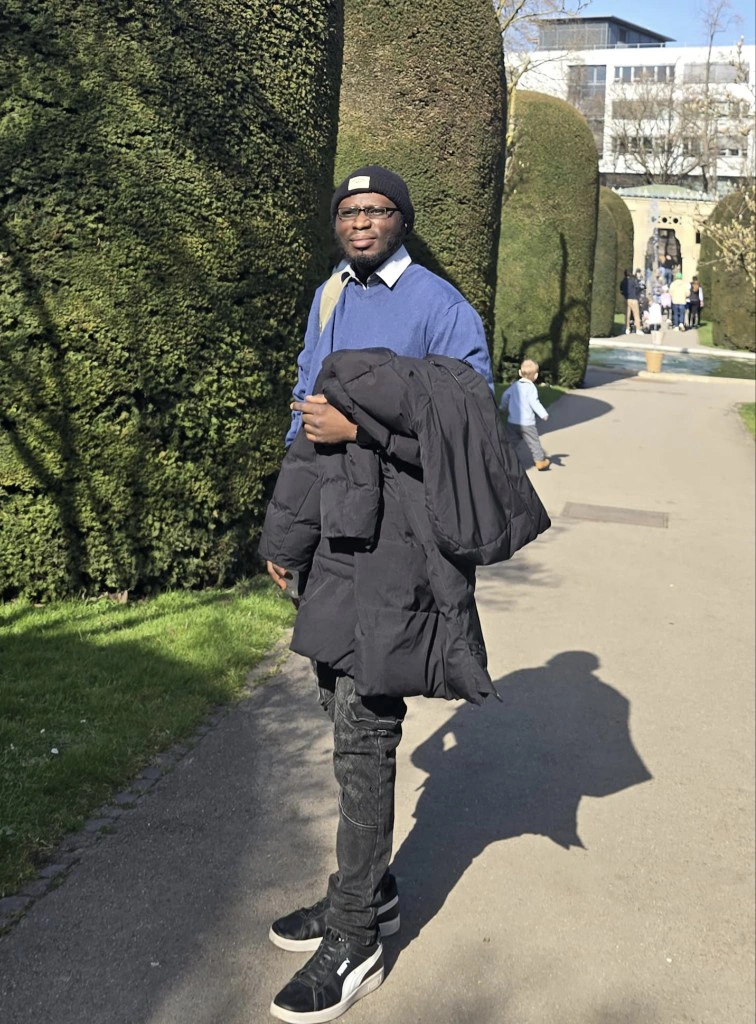
My name is Olaseinde Kehinde Oluwafemi, and I am from Ondo State, Nigeria. I have an academic background that spans physics, electronics, instrumentation maintenance, education, and materials science, and I also founded Olaseinde Kehinde Foundation (OKF) and Scholars Alliance’s Group in 2025. I’m rooted in a problem I understand personally after losing my parents at 10 years old: how poverty, unequal access, and lack of support can quietly limit a child’s future, which I fought and won. I am currently pursuing a Ph.D. at Friedrich Alexander University, Erlangen-Nürnberg, Germany in the Department of Materials Science and Engineering, Institute of Glass and Ceramics, under the Functional Ceramics research group, where my work focuses on CaTiSiO5 as a functional ceramic material, particularly for energy storage applications. I decided to pursue further education in this field because I wanted to work on materials with real scientific and technological relevance. Functional ceramics sit at the intersection of physics, chemistry, engineering, and device applications, and that interdisciplinary nature strongly appealed to me. My long-term goal is to contribute to research, innovation, and teaching in advanced materials, especially in areas that can support sustainable technological development.
Joint Scholarship between Petroleum Technology Development Fund Details
Institution Name: Friedrich-Alexander-Universität Erlangen-Nürnberg,
Scholarship Name: It’s a Joint Scholarship between Petroleum Technology Development Funds (PTDF), Nigeria, and Deutscher Akademischer Austauschdienst (DAAD), and I am also an American Ceramic Society Grant Awardee
Scholarship Amount: I received scholarship support for my doctoral studies in Germany. This also covers health insurance and liability insurance
Were You Offered Any Other Scholarships?
The scholarship I moved forward with was the primary funding route for my doctoral studies.
Educational Background
I hold a B.Sc. in Physics (Electronics), where I graduated as the best student in my class, a Master's in Technology with a major in Electronics Maintenance and Instrumentation, and a Postgraduate Diploma in Education. These degrees gave me a strong foundation in analytical thinking, measurement systems, electronic materials, instrumentation, and problem-solving. They also trained me to approach scientific questions from both theoretical and practical perspectives.
My educational background prepared me well for advanced study in functional ceramics because it combined core physics with applied engineering and laboratory-based thinking. That combination made it easier for me to transition into materials science research, where understanding structure–property relationships, characterization methods, and application-driven design is essential.
How Did You Prepare to Apply to Friedrich-Alexander-Universität Erlangen-Nürnberg?
I prepared by starting early and being deliberate. I first identified institutions and research groups whose work aligned with my interests. After that, I studied faculty profiles, ongoing projects, and the broader research direction of each group. I then tailored my application materials so that my academic background, research interests, and long-term goals clearly aligned with the program.
I also paid close attention to the practical side of the process: updating my academic CV, organizing transcripts and certificates, preparing recommendation letters in good time, and refining my statement of purpose and research proposal. One thing that helped me was treating the application as a professional project rather than as a last-minute submission.
How Did You Find Information About Joint Scholarship between the Petroleum Technology Development Fund and Friedrich-Alexander-Universität Erlangen-Nürnberg?
I found most of my information through official websites, scholarship pages, research group pages, and academic networks. I paid particular attention to information published directly by institutions because it was usually the most accurate source for admission requirements, funding options, deadlines, and supervisor expectations.
I also found it useful to learn from the experiences of other international students and scholarship recipients. Their stories helped me understand the practical side of the process, but I still relied on official sources when making final decisions.
Did You Take Any Standardized Tests? If So, How Did You Prepare for Them?
Not at all. I would advise applicants to check each university's requirements carefully because not all programs require the tests.
How Did You Prepare to Apply for the Joint Scholarship between the Petroleum Technology Development Fund?
My scholarship preparation was built around clarity, consistency, and evidence. I made sure that every part of my application told the same story: my academic journey, my research interests, my readiness for advanced study, and the reason I was a good fit for the opportunity. I paid particular attention to my motivation statement, CV, and supporting documents because these often determine whether the selection committee sees a coherent and compelling application.
I also made sure that my referees understood my academic strengths and research potential so that their recommendation letters reinforced the overall application. Beyond that, I revised my documents carefully to remove weak phrasing, unnecessary repetition, and generic statements.
How Is Your Experience at Friedrich-Alexander-Universität Erlangen-Nürnberg?
My experience has been academically enriching and professionally formative. One of the things I value most is the opportunity to work in a research-focused environment where independent thinking is encouraged, but collaboration is also taken seriously. The experience has strengthened my technical skills, my research discipline, and my ability to think more critically about scientific problems. Studying in Germany has also exposed me to a different academic culture, especially in terms of structure, research rigor, and international collaboration. That exposure has been valuable both personally and professionally.
How Do You Rate Friedrich-Alexander-Universität Erlangen-Nürnberg Academically?
I would rate the institution highly from an academic perspective. My reason is simple: the quality of research training, the seriousness attached to scientific work, and the exposure to advanced facilities and academic standards make it a strong environment for graduate study. For a research student, those factors matter more than image alone. What stands out academically is the emphasis on depth, originality, and technical competence. You are expected to understand your field properly.
How Does Friedrich-Alexander-Universität Erlangen-Nürnberg Support International Students?
The support system for international students is important, and in my experience, institutions in Germany generally provide structured support through international offices, orientation resources, administrative guidance, and student advisory services. These support systems can be very helpful, especially during the early stages of settling in. Beyond formal support, international students also benefit from research group networks, student communities, and peer guidance. In practice, the willingness to ask questions and seek help early makes a big difference.
Is Friedrich-Alexander-Universität Erlangen-Nürnberg That You Are Studying at Free for Your Subject?
For many public institutions in Germany, tuition is either fully waived or not charged in the same way as it is in many other countries, especially for doctoral research. In my case, the financially relevant student cost was mainly the semester contribution rather than tuition.
Exact semester fee: 72 Euro, excluding Deutschland ticket
Are Your Classes Conducted in English or German?
My academic work is conducted primarily in English, especially within the research environment. However, living in Germany makes it useful, and in many cases necessary, to develop at least basic German for daily life, administration, and broader social integration. For many international students, the academic side can be manageable in English, but the non-academic side becomes easier with some knowledge of German.
What Did You Pursue After the Joint Scholarship between the Petroleum Technology Development Fund?
I am currently pursuing advanced research in materials science and engineering, with a focus on functional ceramics and energy storage applications. At this stage, my main path is research, academic development, and contributing to the scientific understanding of CaTiSiO5 and related materials. In the long term, I see this scholarship as a platform for deeper research engagement, publications, collaboration, and future academic or research leadership roles.
Would Potential Students Have Any Problems Not Knowing German?
Academically, many international students can progress well without a strong knowledge of the native language if their program or research environment operates in English. However, that does not mean the local language is irrelevant. The real challenges often appear outside the classroom or laboratory, especially with accommodation, official documents, appointments, transport issues, and everyday communication. So, the honest answer is this: lack of the native language may not stop you academically, but it can make daily life and social integration harder. Learning at least a basic working level of German is a smart decision.
What Do You Think Made Your Application Stand Out?
I believe my application stood out because it showed academic depth, interdisciplinary preparation, and a clear sense of direction. My background is not limited to one narrow route; it combines physics, electronics, instrumentation maintenance, education, and research experience. That breadth gave me both technical grounding and intellectual flexibility. I also think my application benefited from having a clear research motivation. It was not just about wanting to study abroad; it was about pursuing a specific scientific path in a serious way. Selection panels can usually tell when an applicant has done the work to understand their field and their purpose.
What Would You Have Done Differently if You Were Going Through the Process Again?
If I were going through the process again, I would start even earlier and document everything more systematically from the beginning. I would also tighten the feedback cycle by having more experienced people review my application documents before submission. Another thing I would do differently is to track scholarship and institutional deadlines more aggressively and keep a stronger comparison sheet for requirements across programs. Small administrative details can decide outcomes just as much as academic strength.
What Advice Would You Give Those Looking to Apply for a Similar Scholarship?
My advice is straightforward. Start early, research thoroughly, and do not submit generic applications. Understand the institution, understand the scholarship, and make sure your documents show a clear connection between your background, your goals, and the opportunity you are applying for. Also, do not underestimate the value of a strong CV, a well-written motivation statement, and credible recommendation letters. Many applicants are qualified on paper, so clarity, focus, and seriousness often make the difference. Finally, be patient and persistent. The process can be exhausting, and rejection is part of it for many people. What matters is that you keep improving your applications, stay organized, and apply strategically rather than emotionally.
Want to submit your
scholarship journey?
Submit Your Story Here!
More Scholarship Recipients
My name is Sanower Rehman, and I am originally from Pakistan. I come from an engineering background and have always been dee .... Read more
My name is Nicolai. I am 31 years old and from Denmark. I am currently a PhD student at Korea University, Seoul, Republic .... Read more
Coming to you from sunny Malaysia! Meena here, short for Meenatharisni Sundramohana. My journey into health promotion too .... Read more
Leave A Comment