
University of Tokyo Scholarships for International Students 2027
Students considering University of Tokyo can explore scholarships that range from fully funded support to partial awards. This shortlist highlights higher coverage options first.
For institution funded support at University of Tokyo, these scholarships are frequently highlighted when prioritizing higher coverage. Merit Scholarship is fully funded and typically covers admission fees, 100% of tuition fees, and A living stipend of 126,000 yen per month. Tuition Fee Exemption is commonly categorized as full tuition support, and coverage that often includes full tuition fees for 1 academic year. With Graduate Fellowship, students may receive partially funded support, and coverage frequently includes a research grant of 200,000 yen per month.
Outside the university’s own funding routes, University of Tokyo students may be eligible for external programs that can offer substantial support. Here are a few to consider. Japanese Government (MEXT) Scholarship is a fully funded award, and the listed benefits often include tuition fees, ¥143,000 to ¥145,000 per month for research students, and ¥117,000 for undergraduate students. Joint Japan/World Bank Graduate Scholarship Program is usually considered fully funded, and typical coverage can include Round-trip economy airfare between your home country and the host university at the beginning and end of your studies and plus a $600 travel allowance per trip, full tuition for your graduate program and basic medical insurance provided by the university, and a monthly stipend for living expenses, including accommodation, food, and books. The amount varies based on the host country. A strong option is ADB–Japan Scholarship Program which is fully funded and often covers full tuition fees, monthly allowance and accommodation, and books and instructional materials.
This is only a shortlist. Additional scholarships and funding options appear further down on this page.
University of Tokyo Scholarships for International Students
The scholarships at University of Tokyo can help fund your study expenses. There are currently 7 scholarships being offered to international students at the University of Tokyo, all with varying requirements, benefits, and application processes. We have compiled them in this list to help you find the scholarship that best fits you.
Undergraduate Scholarships
Graduate Scholarships
External Scholarships
There are many degrees that are open to international students right now — find yours.
University of Tokyo Admissions
Here are the official admission pages for University of Tokyo:
| Degree | Admissions Pages |
|---|---|
| Bachelor's | International Students Admissions Page |
| Master's | International Students Admissions Page |
Admissions and Scholarship Results at University of Tokyo
Here are some of the admissions and scholarship results from previous applicants to University of Tokyo, which you might find helpful. For more results to University of Tokyo, please see the University of Tokyo Admissions Profile Page .
| Nationality / Region | SAT/ACT | EFC | GPA | Scholarship | Status |
|---|---|---|---|---|---|
| East Asia | 1530 | N/A | N/A | N/A | Accepted |
University of Tokyo Application Deadlines
Tuition Fees at University of Tokyo for International Students
Indicative annual tuition fee ranges for international students at University of Tokyo. Exact fees vary by program, so always confirm the current cost on the university's official tuition fee pages.
| Degree Level | Typical Annual Range |
|---|---|
| Bachelor's Tuition | 535,800 Yen |
| Master's Tuition | 535,800 – 804,000 Yen |
Please note that tuition fees can vary based on the specific program you choose. For the most accurate and current fee information, consult the official tuition fee pages linked above.
University of Tokyo Scholarship Recipients
International students who received scholarships to study at University of Tokyo, documented by Global Scholarships.

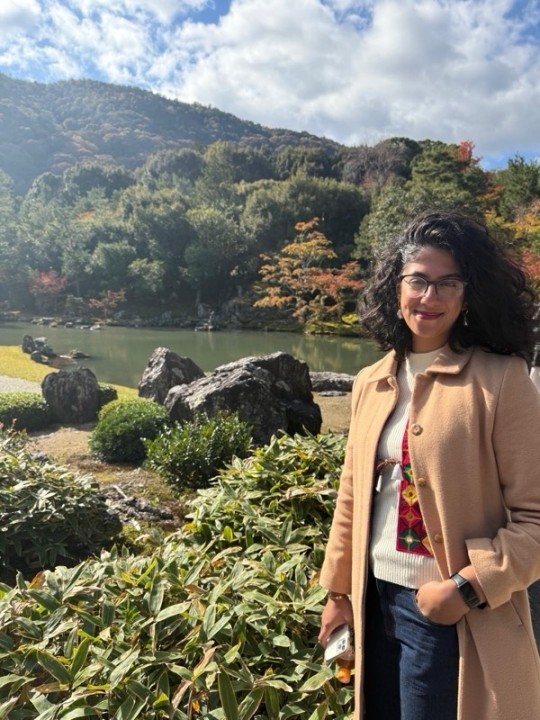

What Scholarship Recipients Say
Advice and insights from international students who successfully secured funding to study at University of Tokyo.
"I am a recipient of the Japanese Government Monbukagakushou (MEXT) Scholarship at the University of Tokyo. It is a program under which a limited number of students from many countries over the world are given the chance by the Japanese Government to pursue their education in Japan with their tuition fee covered in addition to being given a stipend of around 100k-150k yen (depending on your program) for your transport and living expenses."
"I’m Jagreet Dasgupta, a MEXT Scholar from India and I’m currently pursuing my research on Graph Theory at the University of Tokyo. I did my bachelor’s degree in electrical engineering but always had my passion for Computer Science so when I received the scholarship to pursue higher education in the same field in Japan nonetheless, it was a dream come true!"
"I have done my bachelor's Degree in Electrical Engineering and maintained a GPA of 8-8.5 across all my semesters. While this would be enough for meeting the eligibility for the scholarship, I believe my publishing a research paper on graph theory in my first year is what really got me the scholarship as it not only guaranteed my command over the subject..."
"I received the MEXT undergraduate scholarship, which covers full tuition fee + 120,000 JPY of monthly stipend for a period of 5 years"
"My advice is to obsessively scour the Japanese academics till you find someone who is willing to take you on."
"Another major challenge was to find entirely English degree programs and Professors who had high-level proficiency to support my academic journey."
Frequently asked questions
Common questions about scholarships, admissions, and studying at University of Tokyo.
If you’re looking for a scholarship to study an entire UTokyo degree fully online, that’s uncommon. Most UTokyo funding assumes you will be enrolled and studying in Japan (or at least formally enrolled as a UTokyo student).
Both exist, but it depends on the program. UTokyo notes that many undergraduate programs are primarily in Japanese and require sufficient Japanese ability at the time of admission, while it also offers English-taught tracks.
This matches recipient experiences too: Lim Zi Heng described doing intensive Japanese preparation and said his “undergraduate program at the University of Tokyo were taught in Japanese,” while Ana García Fierro specifically looked for “degree programs that were taught in English” when planning her path.
It depends on the scholarship. Many university/private scholarships do not use a single, universal “UTokyo age limit,” but some government-tied scholarships (including MEXT-related routes run through UTokyo units) do set birthdate/age conditions.
For example, UTokyo’s School of Science scholarship information (for a MEXT-linked track) states an age condition such as being “born on or after” a certain date.
UTokyo scholarships are available across a wide range of subjects, often university-wide (tuition exemptions, general international scholarships), and also through faculty/graduate-school specific programs. UTokyo also lists many scholarships offered by private organizations that cover diverse academic areas.
- Medicine / health: UTokyo’s Graduate School of Medicine includes internationally oriented programs—e.g., the School of International Health is described as an English-operated program where academic activities are conducted in English and “no Japanese competency is required,” and a large share of students are international. International students can be eligible for medicine-adjacent graduate degrees (public health, global health, international health) and related scholarships.
- Engineering / STEM: UTokyo has STEM-focused scholarships (including science-focused calls and MEXT-linked university recommendation routes hosted by specific graduate schools/faculties).
- Business / public policy: UTokyo’s public policy ecosystem (e.g., GraSPP) publicizes multiple scholarship routes (including well-known international development/public-policy scholarships, depending on the year).
- Humanities: UTokyo provides scholarships across disciplines
Medicine note (international students): International students can pursue medicine-related graduate programs at UTokyo (including English-operated ones), but for Japanese-taught undergraduate study (including many science/medical tracks), UTokyo cautions that a high level of Japanese proficiency is needed for Japanese-medium programs.
Many UTokyo scholarships are open to international students of various nationalities, but the exact eligibility depends on the funding source.
- UTokyo/private scholarships: Some are broadly open; others restrict eligibility by nationality/region (especially private foundation scholarships).
- MEXT-related scholarships: Nationality rules are set by MEXT (and can change by scholarship type/year). UTokyo’s MEXT-related calls has “eligible nationalities” defined by MEXT.
It depends on your program language and route. For Japanese-taught programs, UTokyo emphasizes that a high level of Japanese proficiency is required. For English-taught programs, English test scores are often requested (unless you qualify for an exemption).
Recipients show how variable this can be: Jagreet Walia said “TOEFL is mandatory,” while Ana García Fierro noted, “I did not have to take the IELTS or TOEFL exam” for one stage of her journey, but later added, “I only had to take the TOEFL, since my degree was taught in Spanish,” and “I also had to take the JLPT exam, and I got N3.” Meanwhile, Lim Zi Heng shared that in his case “Japanese proficiency is considered extra credit rather than mandatory,” even though he still invested heavily in Japanese study.
UTokyo does not have one single minimum grade that applies to every faculty/program and scholarship. Admissions and scholarships are program-specific and competitive.
Strong academics plus a clear fit with your chosen program matter a lot, especially evidence that you can thrive in the language of instruction and in UTokyo’s research/rigor.
- High grades and readiness: Jagreet Walia reported “maintaining a CGPA between 8 and 8.5,” while Lim Zi Heng cited a “Singapore A-level results of 4A*s” and described multi-stage screening and exams.
- Research alignment: Jagreet emphasized research preparation (e.g., publishing and workshops) as part of his profile.
- Proactive academic networking: Ana García Fierro described reaching out to professors and preparing targeted materials for research fit.
Documents vary by program (undergraduate vs graduate, faculty, and scholarship route), but commonly include: application forms, transcripts, graduation certificates, ID/passport pages, recommendation letters, essays/research plans, and proof of language proficiency where required.
Concrete examples: UTokyo’s Graduate School of Medicine application guide (School of Public Health) lists items such as an application form with photos, self-addressed envelopes, an exam fee (with exemptions for MEXT scholars), and academic transcripts among the required application documents. For MEXT-related scholarship routes, UTokyo-hosted guidelines commonly require records like official transcripts, proof of graduation/expected graduation, and evidence of academic excellence, and may require English score reports (e.g., TOEFL/IELTS) unless you qualify for a waiver.
Recipient experience can feel surprisingly “administrative”: Ana García Fierro said, “The paperwork was pretty straightforward,” while Lim Zi Heng described an initial “document screening” phase before exams/interviews.
Yes, most UTokyo admissions routes charge an application/examination fee, and amounts depend on the program.
There are many degrees that are open to international students right now — find yours.
About the Author: Hyun Lee


Is there no program where I can be enrolled for 4 years of university education in a engineering course?
Hello, the bachelor’s program at the University of Tokyo including engineering takes 4 years to complete
How can I apply for this university? I am from Nepal. Can i get full scholarships?
Hello, check the Admissions Section for more information! The application procedure is pretty much the same for every nationality as an international student, and yes, there are full scholarships that are offered to international students at the University of Japan
I’m interested in exploring a Masters program in pharmaceutical drug manufacturing or international development studies
Awesome, check to see if the University of Tokyo has those courses available!
Do I need to be speaking Japanese to get a bachelor in robotics?
Yes, you do need to speak Japanese, but you can learn in a Japanese language school. There’s no “robotics” per se, but there’s relative fields like mechanical engineering, computer science, etc.
Hello
Is there anyone who can guide me through the MEXT scholarship, I want to apply for bachelors degree?
Hello, check out our consultation page! Also, you can see the MEXT Scholarship Recipients Stories to help you out!