
Japanese Government (MEXT) Scholarship 2027 (Fully Funded)
The MEXT Scholarship is a fully funded Japanese government program that supports international students pursuing undergraduate, master’s, or doctoral degrees at Japanese universities. It is offered through two tracks: the Embassy Track, where applicants apply through Japanese embassies in their home countries, and the University Track, where students apply directly to Japanese universities. Administered by the Ministry of Education, Culture, Sports, Science, and Technology, the scholarship aims to foster global academic exchange, strengthen international ties, and develop skilled professionals who contribute to both Japan and their home countries.
If you are interested, check out the available courses for international students in different institutions, such as the bachelor’s courses and Master’s courses for international students.
Japanese Government (MEXT) Scholarship Coverage
This government fully funded scholarship for international students covers the following:
-
Tuition Fees
-
¥143,000 to ¥145,000 per month for research students
-
¥117,000 for undergraduate students
-
Round-trip travel expenses
Japanese Government (MEXT) Scholarship Eligibility Criteria
To be eligible for Japanese Government (MEXT) Scholarship, you need to meet the following criteria:
- Citizens of a country with diplomatic relations with Japan
- Between the ages of 17 and 25 for undergraduate students
- Under the age of 35 for research students
- Students who sat for the required examinations for their degree
For detailed requirements, refer to the official eligibility page .
Eligible degree levels
Eligible programmes
Eligible nationalities
How to Apply
In this section, we'll provide a clear general overview of requirements and steps to guide you through the application process for Japanese Government (MEXT) Scholarship.
To apply for Japanese Government (MEXT) Scholarship, please follow these steps:
-
Visit the Japanese embassy website of your country
-
Download and fill out the application form
-
Submit the required documents
-
Sit for the interview
Important Note: The application procedures and required documents for Japanese Government (MEXT) Scholarship may vary depending on your degree, program, nationality and other factors. For specific details regarding the requirements, kindly visit the official website of Japanese Government (MEXT) Scholarship.
Application Deadlines
Now that you’re familiar with the application procedure, it’s time to know the application dates! Knowing the dates for Japanese Government (MEXT) Scholarship will help you prepare early and it will also give you the time you need to put together a competitive application.
Application deadlines vary
The application deadlines for Japanese Government (MEXT) Scholarship vary. It’s important to review official guidelines on the official website or contact administrators for specific deadlines. Make sure to regularly check the Japanese Government (MEXT) Scholarship page for the latest and most accurate information on application deadlines.
Japanese Government (MEXT) Scholarship Eligible Institutions
The eligible institutions for Japanese Government (MEXT) Scholarship are listed below:
H
J
K
- Kagawa University
- Kagoshima University
- Kanagawa University
- Kanazawa University
- Kansai Medical University
- Keio University
- Kindai University
- Kobe University
- Kochi University
- Kumamoto University
- Kurume University
- Kwansei Gakuin University
- Kyorin University
- Kyoto Institute of Technology
- Kyoto University
- Kyushu Institute of Technology
- Kyushu University
N
S
T
U
Japanese Government (MEXT) Scholarship Recipients
Meet students who have received Japanese Government (MEXT) Scholarship and learn how they secured their award.









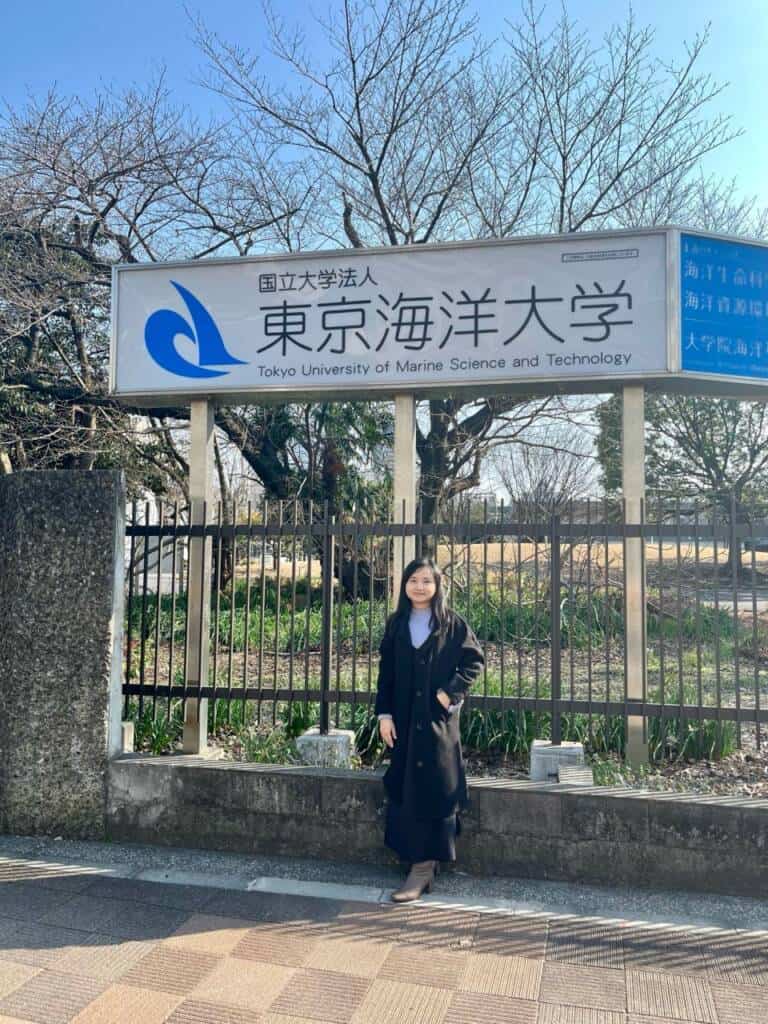
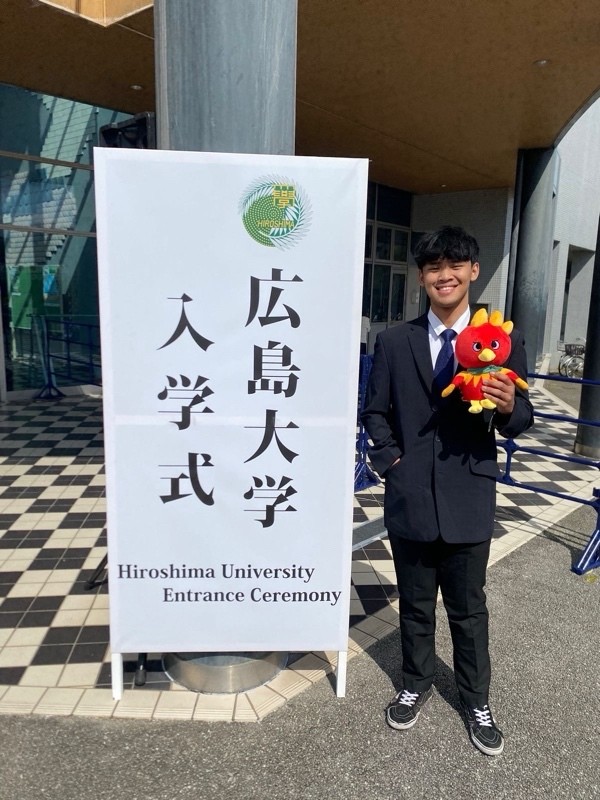

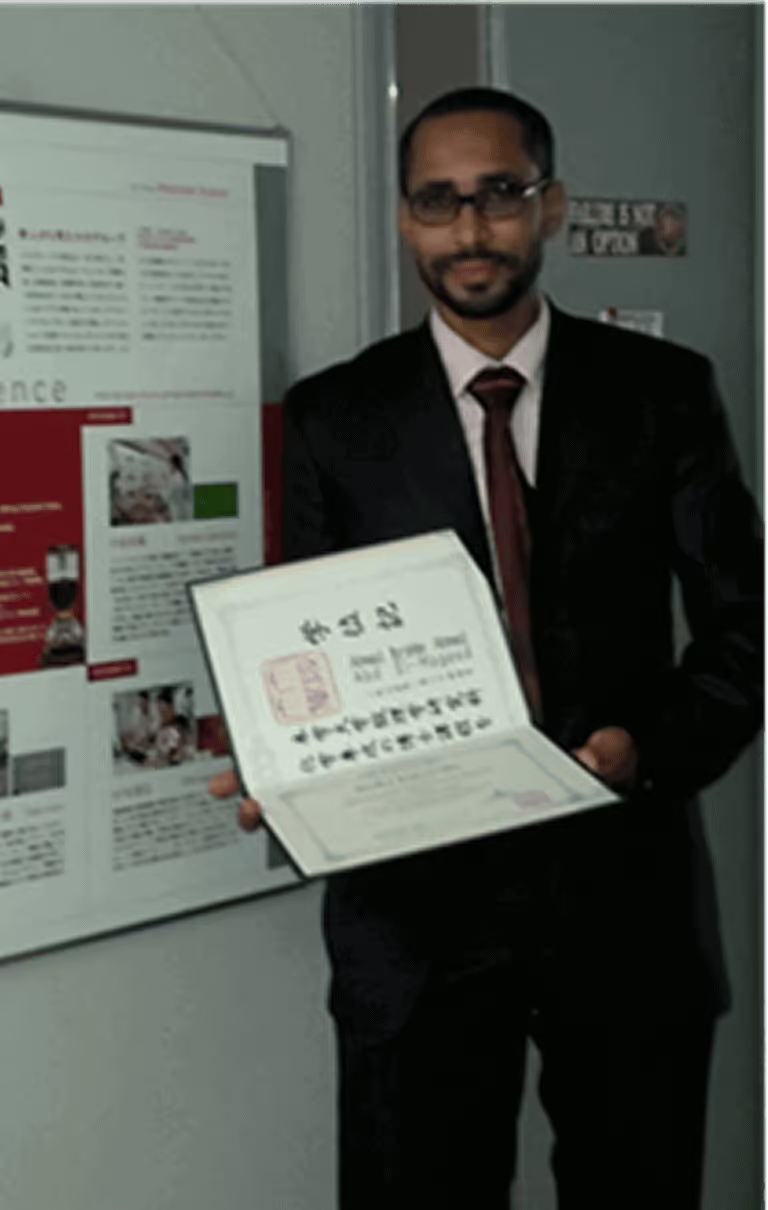





The recipient stories include 48 accounts of degree study supported by Japanese Government (MEXT) Scholarship.
Nationalities Represented in the Recipient Stories
| Nationalities | Stories per nationality |
|---|---|
| Pakistani | 14 |
| Indonesian | 10 |
| Indian | 8 |
| Cambodian, Filipino | 2 each |
| Bangladeshi, Burmese, Egyptian, Italian, Malaysian, Nepali, Nigerian, Paraguayan, Peruvian, Thai, Vietnamese | 1 each |
Degree Study Reported by Recipients
| Degree level | Stories | Subjects |
|---|---|---|
| Bachelor’s | 9 | Chemical Engineering; Chemical Science and Technology; Information and Electrical Engineering; Integrated Global Studies; Global Liberal Arts; Global Business |
| Master’s | 20 | International Relations; Biochemical Engineering; Information Sciences; Computer Science; Environmental Molecular Biology; Electrical and Electronic Engineering; Automotive Science; Biotechnology; Frontier Engineering; Creative Science and Engineering; Information Science; Urban Planning; Materials Innovation; Civil and Environmental Engineering; Natural Resource Economics; Engineering; International Development; International Culture and Communication Studies |
| PhD | 19 | Chemical Engineering; Materials Science; Applied Chemistry; Civil and Structural Engineering; Energy Systems; International Public Policy; Chemistry and Nanomaterials; fish-disease epidemiology; Biological Chemistry and Engineering; Environmental Engineering; Biological Sciences; Urban Planning; Structural Biology and Biophysics; International Culture and Communication Studies |
Funding Reported by Recipients
| Recipient and degree/program | Reported coverage |
|---|---|
| Jillian Abigail Sutrisno — Bachelor’s in Chemical Engineering and Biotechnology, Nagoya University | Full tuition, registration and application fees, airfare and JPY 120,000 per month for four years. |
| Lim Zi Heng — Bachelor’s in Chemical Engineering, University of Tokyo | Full tuition and JPY 120,000 per month for five years, including a preparatory year before the four-year undergraduate degree. |
| Griselda — Bachelor’s in Chemical Science and Technology, Kyoto University | Full tuition exemption, JPY 120,000 per month and return airfare; preparatory Japanese courses were also funded. |
| Kartika — Master’s in Biotechnology, Osaka University | JPY 144,000 per month plus JPY 3,000 in city living allowance. |
| Reno Muhammad Fadilla — Master’s in Frontier Engineering, Kanazawa University | Full tuition, return airfare and approximately JPY 144,000 per month. |
| Myrian Coronel — Master’s in International Development, Nagoya University | Full tuition and fees, JPY 143,000 per month and return airfare between Paraguay and Japan. |
| Muhammad Abdullah (October 2021–September 2024) — PhD in Civil Engineering (Structural Engineering), Nagoya University | Full tuition, JPY 148,000 per month and return travel at the beginning and end of the scholarship. |
| Chaw Su Thin — PhD research in fish-disease epidemiology, Tokyo University of Marine Science and Technology | Tuition and research expenses, plus approximately JPY 140,000 per month. |
| Dr. Ahmed Ibrahim — PhD in Chemistry (Nanomaterial Science), Osaka University | MEXT covered full tuition and living expenses from April 2015 to September 2016. Earlier Egyptian Joint Supervision funding and an overlapping Osaka University fee waiver were separate components. |
Examples of Featured Recipients’ Application Backgrounds
| Recipient and degree/program | Scholarship/application route | Reported background and preparation |
|---|---|---|
| Jillian Abigail Sutrisno — Bachelor’s in Chemical Engineering and Biotechnology, Nagoya University | University Recommendation via Nagoya G30 | Cambridge curriculum; average school marks of 95.4% and second in school. Prepared translated parental income documents and described high-school research and future scientific plans. |
| Raghav Bansal — Bachelor’s in Information and Electrical Engineering, Kyushu University | Undergraduate MEXT selection | JEE Advanced All India Rank 2316 and one year at IIT Kanpur before moving to Japan; described a clear interest in engineering and cross-cultural collaboration. |
| Griselda — Bachelor’s in Chemical Science and Technology, Kyoto University | Kyoto iUP followed by MEXT support | A-Level Mathematics A*, Physics A*, Chemistry A and English A*; school salutatorian and participant in national and international science competitions. |
| Kartika — Master’s in Biotechnology, Osaka University | University Recommendation – special program | Biology bachelor’s at University of Indonesia, GPA 3.71/4.00. Undergraduate recombinant-protein research in E. coli aligned with the proposed molecular-microbiology work. |
| Reno Muhammad Fadilla — Master’s in Frontier Engineering, Kanazawa University | University Recommendation | Electrical Engineering bachelor’s at UIN Bandung, GPA 3.84/4.00; solar-energy thesis and more than a year working on smart-farming products. |
| Myrian Coronel — Master’s in International Development, Nagoya University | Embassy Recommendation in Paraguay | Researched development programs, supervisors and departments; used earlier scholars’ advice to prepare for the document and interview stages. |
| Muhammad Abdullah (October 2021–September 2024) — PhD in Civil Engineering (Structural Engineering), Nagoya University | University Recommendation | Civil Engineering bachelor’s, CGPA 3.438/4.0, and Structural Engineering graduate degree, CGPA 3.408/4.0, both at UET Lahore; structural-design and university engineering work preceded the doctorate. |
| Oluwaseyi Aderemi Ajala — PhD in Applied Chemistry, Hiroshima University | MEXT doctoral application | Earlier polymer synthesis research using Carica papaya seed oil informed a sustained interest in sustainable materials; used former recipients’ accounts to prepare documents and supervisor approaches. |
| Chaw Su Thin — PhD research in fish-disease epidemiology, Tokyo University of Marine Science and Technology | University Recommendation | Research background and English preparation supported the fish-disease epidemiology doctorate; reported IELTS overall 6.5 for the MEXT application. |
How Recipients Met Language Requirements
| Language requirement route | Stories / total funded degree-study stories | Recipients and examples |
|---|---|---|
| IELTS | 9/48 | 8.0 (Manish Jung Pulami, Muhammad Hamza Mehdi); 7.5 (Bintang Bondan Ernowo, Muhammad Athala); 6.5 (Chaw Su Thin, Mazhar Iqbal); IELTS taken for the application (Agnese Dionisio, Griselda, Reno Muhammad Fadilla). |
| TOEFL | 7/48 | 109/120 (Shripriya); 85 (TOEFL iBT) (Myrian Coronel); TOEFL taken for the application (Ana Waqar, Jorge Enrique Ascencio-Damian, and 3 others). |
| TOEFL iBT submitted for the application | 2/48 | TOEFL iBT proficiency submitted (Gardin, Keane Edbert Walerian). |
| IELTS proficiency accepted by the host | 1/48 | IELTS proficiency accepted for the Chuo application (Ayu Dianita Sari). |
| Prior English-medium education or institutional proof accepted | 10/48 | Prior English-medium education or institutional English-proficiency proof accepted for the reported scholarship or host application (Anushka Dinesh, Genes P. Maylem, and 8 others). |
| IGCSE First Language English accepted | 1/48 | Grade A accepted by Nagoya instead of IELTS or TOEFL (Jillian Abigail Sutrisno). |
| English-test exemption for the reported application | 3/48 | TOEFL not required for the reported Embassy-track application (Nauman); IELTS not required for the reported MEXT application (Mazhar Iqbal); External IELTS not required after passing the Embassy English examination (Lyhong So). |
| Embassy English examination | 5/48 | Embassy English examination taken for the application (Ana Waqar, Azeem Ullah, and 3 others). |
| Embassy Japanese examination | 3/48 | Embassy Japanese examination taken for the application (Ana Waqar, Lim Zi Heng, Manish Jung Pulami). |
| TOEIC | 1/48 | TOEIC taken for the application (Shaharyar Brohi). |
| English proficiency examination | 1/48 | English proficiency examination taken for the application (Ali Ahsan). |
| JLPT | 1/48 | JLPT result submitted for the graduate application (Agnese Dionisio). |
Standardized Tests Reported by Featured Recipients
| Test | Stories reporting the test / total funded degree-study stories | Linked recipients and reported scores |
|---|---|---|
| Cambridge A-Levels | 3/48 | Mathematics A*, Physics A*, Chemistry A (Jillian Abigail Sutrisno); Mathematics A*, Physics A*, Chemistry A, English A* (Griselda); Four A* grades (Lim Zi Heng). |
| Cambridge IGCSE O-Level | 1/48 | Mathematics, Chemistry, Physics and Biology A*; First Language English A (Jillian Abigail Sutrisno). |
| MEXT written selection examination | 4/48 | Science selection examination taken (Lim Zi Heng, Raghav Bansal); Embassy written selection examination passed (Lyhong So, Mazhar Iqbal). |
| University of Tokyo entrance examination | 1/48 | Entrance examination passed before starting the master’s (Ana Waqar). |
Application Timelines Reported by Recipients
| Recipient and degree/program | Application or scholarship route | Reported application timeline |
|---|---|---|
| Lanta Suwanlikit — Bachelor’s in Global Business (Economics and Management), University of Hyogo | University Recommendation at University of Hyogo | University entrance interview on March 29; acceptance and MEXT eligibility notice on April 14; document submission deadline April 26; second screening interview May 19; finalist notification May 25 in her reported application cycle. |
| Kartika — Master’s in Biotechnology, Osaka University | University Recommendation | Began preparing around March 2023; submitted the graduate-school application in November 2023; received the nomination letter a month later; final results came in early July 2024, ahead of October enrollment. |
| Myrian Coronel — Master’s in International Development, Nagoya University | Embassy Recommendation in Paraguay | Document screening was followed by an interview in Spanish, English and some Japanese; each stage took around one or two months. |
Interview Experiences Reported by Recipients
| Recipient and degree/program | Reported interview experience |
|---|---|
| Raghav Bansal — Bachelor’s in Information and Electrical Engineering, Kyushu University | Described questions about his motivation for Japan, engineering interests and plans; emphasized honest answers grounded in his own goals. |
| Kartika — Master’s in Biotechnology, Osaka University | An oral biotechnology entrance examination required fundamental subject answers on the spot, beyond the motivation and research discussion she had expected. |
| Manish Jung Pulami — PhD in International Public Policy, Osaka University | After passing English and Japanese written examinations, discussed research goals, motivation and long-term academic plans with an Embassy official and a former MEXT scholar. |
Teaching Language Reported by Recipients
| Recipient and degree/program | Reported teaching language |
|---|---|
| Lim Zi Heng — Bachelor’s in Chemical Engineering, University of Tokyo | Described the preparatory and university route as Japanese-medium. |
| Griselda — Bachelor’s in Chemical Science and Technology, Kyoto University | English lectures were available throughout the first year; Japanese lectures increased from the second year. |
| Jillian Abigail Sutrisno — Bachelor’s in Chemical Engineering and Biotechnology, Nagoya University | The G30 program is taught in English. |
| Gardin — Master’s in Materials Innovation, University of Tsukuba | Materials Innovation courses were entirely in English; optional courses from other departments could be in English or Japanese. |
| Myrian Coronel — Master’s in International Development, Nagoya University | Coursework, supervision and thesis writing were in English. |
| Agnese Dionisio — PhD in International Culture and Communication Studies, Waseda University | Mainly English, with some Japanese courses, including interpreting. |
What Recipients Pursued After Their Scholarship-Funded Studies
| Recipient | Scholarship-funded degree/program | Reported outcome or current status |
|---|---|---|
| Ali Raza (2021–2023) | Master’s in Electrical and Electronic Engineering, Tokai University | Works as a Process Integration Engineer at a global semiconductor manufacturer in Hiroshima. |
| Iqra Ali | Master’s in Engineering, Nara Institute of Science and Technology | Pursuing a UKRI-funded PhD in Computer Science at Queen Mary University of London, continuing work on NLP and AI for social good. |
| Shubham Verma | Master’s in Information Technology and High-Performance Computing, Tohoku University | Continued into a MEXT-funded PhD in high-performance computing at Tohoku University. |
| Dr. Usama Perwez | PhD in Energy Systems, Osaka University | Became Associate Head of the Mechanical Engineering Department at NUST in Pakistan. |
| Oluwaseyi Aderemi Ajala | PhD in Applied Chemistry, Hiroshima University | Completed the doctorate in March 2025. |
| Dr. Ahmed Ibrahim | PhD in Chemistry (Nanomaterial Science), Osaka University | Worked as a Faculty Fellow/Assistant Professor at Osaka University and later as an Associate Professor at GALALA and Minia universities in Egypt. |
| Ali Ahsan | PhD in Science (Structural Biology and Biophysics), Osaka Metropolitan University | Ongoing doctorate; secured a JSPS Postdoctoral Fellowship at Nagoya University scheduled to start in March 2027. |
Other Offers in Featured Applicants’ Journeys
| Recipient | Reported alternative | Decision described in the story |
|---|---|---|
| Jillian Abigail Sutrisno — Bachelor’s in Chemical Engineering and Biotechnology, Nagoya University | MEXT Scholarship offer for the ISP Chemistry program at Hokkaido University. | Enrolled at Nagoya University in Chemical Engineering and Biotechnology. |
| Reno Muhammad Fadilla — Master’s in Frontier Engineering, Kanazawa University | Fully funded Electrical Engineering offer at King Fahd University of Petroleum and Minerals: tuition, accommodation, return airfare including an annual holiday trip, and approximately SAR 2,500 per month. | Pursued the Frontier Engineering master’s at Kanazawa University. |
| Muhammad Umar Nadeem — PhD research in climate change and water resources, University of Tsukuba | ANSO Doctorate Scholarship awarded by the Chinese Government. | Reported MEXT-funded doctoral research at University of Tsukuba. |
What Japanese Government (MEXT) Scholars Say
Advice and reflections from scholars about the Japanese Government (MEXT) application process and programme.
"The scholarship fully covers tuition, provides a monthly stipend, and includes round-trip airfare between Japan and my home country."
"The scholarship covers round-trip airfare from my home country to Japan, tuition fees, and a monthly living stipend of approximately $1,000 USD"
"Applying for the MEXT scholarship is actually straightforward. The official embassy guidelines available on their website are very clear and sufficient."
"I carefully went through the course guide to identify professors whose areas of expertise overlapped with mine."
"Our university has an organization for supporting international students, either for consultation or other things, with staff who can speak English."
"Studying in Japan has been a life-changing experience. The culture, discipline, and academic atmosphere at JAIST are truly inspiring."
Frequently asked questions
Common questions about Japanese Government (MEXT) Scholarship, eligibility, funding, and applications.
Yes. The Global Scholarships MEXT page describes it as a fully funded Japanese government scholarship that covers tuition fees, a monthly stipend, and round-trip travel expenses. The page also notes that research students generally receive ¥143,000 to ¥145,000 per month, while undergraduate students generally receive ¥117,000 per month. According to Genes P. Maylem, the scholarship “fully covers tuition, provides a monthly stipend, and includes round-trip airfare between Japan and my home country.”
MEXT supports Bachelor’s, Master’s, and PhD studies in Japan. Recipient stories also show that students have used it for undergraduate, master’s, doctoral, research, and teacher-training pathways. For example, Ayush Dixit used MEXT for a bachelor’s degree, while Chhay LIM received it under the Research Student category for a master’s degree.
There are two main application routes: the Embassy Track, where students apply through Japanese embassies in their home countries, and the University Track, where students apply directly through Japanese universities. Chaw Su Thin explained this clearly: “There are two types of MEXT Scholarships: University Recommendation and Embassy Recommendation.”
The general Global Scholarships overview says applicants commonly need academic transcripts, a certificate of graduation or enrollment, a recommendation letter, a health certificate, a language proficiency certificate, and thesis abstracts for research students. From a recipient perspective, Lubanda (Luyando) Hamweendo said, “I prepared and gathered supporting documents early: transcripts, recommendation letters, a polished CV, and any required certificates.” Jawad Khan also advised applicants to “Start early—give yourself months to gather documents, refine your research proposal, and seek feedback.”
It depends on the program. Many MEXT recipients study in English-taught programs, but learning Japanese still helps a lot with daily life and integration. Gardin, a MEXT scholar at the University of Tsukuba, said that “the courses are entirely conducted in English” in his program. At the same time, he added that basic Japanese is highly recommended for everyday life. Chhay LIM also noted that “MEXT requires you to sit for a written English and Japanese language examination” depending on your study language and route.
Across the recipient stories, the strongest applications are usually well-prepared, clearly aligned with the chosen university or professor, and backed by a strong academic or professional story. Ragini Kumari said, “I carefully went through the course guide to identify professors whose areas of expertise overlapped with mine.” Likewise, Lubanda (Luyando) Hamweendo emphasized tailoring the proposal to the supervisor’s research, and Jawad Khan stressed refining the research proposal early and seeking feedback.
No single deadline applies to everyone. Deadlines vary by institution, which is why applicants should check the Japanese embassy in their country or the specific university handling the nomination. Since procedures can differ by route and degree level, it is best to confirm dates directly from the relevant official source before applying.
Recipient stories suggest that the experience can be academically demanding but very supportive and rewarding. Gardin said his university had “an organization for supporting international students” and also provided tutors, dormitory options, and free Japanese courses. Jawad Khan described studying in Japan as “a life-changing experience,” adding that the academic atmosphere and support from professors and lab members were major highlights.
There are many degrees that are open to international students right now — find yours.

Is one required to be official accepted into a Japanese university prior to applying for this scholarship via Japanese embassy ?
No, you will apply for the embassy first
Can I apply to a school offering culinary arts courses to undergraduate students through Mext
Hello, I’m not too sure
I’m lost a bit in the process. Do you mind if I message you privately for assistance and guidance?
Hello, check out our consulting services page!
What is MEXT scholarship? Does it cover bachelor’s program language course?
Hello, yes, MEXT scholarship covers one year of Japanese language course
So am I supposed to apply a university first and then the scholarship or what am a bit lost on the application process
Hello, there are two tracks, embassy track and university track. I suggest going to MEXT scholarship success stories to find more information!
Hello do I need good grade to apply
Hello, good grades will certainly help your chances:)
The interview is it through video call and is it in English
It should be in English if you are studying in English (and a bit in Japanese if you are studying in Japanese) and through a video call!
When is the application starting and ending for 2026
Hello, it’s country and track specific, but it should start in February
Because of my background I can’t afford to pay for university next year. But If am offered with a scholarship abroad for university, I will fullfil my career
Best of luck to you!
Can I still apply for bachelor’s degree in English for mext scholarship now? It’s 30th of December 2025
Hello, the application opens on April and ends in June for embassy track for undergraduate students, so you should start preparing your application now
How do I apply for the scholarship
Hello, please see the scholarship page!
Is it certain to write an exam as part of the application process?
No, it’s not certain; in fact, most recipients do not have an entrance exam. However, you may need to do standardized exams like JLPT, IELTS/TOEFL, etc
hello can i apply i am from Afghanistan