
Commonwealth Shared Scholarship Recipient, Vaibhav Sonone from India, Shares His Journey of Pursuing an MSc in Environment and Development at the University of Leeds, United Kingdom
University: University of Leeds, United Kingdom
Degree: MSc in Environment and Development
Previous Education: MA in Development, Azim Premji University (CGPA 7.49) || BA in Political Science, Economics, and Sociology, Fergusson College, Pune (75.8%)
Scholarship: Commonwealth Shared Scholarship (FCDO & University of Leeds) – Fully Funded (tuition, stipend, travel, and academic costs, valued at approx. £50,000)
Other Offered Scholarships: Chevening Scholarship – Fully Funded (UK Government)
Social Media
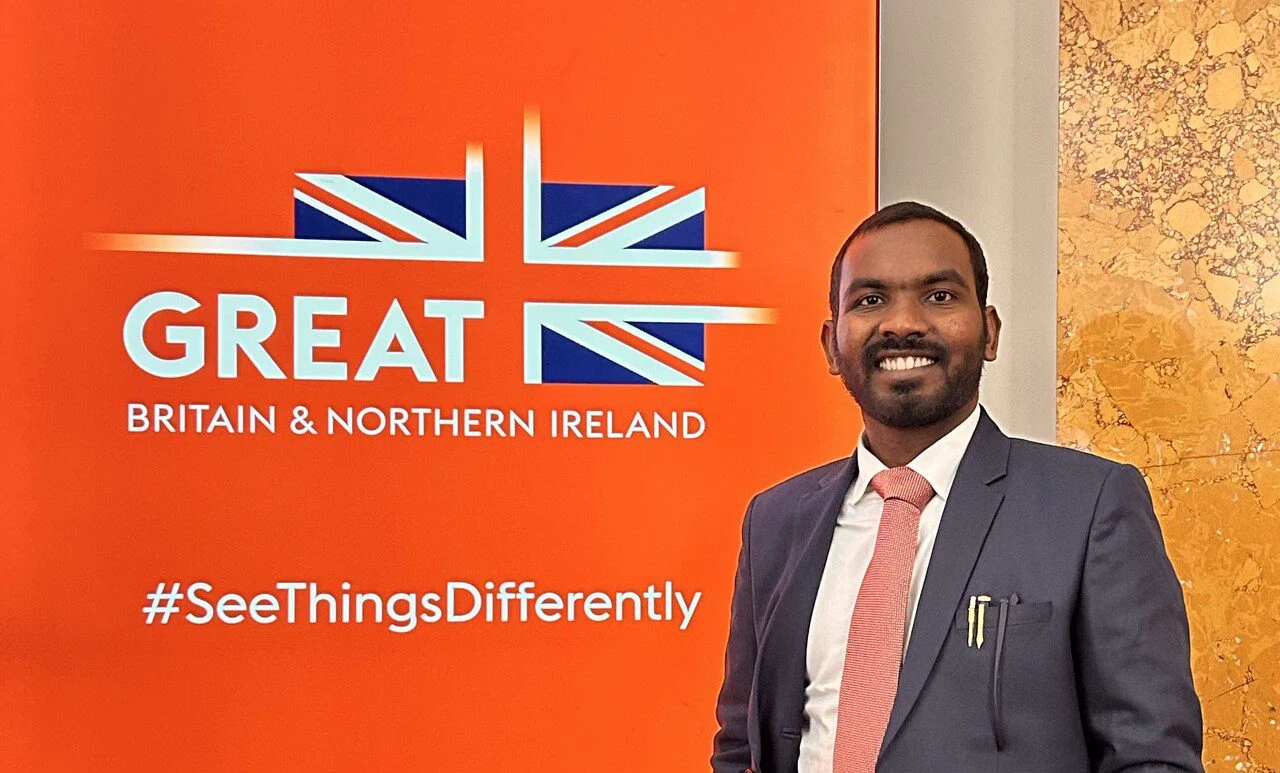
The Journey
I am Vaibhav Sonone, a first-generation learner from a marginalised rural community in Maharashtra, India. Growing up, I witnessed the challenges created by poverty, social exclusion, and a lack of representation in education. These early experiences rooted my commitment to social equity and shaped my path as a development practitioner. For the past nine years, I have worked with Indigenous communities in the Central India Tribal Region, focusing on climate-resilient livelihoods, natural resource governance, women’s leadership, and sustainable development. My journey, from a small village to becoming a Commonwealth Shared Scholar at the University of Leeds, has strengthened my belief that education and empathy can transform not just individuals but entire communities.
Commonwealth Shared Scholarship Details
I was awarded the Commonwealth Shared Scholarship (2023–24), jointly funded by the UK Foreign, Commonwealth & Development Office (FCDO) and the University of Leeds, to pursue the MSc in Environment and Development. The total value of the award was approximately £50,000, covering full tuition fees, living expenses, travel, and other academic costs.
Were You Offered any Other Scholarships?
Yes. Along with the Commonwealth Shared Scholarship, I was also awarded the Chevening Scholarship, another fully funded UK government scholarship. Since both awards covered full tuition and living expenses, I had to choose one, and I decided to accept the Commonwealth Shared Scholarship. My decision was guided by its strong alignment with my long-term commitment to sustainable development, climate adaptation, and working with marginalised and Indigenous communities in India. Although I could accept only one, receiving both awards reinforced my belief that strong preparation, purpose-driven goals, and mentorship can open multiple pathways for first-generation learners like me.
Educational Background
I hold an MSc in Environment and Development (Merit) from the University of Leeds, supported by the prestigious Commonwealth Shared Scholarship (FCDO, UK). The programme strengthened my grounding in climate adaptation, political ecology, natural resource governance, and mixed-methods research, directly shaping my professional and academic interests. I also completed an MA in Development (CGPA 7.49) from Azim Premji University, where I developed strong foundations in social policy, gender, governance, and community-based research through intensive fieldwork in tribal regions. My undergraduate degree in Political Science, Economics, and Sociology (75.8%) from Fergusson College, Pune, provided interdisciplinary analytical skills. Together, these degrees prepared me to work at the intersection of climate change, indigenous livelihoods, gender, and participatory governance, and motivated me to pursue advanced research in these fields.
How Did You Find Information About Scholarships and Institutions?
My journey toward applying for international scholarships was strongly shaped by collective support. The Eklavya India Foundation played a crucial role by helping me connect with mentors who guided me through the process. I also relied on insights from friends who had previously studied in the UK, whose experiences gave me clarity on courses, universities, and application strategies. Further, my friend Abhishek Kumar and my partner Snehal Tanpure supported me consistently, reviewing my essays, sharing resources, and motivating me at every stage. Their guidance was instrumental in helping me navigate the entire process with confidence.
Did You Take Any Standardized Tests? If So, How Did You Prepare for Them?
Yes, I took the IELTS exam and scored an overall 6.5 band. I prepared mainly through online resources, dedicating 2–3 hours daily for about a month. I practised extensively using mock tests available on various online platforms, which helped me understand the pattern and improve my timing. For the writing section, a friend reviewed my essays and provided detailed feedback, which significantly strengthened my responses. I also watched several IELTS preparation videos and interviews on YouTube to enhance my listening and speaking skills. Overall, a combination of structured online materials and peer support played a major role in my preparation.
How Did You Prepare to Apply to the Scholarship?
For Chevening, I was supported by a close group of 5–6 friends and mentors. Since English is not my first language, understanding the deeper meaning of feedback was initially challenging. My process became cyclical: I drafted the essays, shared them with mentors for feedback, and then discussed that feedback with my friend Abhishek, who helped me break it down into clear, actionable steps. I revised each essay multiple times, about 8–9 versions of the leadership essay and 4–5 versions of the remaining three essays, until the narrative became strong and coherent.
For the Chevening interview, I prepared rigorously by completing 16–17 mock interviews with Chevening Scholars. Additionally, Abhishek and my partner (wife), Snehal, conducted several practice interviews. Though they were not Chevening Scholars, they helped refine my communication style, clarity, structure, and timing. Also, I connected people from Facebook and LinkedIn.
For the Commonwealth Shared Scholarship, I worked closely with two mentors, particularly Saurabh Vaitya, who guided me thoroughly despite the limited preparation time. I developed 4–5 improved drafts of each essay, ensuring clarity, strong linkage to development impact, and alignment with CSC themes.
Overall, mentorship, peer support, and repeated refinement played a crucial role in shaping my final scholarship applications.
How is (was) Your Experience at the Institution?
My experience at the University of Leeds as a Commonwealth Shared Scholar was deeply transformative, academically, professionally, and personally. Coming from a marginalised community and being a first-generation learner, the inclusive and supportive environment of Leeds made a profound difference. It was the first place where I felt that every student’s voice mattered, and this boosted my confidence tremendously.
The teaching approach at Leeds was unique: evidence-based, analytical, and grounded in real-world application. I learned to move beyond rote learning and engage in critical thinking, policy analysis, and interdisciplinary discussions. Modules that focused on climate adaptation, livelihoods, and development frameworks helped me directly shape my ongoing work with Indigenous communities in India. The DFID Sustainable Livelihoods Framework, studied in depth at Leeds, became the backbone of many livelihood models I later implemented.
Beyond academics, Leeds offered leadership and representation opportunities. Serving as a Course Representative and attending events such as the National Union of Students Conference taught me participatory governance, something that deeply influences my work today. Voting in the UK General Elections as an international student was a powerful lesson in inclusivity and civic value.
But the most meaningful part was the community. Support from professors, global peers, and the wider Leeds network encouraged me. The experience shaped my worldview, strengthened my commitment to equity, and empowered me to bridge global frameworks with grassroots realities. In every sense, Leeds was not just an academic institution but a turning point in my life, one that continues to shape my work, values, and leadership.
How Do You Rate the Institution Academically and Why?
I rate the University of Leeds 9 out of 10 academically because of its rigorous, evidence-based, and interdisciplinary teaching approach. The curriculum challenged me to move beyond rote learning and develop strong analytical, research, and critical-thinking skills, something my earlier education lacked. Faculty members were highly supportive, accessible, and deeply knowledgeable, encouraging open debate and diverse perspectives. The emphasis on linking theory with real-world application, especially through frameworks like the DFID Sustainable Livelihoods Framework, directly shaped my ongoing work with Indigenous communities in India.
The only reason I do not rate it a full 10 is that I believe increased opportunities for field immersion in Global South contexts would make the programme even stronger. Overall, Leeds provided an academically transformative environment that continues to influence my professional practice.
How Does the Institution Support International Students?
The University of Leeds provides comprehensive support to international students from arrival to graduation. Dedicated teams, the International Student Office, Student Visa Advice service, and Student Information Service, assist with visa and immigration, pre-arrival guidance, airport pick-ups, and arrival orientation. Academically, the university offers language support through free Academic English workshops, writing and study-skill sessions, and ongoing academic-skills support. For well-being, there is counselling and mental-health support available 24/7, enabling students to manage stress and adapt to a new environment.
Socially, opportunities such as the Global Community, Global Café, student unions, clubs and societies help international students integrate, build networks, and feel a sense of belonging within a diverse global campus. Overall, the university’s holistic support structure, academic, administrative, social and well-being, ensures a smooth and empowering experience for international students.
What Do You Think Made Your Application Stand Out?
What truly strengthened my application was the clarity of its purpose. I had a well-defined academic and professional objective, explaining why I wanted to pursue this course, how it aligned with my long-term development goals, and how the learning would directly benefit the communities I work with. I demonstrated strong knowledge of the programme and university, showing that my choice was intentional and research-driven. Equally important was the support of my mentors and close circle. My mentors guided me to refine my narrative, while Abhishek and Snehal helped me articulate my experiences with precision and authenticity. This combination of clear vision, grounded field experience, and thoughtful mentorship made my application stand out.
What Would You Have Done Differently if You Were Going Through the Process Again?
If I were to go through the application process again, I would start much earlier and give myself more structured preparation time. During my first attempt, I often worked very close to deadlines, which limited the time I had to reflect deeply, revise multiple drafts, and incorporate feedback effectively. I now realise how valuable it is to build a steady writing routine and maintain space for critical thinking.
I would also approach mentors earlier, rather than in the final stages. Meaningful mentorship requires time, discussion, refinement, and personal growth. Beginning the process early would have allowed me to explore my story more thoughtfully and create even stronger, more polished essays. Overall, I would focus more on planning, pacing, and intentional reflection, key elements that transform a good application into an exceptional one.
What Advice Would You Give Those Looking to Apply for a Similar Scholarship?
My biggest advice is to start early and treat the application as a journey of self-discovery, not just a formality. Scholarships like Commonwealth and Chevening look for clarity of purpose, so spend time understanding why you want to study, what you want to learn, and how you will use it to create impact.
Do not wait until the deadline to seek feedback. Mentorship is most valuable when it has time to evolve. I benefited from more than a dozen detailed reviews and multiple mock interviews; this depth only comes with early preparation.
Second, avoid copying templates. Your story, your values, and your lived experience are your strongest assets. Reflect honestly on your journey, your challenges, your community, and what shaped your worldview. Even simple experiences, if deeply analysed, can create powerful essays.
Third, research your course and university thoroughly. Show that you have engaged with the modules, professors, and academic culture. Scholarships reward applicants who know exactly how their chosen programme fits into their long-term goals.
Lastly, stay consistent and grounded. There will be moments of doubt, but persistence makes the difference. Use online resources, read successful essays, talk to alumni, join communities, and do not hesitate to ask for help. I never hesitated to ask for guidance, and every time, I received it.
If you start early, stay authentic, and keep refining, you will give yourself the best chance to succeed.
Want to submit your
scholarship journey?
Submit Your Story Here!
More Scholarship Recipients
Hi! My name is Banu, and I come from Kazakhstan. I was born and raised there, and upon high school graduation, I decided to .... Read more
Hello! My name is Yumna Arif, and I am from Pakistan. I hold a PhD in Business and Management from Warwick Business School, .... Read more
I am Vishnu Vardhan. I hail from the Telangana state of India. I hold a bachelor’s degree in electrical and electronics en .... Read more
Leave A Comment