
Erasmus Mundus Scholar, Tayyab Tahir from Pakistan, Shares His Journey of Studying Marine and Maritime Intelligent Robotics (MIR) at Université de Toulon and NTNU
University: Université de Toulon (France) & Norwegian University of Science and Technology (NTNU), Norway
Degree: Erasmus Mundus Joint Master’s in Marine and Maritime Intelligent Robotics (MIR)
Previous Education: Bachelor’s in Electrical Engineering – Pakistan (Gold Medalist, CGPA 3.96/4.00)
Scholarship: Erasmus Mundus Scholarship – Fully Funded (Full tuition, health insurance, €1,000 monthly stipend, and €7,000 travel and installation allowance)
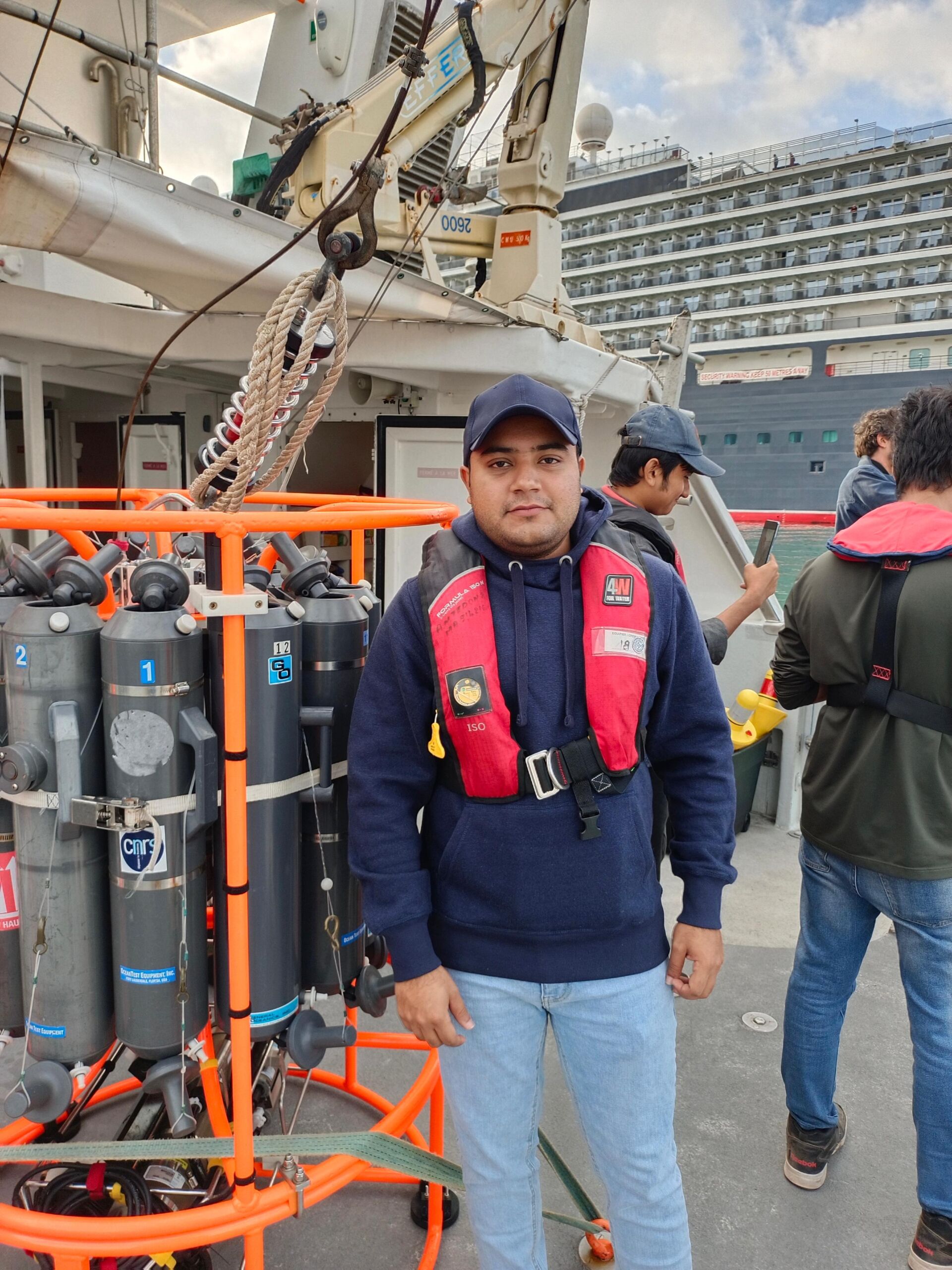
The Journey
My name is Tayyab Tahir, and I am from Pakistan. I studied Electrical Engineering in my bachelor’s degree and have always been interested in embedded systems, control, and Machine Learning. Growing up in a country that faces serious energy and power issues, I became very motivated to work on smarter, cleaner, and more reliable energy solutions.
Because of this interest, I wanted to study further in a field that combines robotics, control, and renewable energy. I applied for the Erasmus Mundus Joint Master's in Marine and Maritime Intelligent Robotics (MIR), which allowed me to study in different European countries, gain advanced technical knowledge, and work on real research problems related to intelligent systems and energy.
Erasmus Mundus Scholarship Details
I received the Erasmus Mundus scholarship for the Marine and Maritime Intelligent Robotics (MIR) program. In this program, I studied my first year at Université de Toulon in France and my second year at NTNU (Norwegian University of Science and Technology) in Norway.
The Erasmus Mundus scholarship covered my full tuition fees, health insurance, a monthly living allowance of about 1,000 euros, and extra support for travel and installation costs, which was around 7000 euros for two years. This funding was enough for me to live as a student in Europe without constant financial stress, and it allowed me to focus fully on my studies and research.
Also at NTNU, I got a job as a teaching assistant with my supervisor, and it really helped me a lot to cover my expenses because Norway is super expensive, which is almost double that of France.
Were You Offered any Other Scholarships?
Yes, I was offered two more Erasmus Mundus scholarships in addition to MIR.
One was IFROS (Intelligent Field Robotic Systems), and the other was DREAM (Dynamics of Renewables-based Power Systems), both were Erasmus Mundus programs. Both of these offers were also fully funded, with full tuition waivers and a monthly stipend similar to the MIR scholarship.
I decided to join MIR because it had stronger industrial involvement, more flexibility in choosing thesis topics and courses, and a unique combination of marine robotics and maritime-related applications, which matched my long-term goals very well.
Educational Background
I completed my Bachelor’s in Electrical Engineering in Pakistan with first-class honours and received a gold medal for having one of the best academic performances in my batch. My CGPA was 3.96/4.00, which was among the highest in the program.
During my bachelor’s, I studied subjects like power systems, control systems, electronics, signals and systems, and programming (mainly MATLAB, Python, and some C++). My final year project was a solar-powered smart lawn mower, which was funded at the national level. This project gave me hands-on experience in robotics, embedded systems, and control.
After my bachelor’s, I continued working in areas related to control and contributed to research publications in topics like energy management, microgrids, and intelligent control. I have authored and co-authored research papers. My academic achievements and my research publications together made my profile stronger and showed that I was serious about both academics and research, which helped a lot when applying for competitive scholarships like Erasmus Mundus.
How Did You Prepare to Apply to Institutions?
When I decided to apply, I first became clear about what I wanted from a master’s program. I knew I wanted something in robotics, control, and renewable energy, with strong research and industry links. Based on this, I started searching for suitable programs.
How Did You Find Information About the Erasmus Mundus Scholarship and Institutions?
Most of my information came from official sources, such as the Erasmus Mundus Joint Masters website and the official webpages of each program. This helped me avoid confusion and outdated information.
At the same time, I also used scholarship pages like “Scholarship Network” on Facebook and LinkedIn to hear real experiences. I contacted some alumni and seniors from Pakistan who were already in Erasmus Mundus programs and asked them about the application process and selection criteria, and they never hesitated to send emails to the program coordinators.
Did You Take Any Standardized Tests? If So, How Did You Prepare for Them?
I took PTE Academic. To prepare, I used online practice tests and official preparation materials. I practiced listening and speaking using headphones, so I became comfortable with the test environment. I read short articles and tried to summarize them in my own words to improve reading and writing skills. I also practiced writing under time limits to get used to the time pressure. This regular practice made me more confident on the test day. Also, before taking the English test, I already had three publications, which really helped me boost my confidence.
How Did You Prepare to Apply to the Erasmus Mundus Scholarship?
For Erasmus Mundus programs, the scholarship application is usually part of the main application, so I focused on making my overall application as strong as possible.
I spent a lot of time on my motivation letter. I explained clearly who I am, what I studied, what projects and jobs I had done, and how all of this is connected to the program. I also explained my future goals and how this master’s would help me contribute to both research and industry in my country.
In my CV, I highlighted my achievements, my bachelor's project, my teaching and industrial experience, and my research publications. I requested recommendation letters from professors who knew my work well and could write in detail about my academic performance and research potential.
How is (was) Your Experience at the Institutions?
My experience at the institutions has been very positive and also challenging in a good way.
In France, I learned the fundamentals of marine science, robotics, and AI. I also experienced living in a multicultural environment with classmates from many different countries.
In Norway, the focus was more on applications and research, especially in marine technology and advanced control systems. I worked on my master’s thesis related to modelling and energy management of a sustainable port microgrid using deep reinforcement learning, which matched my background and interests perfectly. Through these projects, I improved my programming skills, system-level thinking, and ability to work with real or realistic data.
How Do You Rate the Institutions Academically and Why?
Academically, I would rate the institutions I studied at as excellent.
The courses were demanding but very practical. Many of them were project-based, which meant we had to actually implement ideas, run simulations, or analyze data instead of just reading theory, especially at NTNU. The professors were active researchers, so they often brought recent research topics into the classroom. The labs and facilities, especially in marine technology and robotics, were strong and well-equipped. This environment pushed me to grow and think like a researcher and an engineer, not just as a student.
How Do the Institutions Support International Students?
I felt that the support for international students was quite good.
At the beginning of the program, our coordinator gave us complete information and also kept us connected and shared timely information even before the start of the program. The international offices helped with questions about visas, residence permits, health insurance, accommodation, and other documents. In France, there were buddy or mentor programs, where local or senior students helped new international students settle in. There were also counselling and health services available for students who needed emotional or medical support.
Are Your Classes Conducted in English or French/Norwegian?
All my classes in the MIR Erasmus Mundus program were conducted in English, even though the countries where I studied were France and Norway. Lectures, exams, assignments, and group projects were all in English. This made it easier for international students from different countries to study together without language barriers in the classroom.
Would Potential Students Have Any Problems Academically Not Knowing French and Norwegian?
Academically, I do not think students will have problems if they do not know the native language, because the program is fully in English, and professors are used to working with international students.
However, for daily life, knowing some basic French can be helpful. It makes it easier to talk to local people, understand signs, use public transport information, and handle small everyday tasks. So, I would say it is not necessary for academic success, but it can improve your overall life experience in the country.
What Do You Think Made Your Application Stand Out?
I believe several things helped my application stand out.
First, my strong academic record with a gold medal in Electrical Engineering showed that I was serious and consistent in my studies. Second, my final year project on a solar-powered smart lawn showed that I had practical experience, not just theory, related to the program. Third, my research publications and ongoing work in areas like intelligent control indicated that I was already involved in research and wanted to grow further.
Finally, my motivation letter was very specific and personal. I did not write a generic essay. I clearly connected my background to the MIR program, explained why I chose this program, and shared my long-term goal of contributing to my country. I think this clear and honest story helped my application.
What Would You Have Done Differently if You Were Going Through the Process Again?
If I could go through the process again, I would start even earlier.
I would begin preparing for my English test and collecting documents several months before the deadlines. I would contact more alumni from each program I was interested in to better understand the strengths and weaknesses of each. I would also try to learn basic French before arriving, to make my daily life easier from the first day.
What Advice Would You Give Those Looking to Apply for a Similar Scholarship?
My main advice is to not underestimate yourself and to start early. Read the official program websites carefully and make sure you understand the requirements. Take your time to write a clear and honest motivation letter that shows who you are, what you have done, and why this program is the right next step for you. Highlight your projects, internships, work experience, achievements, and any publications or research activities, even if they seem small to you.
Ask seniors, friends, or mentors to review your documents and give feedback. And most importantly, do not self-reject. Many students think they are not good enough and never apply. Scholarships like Erasmus Mundus look at your profile as a whole, not only at your grades. If you prepare well and tell your story clearly, you have a real chance.
Want to submit your
scholarship journey?
Submit Your Story Here!
More Scholarship Recipients
My name is Mona Perlingeiro, and I am from São Paulo, Brazil. São Paulo is the Brazilian city with the largest number of m .... Read more
I am Ludmille Lyvert, and I am from Haiti. I hold a master’s degree in Women’s Studies, and I am currently a Ph.D. stude .... Read more
My name is Leisha Ravindra Babu, and I am from India. I am currently a Global Korea Scholarship (GKS) scholar completing my .... Read more
Leave A Comment