
OSU Presidential Fellowship Scholar Syed Murtaza Arshad from Pakistan Shares His Journey of Securing a Fully Funded PhD at The Ohio State University, United States
University: The Ohio State University
Degree: PhD in Electrical and Computer Engineering
Previous Education: B.S. Electrical Engineering, University of Engineering and Technology (UET) Lahore
Scholarship: Fully Funded PhD (Graduate Research Associateship + OSU Presidential Fellowship) – Full Funding (Tuition, Stipend, Benefits)
Social Media
LinkedIn: linkedin.com/in/syedmurtazaarshad/
The Journey
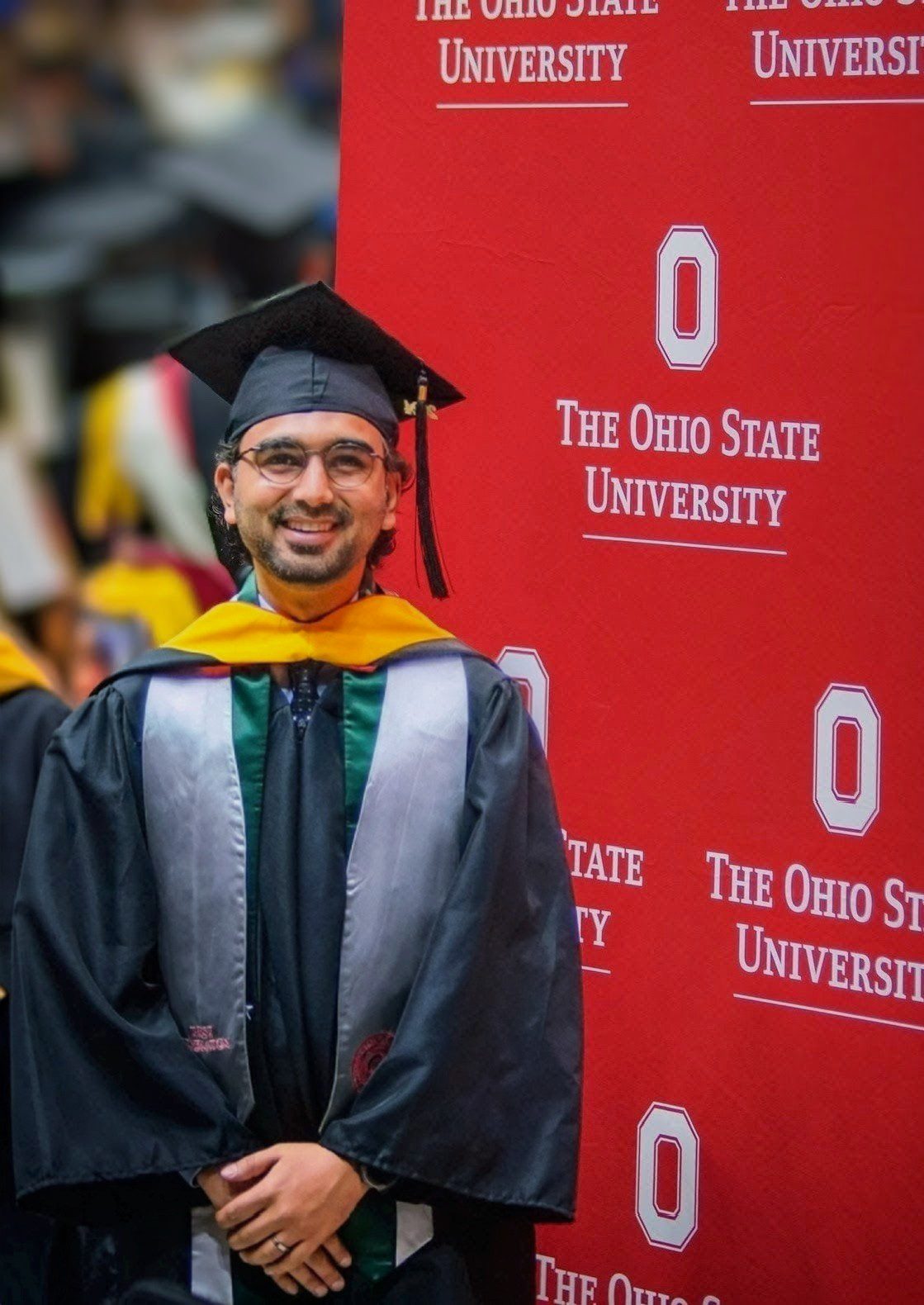
My name is Syed Murtaza Arshad, and I am from Lahore, Pakistan. I am currently a Ph.D. candidate in Electrical and Computer Engineering at The Ohio State University (OSU), specializing in medical image processing and machine learning.
Growing up, my academic journey was quite free, thanks to my parents and siblings. I naturally gravitated toward the subjects I loved, Mathematics and Computer Science, which is probably why I consistently performed at the top of my class. I was always fascinated by gadgets and devices, with a constant curiosity to understand how things work. That curiosity led me to pursue Electrical Engineering.
I completed my undergraduate degree from UET Lahore, graduating as a gold medalist (rank 1/142). My final year project was particularly successful; it received the IEEE Humanitarian Project Award (2019) along with several national awards and media recognition in Pakistan.
However, pursuing higher education abroad was never part of my original plan. Like many students, I initially aimed for a stable job. That changed after experiencing the monotonous nature of corporate life, which made me realize I wanted to work on challenging, research-driven problems that create real impact. That realization ultimately pushed me toward graduate studies.
GRA and OSU Presidential Fellowship Details
I received a fully funded PhD offer at The Ohio State University, supported through a Graduate Research Associateship (GRA), which covered full tuition along with a competitive stipend for the first three and a half years.
More recently, I was awarded the OSU Presidential Fellowship (2025–2026), which is funding the final year of my PhD.
Overall, the funding package is approximately $95,000 per year, including tuition, stipend, and benefits. This support not only made it possible for me to pursue graduate studies but also allowed me to bring my partner to the U.S., support my parents, and focus entirely on research without financial stress.
Were You Offered Any Other Scholarships?
While I did not receive other scholarships, I applied to several highly competitive programs, including:
- Erasmus Mundus Scholarship (Europe) – Not selected
- MEXT Scholarship (Japan) – No response
Even though these did not work out, they played an important role in my journey. Preparing for them helped me take the IELTS and significantly improved my statement of purpose and overall application maturity.
Educational Background
I completed my:
B.S. Electrical Engineering (UET Lahore)
- GPA: 3.95/4.0
- Rank: 1/142 (Gold Medalist)
My academic background gave me a strong foundation in signal processing, linear algebra, probability and statistics, and machine learning. These fundamentals aligned well with my current research in cardiac MRI reconstruction and made me a strong candidate for this PhD position.
One important thing to highlight is that I did not have extensive research experience during my undergraduate studies, something many applicants worry about. My journey shows that strong fundamentals, curiosity, willingness to learn, and a bit of luck can still open doors.
How did you find information about the GRA and OSU Presidential Fellowship and The Ohio State University?
My PhD opportunity did not come through a traditional search process. I was aware of the fully funded PhD pathway in the U.S. through a friend at UIUC, who encouraged me to apply. However, due to my limited research experience, I never felt confident enough to pursue it seriously.
Things changed when a colleague at my job shared a Facebook post from a professor at Ohio State University who was looking for a PhD student.
Looking back, this made me realize that many of the best opportunities in my life have come from unexpected sources, often because people around me knew what I was capable of and what I was looking for. It taught me the importance of consistently presenting yourself as someone capable, driven, and clear about your goals.
Did You Take Any Standardized Tests?
I already had an active IELTS with a score of 8.0. I prepared for it about a week using IELTS Liz (https://ieltsliz.com/) videos and practice tests.
I did not take the GRE, as it was waived during the COVID period. However, GRE requirements vary across universities—some still require it, while others have made it optional. I would recommend checking requirements for your target programs and taking the GRE if you feel that you don’t have a strong research profile and GPA.
How Did You Prepare to Apply for the GRA and OSU Presidential Fellowship?
After my interview and confirmation of support from my advisor, the application process was relatively straightforward. I applied through the university portal, submitted my documents, SOP, and recommendation letters, and received confirmation within a couple of weeks. I later provided original transcripts upon arriving on campus.
In my statement of purpose, I focused on:
- Clearly presenting my academic background
- Demonstrating my problem-solving ability
- Showing genuine interest in the research area
What Do You Think Made Your Application Stand Out?
Looking back, a few factors played a key role:
- Strong academic performance
- Being self-motivated
- A genuine and honest interview approach
I didn’t try to oversell myself. I presented my work as it was, stayed confident, and remained authentic.
I believe authenticity, combined with clarity in thought, made a stronger impression than trying to appear “perfect.”
What Would You Have Done Differently if You Were Going Through the Process Again?
If I could go back, I would not underestimate myself.
My original plan was to pursue a master’s degree first, build a research profile, and then apply for a PhD. I didn’t think I was good enough to directly secure a PhD position in the U.S.
Ironically, I never got into those master’s programs, and instead, I ended up securing a fully funded PhD.
In hindsight, I would:
- Apply directly for PhD programs earlier
- Start research projects during undergraduate studies
- Aim to publish at least one conference paper and contribute as a co-author to a journal paper
What Did You Pursue After the Fully Funded PhD?
I am currently in the final phase of my PhD, and my plan is to transition into industry R&D, where I can continue working on cutting-edge problems at the intersection of machine learning and medical imaging.
What Advice Would You Give Those Looking to Apply for a Similar Scholarship?
If I had to summarize my advice:
- Don’t self-reject
Many students eliminate themselves before even applying. Let the university decide—don’t decide for them. - Be open to unconventional paths
Opportunities often come from unexpected places—stay active, visible, and connected. - Focus on fundamentals, not just credentials
A strong understanding of core concepts will always pay off in some manner. - Be authentic in interviews
Confidence and honesty go a long way. You don’t need to impress—just be the best version of yourself. - Learn from rejection, but don’t stop
Every rejection is part of the process. In my case, multiple rejections led me to a better opportunity than I had initially planned. - Wherever you are, do your best
There’s a common narrative that GPA, coursework, or academic rigor doesn’t matter—but that’s not true. Your consistency, discipline, and the reputation you build among peers and mentors matter a lot. Often, opportunities come through people who know you as someone reliable and capable of getting things done.
Looking back, my journey was far from linear—from early academic success to corporate dissatisfaction, through repeated rejections, and eventually to securing a fully funded PhD. And through it all, I’ve learned that wherever you are, do your best—life has a way of figuring out what comes next for you.
Want to submit your
scholarship journey?
Submit Your Story Here!
More Scholarship Recipients
My name is Ralph Carlo Evidente, and I am from the Philippines. I am a chemical engineer by training, and I am about to begi .... Read more
- Belgium
- Denmark
- Energy
- Energy Systems
- Erasmus Mundus Scholarship
- Filipino Nationality
- Freiberg University of Mining and Technology
- Fully Funded Scholarships
- Germany
- Ghent University
- Marie Skłodowska-Curie Actions Doctoral Networks (MSCA-DN)
- Ph.D. Scholarships
- Sustainability
- Sweden
- Technical University of Denmark
- Uppsala University
Hello, I am Mehenaz Mashreen, and I am from Bangladesh. I am currently pursuing a Master’s degree in International and Dev .... Read more
Hello, I am Charles Agyei from Ghana. I did my undergraduate degree in Land Economy at Kwame Nkrumah University of Science a .... Read more
Leave A Comment